workout plan generator
Workout Plan Generator: How to Build a Weekly Plan That Adapts to You
A good workout plan generator does more than shuffle exercises. It helps you build a weekly structure around your goal, recovery, equipment, and progress so training stays realistic and effective.
Workout Plan Generator: What It Should Actually Do
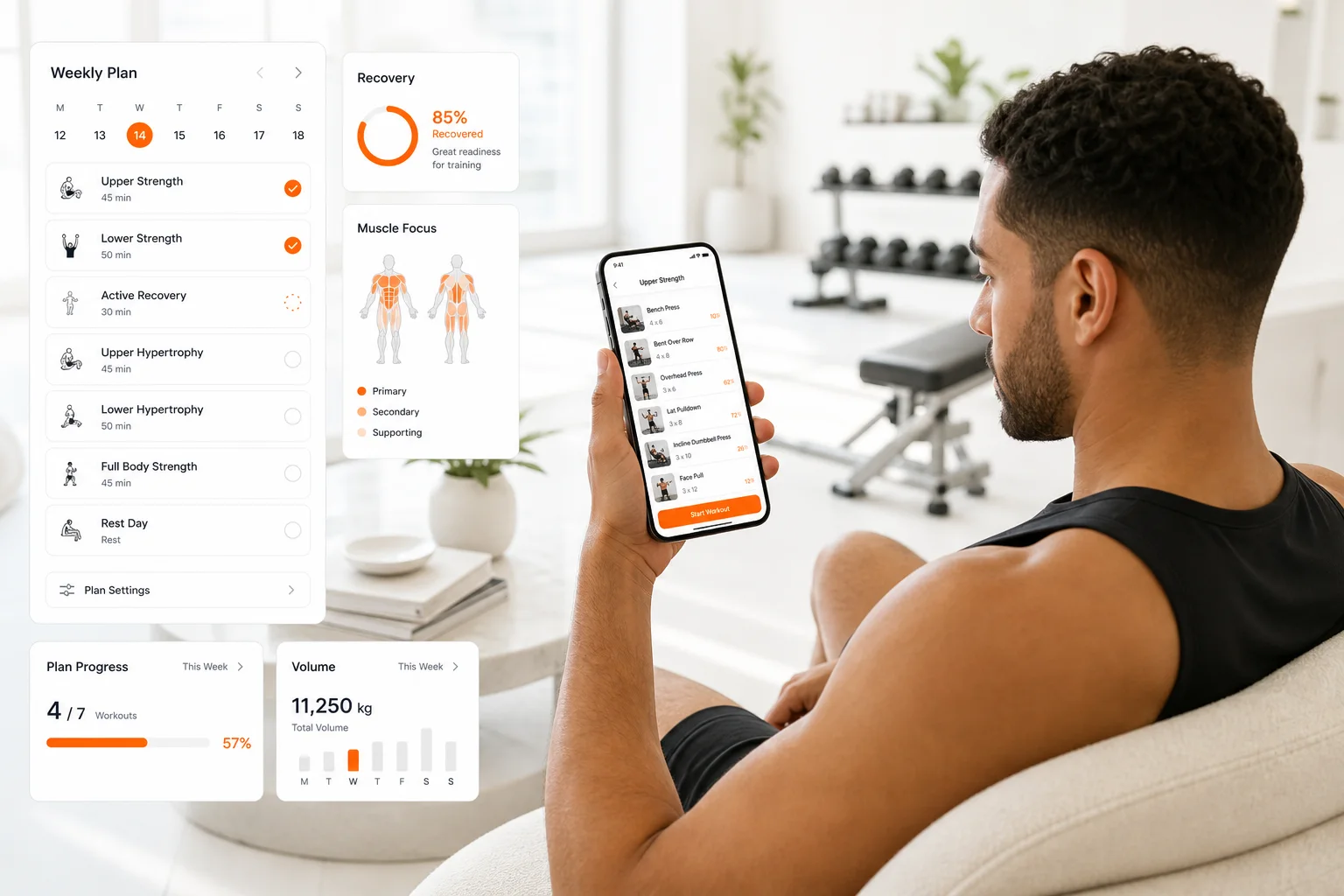
A workout plan generator should do more than spit out random exercises. The real value is in turning your goal, schedule, equipment, and recovery into a weekly plan you can actually follow. That matters because consistency is easier when the plan fits your life, and training works better when it balances effort with recovery.
Public health guidance from the CDC and WHO continues to emphasize regular physical activity, including muscle-strengthening work at least two days per week for adults. A useful generator should help you meet that baseline while still adjusting for your goal, experience level, and available time.
If the plan is too aggressive, you miss sessions. If it is too vague, you drift. The best workout plan generator sits in the middle: structured enough to guide you, flexible enough to adapt.
What a Good Weekly Structure Looks Like
The weekly structure is the backbone of any effective plan. Instead of thinking only in individual workouts, think in training days, recovery days, and the order of stress across the week.
1. Start with your goal
Your goal changes the shape of the week. A fat-loss focused plan may combine strength work with conditioning. A muscle-building plan usually needs enough weekly volume and repeat exposure to key movement patterns. A general fitness plan may prioritize balance, movement quality, and sustainability.
2. Match training days to your schedule
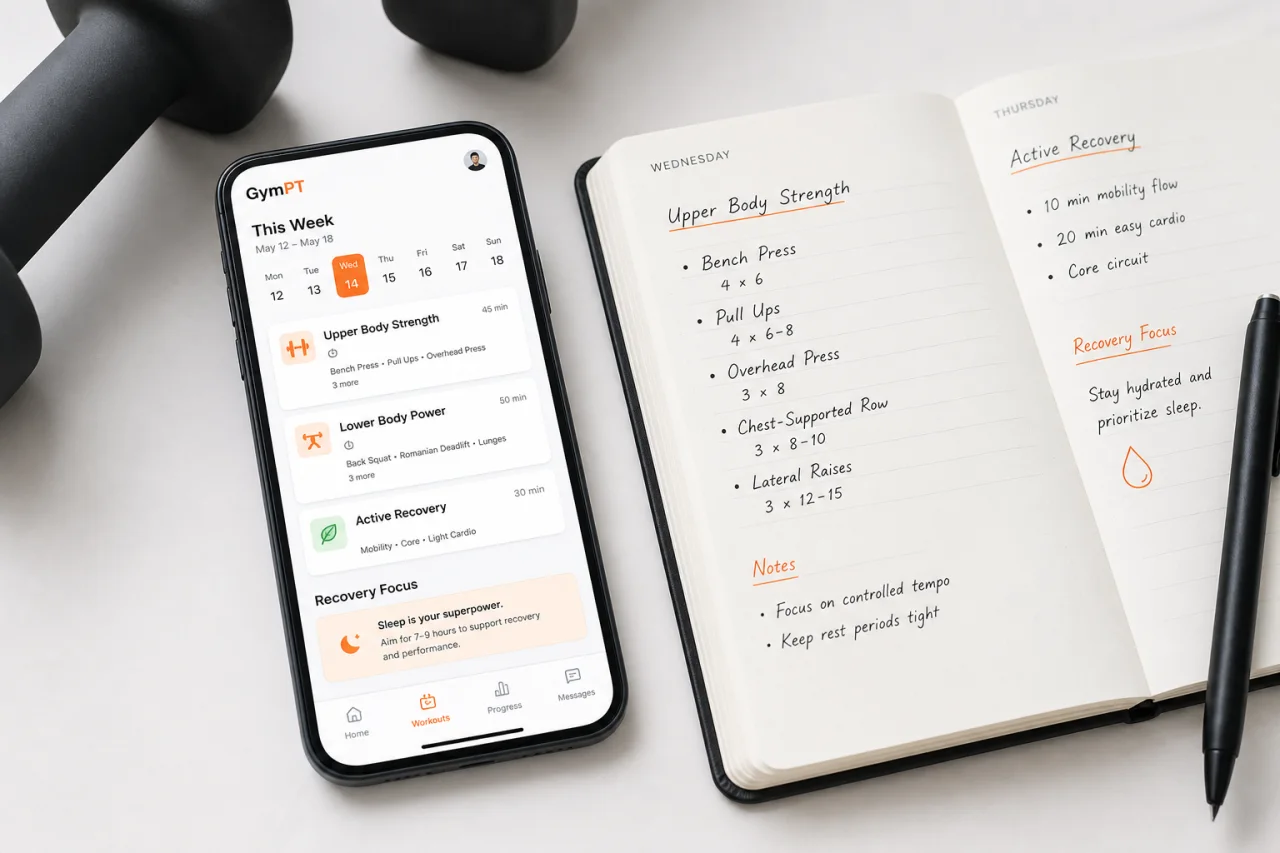
A plan is only useful if it fits your actual calendar. A good generator should let you train three, four, or five days per week without forcing a one-size-fits-all template. That makes it easier to stay consistent during busy weeks and avoid the all-or-nothing trap.
3. Place hard sessions with recovery in mind
Recovery is not a bonus feature. It is part of the plan. Hard lower-body sessions back-to-back, or repeated high-intensity days without enough rest, can make progress harder to sustain. A smarter weekly structure spreads stress so you can train hard when it matters and recover when you need to.
How a Workout Plan Generator Should Adapt to You
The best plans are not static. They respond to what you can do today, not just what looked good on paper last week. That is where adaptive training becomes useful.
- Training history: Beginners need simpler movement patterns and lower total volume. More experienced lifters may need more precise progression.
- Equipment access: A home setup, a full gym, and a hotel gym all require different exercise choices.
- Recovery status: Sleep, soreness, and recent training load should influence how hard the next session feels.
- Progress data: If lifts stall or fatigue builds, the plan should adjust instead of repeating the same week forever.
This is where a adaptive workout plan is more useful than a fixed template. It keeps the structure, but changes the details when your body or schedule changes.
Recovery Is Part of the Program, Not an Afterthought
Many people think progress comes from doing more. In practice, progress comes from doing enough work to stimulate adaptation, then recovering well enough to repeat it. That is why a strong workout plan generator should build recovery into the week from the start.
Recovery does not mean doing nothing. It can include lighter training days, lower-impact cardio, mobility work, or simply spacing sessions so the same muscle groups are not overloaded too often. For most people, the goal is to leave the gym challenged, not destroyed.
Good recovery also supports adherence. When sessions are manageable, you are more likely to keep showing up. That is one reason a personalized workout plan often works better than a generic split copied from someone else.
How to Choose the Right Exercises for Your Goal
A workout plan generator should not just fill slots. It should choose exercises that match the goal and the training environment.
For strength-focused training
Prioritize compound lifts, stable movement patterns, and clear progression. The plan should make it easy to track load, reps, and effort over time.
For muscle gain
Use enough weekly sets for each major muscle group, and spread them across the week so quality stays high. Exercise selection should balance big lifts with targeted accessory work.
For fat loss
Keep strength training as the foundation, then add conditioning in a way that does not crush recovery. The best fat-loss plans support energy expenditure without making every workout feel like a test.
For beginners
Keep the exercise list simple. A beginner benefits more from learning a few reliable patterns well than from chasing variety every session. If you want a safer starting point, see our beginner gym workout plan.
What to Track So the Plan Can Improve
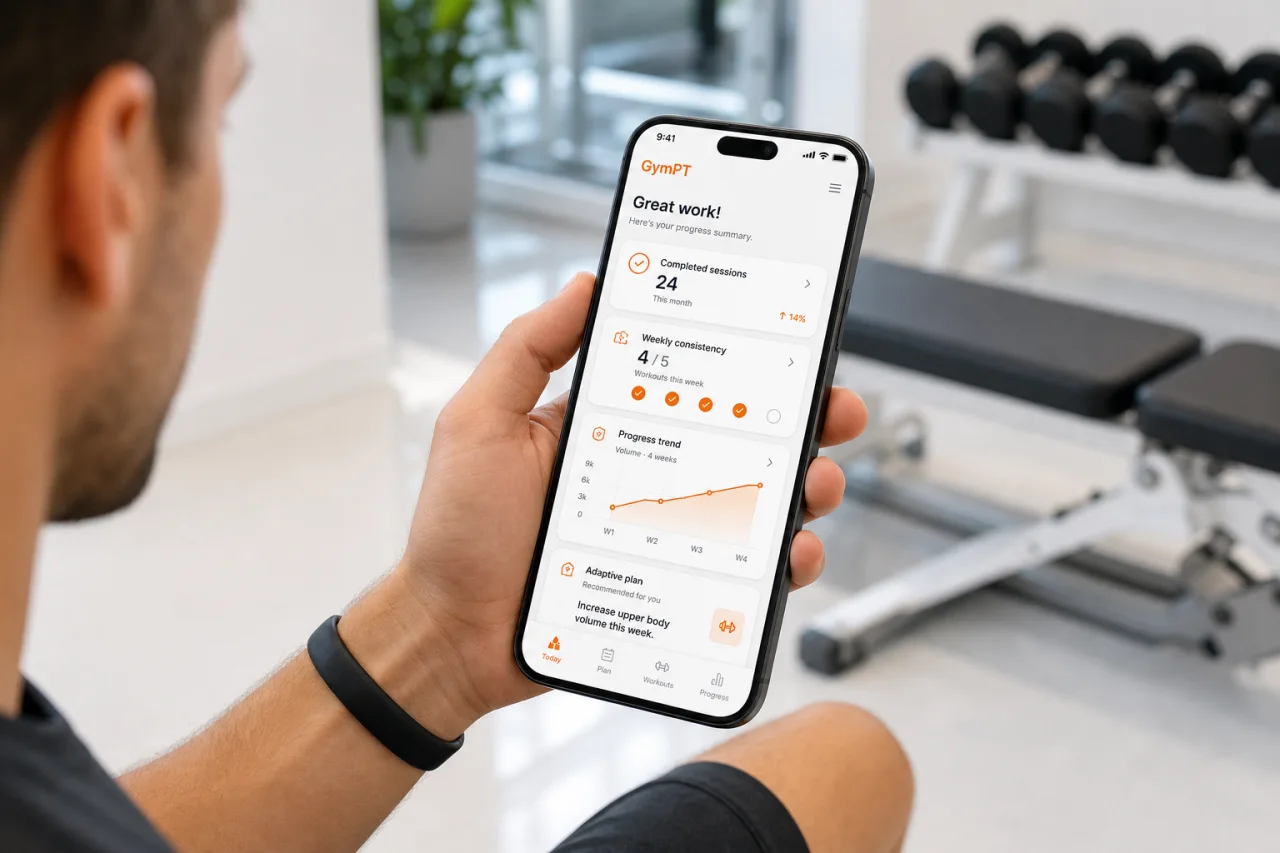
A workout plan generator becomes much more useful when it learns from your training logs. Tracking gives the plan a feedback loop.
- Workout completion: Did you finish the planned session?
- Performance: Did reps, load, or control improve?
- Effort: Did the workout feel appropriately challenging?
- Recovery: Were you ready for the next session?
- Consistency: Are you following the plan week after week?
That is why workout progress tracking matters. Without it, the plan cannot tell whether you need more volume, less volume, a different exercise, or just more time.
Why AI Makes Workout Planning More Practical
An AI-powered generator can do something a static template cannot: it can combine your goal, equipment, schedule, and progress into one living plan. That is especially helpful when your week changes often or when you train in different places.
GymPT uses that idea in a practical way. It can build a personalized workout plan, support AI coach chat, adapt to available equipment, track workouts, and surface progress insights so your plan stays aligned with what is actually happening in training.
If you want a broader overview of how the system works, read what makes a smart workout app better than a static plan and when a static plan stops being enough.
How to Use a Workout Plan Generator the Right Way
The best results usually come from a simple process:
- Choose one primary goal.
- Pick a realistic weekly training frequency.
- Match exercises to your equipment.
- Leave room for recovery.
- Review progress every week or two.
If the plan is too hard to follow, simplify it. If it is too easy to progress, increase the challenge gradually. A good generator should help you make those adjustments without rebuilding everything from scratch.
Conclusion
A workout plan generator is most useful when it creates structure you can sustain. The right plan balances weekly training, recovery, equipment, and progress so you can keep moving forward without guessing what to do next. That is the difference between a plan that looks good and a plan that actually works.
If you want a plan that adapts as you train, GymPT is built to help you generate it, follow it, and improve it over time.