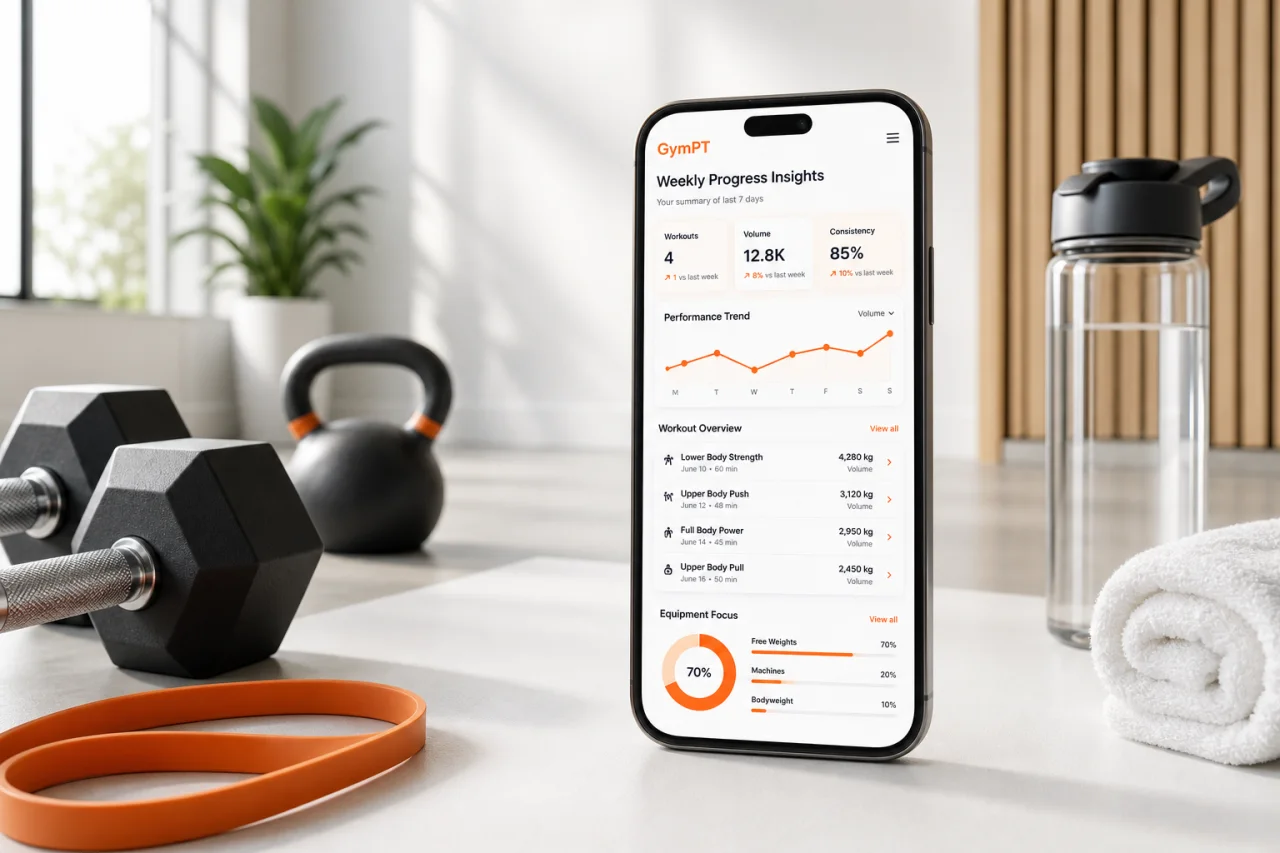
workout progress tracking
Workout Progress Tracking: How to Log Training, Stay Consistent, and See Real Results
Workout progress tracking turns random gym sessions into a clear training system. Learn what to log, how to read trends, and how GymPT helps you stay consistent.
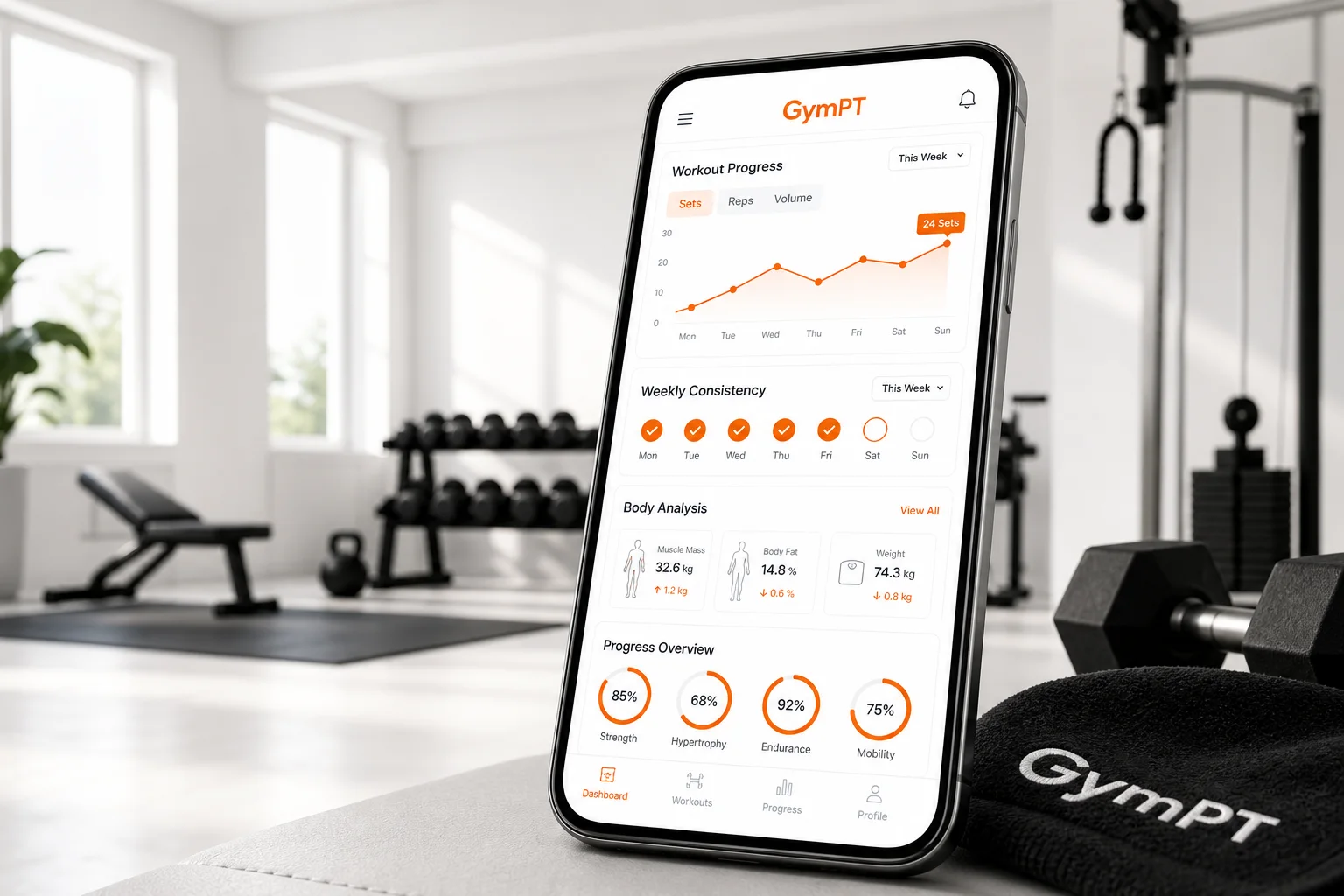
Workout progress tracking: the simplest way to train with purpose
Workout progress tracking is more than writing down weights and reps. Done well, it shows whether your training is actually moving you forward, where you are stalling, and what to change next. That matters because consistent physical activity supports health, fitness, and long-term adherence, and self-monitoring is one of the most useful ways to make progress visible. When you can see the pattern, you can improve the plan.
Many people train hard but still feel stuck because they rely on memory. Memory is unreliable. A good training log gives you a record of what you did, how it felt, and whether the session was easier or harder than last time. That is the foundation of better decisions.
Why tracking works better than guessing
Progress is rarely obvious from one workout to the next. Strength can rise slowly, endurance can improve without dramatic visual changes, and fatigue can hide real gains. Tracking helps you separate a bad day from a bad trend.
Research on self-monitoring and physical activity consistently shows that logging behavior can support adherence and help people stay engaged with their goals. Public health guidance also emphasizes gradual progression and regular activity, which makes tracking especially useful when you are trying to increase volume, intensity, or consistency over time.
What a good training log should capture
- Exercise name and variation used
- Sets, reps, and load for each movement
- Rest time when it matters for performance
- Effort level, such as how hard the set felt
- Workout duration and total session volume
- Notes on sleep, soreness, energy, or pain
You do not need to track everything forever. The goal is to capture enough information to make the next session smarter.
How to track progress without overcomplicating it
The best workout progress tracking system is the one you will actually use. Start with a simple structure and add detail only if it helps.
- Pick your main goal. Are you trying to build muscle, get stronger, improve conditioning, or stay consistent?
- Choose a few key lifts or movements. Track the exercises that matter most to your plan.
- Use the same format every time. Consistency makes comparisons meaningful.
- Review weekly, not just daily. One workout is data; a week is a pattern.
- Adjust one variable at a time. Change load, reps, sets, or frequency in a controlled way.
If you change too many things at once, you will not know what caused the result.
What to look for in your progress reports
Progress reports are useful because they turn raw workout data into decisions. Instead of asking, “Did I do enough?” ask, “What changed?”
Look for these signals:
- Load trend: Are your working weights increasing over time?
- Rep trend: Can you do more reps with the same weight?
- Volume trend: Are you completing more quality work across the week?
- Consistency trend: Are you missing fewer sessions?
- Recovery trend: Are you bouncing back faster between sessions?
These trends matter more than a single PR. A strong month of steady progress usually beats a few random great workouts.
How to know if you are progressing in the right direction
Not all progress looks the same. If your goal is strength, you may see heavier loads or more reps at the same load. If your goal is muscle gain, you may notice better performance, improved training tolerance, and more consistent volume. If your goal is general fitness, the biggest win may be showing up more often and recovering better.
That is why workout progress tracking should match the goal. A runner, a lifter, and someone rebuilding a routine after time off should not use the exact same scorecard.
Simple signs your plan is working
- You recover well enough to repeat quality sessions
- Your technique stays stable as the workload increases
- Your weekly training feels challenging but manageable
- You are hitting planned sessions more often
- Your numbers improve gradually instead of spiking and crashing
Common tracking mistakes that hide real progress
Even a good log can become useless if it is messy or incomplete. These are the most common mistakes:
- Tracking only the best sets and ignoring the rest of the session
- Changing exercises too often to make progress look faster
- Recording numbers without context, such as sleep, soreness, or fatigue
- Judging progress too early after only a few workouts
- Using too many metrics and never reviewing them
Good tracking should reduce confusion, not create it.
How GymPT makes workout progress tracking easier
GymPT helps turn your training log into a usable system. Instead of manually piecing together what happened last week, you can keep your plan, workouts, and progress insights in one place. That makes it easier to spot patterns, stay consistent, and make informed adjustments.
With GymPT, you can:
- Follow a personalized workout plan that matches your goal and equipment
- Use AI coach chat to ask what to do next when progress slows
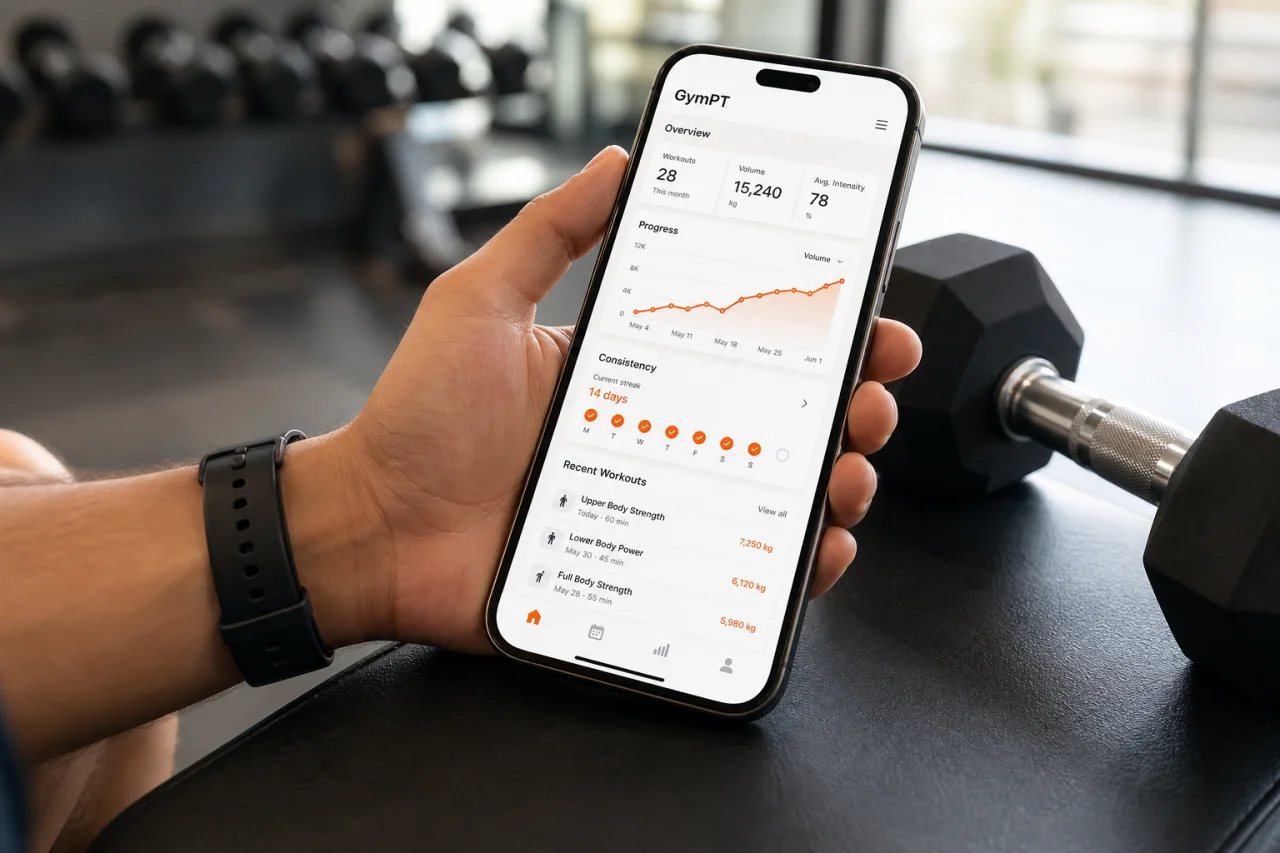
- Track workouts so your sessions build on each other
- Review progress insights without digging through scattered notes
- Combine body analysis with training data for a fuller picture
That combination is powerful because it connects what you did, how your body is changing, and what your next workout should look like.
A simple weekly review routine
If you want better results, set aside five minutes each week to review your training. Ask these questions:
- Did I complete the sessions I planned?
- Which exercises improved?
- Where did performance stall?
- Did fatigue, stress, or poor recovery affect training?
- What is the one adjustment I should make next week?
This small habit keeps your plan adaptive. It also helps you avoid the common trap of repeating the same week forever.
What to do when progress slows
Plateaus are normal. When they happen, do not panic and do not overhaul everything at once. Use your log to diagnose the issue.
First, check consistency. Missed sessions, poor sleep, or inconsistent nutrition can make progress look worse than it is. Next, check workload. You may need a small increase in volume, a better exercise selection, or more recovery between hard sessions. Finally, check whether the goal is realistic for the current phase of training.
Sometimes the best move is not to push harder, but to train more clearly.
Build a tracking system you can keep using
The best workout progress tracking system is simple, repeatable, and tied to action. It should help you answer three questions quickly: What did I do? How did it go? What should I change next?
If your current method cannot answer those questions, it is time to simplify. Start with a basic training log, review it weekly, and let the data guide your next step. That is how consistency turns into progress.
Ready to make tracking easier? GymPT helps you log workouts, follow a personalized plan, and see progress insights that actually support better training decisions.