body analysis fitness app
How a Body Analysis Fitness App Turns Photos and Measurements Into Better Training Decisions
A body analysis fitness app can help you track more than scale weight. Learn what to measure, what to ignore, and how to use insights to train smarter.
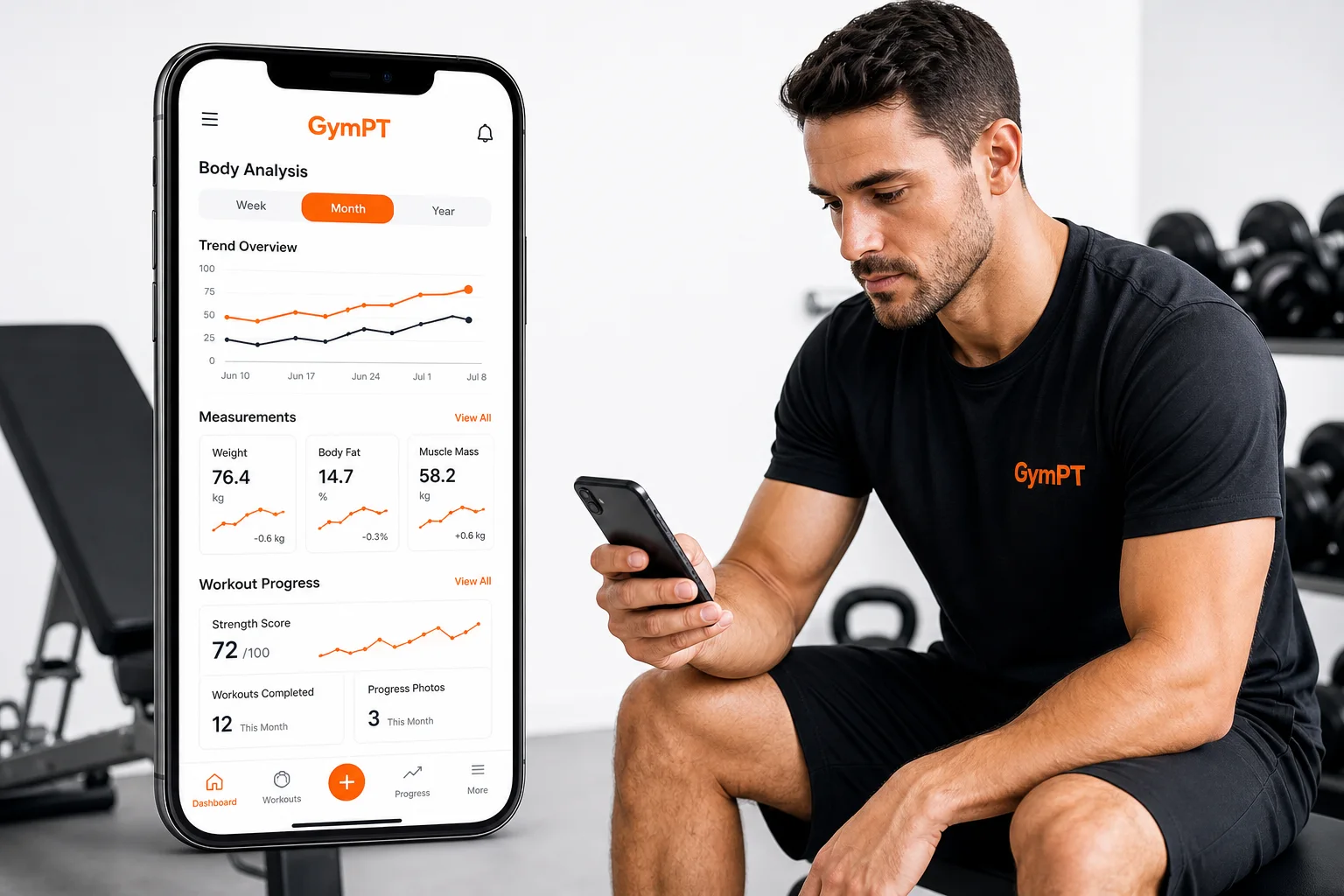
Why a body analysis fitness app is more useful than the scale alone
If you are trying to get stronger, leaner, or simply more consistent, a body analysis fitness app can give you a clearer picture than body weight by itself. The scale only shows one number. Training progress is usually a mix of strength, measurements, photos, recovery, and how your workouts are trending over time.
That matters because physical activity supports health in many ways, and adults are generally advised to get regular aerobic activity plus muscle-strengthening work each week. A good app helps you connect those broad health goals to daily training decisions instead of guessing from one weigh-in.
GymPT is built for that kind of decision-making. It combines personalized workout plans, AI coach chat, workout tracking, equipment-based training, body analysis, and progress insights so you can adjust your plan based on what is actually happening.
What body analysis should measure
Useful body analysis is not about diagnosing anything. It is about spotting trends that help you train better. The most helpful signals usually include:
- Body measurements such as waist, hips, chest, arms, or thighs.
- Progress photos taken under similar lighting and pose conditions.
- Body weight trends tracked over time, not day to day.
- Workout performance such as reps, load, sets, and consistency.
- Recovery and adherence such as missed sessions, fatigue, or streaks.
These inputs work better together than alone. For example, if weight is stable but your lifts are improving and your waist measurement is shrinking, that is a more useful signal than any single number.
What to ignore or de-emphasize
Not every change means your plan is working or failing. Water retention, sleep, stress, sodium intake, and menstrual cycle timing can all affect short-term readings. That is why a body analysis fitness app should focus on patterns over weeks, not emotional reactions to one bad day.
In practice, the best apps help you zoom out. They make it easier to ask: Is my training volume appropriate? Am I recovering well? Am I progressing on the exercises that matter?
How AI body analysis supports better training decisions
AI is most useful when it helps you interpret data, not when it makes dramatic promises. In a strong fitness app, AI can help you:
- spot whether your plan is too easy or too aggressive,
- compare recent workouts against your baseline,
- suggest when to increase load, reps, or volume,
- adjust exercise selection based on available equipment,
- turn body analysis trends into practical next steps.
That is especially helpful if you train at home, in a commercial gym, or in a mixed setup. A smart system can keep your plan realistic while still pushing progress.
GymPT’s AI coach chat is designed for exactly that kind of support. You can ask what to do when your progress stalls, how to adapt a session to the equipment you have, or whether your current split still matches your goal.
How to use body analysis without overcomplicating your routine
The best tracking system is the one you will actually keep using. If you want body analysis to help, keep the process simple and repeatable.
- Pick 3 to 5 metrics. For most people, that means weight trend, waist measurement, progress photos, workout performance, and weekly consistency.
- Measure on a schedule. Use the same time of day and similar conditions whenever possible.
- Review weekly, not hourly. Short-term noise is normal. Weekly trends are more useful.
- Link insights to action. If strength is flat for several weeks, adjust volume, recovery, or exercise selection.
- Keep the goal visible. Fat loss, muscle gain, and performance goals should not all be judged by the same metric.
This is where a body analysis fitness app becomes more than a tracker. It becomes a decision layer between your data and your next workout.
What makes a good body analysis fitness app
Not every app that says “analysis” is actually helpful. Look for these features:
- Clear progress insights instead of raw numbers only.
- Personalized workout plans that adapt to your goal and schedule.
- Workout tracking that makes it easy to log sets, reps, and load.
- Equipment-based training so your plan matches what you can use today.
- Coach-style guidance that explains why a change is recommended.
That combination matters because training quality is not just about collecting data. It is about making the next session better than the last one.
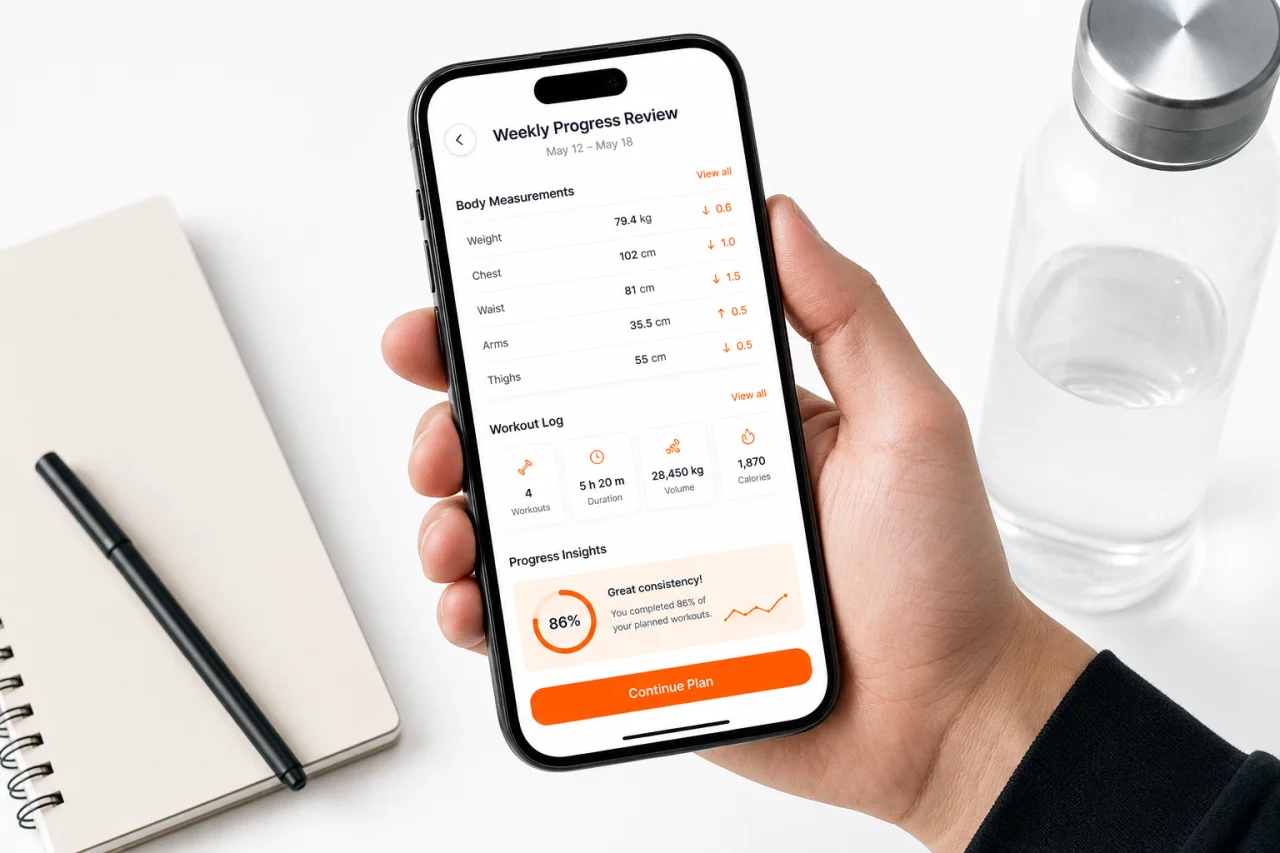
How GymPT fits into a smarter body analysis workflow
GymPT brings the pieces together in one place. You can build a personalized plan, log your workouts, check body analysis trends, and use AI coach chat to decide what to do next. If your available equipment changes, the plan can still stay practical. If your progress slows, the app can help you identify whether the issue is consistency, recovery, exercise selection, or progression strategy.
That makes it easier to stay focused on what training is supposed to do: create measurable improvement over time.
A simple weekly review routine
Try this once a week:
- Check your workout log for missed sessions or repeated plateaus.
- Review your body analysis trends for the last 2 to 4 weeks.
- Compare photos and measurements under the same conditions.
- Decide one adjustment only: more load, more reps, more recovery, or a different exercise.
Small, consistent adjustments usually beat constant overhauls.
Who benefits most from a body analysis fitness app
A body analysis fitness app is especially useful if you:
- want more structure than a generic workout template,
- are trying to lose fat while keeping strength,
- are building muscle and want proof of progress beyond the mirror,
- train with limited equipment and need adaptable programming,
- prefer clear feedback instead of motivational fluff.
If that sounds like you, the right app can save time, reduce guesswork, and make your training feel more intentional.
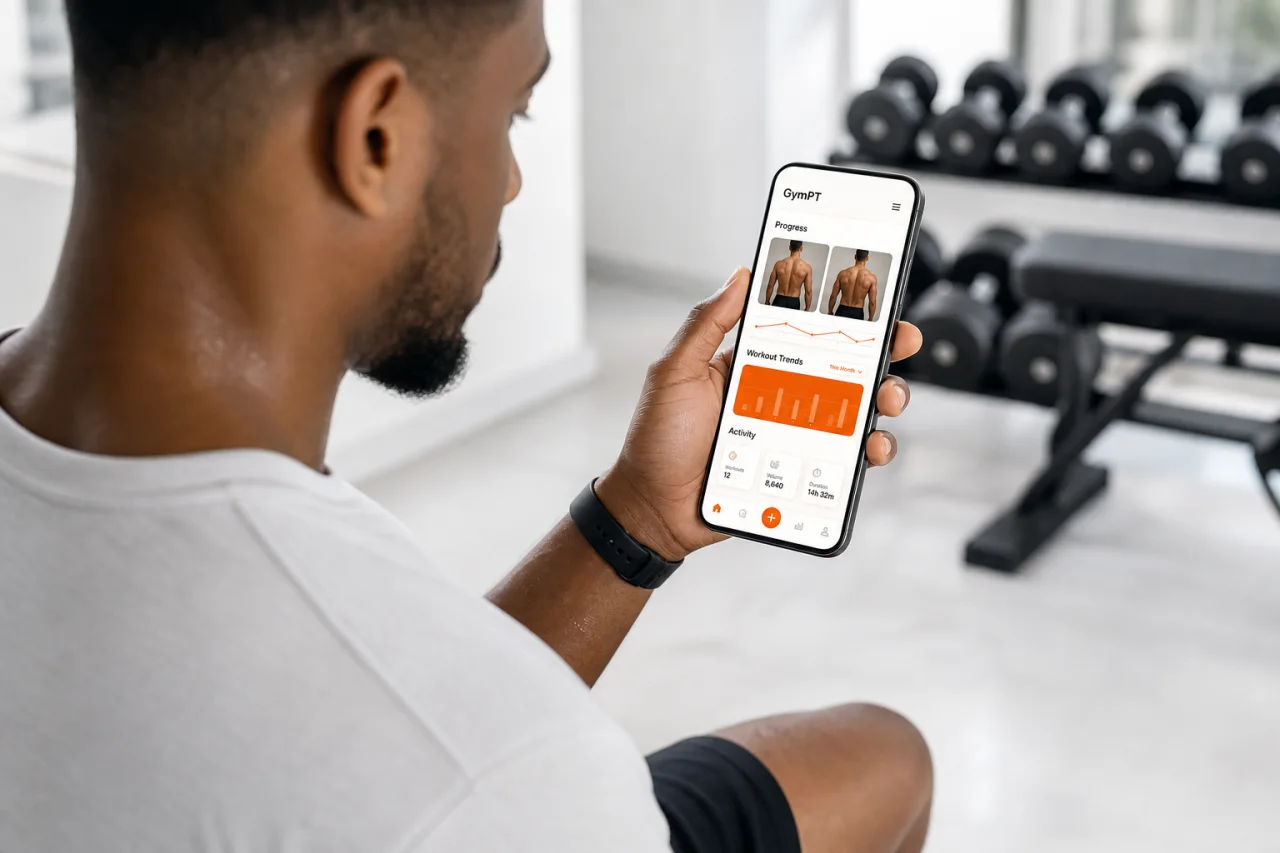
Final takeaway
A body analysis fitness app is most valuable when it helps you make better training decisions, not when it overwhelms you with data. Focus on a few meaningful metrics, review trends over time, and connect every insight to a concrete workout change. That is the simplest path to smarter progress.
GymPT is built to support that process with personalized plans, AI coaching, workout tracking, equipment-aware training, and progress insights in one app.
Explore more on personalized workout plans, equipment based workout strategies, and how to choose the right gym workout plan app for your training style.