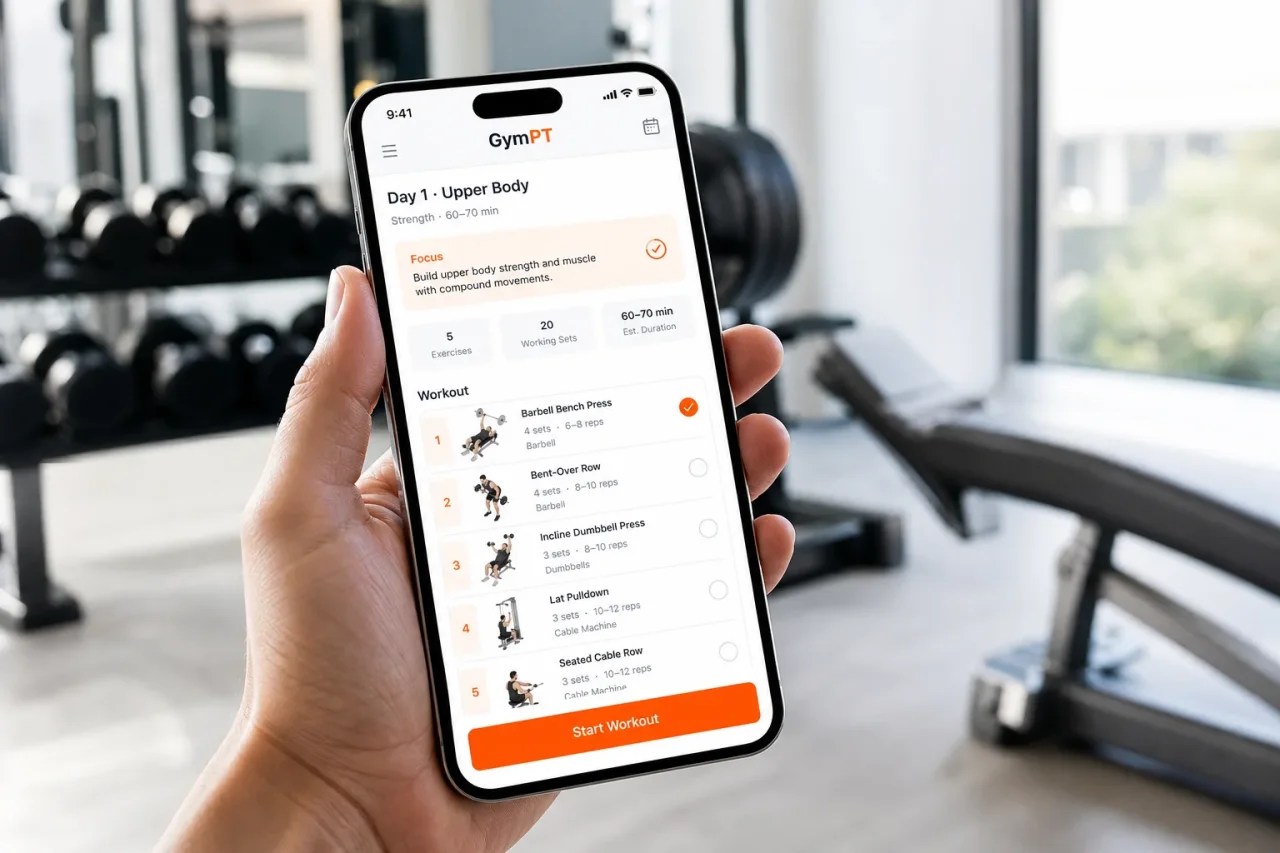
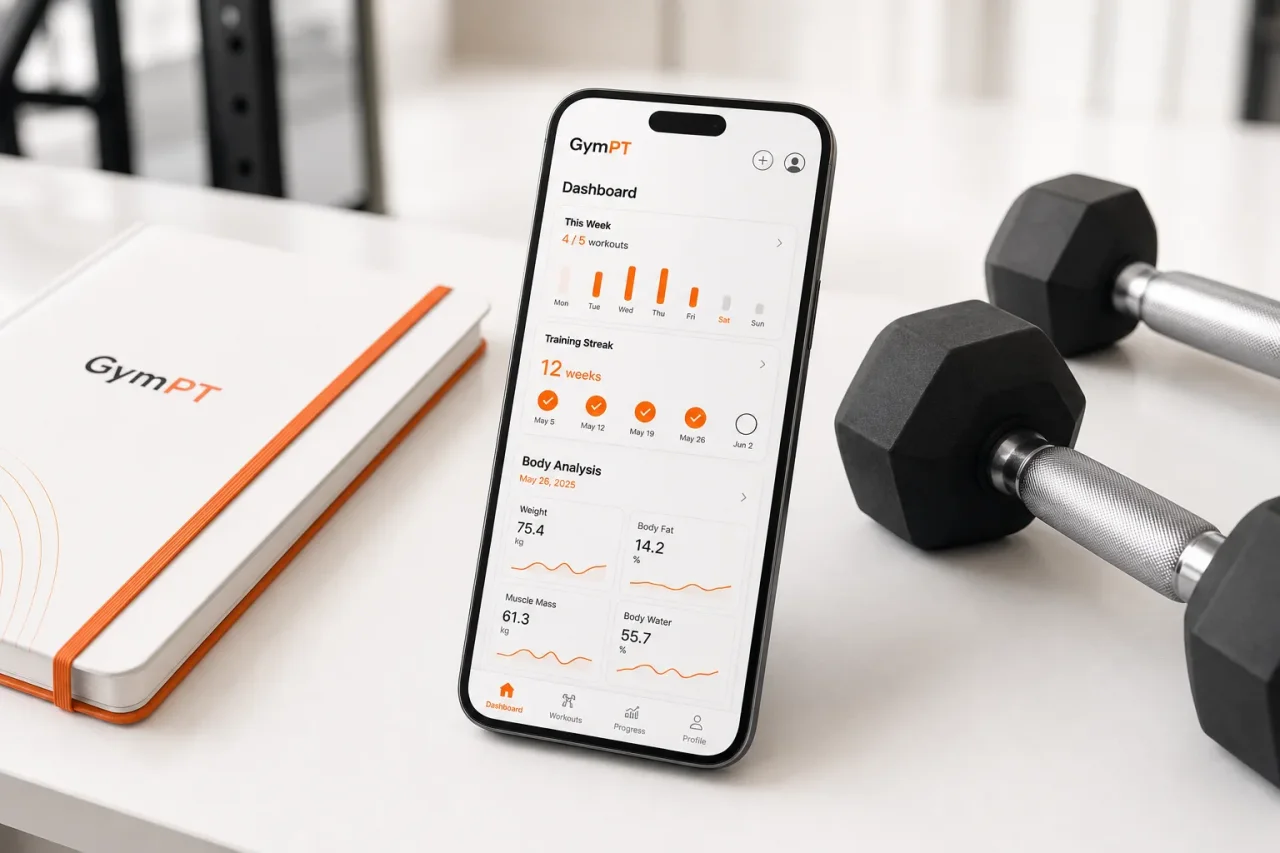
gym workout plan app
How to Choose a Gym Workout Plan App That Actually Fits Your Training
A good gym workout plan app should do more than list exercises. Here’s how to choose one that matches your goals, equipment, and schedule.
What a gym workout plan app should actually do
If you are comparing a gym workout plan app, the best choice is usually the one that helps you train consistently, not the one with the longest exercise library. A useful app should turn your goal, schedule, and available equipment into a plan you can follow in the real world.
That matters because public health guidance still points to a simple baseline: adults should get regular aerobic activity and at least two days of muscle-strengthening work each week. A good app helps you turn that recommendation into a weekly routine you can repeat.
Instead of asking, “Which app has the most workouts?” ask, “Which app makes the next workout obvious?” That shift is what separates a plan you save from a plan you use.
Look for personalization before you look for variety
Most people do not need more exercise options. They need better decisions about which exercises to do, how many sets to perform, and when to progress. That is why personalized workout plans are more useful than generic templates for most gym-goers.
A strong app should adapt to your training level, goals, and recovery capacity. It should also help you choose between full-body, upper/lower, or split routines based on how many days you can realistically train each week. If your schedule changes, the plan should change with it.
- Beginner: simple movements, fewer exercises, clear progression.
- Intermediate: structured volume, exercise rotation, and load progression.
- Busy schedule: shorter sessions with priority lifts and efficient supersets.
Make sure the app matches your equipment
One of the biggest reasons workout plans fail is mismatch. The plan looks good on paper, but it assumes equipment you do not have. A better gym workout plan app should build around the tools available to you, whether that is a full commercial gym, a small apartment setup, or a hotel fitness room.
Equipment-based training is especially helpful when you want fewer excuses and fewer substitutions. If the app knows you have dumbbells, barbells, cables, or machines, it can choose exercises that fit your environment instead of forcing a generic routine.
That also makes progression easier to track. When the same movement pattern shows up in a consistent way, it is simpler to increase load, reps, or control over time.
Tracking matters more than motivation
Motivation is unreliable. Tracking is not. A workout tracking app helps you see whether you are actually improving, which is the real point of training. If you do not record sets, reps, loads, and effort, it becomes hard to know whether your plan is working.
Progress insights are useful because they turn scattered workouts into a pattern. Over time, you can spot trends such as:
- which lifts are moving up steadily,
- where your volume is too high or too low,
- which days you are underperforming, and
- when recovery may be limiting progress.
That kind of feedback helps you adjust before you stall. It is one reason a modern app can be more practical than a static spreadsheet or a saved PDF.
Use coaching support when you need quick answers
Even a good plan raises questions. Should you add weight this week? Is this exercise the right substitute? Is your split too aggressive for your recovery? AI coach chat can help you make those small decisions without losing momentum.
The best coaching support is not about hype. It is about fast, specific guidance that keeps your training on track. If the app can explain why a workout changed, or why a progression step makes sense, you are more likely to follow it consistently.
This is especially helpful when you are learning gym basics, returning after time off, or trying to train around a busy week. You do not need a lecture. You need a clear next step.
How to evaluate a gym workout plan app before committing
Before you settle on an app, test it against the realities of your routine. A good app should pass these checks:
- Can it build a plan from your goal? Look for muscle gain, fat loss support, strength, or general fitness.
- Can it adapt to your equipment? The plan should fit the gym you actually use.
- Can you track every session easily? Logging should be quick, not annoying.
- Does it show progress clearly? You should be able to see trends without digging.
- Can you get help when something changes? A coach chat or adjustment tool is valuable when life gets in the way.
If an app fails on two or more of these, it may look polished but still be hard to use week after week.
Why consistency beats complexity
People often overestimate how complicated training needs to be. In practice, the best results usually come from a plan you can repeat, recover from, and improve over time. That is why simple, adaptive programming tends to outperform flashy routines that are hard to sustain.
CDC and WHO guidance both emphasize regular movement and muscle-strengthening activity as part of a healthy weekly routine. A good app should help you meet that standard in a way that fits your life, not fight against it.
So when you compare apps, focus less on novelty and more on execution. The right tool makes training easier to start, easier to follow, and easier to improve.
Where GymPT fits in
GymPT is built for people who want a practical gym workout plan app without the clutter. It combines personalized workout plans, AI coach chat, body analysis, equipment-based training, workout tracking, and progress insights so your plan can evolve as you do.
If you want an app that helps you choose the right workout, log it quickly, and adjust it intelligently, that combination is hard to beat. The goal is not to replace effort. The goal is to make effort count.
Bottom line: choose the app that helps you train consistently with the equipment, time, and experience level you actually have. That is the app you will keep using.
Related reading: personalized workout plan strategies can help you understand why adaptive training often works better than static templates.