equipment based workout
Equipment Based Workout: How to Match Machines, Cables, and Free Weights to Your Plan
The best equipment based workout is not the fanciest one—it is the one you can repeat. Learn how to match machines, cables, and free weights to your goal, schedule, and gym setup.
Why an equipment based workout works better than a generic plan
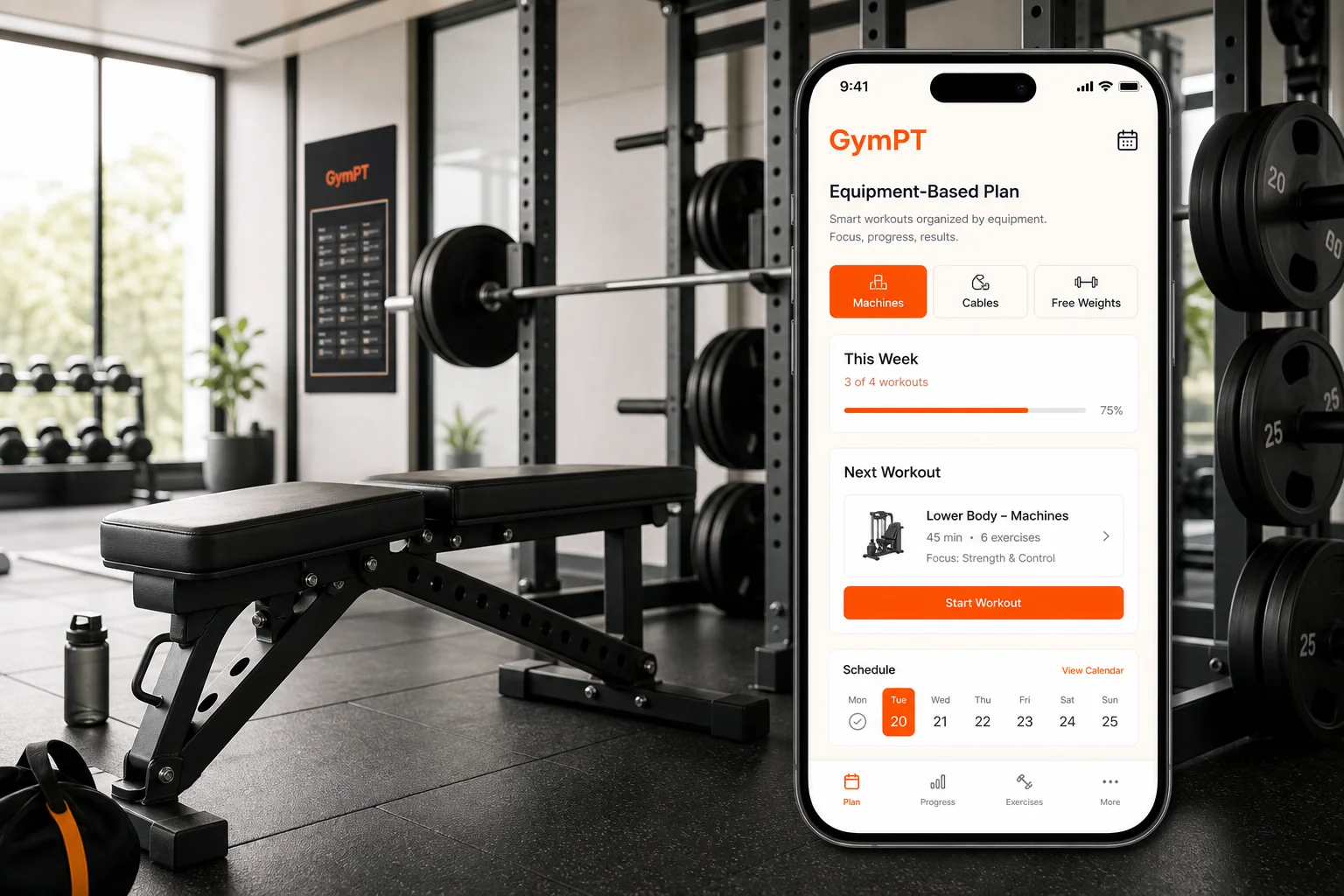
An equipment based workout is a training plan built around the tools you actually have access to: machines, cables, dumbbells, barbells, benches, bands, or bodyweight stations. That sounds simple, but it solves one of the biggest reasons people stop training: the plan does not match the gym they use.
When your workout fits your equipment, it is easier to start, easier to repeat, and easier to progress. That matters because adults are recommended to do muscle-strengthening activity at least two days per week, alongside regular aerobic activity. A plan that matches your environment makes that target much more realistic to hit consistently.
The goal is not to choose one “best” tool forever. The goal is to choose the right tool for the exercise, the goal, and your current setup.
What each type of equipment is best for
Different tools solve different training problems. A smart plan uses that to your advantage.
Machines
Machines are useful when you want stability, simple setup, and a clear path of motion. They are often a strong choice for beginners, for higher-rep accessory work, or for days when you want to train hard without spending time balancing the load.
- Best for: learning movement patterns, isolating a muscle group, and keeping sessions efficient.
- Why they help adherence: less setup, less intimidation, and fewer technique barriers.
- Common examples: leg press, chest press, lat pulldown, seated row, leg curl.
Cables
Cables are one of the most flexible options in the gym. They let you train through a smooth resistance curve, change angles easily, and move quickly from one exercise to the next. That makes them ideal for upper-body work, core training, and accessory movements that need constant tension.
- Best for: rows, flyes, triceps work, face pulls, rotations, and controlled single-arm work.
- Why they help adherence: one station can cover many exercises, so the workout feels less crowded and more efficient.
Free weights
Free weights like dumbbells and barbells are excellent when your goal is to build strength, practice coordination, and progress load over time. They require more control, which can be a benefit if you want to train multiple muscles at once and build confidence with foundational lifts.
- Best for: squats, presses, deadlifts, lunges, rows, and unilateral work.
- Why they help adherence: they are versatile, so you can keep training even when the gym is busy.
Bodyweight and bands
Bodyweight and resistance bands are underrated for warm-ups, travel workouts, and lower-friction training days. They are also useful when you want to keep a routine going at home or when equipment is limited.
- Best for: push-ups, split squats, glute bridges, pull-apart work, mobility prep, and finishers.
- Why they help adherence: they remove the “I need the perfect gym” excuse.
How to choose the right equipment for your goal
The best equipment based workout starts with the outcome you want, then picks the tool that makes that outcome easier to repeat.
If your goal is strength
Use free weights for your main lifts when possible, then add machines or cables for extra volume. Free weights are especially useful for practicing compound patterns and progressing load in a measurable way.
If your goal is muscle gain
Mix free weights, machines, and cables. This gives you enough overload to grow while also making it easier to add volume without your technique breaking down. Machines are especially helpful for pushing close to fatigue on later sets.
If your goal is consistency
Choose the equipment you can access most reliably. A plan that uses the same few stations every week is often better than a “perfect” plan that depends on equipment you rarely find open.
If your goal is fat loss
Pick equipment that lets you train efficiently and recover well. The best plan is the one you can sustain while still meeting your weekly activity target and keeping strength work in the routine.
How to build an equipment based workout without overcomplicating it
You do not need a different exercise list for every machine in the gym. You need a structure that can adapt.
- Pick one main lower-body push. Example: squat, leg press, or split squat.
- Pick one main upper-body push. Example: dumbbell bench press, machine chest press, or cable press.
- Pick one main pull. Example: row, lat pulldown, or pull-up variation.
- Add one hinge pattern. Example: Romanian deadlift, hip thrust, or cable pull-through.
- Finish with accessories. Example: curls, triceps, lateral raises, calves, or core work.
This structure keeps the workout balanced even when the exact exercise changes. That is the real advantage of an equipment based workout: the plan stays stable while the tools adapt.
Machines vs free weights: which should you use first?
For most people, the answer is not either/or. Start with the tool that lets you train the movement well today.
- Use machines first if you are new, returning after a break, or want a lower-skill way to build volume.
- Use free weights first if you already know the movement and want more carryover to general strength and coordination.
- Use cables first if you want a smooth setup, constant tension, or a joint-friendly accessory option.
A practical rule: the more technical the lift, the more important it is to keep the setup simple and repeatable. The more advanced your training becomes, the more useful it is to combine tools instead of relying on only one.
How to make your plan easier to stick to
Adherence improves when the workout feels doable before you even start. These small choices help.
- Limit station hopping. Build workouts around nearby equipment so you spend less time waiting and walking around.
- Keep a backup option. If the squat rack is taken, know your machine or dumbbell substitute in advance.
- Match the workout to your energy. On busy days, use machines and cables. On high-energy days, use heavier free weights.
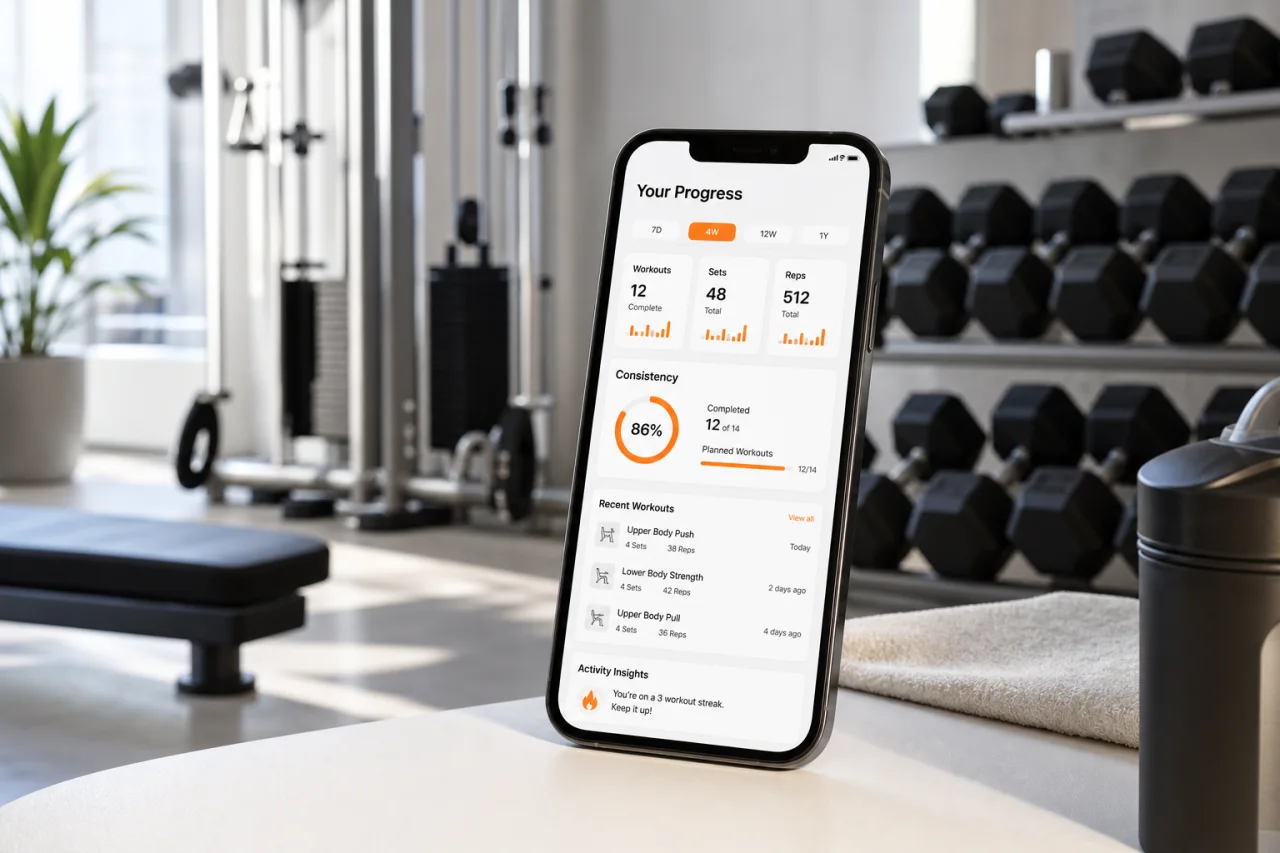
- Track what you used. Logging equipment, load, reps, and sets makes progression easier to repeat.
- Repeat the same pattern weekly. Familiarity reduces friction and helps you improve faster.
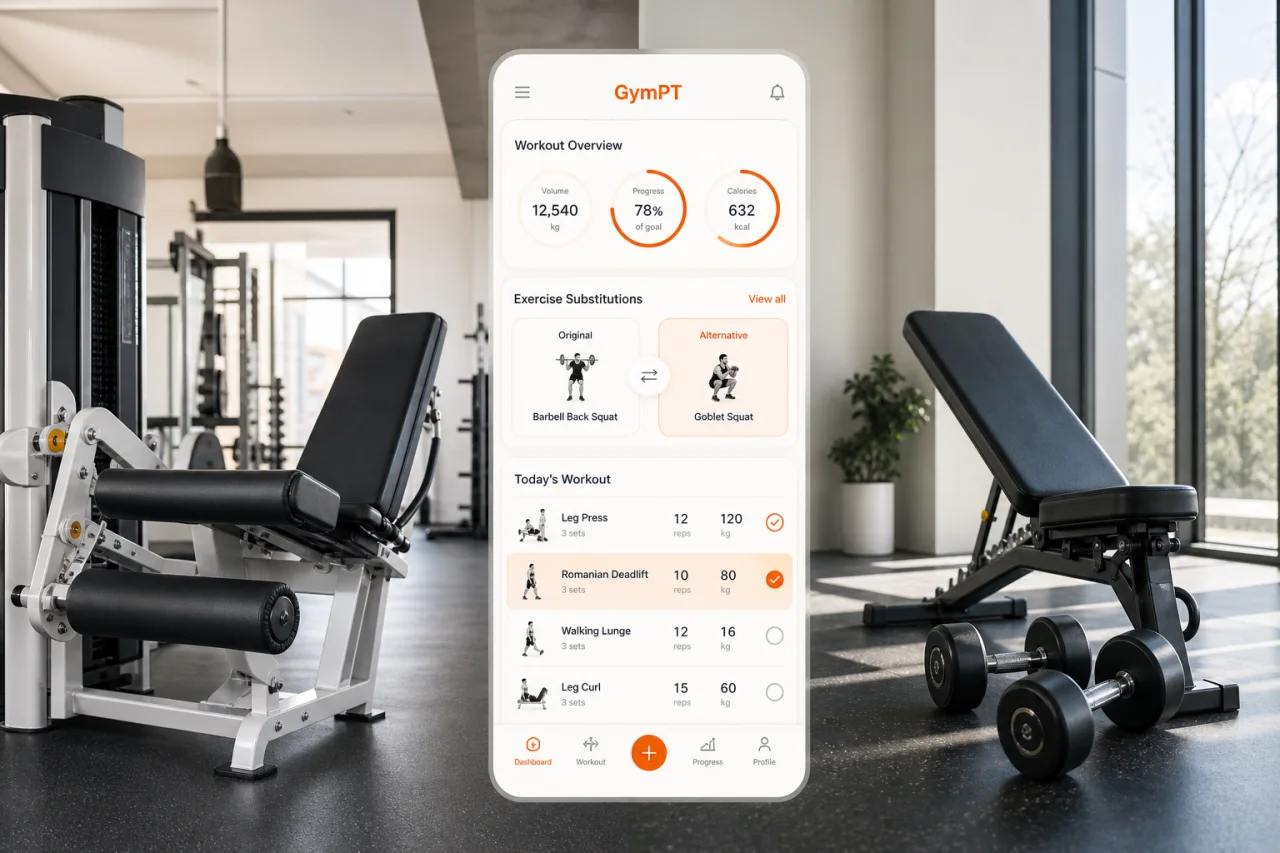
That is also where an app can help. GymPT can build a personalized workout plan around the equipment you have, then help you track sessions and adjust the plan as you progress.
Common mistakes to avoid
Even a good equipment based workout can fail if the setup is wrong.
- Choosing exercises you cannot repeat. If the plan depends on one specific machine that is always busy, it will become frustrating.
- Using only one type of equipment. Variety is useful when it supports the goal, not when it makes the plan random.
- Ignoring progression. The equipment matters less than whether you can gradually do more over time.
- Copying someone else’s gym split. Their equipment access, experience, and schedule may be completely different from yours.
How GymPT helps you train with the equipment you actually have
GymPT is built for real-world training, not idealized gym conditions. You can choose your equipment, get a personalized workout plan, chat with the AI coach, track workouts, and review progress insights in one place.
That means your plan can adapt when your gym is crowded, when you switch locations, or when you want to train with machines one day and free weights the next. The result is a routine that is easier to follow and easier to improve.
Final takeaway
The best equipment based workout is the one that fits your gym, your schedule, and your ability to repeat it next week. Machines can make training simpler. Cables can make it smoother. Free weights can make it more versatile. The smartest plan uses the right tool for the job and keeps progression easy to track.
If you want a plan that matches your equipment instead of forcing you into a template, build it around what you can actually use consistently.