smart workout app
What Makes a Smart Workout App Better Than a Static Plan?
A smart workout app does more than store exercises. It adapts to your equipment, progress, and schedule so your plan stays useful after week one.
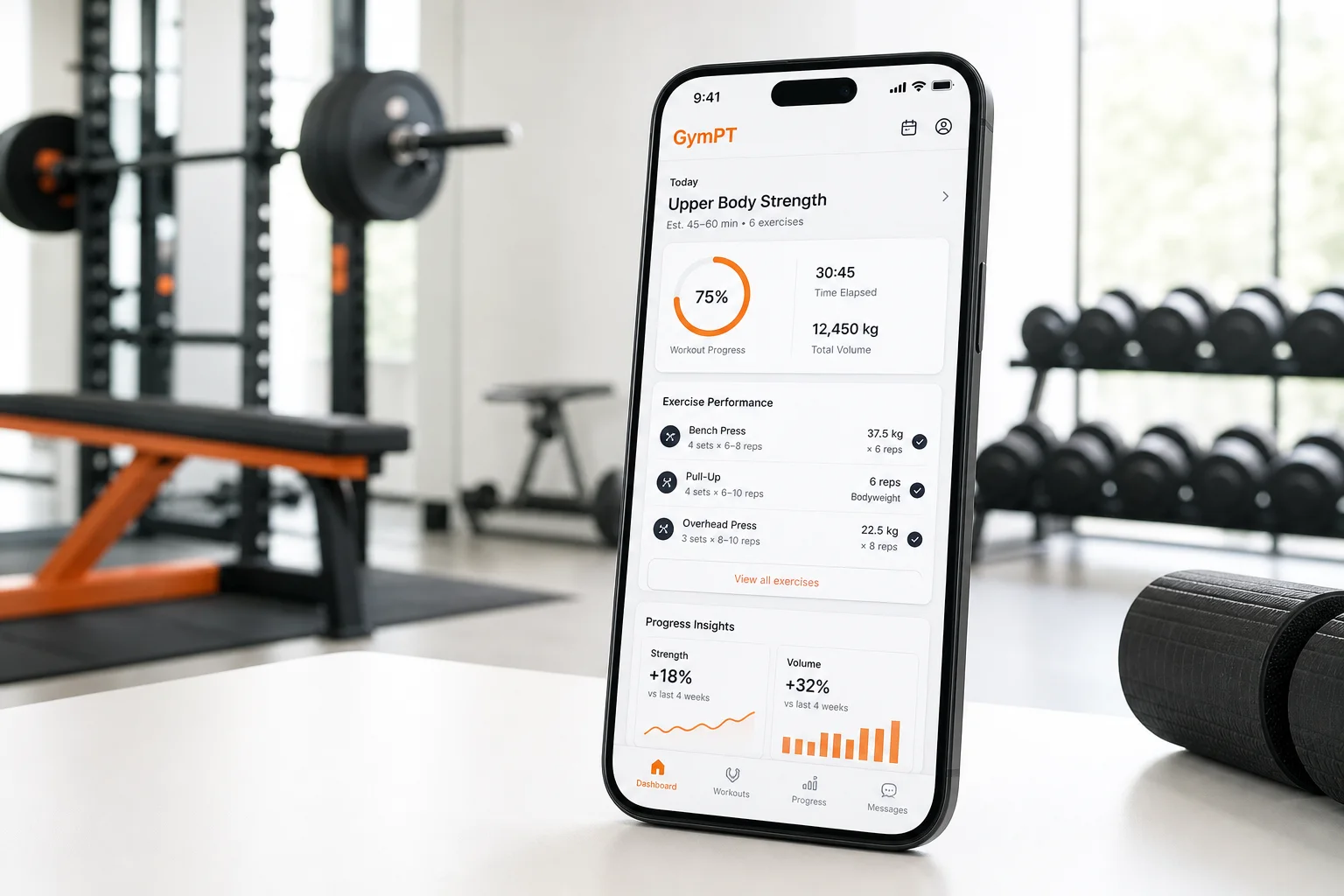
Smart workout app: what it should actually do
A smart workout app should do more than hand you a generic split and hope you stay motivated. The best apps help you choose the right workout, adjust as your training changes, and keep your plan practical when real life gets in the way. That matters because adults are generally advised to get at least 150 minutes of moderate-intensity activity each week, plus muscle-strengthening work on two or more days. A good app makes those targets easier to organize and follow consistently.
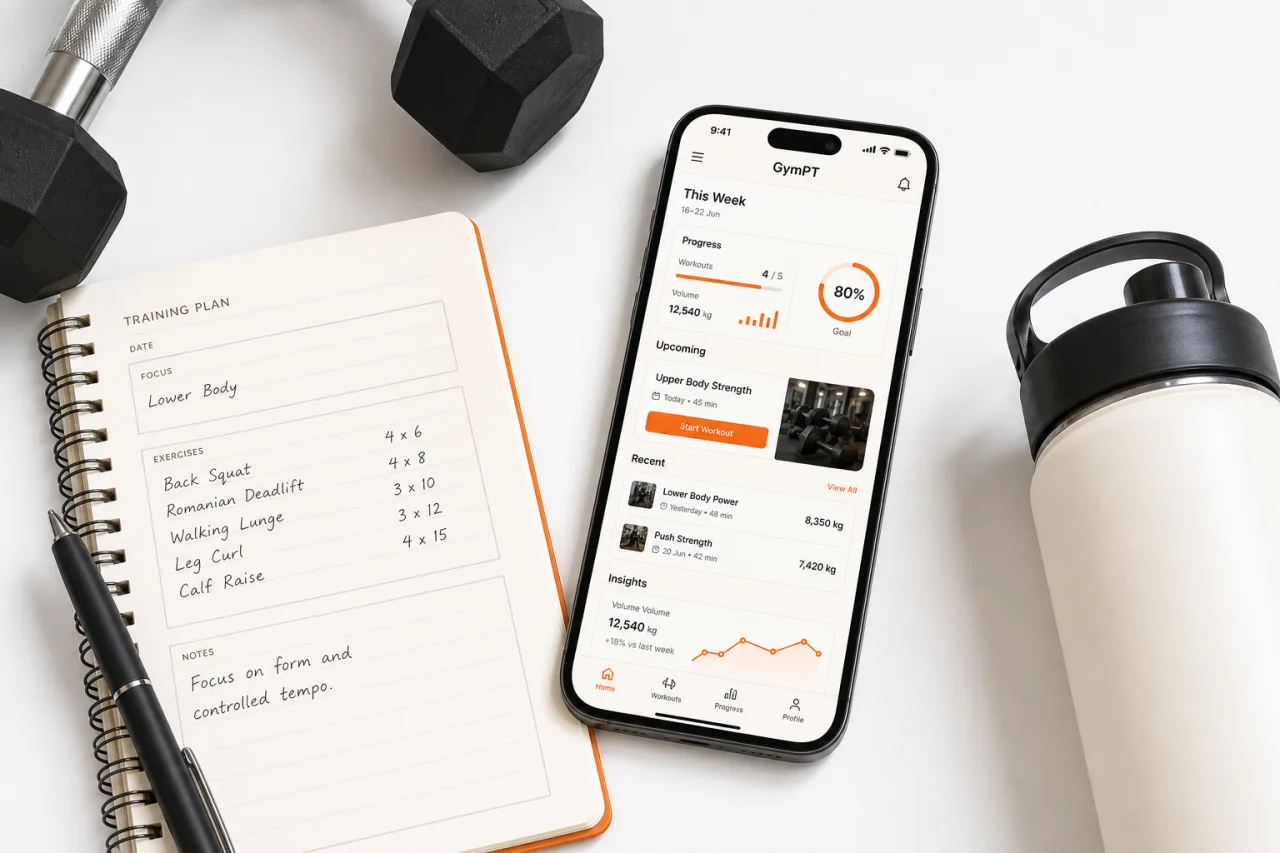
If you have ever downloaded a PDF plan, followed it for a week, and then stopped because the exercises did not match your equipment, schedule, or current level, you already know the problem. Static plans can be useful as a starting point, but they do not react when you miss a session, get stronger, or need to swap a machine for dumbbells. A smart workout app is useful because it turns training into a living system instead of a fixed document.
Why a static PDF plan breaks down fast
PDF plans are simple, but simplicity has limits. They usually assume the same gym setup, the same recovery, and the same weekly availability every time. In practice, training changes from week to week. You may have a busy workday, a crowded gym, a different set of machines, or a goal shift from fat loss to muscle gain. When the plan cannot adapt, consistency drops.
That is one reason people often need more than a template. A smart workout app can keep the structure of a plan while changing the details around it. Instead of forcing you to fit the plan, it fits the plan to you.
What to look for in a smart workout app
Not every fitness app deserves the label “smart.” The best ones usually combine four things:
- Personalization: workouts based on your goal, experience, and available equipment.
- Adaptation: the ability to update training when your progress changes.
- Tracking: a clear log of sets, reps, load, and completed sessions.
- Feedback: insights that help you understand what to do next.
Those features matter because training works best when it is progressive and repeatable. Research-based guidance from major health organizations consistently supports regular aerobic activity, muscle strengthening, and reducing long sedentary periods. A smart app helps you translate that guidance into an actual weekly routine.
1. Personalized workout plans that match your starting point
A strong app should not give the same plan to a beginner, an intermediate lifter, and someone returning after a break. It should ask about your goal, training frequency, and equipment, then build a plan that makes sense for your current reality. That is especially important if you train at home, in a commercial gym, or with a limited set of machines.
2. Equipment-based training that removes guesswork
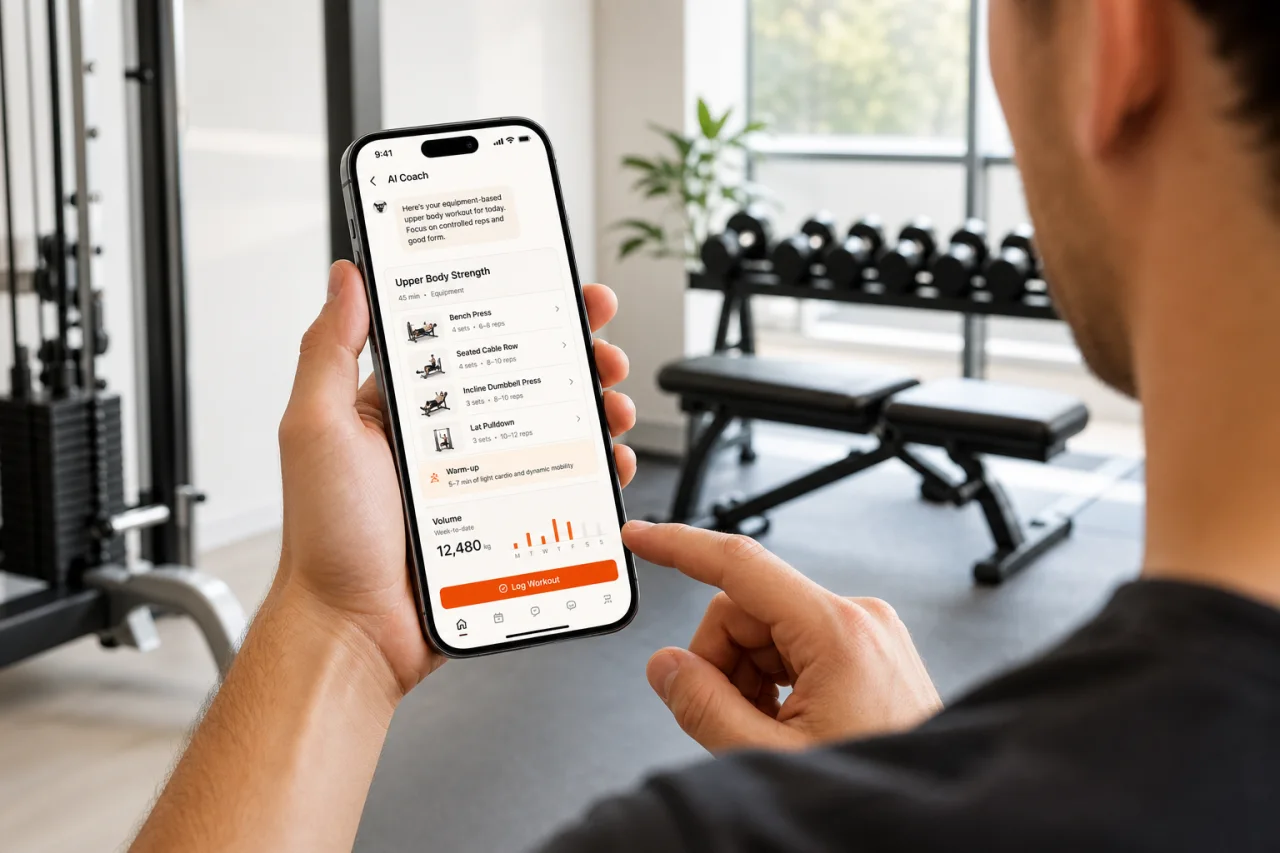
One of the biggest reasons people abandon plans is equipment mismatch. A smart workout app can build sessions around dumbbells, barbells, cables, machines, or bodyweight so you are not stuck improvising every time a bench is taken. That makes the plan easier to follow and more likely to survive a busy gym floor.
3. Workout tracking that shows real progress
Progress is easier to manage when the app remembers what you did last time. Tracking sets, reps, and load helps you see whether you are adding volume, increasing weight, or simply staying consistent. That matters because progress is not just about motivation; it is about making the next workout slightly better than the last one.
4. AI coach chat for quick decisions
Sometimes you do not need a new plan. You need a fast answer: Can I swap this exercise? Should I lower the load today? What should I do if I only have 30 minutes? AI coach chat is useful when it helps you make small, practical decisions without losing the structure of your program.
When a smart workout app is more useful than a static plan
A smart workout app is usually the better choice if any of these sound familiar:
- You train in different gyms or at home and need flexible exercise options.
- You want a plan that can change as you get stronger.
- You often miss sessions and need a way to get back on track.
- You prefer clear workout tracking instead of guessing what to repeat.
- You want coaching support without booking a live session every week.
If your training is stable, a simple plan may be enough. But if your schedule, equipment, or goals change often, an adaptive app saves time and reduces friction.
How GymPT helps you train smarter
GymPT is built for people who want a plan that feels personal, not generic. It combines personalized workout planning, AI coach chat, body analysis, equipment-based training, workout tracking, and progress insights in one place. That means you can start with a clear plan, adjust it when needed, and keep moving without rebuilding your routine from scratch.
Instead of treating training like a one-time download, GymPT treats it like an ongoing process. That is the real advantage of a smart workout app: it helps you make better decisions before, during, and after each workout.
How to choose the right app for your goals
Before you commit to any fitness app, ask three simple questions:
- Does it fit my equipment? If not, you will spend too much time replacing exercises.
- Does it track my progress clearly? If not, it is hard to know whether the plan is working.
- Does it adapt when my routine changes? If not, it will feel outdated quickly.
If the answer is yes to all three, you are probably looking at a smart workout app rather than a static template.
Final takeaway
A static plan can tell you what to do once. A smart workout app helps you keep training when life changes, equipment changes, and your body changes. That is why adaptive coaching, workout tracking, and equipment-aware planning are more than nice features—they are what make a plan usable long enough to matter.
If you want a fitness app that behaves more like a coach than a file, GymPT is designed for exactly that.
Frequently asked questions
Is a smart workout app better for beginners?
Often, yes. Beginners benefit from structure, but they also need guidance that can adjust as they learn. A smart app can reduce confusion by matching workouts to their current level and available equipment.
Can a smart workout app replace a personal trainer?
It can replace a lot of the day-to-day planning and tracking for many people, especially if they want flexible guidance. For highly specialized needs, some people still prefer human coaching.
What is the biggest advantage over a PDF plan?
Adaptability. A PDF stays the same even when your schedule, strength, or equipment changes. A smart workout app can update with you.