AI fitness app
AI Fitness App: When Smart Coaching Beats a Static Workout Plan
A static plan can work for a while. An AI fitness app becomes more useful when your schedule, equipment, or progress changes and your training needs to adapt.
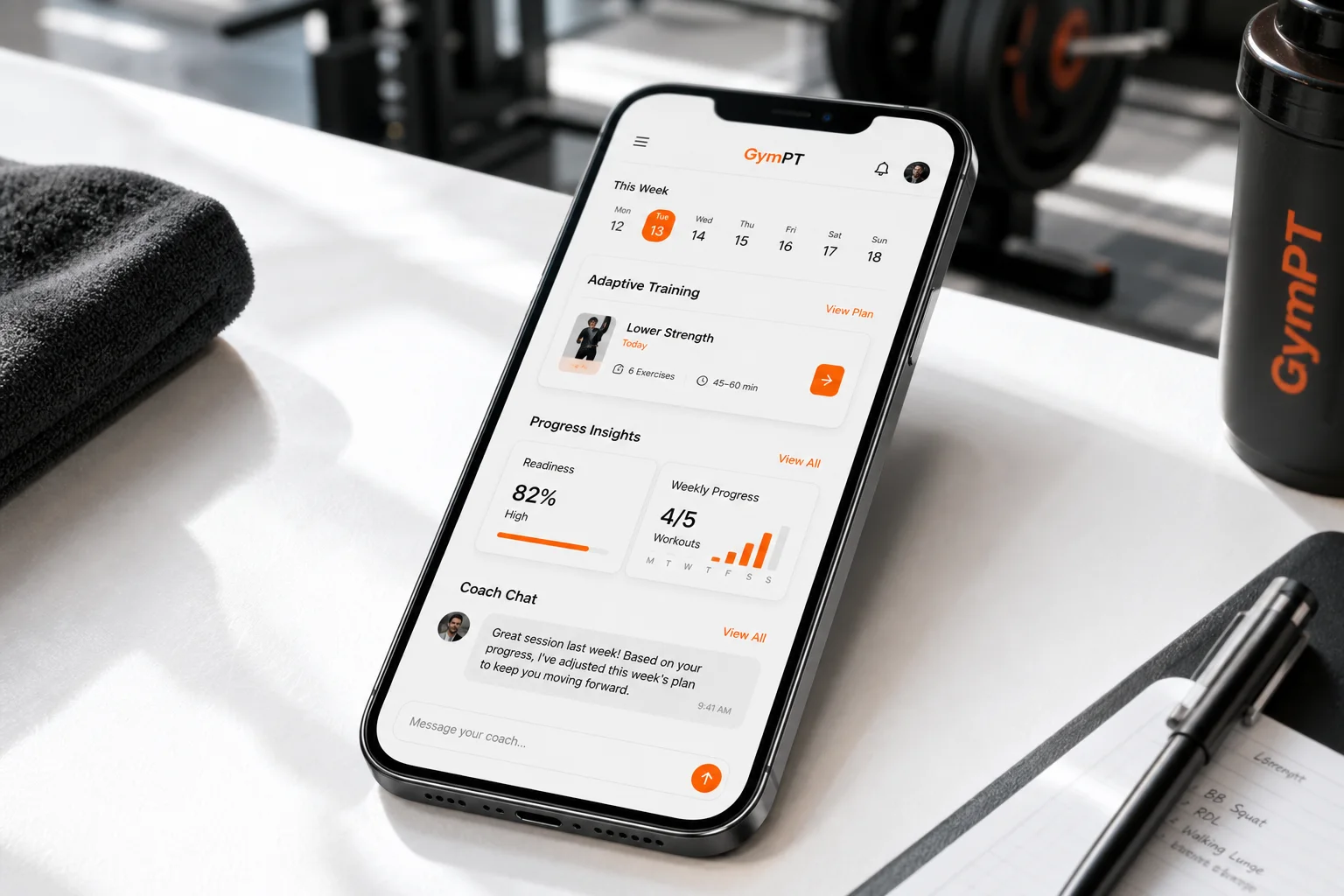
AI Fitness App: When Smart Coaching Beats a Static Workout Plan
An AI fitness app is most useful when your training needs change faster than a PDF can keep up. If your schedule shifts, your gym equipment changes, or your progress stalls, a static plan usually asks you to adapt on your own. A smart app can adjust the plan, keep your workouts organized, and help you make better decisions week after week.
That matters because the basics of effective training are simple, but consistency is not. Public health guidance still points to regular weekly activity and muscle-strengthening work, while resistance training guidance emphasizes gradual progression over time. In practice, the best plan is the one you can follow, recover from, and keep improving.
Why a static PDF plan often breaks down
A downloadable plan can be a good starting point. The problem is that it assumes your life stays the same.
- Your gym is crowded and the equipment you need is taken.
- You miss a session and do not know how to adjust the rest of the week.
- You get stronger, but the plan never increases the challenge.
- You travel, switch gyms, or train at home and the plan no longer fits.
- You want feedback, but a PDF cannot answer questions in real time.
That is where an AI fitness app becomes more practical than a static template: it can respond to the training context you are actually in, not the one you had when you downloaded the plan.
What an AI fitness app can do better
A strong app should do more than generate random workouts. It should help you train with structure, then adapt that structure as your situation changes.
1. Build a personalized workout plan
Instead of forcing everyone into the same split, a good app can shape training around your goal, experience level, available days, and equipment. That makes it easier to start with the right volume and exercise selection instead of guessing.
2. Adjust for the equipment you actually have
Not every gym has the same machines, cables, dumbbells, or benches. Equipment-based training is more useful when the app can swap exercises based on what is available, so you do not lose momentum when one station is busy.
3. Support better progression
Progressive overload is easier to manage when the app remembers what you lifted, how many reps you completed, and how hard the set felt. That turns training from a one-time plan into an ongoing system.
4. Make logging less annoying
Workout tracking only works when it is simple enough to repeat. If logging is fast, you are more likely to keep using it, and that gives you the data needed to make smarter adjustments.
5. Answer questions like a coach
AI coach chat can help you decide what to do when something changes: you slept badly, you missed a workout, or you are unsure whether to increase weight or repeat the same load. That kind of support is especially useful between sessions, when most people actually need guidance.
When an AI fitness app is more useful than a PDF
Choose an app over a static plan when one or more of these are true:
- You want the plan to adapt as you improve.
- You train in different gyms or with changing equipment.
- You need help staying consistent after missed sessions.
- You want workout history, progress insights, and reminders in one place.
- You prefer quick answers instead of interpreting a generic program on your own.
If your training is simple and you never deviate, a PDF may be enough. But if you want a plan that behaves more like a coach, an AI fitness app is the better fit.
What to look for before you choose an app
Not every app that says “AI” is actually helpful. Look for these features:
- Personalization: the plan should reflect your goal, experience, and schedule.
- Adaptation: the app should update workouts when your availability or equipment changes.
- Tracking: you should be able to log sets, reps, and load without friction.
- Progress insights: the app should show trends, not just isolated workouts.
- Coach support: you should be able to ask questions and get practical next steps.
These features matter because training quality is not only about choosing exercises. It is also about making the next decision correctly: when to push, when to repeat, and when to simplify.
How GymPT fits this use case
GymPT is built for people who want more than a static plan. It combines personalized workout planning, AI coach chat, body analysis, equipment-based training, workout tracking, and progress insights in one app. That makes it easier to start with a plan and keep improving it as your training changes.
For someone who wants a practical system instead of a one-off program, that is the real value of an AI fitness app: less guessing, better structure, and more consistency over time.
Simple way to decide if you need one
Ask yourself one question: Do I want a plan that stays fixed, or one that can adapt with me?
If you are still experimenting, a basic template may be enough. If you want a training tool that helps you stay organized, adjust faster, and track progress more clearly, an AI fitness app is usually the smarter choice.
Bottom line: static plans tell you what to do once. Smart apps help you train better next week, too.
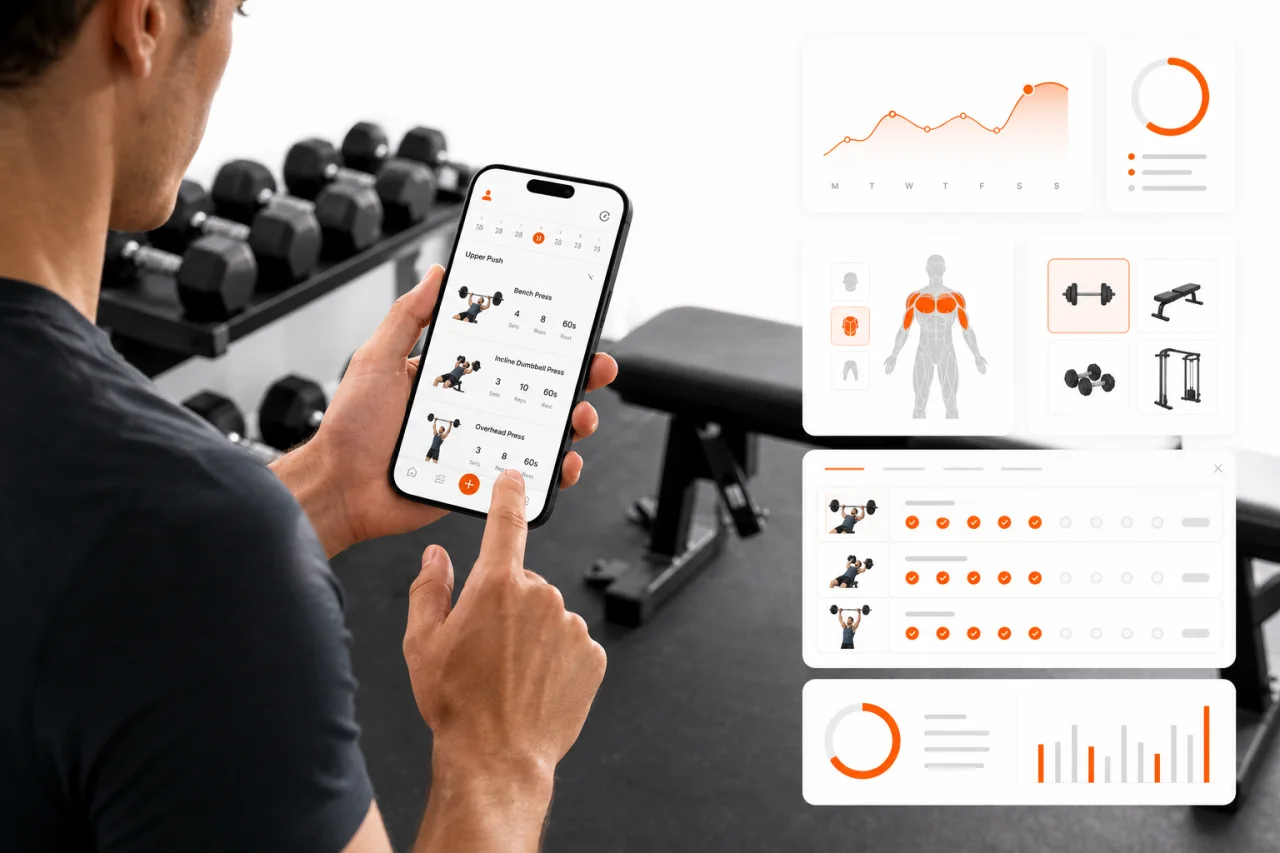
How to use an AI fitness app without overcomplicating training
Keep the system simple. Pick a goal, follow the plan for a few weeks, log your sessions honestly, and let the app adjust based on real training data. The point is not to chase novelty. The point is to make good training decisions more often.
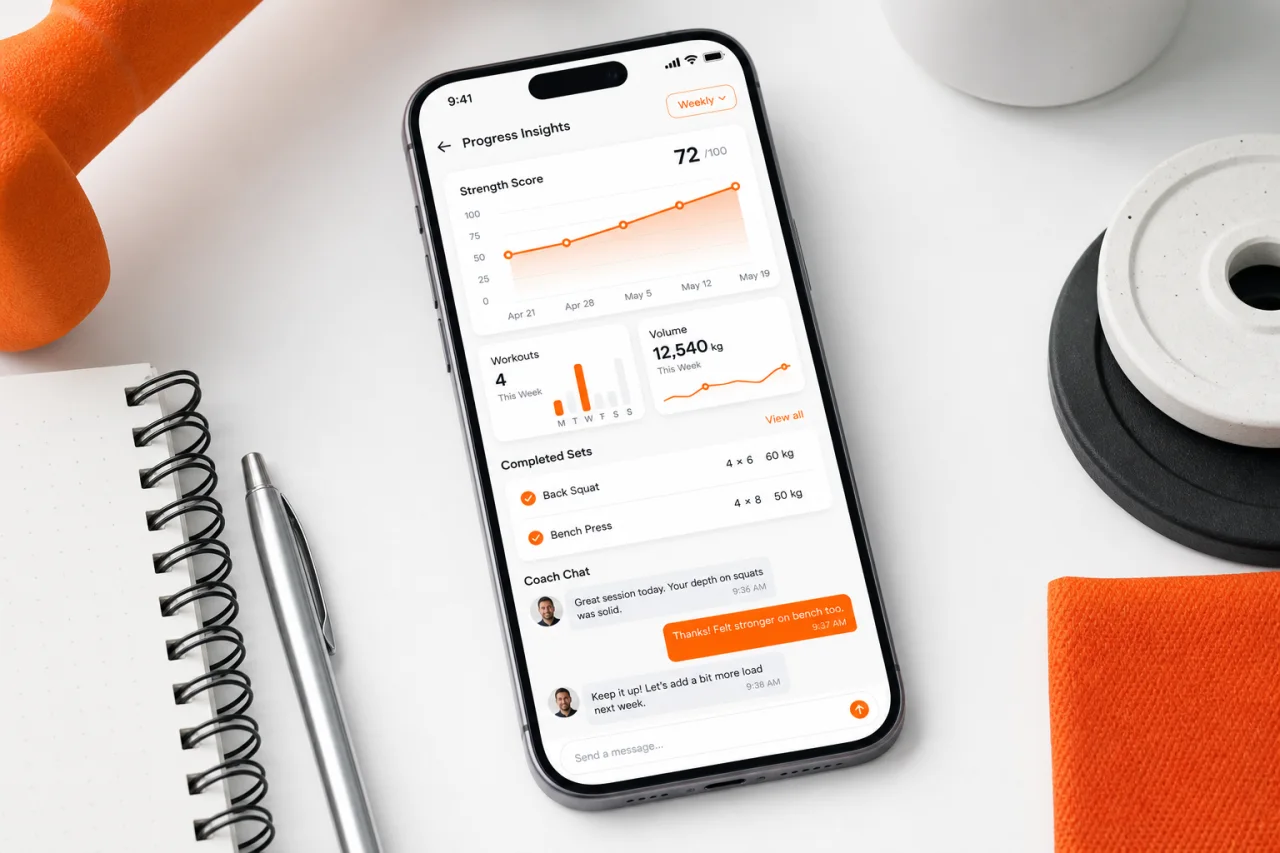
Final takeaway
An AI fitness app is most valuable when your training is not perfectly predictable. If your schedule, equipment, or progress changes, smart coaching can keep your plan useful instead of outdated. That is why GymPT is a strong option for people who want a more adaptive, coach-like experience than a static PDF can provide.
Related reading: if you are comparing app types, start with a gym workout plan app, explore how a virtual personal trainer works, or see why an AI gym coach can make training more personal. You may also like our guide to a workout progress tracking system that keeps your data useful.