virtual personal trainer
What a Virtual Personal Trainer Can Actually Do for Your Training
A virtual personal trainer can do more than generate workouts. Learn how AI coaching, progress tracking, and equipment-aware planning can make training more practical and consistent.
What a virtual personal trainer can actually do
A virtual personal trainer is most useful when it helps you make better training decisions between workouts, not just when it hands you a random plan. The best systems can adapt to your goal, schedule, equipment, and recent performance so your training stays realistic and consistent.
That matters because the basics of effective training are not complicated: adults should accumulate regular physical activity each week and include muscle-strengthening work on at least 2 days weekly. A virtual coach can help you organize that into a plan you can actually follow, especially when life gets busy.
Why generic plans often break down
Most people do not fail because they lack motivation. They fail because the plan is too rigid. A template may ignore your available equipment, recovery, training age, or how much time you really have. When that happens, workouts become harder to sustain.
A better approach is to use a plan that adjusts to the person, not the other way around. That is where AI coaching can be practical: it can reduce guesswork, keep sessions aligned with your goal, and make it easier to progress without constantly rewriting your routine.
How a virtual personal trainer helps in real life
1. It builds a plan around your goal
Whether you want to build muscle, lose fat, get stronger, or simply train more consistently, the plan should reflect that goal. A virtual personal trainer can organize exercise selection, weekly frequency, and progression so the plan matches the outcome you want.
2. It adapts to your equipment
Not everyone trains in a full gym. Some people have dumbbells, cables, machines, resistance bands, or only bodyweight options. Equipment-aware planning matters because the best exercise is the one you can perform safely and repeatably with what you have.
3. It supports progression
Progressive overload is still the engine of long-term improvement. In practice, that means gradually increasing load, reps, sets, or exercise difficulty over time. Research-based resistance training guidance emphasizes planned progression rather than staying on the same workout forever.
4. It makes tracking easier
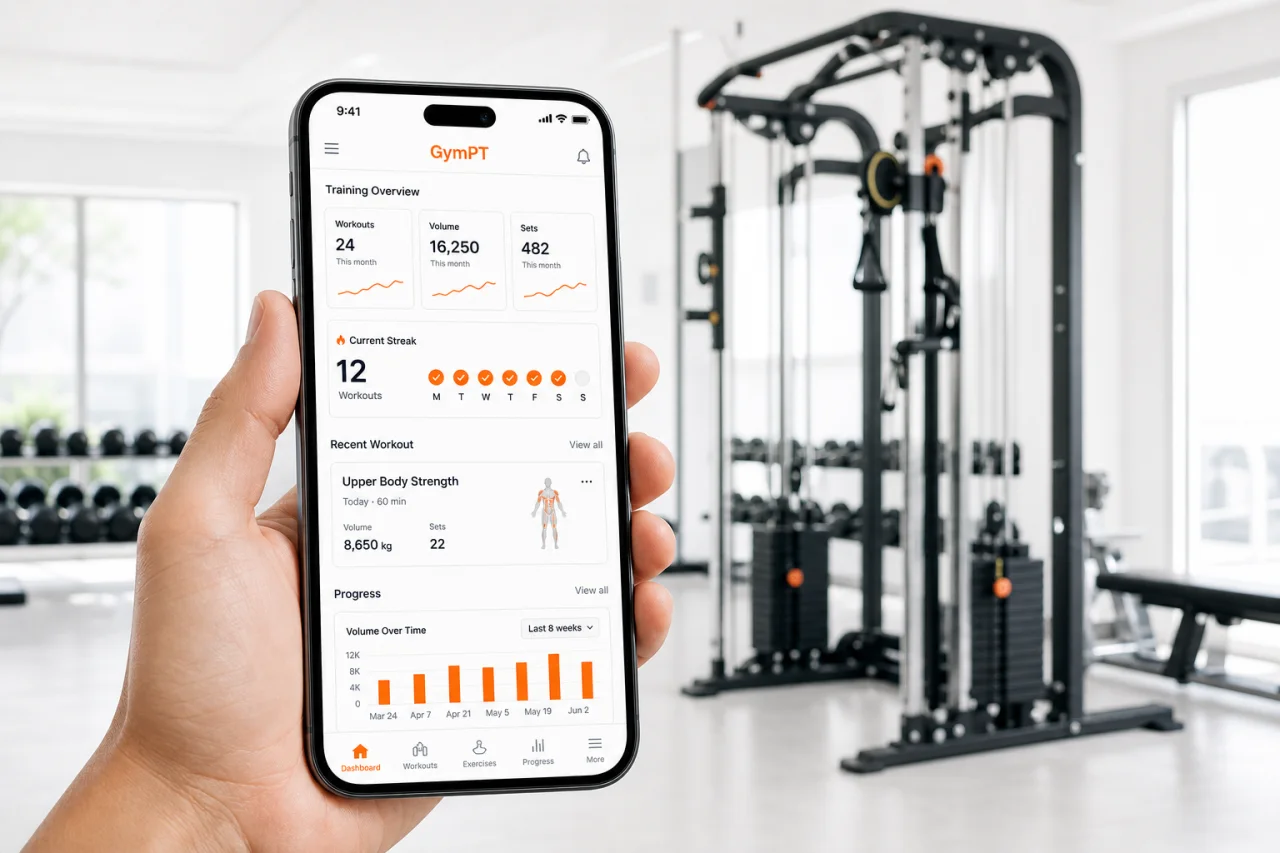
Workout tracking is not just for data lovers. It helps you remember what you lifted, how many reps you completed, and whether you are moving forward. That feedback loop is useful because progress is easier to manage when the plan can “see” your recent training history.
5. It keeps coaching available between sessions
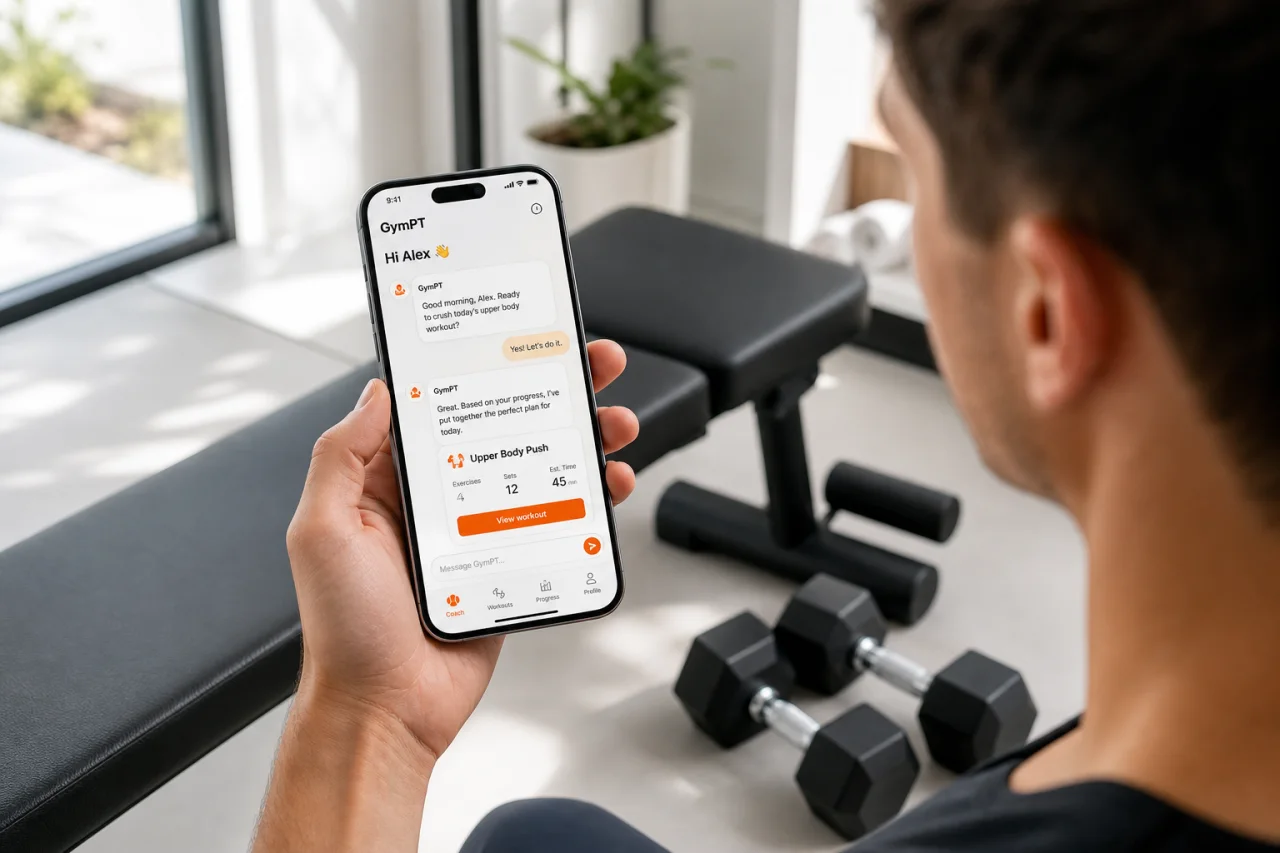
Questions do not only come up during the workout. You may wonder whether to increase weight, swap an exercise, shorten a session, or change your split. AI coach chat can help answer those small decisions quickly so you do not stall out waiting for the “perfect” plan.
What evidence says about the training basics
Public health guidance is clear on the minimums: adults should aim for at least 150 minutes of moderate-intensity activity per week, or an equivalent amount of vigorous activity, plus muscle-strengthening work on 2 or more days each week. That does not mean every workout must be long or complicated. It means consistency and structure matter more than novelty.
For strength training, professional guidance also supports using progression, appropriate frequency, and enough volume to match the trainee’s status and goal. In other words, a good plan should be challenging, but not random.
How GymPT fits the role of a virtual personal trainer
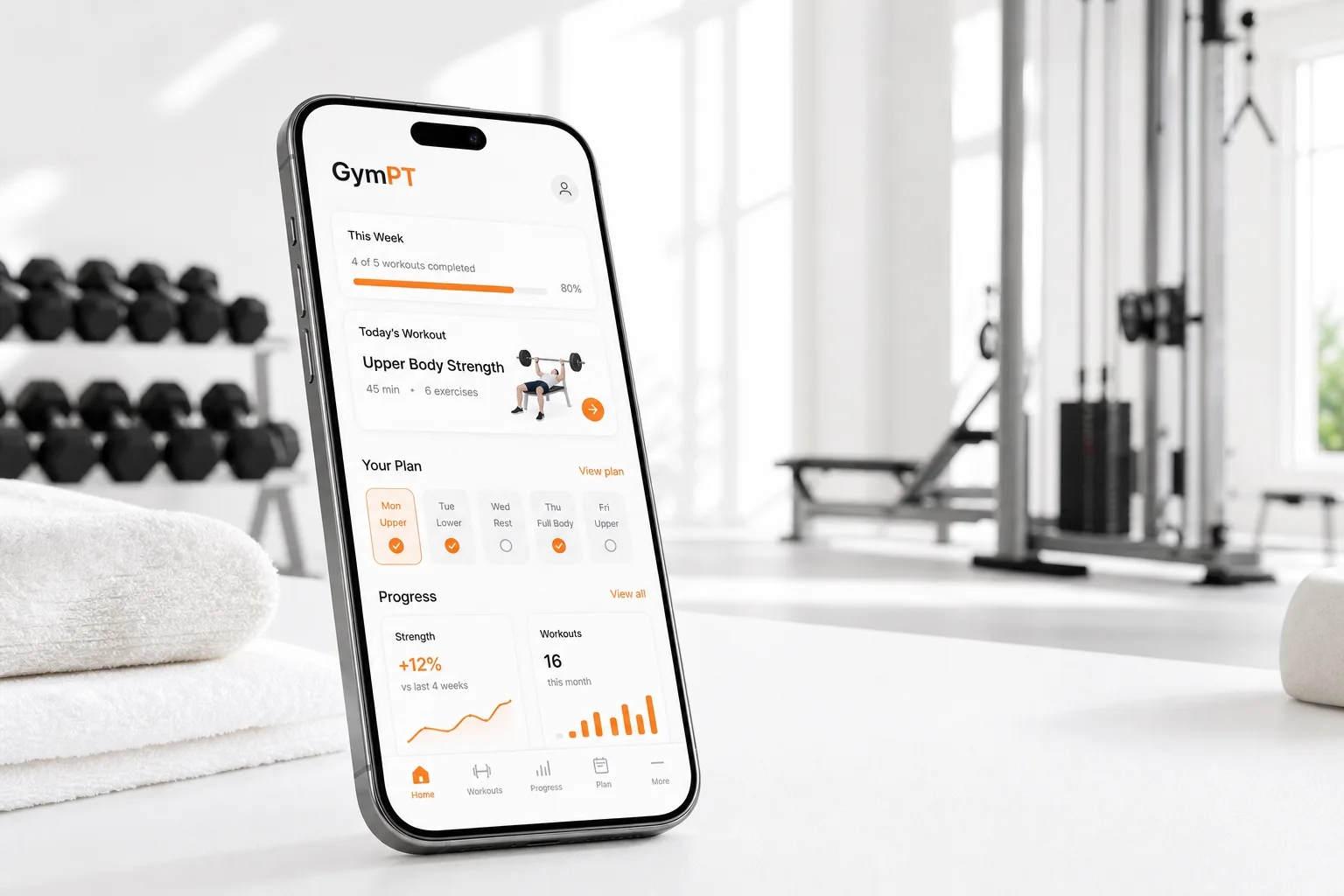
GymPT is designed to make virtual coaching practical. It can create personalized workout plans, support AI coach chat, adapt to available equipment, track workouts, and show progress insights. That combination is useful because it covers the full loop: plan, train, review, and adjust.
Instead of treating coaching as a one-time PDF, GymPT helps you keep the plan alive. If your schedule changes, your equipment changes, or your performance changes, the app can help you respond without starting over.
Who benefits most from a virtual personal trainer?
- Beginners who need structure and simple next steps.
- Busy professionals who need efficient workouts that fit real schedules.
- Gym-goers with limited equipment who need a plan built around what is available.
- People returning to training who want a gradual, organized restart.
- Anyone who likes feedback and wants to see progress instead of guessing.
How to get better results from AI coaching
- Be specific about your goal. “Get stronger” is useful, but “build strength with 3 days per week” is better.
- Log your workouts honestly. The more accurate your tracking, the better the next recommendation.
- Use the equipment you actually have. A realistic plan beats an ideal plan you cannot repeat.
- Review progress weekly. Small adjustments are easier than big resets.
- Stay consistent before chasing complexity. The best plan is the one you can keep doing.
The bottom line
A virtual personal trainer is most valuable when it helps you train with more clarity, not more noise. The right app can personalize your plan, support progression, and make it easier to stay consistent over time. GymPT is built for that kind of practical coaching: clear, adaptive, and focused on helping you make better training decisions every week.
If you want a smarter way to organize your workouts, a virtual personal trainer can be a strong fit—especially when it combines planning, chat, tracking, and progress insights in one place.