AI gym coach
AI Gym Coach: How Smart Coaching Makes Training More Personal
An AI gym coach can do more than generate random workouts. Learn how smart coaching helps you train with structure, adapt to your schedule, and stay consistent using GymPT.
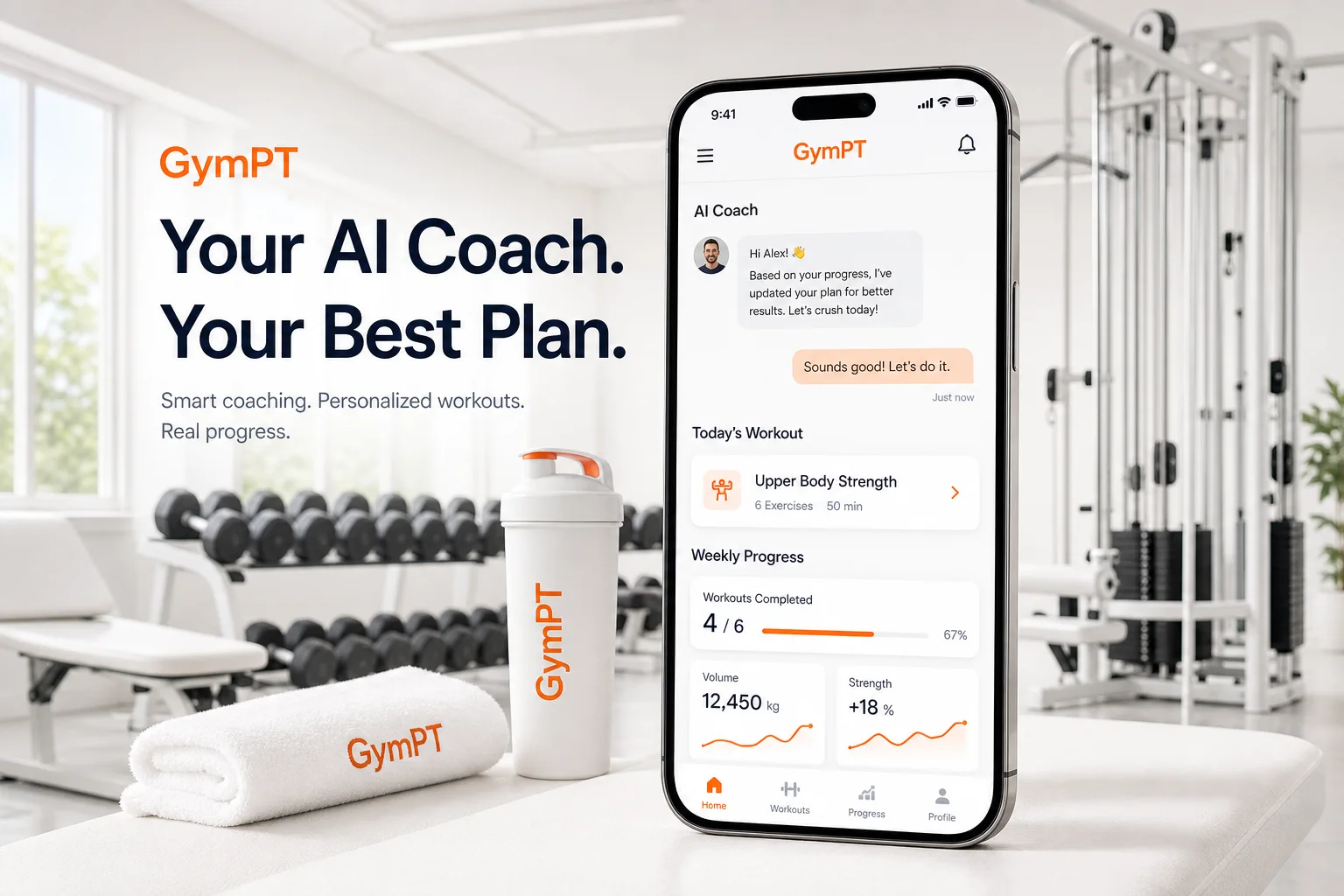
AI gym coach: what it actually does in real training
An AI gym coach is most useful when it behaves like a practical training assistant, not a hype machine. Instead of handing you a generic split and hoping it works, it helps you choose exercises, organize sessions, adjust for available equipment, and keep track of what you did last time. That matters because effective training is built on consistency, progressive overload, and recovery—not on novelty for its own sake.
For most adults, public health guidance still points to a simple baseline: regular physical activity across the week, plus muscle-strengthening work on at least two days. In the gym, that usually means a plan you can repeat, recover from, and gradually improve. A good AI coach helps you turn that principle into a schedule you can actually follow.
Why generic workout templates often fail
Generic plans usually break down for one of three reasons:
- They ignore your equipment. A plan that assumes barbells, cables, and machines is less useful if your gym is crowded or limited.
- They ignore your recovery. Beginners often do well with two or three full-body sessions per week, while more advanced lifters may need different structures.
- They ignore your history. If you do not know what weights, reps, and exercises you used last week, it is hard to progress with intention.
An AI gym coach solves these problems by using your inputs to make the plan more specific. That does not mean it replaces judgment. It means it reduces the friction between knowing what to do and actually doing it.
What a smart AI coach should help you do
A useful AI coach should support the parts of training that most people struggle to manage consistently.
1. Build a personalized workout plan
Instead of forcing everyone into the same split, the coach can adapt training around your goal, experience level, and weekly availability. For example, a beginner may need a simpler full-body structure, while someone focused on muscle gain may need more volume and exercise variety. The point is not complexity; it is fit.
2. Match training to the equipment you have
Not every gym session looks the same. Some days you have access to dumbbells and machines. Other days you only have a bench, a cable station, and a pair of adjustable weights. An AI gym coach can suggest substitutions that preserve the intent of the session so you do not lose momentum when the gym is busy.
3. Track progress without making it tedious
Progress tracking is where many plans become useful or useless. If the app remembers your last working sets, reps, and loads, it becomes much easier to make a small, sensible jump next time. That is one reason training logs matter: they turn effort into data you can act on.
4. Give feedback you can use immediately
Good coaching feedback is specific. It should tell you whether to add a rep, keep the same load, reduce volume, or repeat a session after more recovery. That kind of guidance is especially helpful when you are trying to stay consistent across busy weeks.
How GymPT uses AI coaching in a practical way
GymPT is designed around the everyday decisions that shape training quality. It can create a personalized workout plan, support AI coach chat, adapt to your equipment, and help you review your workout progress tracking over time. If you also use body measurements or photo-based check-ins, the app can help you interpret trends more clearly through body analysis fitness app features.
That combination is valuable because training is rarely one big decision. It is a series of small ones: what to train today, how hard to push, what to swap when equipment is taken, and whether you are actually moving forward. GymPT is built to make those decisions easier without pretending that the app does the work for you.
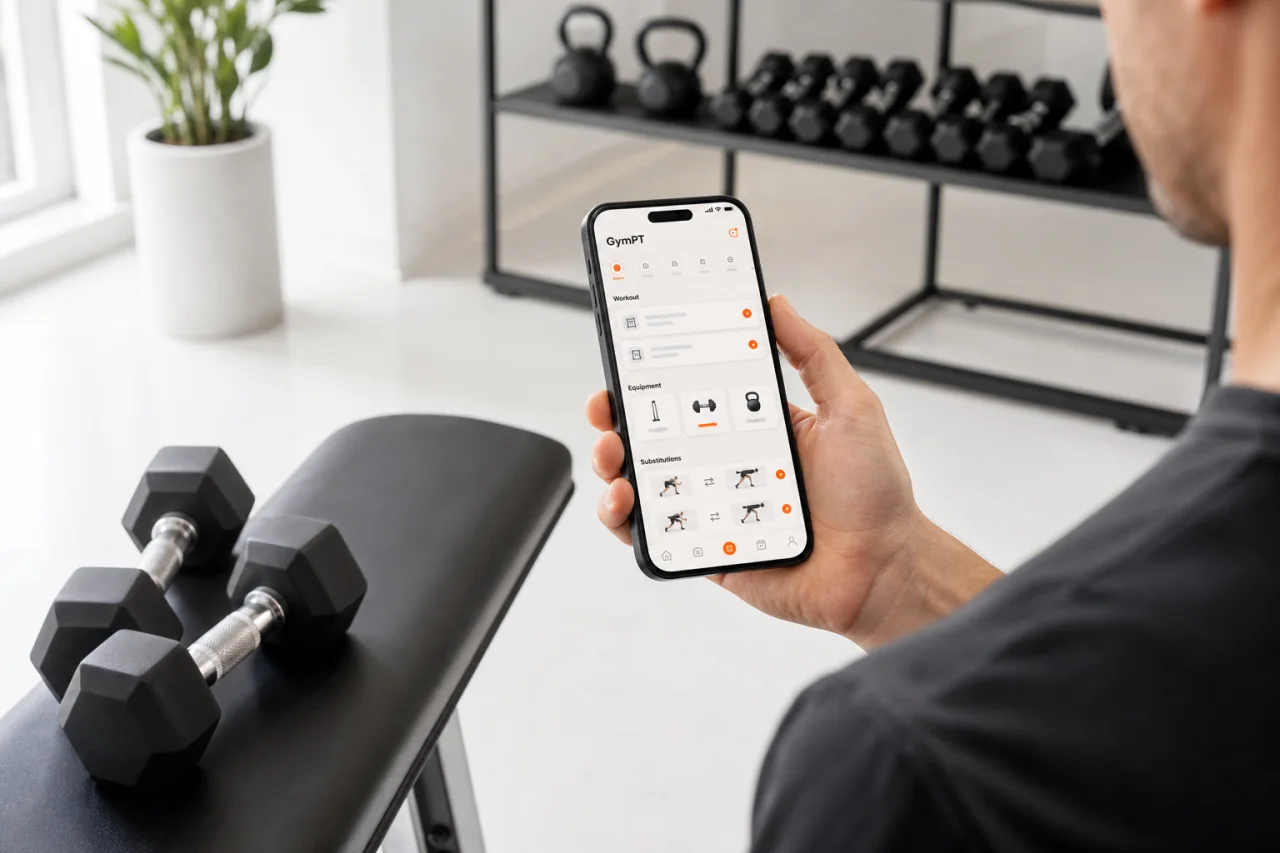
What to look for in an AI gym coach app
If you are comparing apps, focus on these practical signs of quality:
- Clear plan structure: sessions should be easy to follow, not overloaded with random exercises.
- Adaptive logic: the app should respond to your goal, experience, and available time.
- Equipment awareness: substitutions should make sense for your gym setup.
- Progress visibility: you should be able to see what changed from one week to the next.
- Simple coaching language: advice should be specific enough to act on immediately.
If an app cannot explain why it changed your workout, it is probably not coaching—it is just content generation.
How to use AI coaching without overcomplicating training
The best way to use an AI gym coach is to keep the system simple:
- Pick one goal. For example: get stronger, build muscle, or stay consistent.
- Train on a realistic schedule. Two to four sessions per week is often easier to sustain than an ambitious plan you cannot repeat.
- Log the basics. Record exercises, sets, reps, and load.
- Review weekly. Look for trends in performance, not just one good or bad session.
- Adjust gradually. Small changes usually work better than constant reinvention.
This approach fits the broader evidence on physical activity: regular movement, repeated strength work, and a plan you can sustain over time are what matter most.
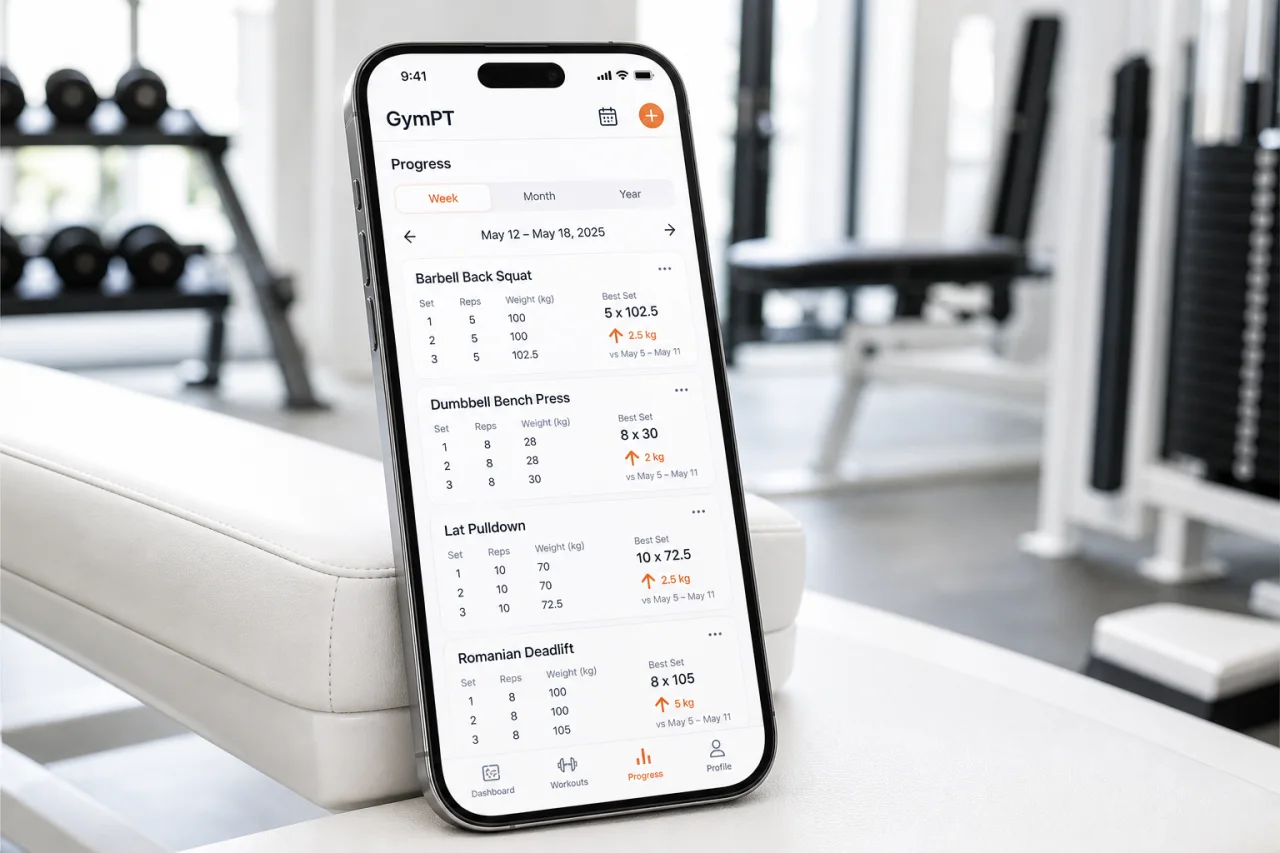
Who benefits most from an AI gym coach?
An AI coach is especially helpful if you:
- want structure but do not want to hire a coach yet,
- train in a busy gym and need quick substitutions,
- struggle to stay consistent with generic templates,
- like seeing progress in a clear log, or
- prefer a plan that adapts as your schedule changes.
It is less useful if you want a fully hands-off experience. Even the best AI coach still depends on honest input, consistent training, and a willingness to follow the plan long enough to see results.
The bottom line
An AI gym coach is most valuable when it helps you make better training decisions faster. It should personalize your plan, respect your equipment, track your progress, and keep the process simple enough that you can repeat it week after week. That is the real advantage of GymPT: not magic, but smarter structure.
If you want coaching that feels practical instead of generic, start with a plan that fits your life, then let the app help you refine it as you go.