custom workout app
Custom Workout App: When a Static Plan Stops Being Enough
A custom workout app is more useful than a static plan when your schedule, equipment, or progress changes. Here’s how to choose one that adapts with you.
Why a custom workout app is different from a static plan
A custom workout app is built to adjust to your real training life: your schedule, your equipment, your experience level, and how your body is responding week to week. That matters because fitness guidelines are simple in theory but messy in practice. Adults are generally advised to get regular aerobic activity and muscle-strengthening work each week, yet the best way to do that depends on what you can actually repeat consistently.
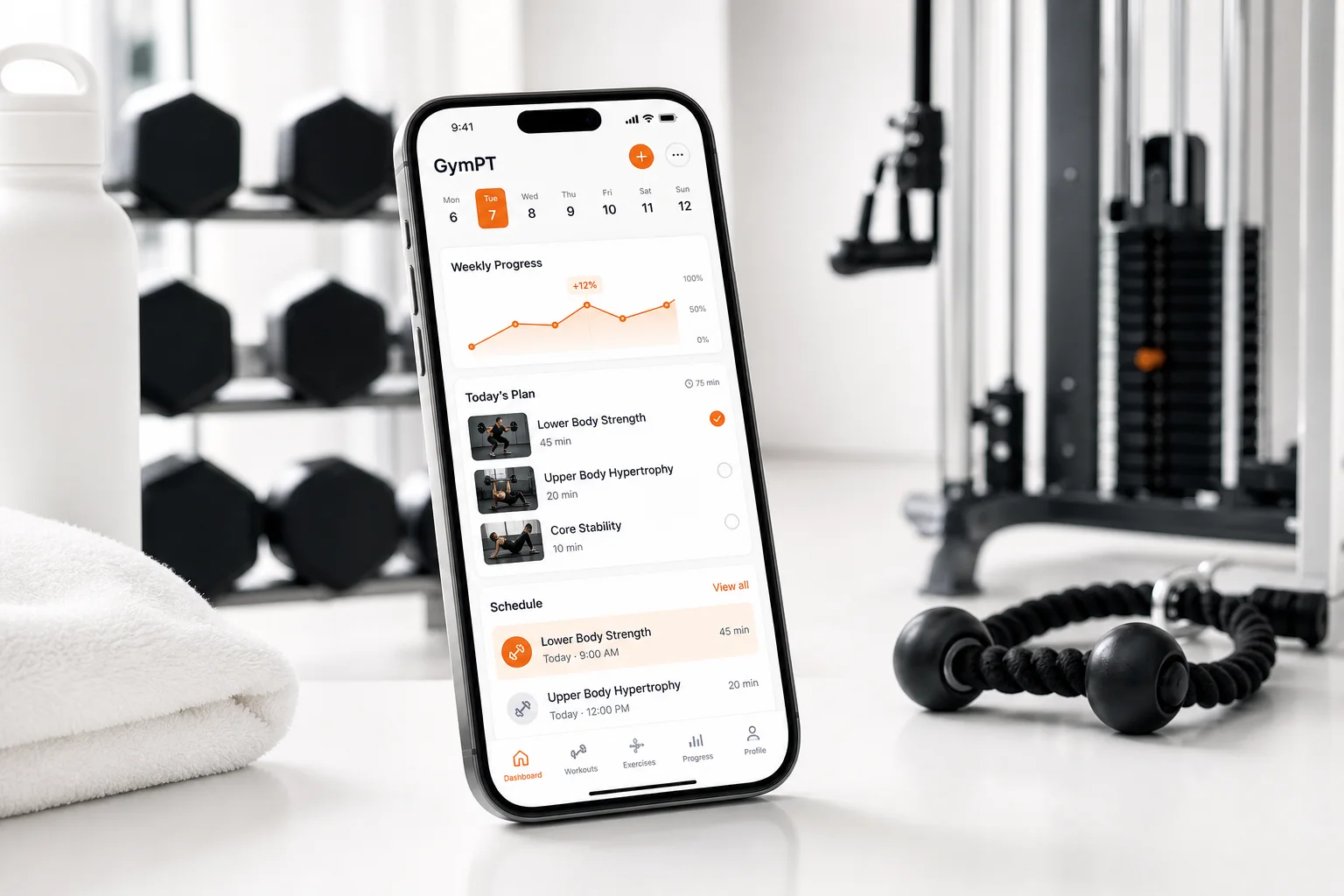
A PDF plan can be a good starting point. But once your week changes, your gym is crowded, or a lift stalls, a static plan usually gives you one answer for every situation. A better app can help you make the next decision instead of forcing you to guess. That is where GymPT fits: it turns training into an adaptive system, not a one-time download.
When a static workout plan starts to break down
Most people do not quit because they lack a perfect program. They quit because the program stops matching reality. Common failure points include:
- Your schedule changes. Missed sessions make a fixed split harder to follow.
- Your equipment changes. A plan written for barbells may not fit a hotel gym or home setup.
- Your recovery changes. Sleep, stress, and soreness affect what you can do well.
- Your progress changes. The same weights and reps may become too easy or too hard.
WHO guidance emphasizes that any amount of activity is better than none, and that people should build up gradually over time. In practice, that means the best plan is the one you can keep adapting without losing momentum.
What to look for in a custom workout app
If you are comparing apps, look for features that solve real training problems rather than just making the interface look polished. A strong custom workout app should do more than store workouts.
1. Personalized workout plan generation
Your plan should reflect your goal, training age, available days, and preferred style of training. A beginner does not need the same structure as someone chasing hypertrophy or strength. GymPT uses your inputs to build a plan that is specific enough to be useful, but flexible enough to survive a busy week.
2. AI coach chat for quick decisions
Good coaching is not only about the first plan. It is also about the questions that come up later: “Should I reduce volume today?” “Can I swap this exercise?” “How do I progress if I only have dumbbells?” AI coach chat helps you make those decisions fast, so you spend less time improvising and more time training.
3. Equipment-based training
One of the biggest advantages of a modern app is equipment awareness. If your gym has cables, machines, dumbbells, or only a few pieces of equipment, the app should adapt the session to match what is available. That makes the plan more realistic and reduces skipped workouts.
4. Workout tracking that shows progression
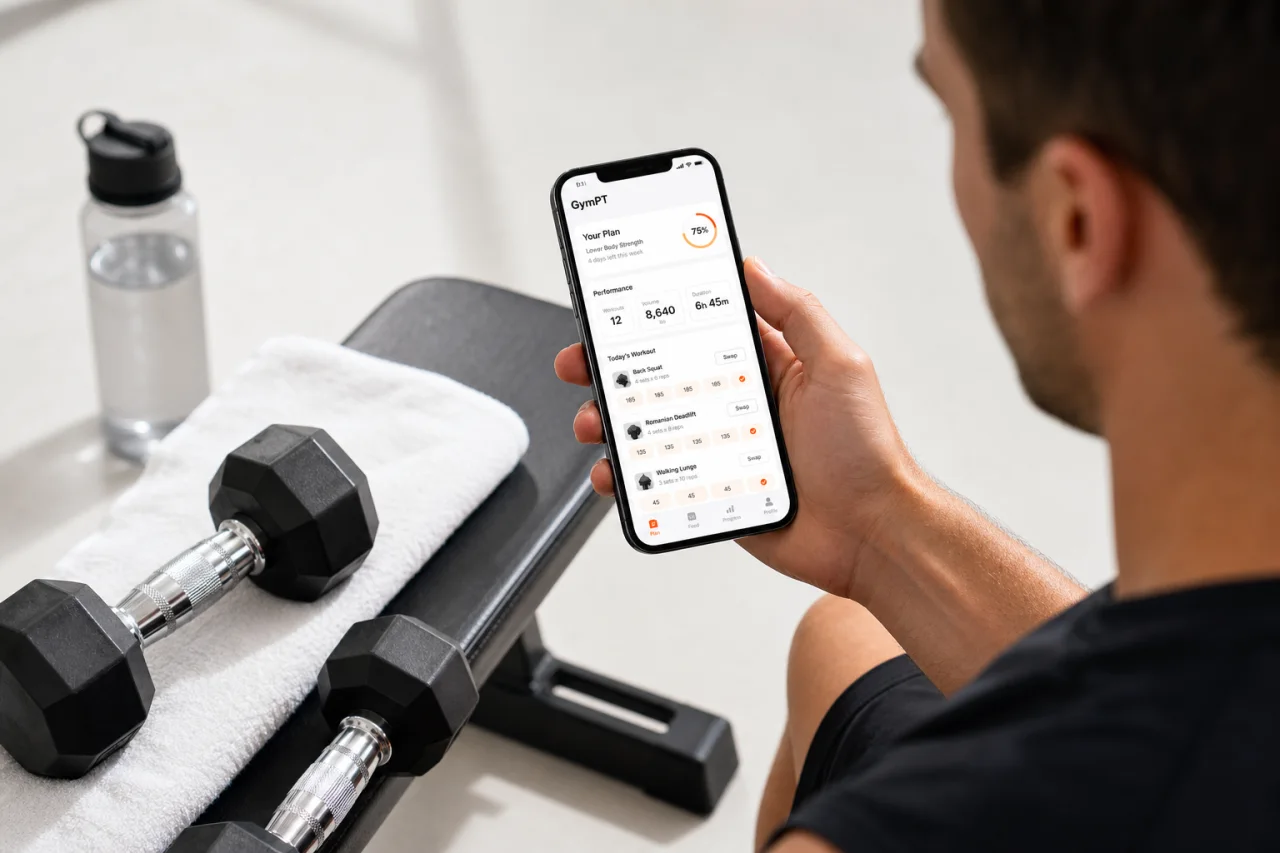
Progress is easier to manage when your app remembers what you lifted, how many reps you completed, and how hard the session felt. Tracking turns vague effort into usable data. Over time, that helps you spot when to increase load, add reps, or keep the same prescription for another week.
5. Progress insights you can act on
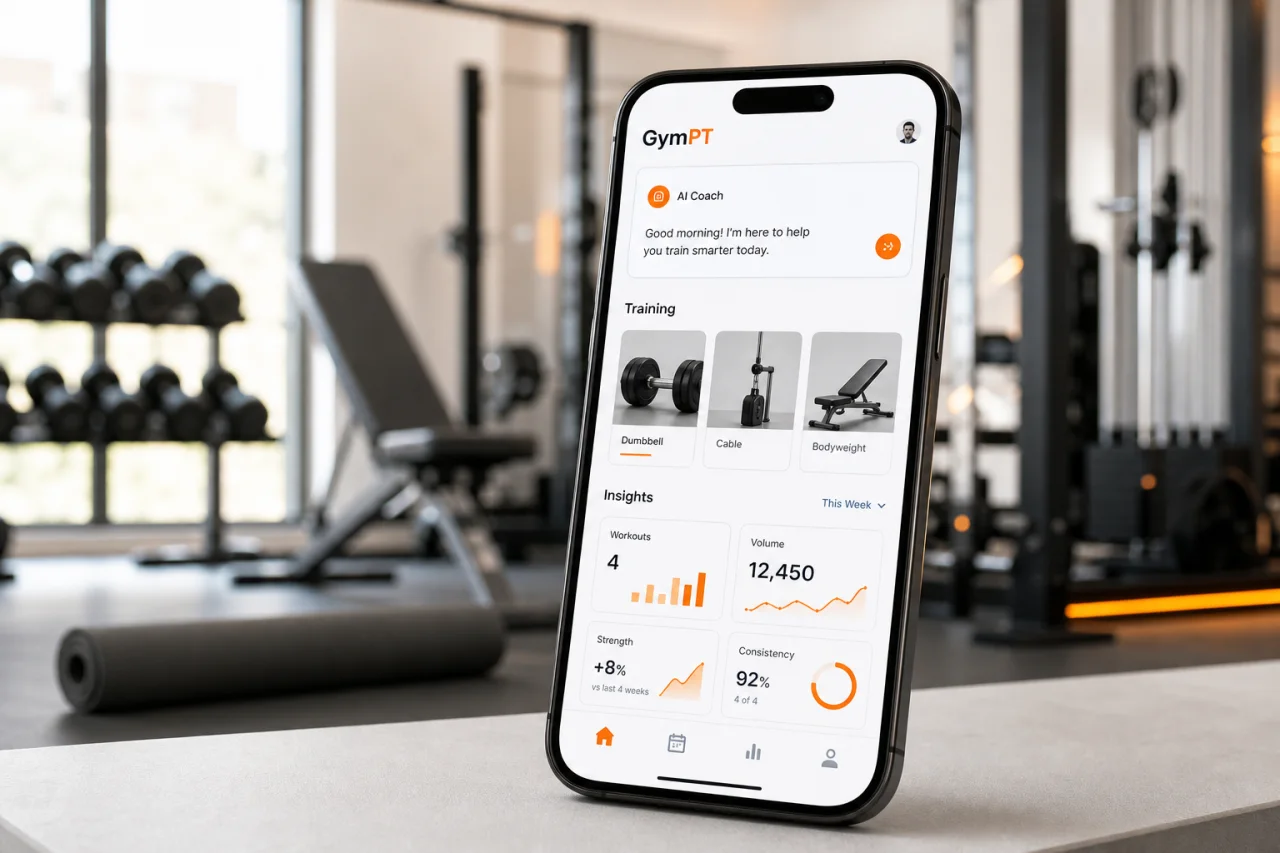
Insights are only useful if they change your next workout. Look for trends in consistency, volume, and performance, not just colorful charts. GymPT is designed to show you what is happening in your training so you can make a better next step.
Why adaptive training usually beats a fixed template
Training works best when it balances structure and adjustment. Public health guidance supports regular weekly activity and muscle-strengthening work, while resistance-training guidance emphasizes progression and modification over time. That is exactly why a custom workout app can outperform a static template: it keeps the structure, but it also supports progression when your circumstances change.
In plain language, adaptive training helps you answer three questions every week:
- What should I do today?
- What should I change if today is not ideal?
- How do I progress next week?
A PDF can answer the first question. A custom workout app can help with all three.
Who benefits most from a custom workout app?
A custom workout app is especially useful if you are:
- new to the gym and need clear structure;
- training around a changing schedule;
- switching between home, commercial gym, and travel setups;
- trying to build muscle or strength with better progression;
- tracking workouts but not sure how to use the data;
- tired of restarting every time life gets busy.
If you already know exactly what to do, have stable access to the same equipment, and never miss sessions, a static plan may be enough. For most people, though, training is more dynamic than that.
How GymPT helps you stay consistent
GymPT is built for the moments when a plan needs to become practical. Instead of giving you a fixed routine and hoping it fits, GymPT helps you:
- generate a personalized workout plan;
- ask follow-up questions through AI coach chat;
- train based on the equipment you actually have;
- log sessions with workout tracking;
- review progress insights that support better decisions.
That combination is what makes a custom workout app more useful than a static PDF for long-term training. It reduces friction, supports consistency, and gives you a better chance of following through.
How to choose the right app before you commit
Before you download any fitness app, ask these questions:
- Can it adapt when I miss a workout?
- Can it adjust for my equipment?
- Does it help me progress, not just log sessions?
- Can I get quick coaching without starting over?
- Will it still make sense after week four?
If the answer is yes, you are probably looking at a tool that can support real training, not just store a template.
The bottom line
A static plan can get you started. A custom workout app can help you keep going when life, equipment, and recovery change. That is the real advantage of adaptive training: it makes the next workout easier to decide, easier to complete, and easier to improve.
If you want a plan that fits your actual routine instead of an ideal one, GymPT is built to do exactly that.
Frequently asked questions
Is a custom workout app better than a PDF plan?
Usually, yes, if your schedule or equipment changes often. A PDF is fixed. A custom workout app can adapt your plan and help you keep training consistently.
Can a custom workout app help beginners?
Yes. Beginners often benefit the most because they need structure, simple progression, and quick answers when something in the plan does not fit.
Does GymPT replace a coach?
GymPT is designed to support training decisions and planning. It is a fitness tool, not a medical device, and it works best as a practical coaching companion for everyday workouts.
What makes adaptive training more useful?
Adaptive training helps you respond to missed sessions, equipment changes, and progress changes without abandoning the plan. That usually leads to better consistency over time.