adaptive workout plan
Adaptive Workout Plan: How to Adjust Training Week by Week Without Losing Progress
A good adaptive workout plan does not stay rigid. It changes with your recovery, schedule, equipment, and progress so you can keep moving forward without burning out.
Why an adaptive workout plan works better than a fixed template
An adaptive workout plan is built to change as your training changes. That matters because your energy, schedule, recovery, and performance are not identical every week. A plan that can adjust is easier to follow, more realistic to recover from, and more likely to keep you consistent over time.
Public health guidance from the World Health Organization recommends regular weekly activity, including muscle-strengthening work on at least two days per week for adults. That gives you a useful baseline. The real coaching question is how to organize those sessions so they still fit your life when work gets busy, sleep drops, or your gym setup changes.
That is where adaptive training helps. Instead of asking, “Can I force the same plan again?” it asks, “What should this week look like so I can keep progressing?”
What makes a workout plan adaptive?
An adaptive plan is not random. It still has structure. The difference is that the structure has room to respond to real feedback.
- Training goal: fat loss, muscle gain, strength, general fitness, or a mix.
- Weekly availability: how many days you can realistically train.
- Recovery status: soreness, fatigue, sleep quality, and stress.
- Equipment access: dumbbells, machines, cables, barbells, or home gear.
- Performance trend: whether reps, load, or effort are moving up or stalling.
When these inputs change, the plan should change with them. That is the difference between a personalized workout plan and a static template that only works on paper.
How to structure a week so it can adapt
The best weekly structure is simple enough to repeat and flexible enough to modify. A strong starting point is to organize the week around movement patterns rather than a rigid list of exercises.
1. Build around 2 to 5 training days
For most people, the sweet spot is a schedule that can shrink or expand without breaking. If you usually train four days, your plan should still work if one day disappears. If you only have two days, the plan should still cover the major movement patterns.
- 2 days: full-body sessions
- 3 days: full-body or upper/lower/full-body
- 4 days: upper/lower split
- 5 days: upper/lower plus targeted accessory work
2. Keep the main lifts stable
Adaptive does not mean changing everything every session. Keep a few core movements in place for several weeks so you can actually measure progress. Then adjust the supporting work around them.
For example, you might keep a squat pattern, a hinge pattern, a push, a pull, and a core movement in the plan while rotating the exact exercise based on equipment or recovery.
3. Leave room for recovery
Recovery is part of the program, not an afterthought. If your legs are still heavily fatigued from the previous session, the next workout should not blindly repeat the same stress. A good plan can reduce volume, lower intensity, or switch to a different movement pattern when needed.
That approach matches the broader evidence-based idea of progressing gradually and allowing enough recovery between hard sessions.
How an adaptive workout plan changes week by week
Think of adaptation in three layers: load, volume, and exercise selection.
Load: how much weight you use
If you complete all target reps with solid form and the last set feels manageable, the next week can usually add a small amount of weight. If the same load suddenly feels much harder, hold steady or reduce it slightly.
Volume: how much work you do
Volume is the total amount of training work across sets and exercises. If you are recovering well, you may add a set or two. If you are feeling run down, reduce volume before you reduce consistency. That keeps the habit alive while lowering fatigue.
Exercise selection: what you do
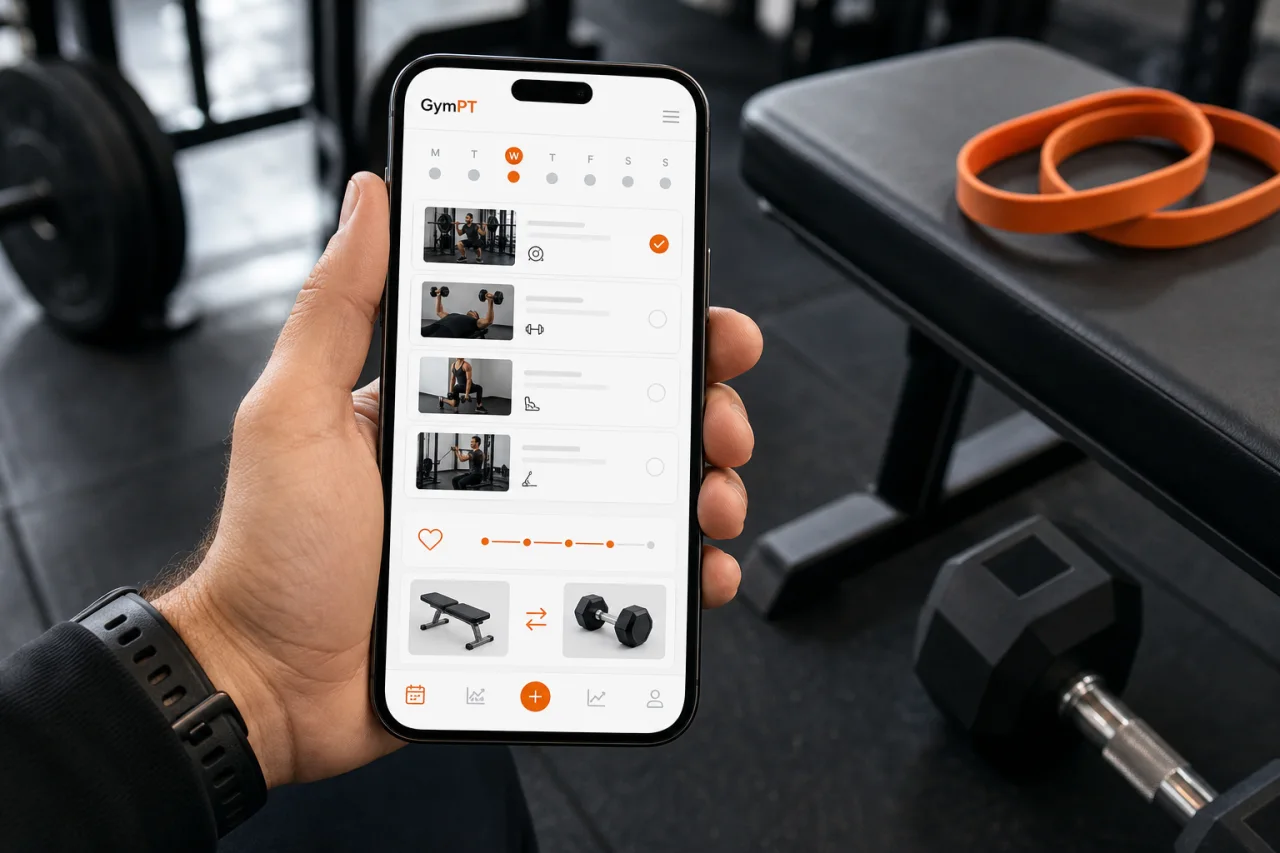
Exercise selection should adapt to your equipment and joints. If the barbell bench press is not available, a machine press or dumbbell press can keep the same pattern. If your lower back is tired, a supported row may be a smarter pull than a bent-over row.
This is why an equipment based workout approach pairs so well with adaptive planning: the goal stays the same even when the tools change.
How to use recovery as a decision rule
Recovery should guide the next workout, not just the next rest day. A simple weekly check-in can help:
- Energy: Do you feel ready to train or unusually drained?
- Soreness: Is soreness mild, moderate, or limiting movement?
- Performance: Did your last session feel normal, easier, or harder than expected?
- Schedule: Do you have the full session time, or only a shorter window?
If two or more of those answers are negative, the plan should adapt. That might mean fewer sets, lighter loads, a machine-based session, or a lower-stress conditioning day.
Recovery-based training is not “backing off.” It is how you stay productive long enough to make progress.
How to know whether the plan is still working
An adaptive plan should be judged by trends, not by one perfect workout. Use workout progress tracking to look for the following signs:
- You are completing more reps with the same load.
- You are adding small amounts of weight over time.
- Your form is staying consistent.
- Your weekly training feels challenging but sustainable.
- You are not constantly needing to skip sessions because of fatigue.
If progress stalls for one week, do not panic. If it stalls for several weeks, the plan may need a new stimulus, a deload, or a better match to your current recovery and schedule.
A practical example of an adaptive week
Here is what a flexible four-day week can look like for someone training for general strength and muscle:
- Day 1: Lower body focus with squat pattern, hinge accessory, core
- Day 2: Upper body push and pull
- Day 3: Rest or light movement
- Day 4: Lower body focus with hinge pattern, single-leg work, calves
- Day 5: Upper body focus with different angles and accessories
If recovery is poor, Day 5 can become a shorter session. If the gym is crowded, the plan can swap barbells for machines or cables. If you only have three days, the same structure can compress into full-body sessions without losing the main movement patterns.
How GymPT helps make training adaptive
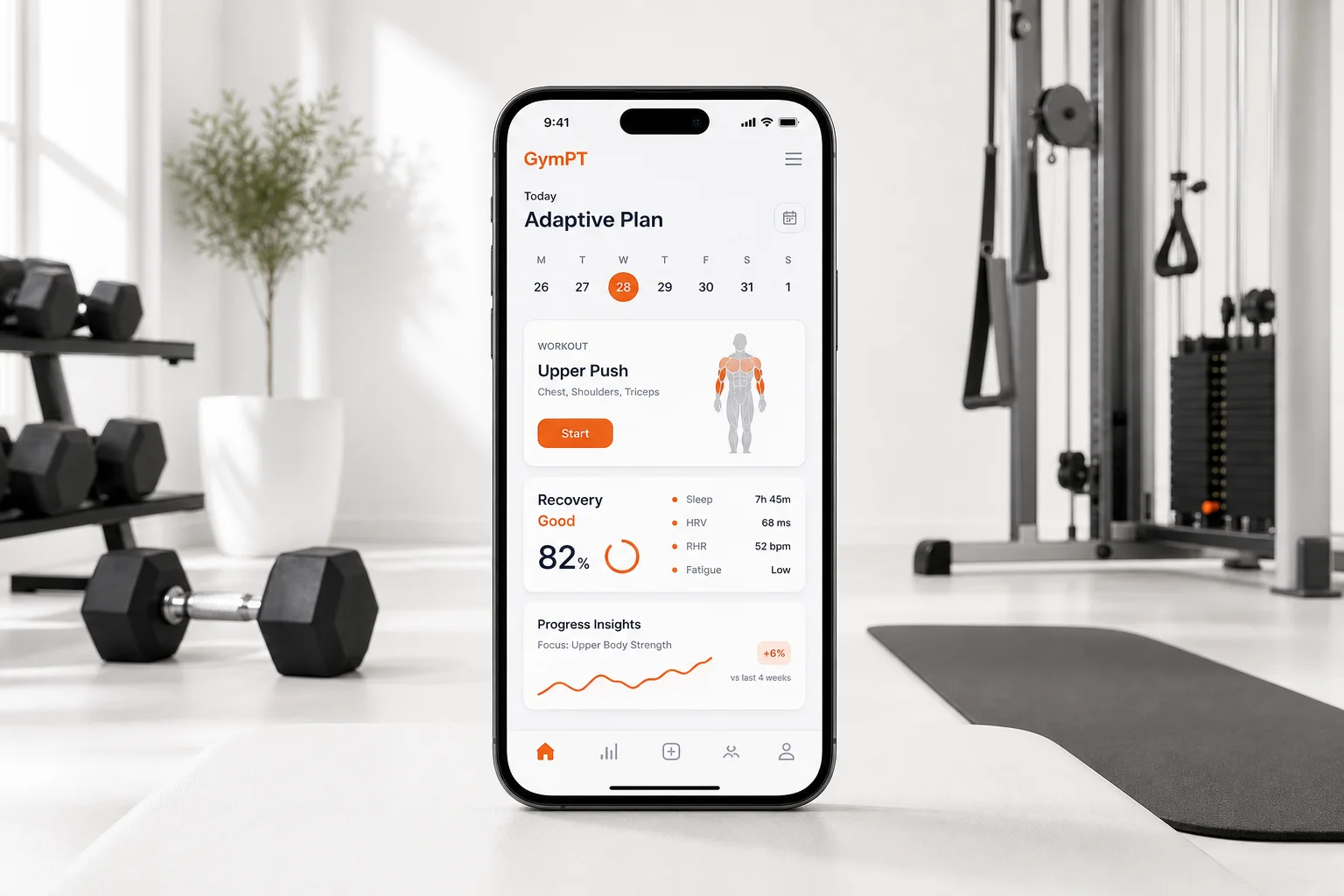
GymPT is designed for exactly this kind of decision-making. Instead of locking you into a plan that ignores your real week, it can help you build a personalized workout plan around your goals, available equipment, and training history.
- AI coach chat helps you adjust the plan when your week changes.
- Workout tracking shows whether your training is moving forward.
- Body analysis helps you connect progress with real changes over time.
- Equipment-based training keeps the plan practical in any gym setup.
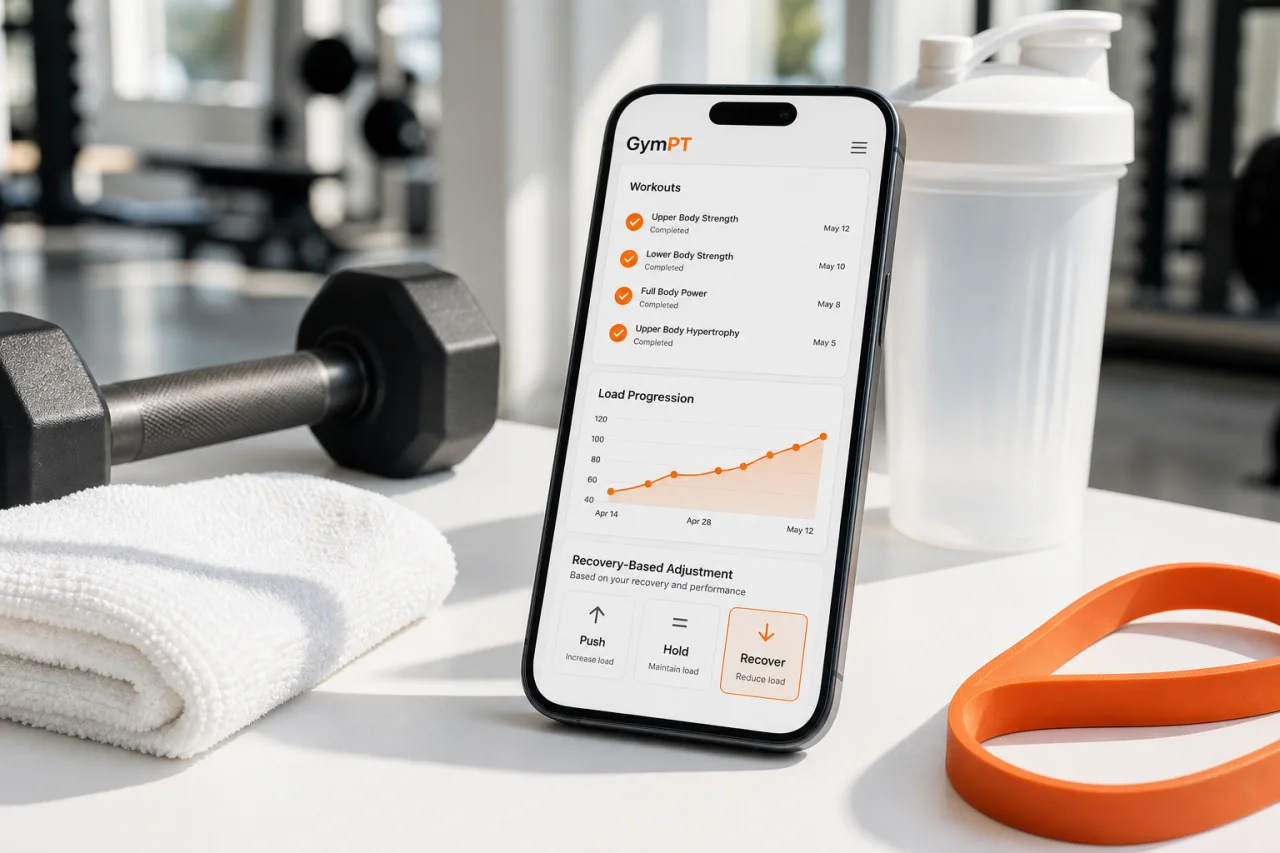
- Progress insights make it easier to spot when to push, hold, or recover.
That combination matters because the best plan is not the one that looks perfect on Monday. It is the one you can still follow on Friday.
Common mistakes to avoid
- Changing too much too often: adapt the plan, but keep enough consistency to measure progress.
- Ignoring recovery: hard training only works if you can recover from it.
- Using the same week forever: if nothing changes, the body has less reason to adapt.
- Making the plan too complicated: simple plans are easier to repeat and improve.
- Training around motivation instead of structure: a good plan works even on average days.
The bottom line
An adaptive workout plan gives you the structure of a real program and the flexibility of a good coach. It respects your goals, your recovery, your equipment, and your weekly reality. That is what makes it sustainable.
If you want a plan that can adjust without losing direction, focus on the basics: a clear weekly structure, honest recovery checks, and steady progress tracking. That is how training stays effective long after the first week.