AI strength training app
AI Strength Training App: How Smart Coaching Makes Lifting More Personal
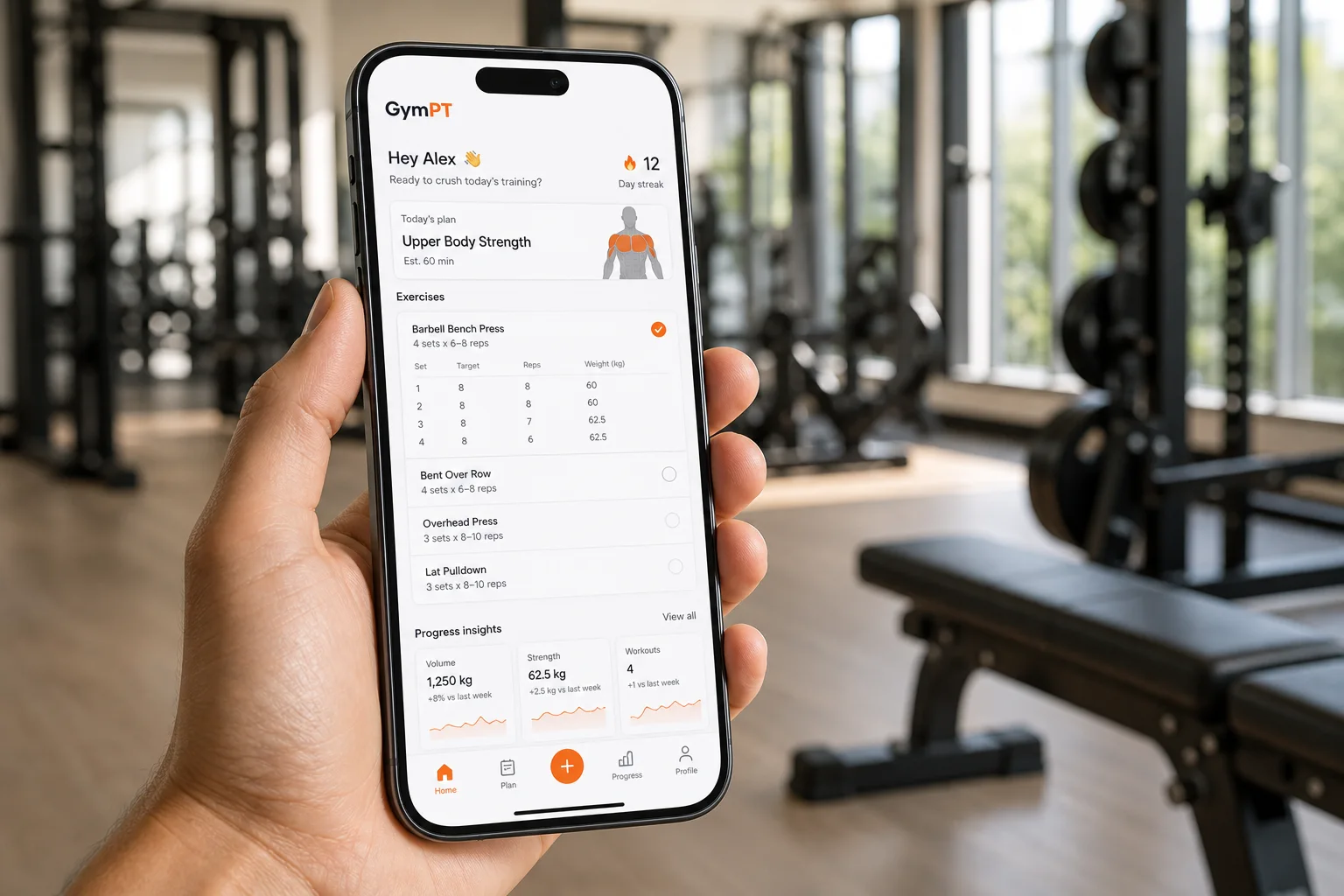
An AI strength training app can do more than generate workouts. It can help you choose the right exercises, adjust training to your equipment, and keep progress visible week after week.
AI strength training app: what it should actually do
An AI strength training app should not feel like a random workout generator. Its real job is to help you train with more structure, better fit, and less guesswork. That means turning your goal, schedule, equipment, and training history into a plan you can actually follow.
For most people, the value is not “AI” by itself. The value is faster decision-making: what to train today, how hard to push, when to recover, and how to keep the plan realistic when life gets busy. That is where an app like GymPT can be useful.
Why smart coaching matters more than generic templates
Generic plans assume everyone has the same time, equipment, recovery, and experience. In reality, training works better when it matches the person in front of the program. Public health guidance recommends regular muscle-strengthening work for adults, and resistance-training guidance from professional organizations emphasizes adjusting frequency and volume to the trainee’s status and recovery capacity.
That is the practical role of AI in coaching: it can help organize those variables quickly. A good system can suggest a split for two, three, or more weekly sessions, keep nonconsecutive days in mind for beginners, and adapt exercise selection when your gym setup changes.
What to look for in an AI strength training app
If you are comparing apps, focus on features that improve training quality rather than flashy promises.
- Personalized workout plan: The app should build around your goal, experience level, and available days.
- Equipment-based workout matching: It should adjust exercises to dumbbells, machines, cables, barbells, or home setups.
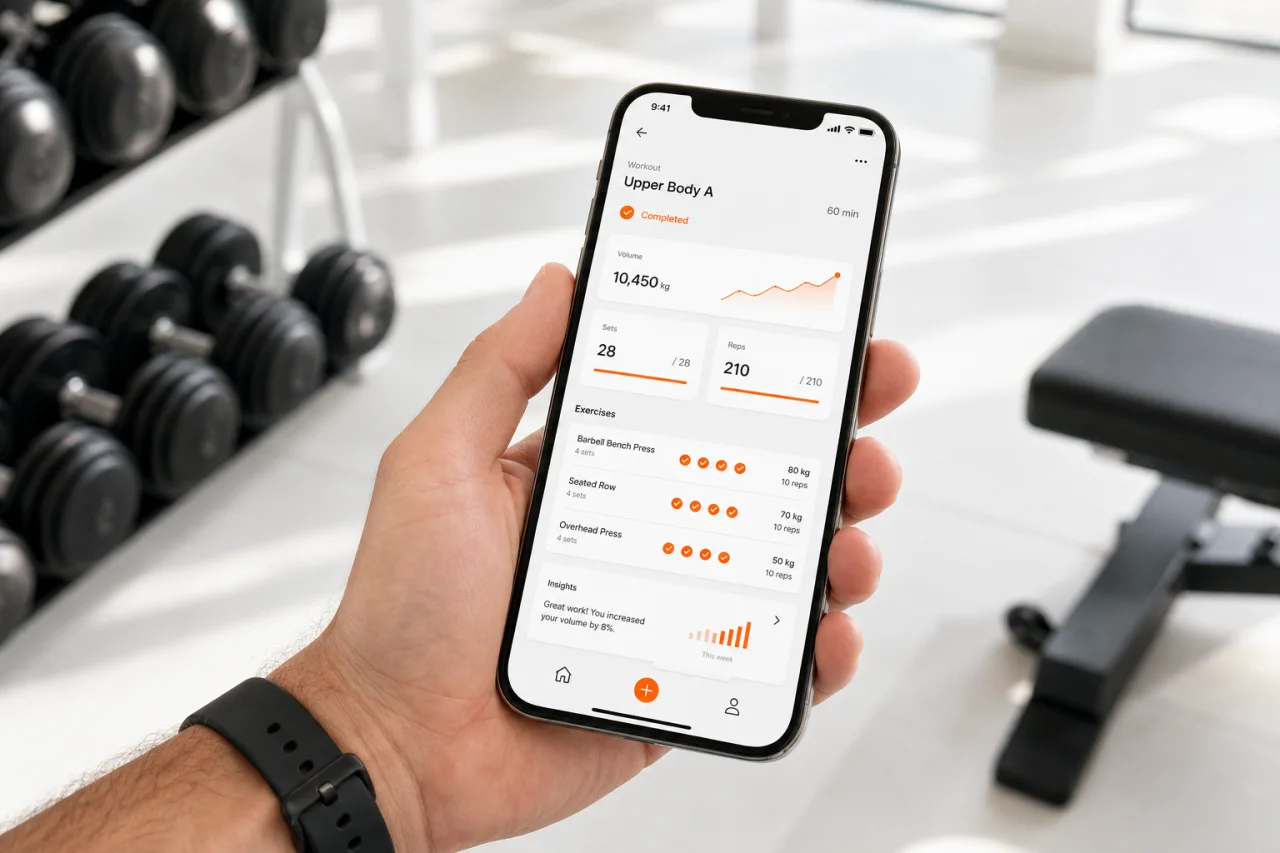
- Workout progress tracking: Logging sets, reps, load, and effort helps you see whether the plan is working.
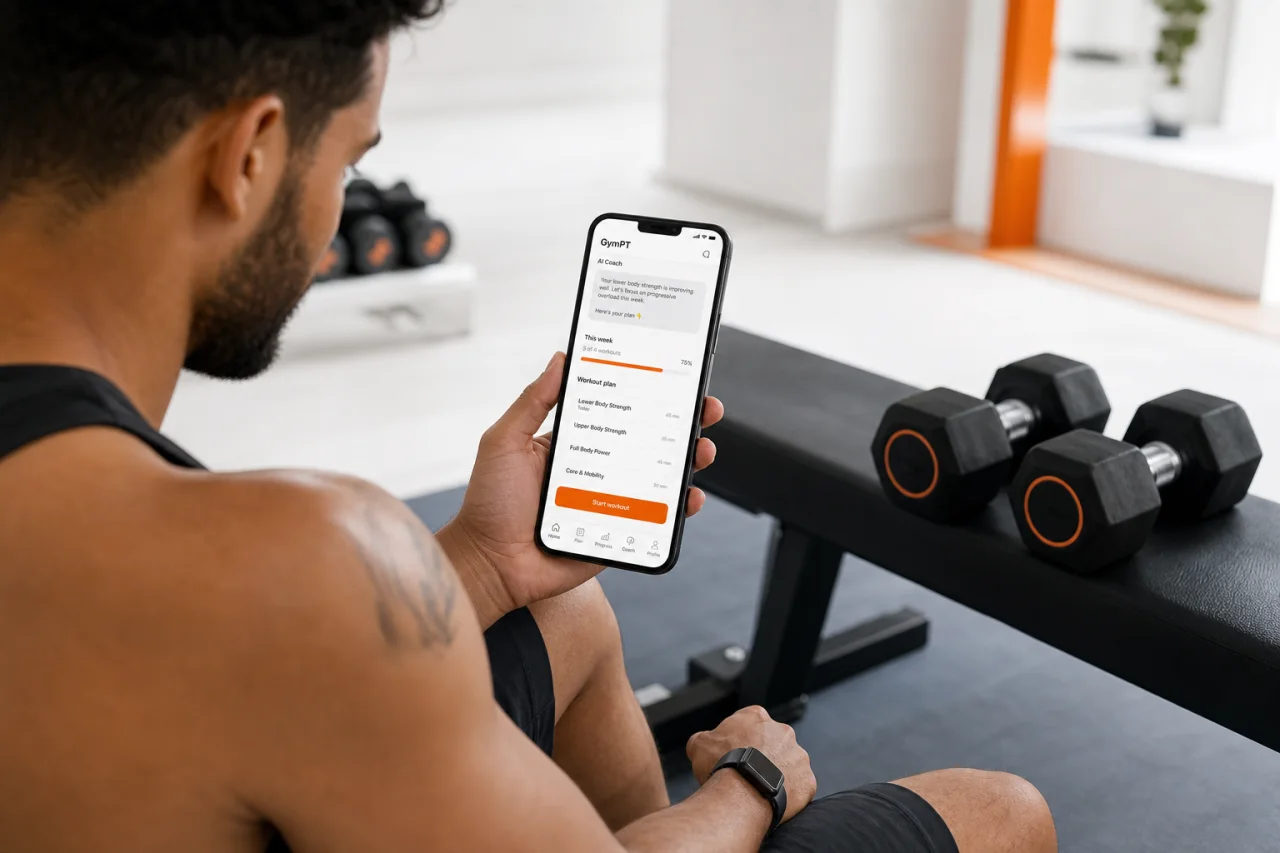
- AI coach chat: You should be able to ask practical questions like how to modify a session, not just read static instructions.
- Progress insights: The app should help you notice trends, such as stalled lifts, missed sessions, or rising volume too quickly.
These features matter because strength training is not only about effort. It is also about consistency, recovery, and gradual progression. The best app makes those decisions easier to repeat.
How GymPT supports better strength training decisions
GymPT is designed to make training feel more personal without making it complicated. You can use it to create a plan that fits your goal, then adjust it as your schedule or equipment changes. That is especially useful if you train in different places, prefer certain machines, or want a plan that evolves with your progress.
Instead of forcing you into one fixed routine, GymPT helps you stay on track with a clearer training structure. It combines planning, logging, and feedback so you can see what you did, what changed, and what to do next.
How AI can improve strength training in practice
The most useful AI coaching is not dramatic. It is practical. Here are a few examples:
- It reduces setup time. You spend less time deciding what to do and more time training.
- It keeps training realistic. If you only have 30 to 45 minutes, the plan can prioritize the most important work.
- It adapts to equipment. If a rack is taken or you are training at home, the app can suggest a workable substitute.
- It supports progression. When your logs show you are ready, the plan can move forward instead of repeating the same week forever.
- It makes patterns visible. Progress insights can show whether you are adding load, reps, or consistency over time.
That last point matters. Many lifters do not need more motivation; they need better feedback. When the app shows what is improving and what is lagging, it becomes easier to make the next session count.
Who benefits most from an AI strength training app?
An AI strength training app is especially helpful if you:
- are new to lifting and want a clear starting point,
- need a plan that fits a busy schedule,
- train in different gyms and need equipment flexibility,
- want to track progress without building a spreadsheet, or
- prefer guidance that changes as your training changes.
Beginners often benefit from simple full-body or low-complexity routines done two or three days per week, with recovery built in between sessions. More experienced lifters usually need more detail in exercise selection, volume, and progression. A smart app should support both without overcomplicating the process.
What AI should not replace
AI can help organize training, but it should not replace judgment. You still need to pay attention to technique, fatigue, soreness, sleep, and how your body responds to the plan. If something feels off, the right move is to adjust the session, not force the program.
That is why the best use of AI in strength training is as a coach-like assistant: it helps you make better decisions faster, while you stay in control of the final choice.
Simple way to use GymPT for strength training
If you want a straightforward workflow, try this:
- Set your goal and training level.
- Choose the equipment you actually have access to.
- Follow the generated plan for a few weeks.
- Log each workout consistently.
- Review progress insights and adjust when needed.
That process is simple, but it is powerful because it connects planning, execution, and feedback in one place.
Final take
The best AI strength training app is not the one that sounds the smartest. It is the one that helps you train with more clarity, better consistency, and fewer missed decisions. If you want a practical example, GymPT brings together personalized workout plans, AI coach chat, body analysis, equipment-based training, workout tracking, and progress insights in one app.
Used well, AI does not replace good coaching. It makes good coaching easier to access every week.
Related reading: If you want to go deeper, explore how a virtual personal trainer can support your training, how an AI gym coach changes day-to-day decision-making, why a gym workout plan app can improve consistency, and how workout progress tracking helps you stay accountable.