fitness body scan app
Fitness Body Scan App: How to Read Your Body Data and Train Smarter
A fitness body scan app can help you understand trends in your body data, set better training targets, and adjust your plan with more confidence. Here’s how to use body analysis as practical fitness guidance—not a diagnosis.
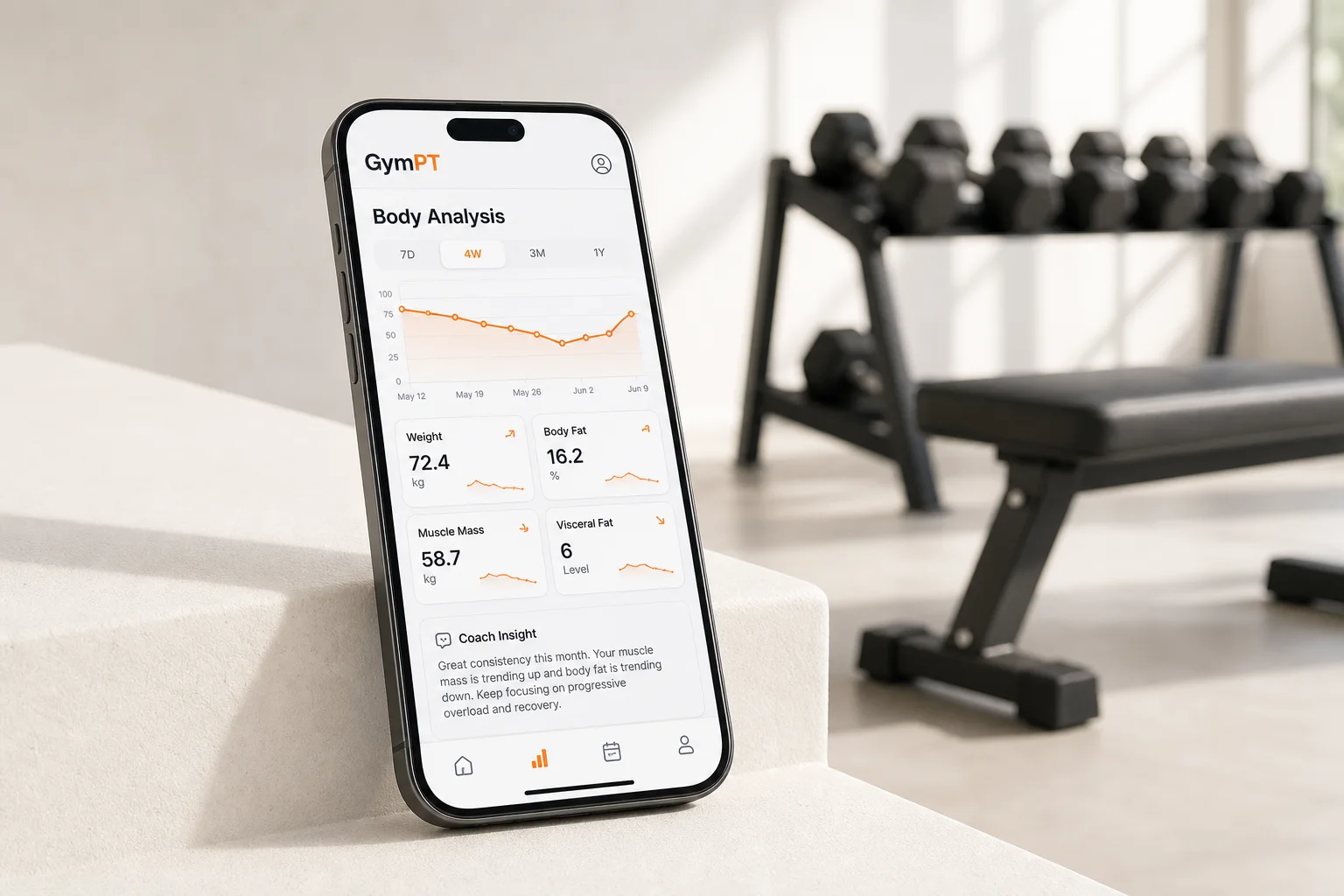
Fitness body scan app: what it can actually tell you
A fitness body scan app is most useful when you treat it as a coaching tool, not a medical verdict. The best apps help you notice trends in body measurements, compare changes over time, and connect those changes to your training, recovery, and nutrition habits. That matters because regular physical activity and muscle-strengthening work are strongly recommended for adults, and resistance training is associated with improvements in body composition and other fitness outcomes.
GymPT uses body analysis to support training decisions: what to train next, whether to push volume, and when to keep things steady. That is the right mindset for body scan data. The goal is not to chase a single number. The goal is to make better choices week after week.
Why body scan data is more useful as a trend than as a snapshot
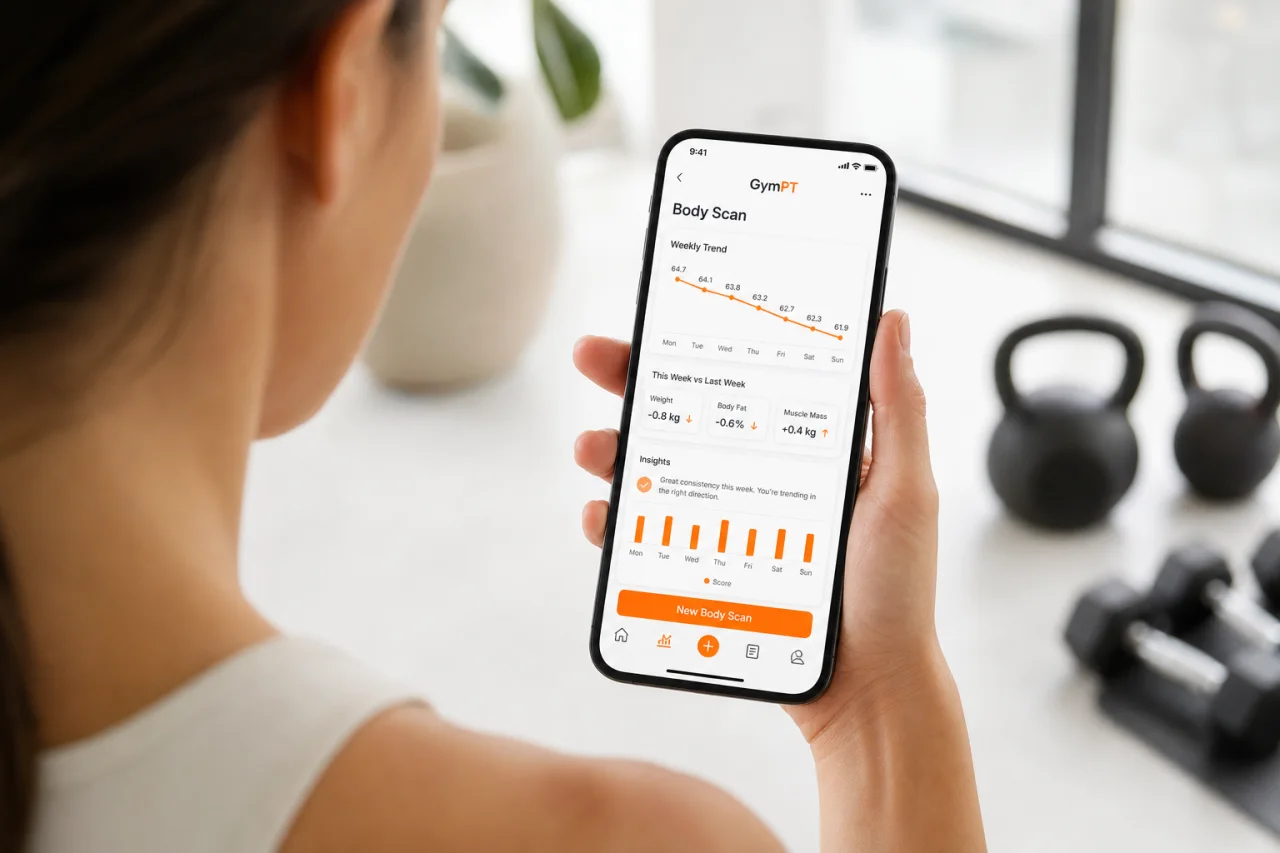
One scan can be noisy. Hydration, food intake, sleep, time of day, and recent exercise can all affect body measurements. That is why the most useful body analysis apps focus on repeated measurements and pattern recognition instead of one-off results. In practice, the question is not “What did the scan say today?” but “What is changing across the last few weeks?”
That trend-based approach fits how training actually works. Strength, muscle gain, and fat loss do not happen in a straight line. They show up gradually through performance, recovery, and body changes over time. WHO guidance also emphasizes that adults should combine aerobic activity with muscle-strengthening work on at least two days per week for added health benefits.
Use these scan signals as coaching clues
- Stable weight, better measurements: often a sign that training and recovery are supporting recomposition.
- Fast weight drops with poor performance: may suggest you are under-recovering or under-fueling.
- No visible change for several weeks: may mean your plan needs a new stimulus, better consistency, or more time.
- Strength up, body data steady: a good sign that your training is working even before visible changes appear.
How to read body analysis without overreacting
The biggest mistake people make with a fitness body scan app is reacting to every small change. A better method is to use a simple review process.
- Measure under similar conditions. Try to scan at the same time of day and under similar routine conditions.
- Look at 2–4 week trends. Short-term changes are often just noise.
- Pair scan data with training logs. If your lifts are improving, that context matters.
- Check recovery signals. Energy, soreness, sleep, and motivation help explain the numbers.
- Adjust one variable at a time. Change training volume, exercise selection, or recovery—not everything at once.
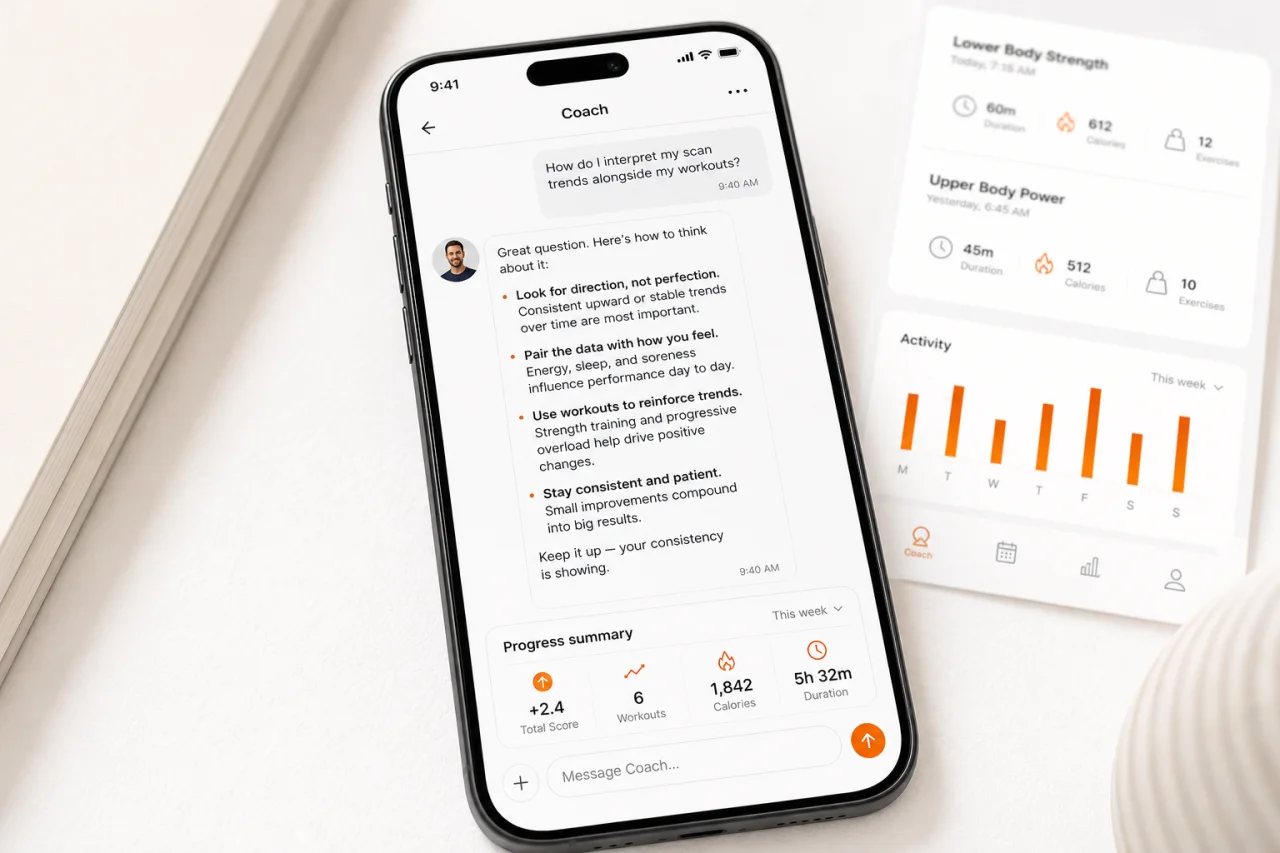
This is where an AI coach can be helpful. Instead of staring at a dashboard and guessing, you can ask what the data means for your next workout. GymPT combines body analysis with workout tracking and progress insights so you can make a practical adjustment instead of an emotional one.
What a good fitness body scan app should help you do
Not every app is equally useful. A strong body analysis app should make your data easier to act on, not harder to understand. Look for features that connect scan results to training decisions.
- Progress tracking app features: clear history, trend lines, and simple comparisons.
- AI workout insights: suggestions based on your recent training load and body trends.
- Equipment-based training support: plans that adapt to the tools you actually have.
- Workout tracking: logs that show whether your performance is moving in the right direction.
- Coach chat: quick answers when you want to know what to do next.
WHO guidance also notes that physical activity supports overall health and well-being, while muscle-strengthening work adds extra benefits. That makes it smart to choose an app that helps you keep both the big picture and the weekly details in view.
How to use scan results to improve your training plan
Body scan data becomes valuable when it changes your next decision. Here are a few practical examples.
If your goal is muscle gain
Use scan trends alongside strength progress. If your lifts are rising and your body data is moving slowly, that can still be a good sign. Keep training consistent, keep progressive overload realistic, and avoid changing your plan too often.
If your goal is fat loss
Look for a steady downward trend, not a dramatic weekly drop. If the scan is flat for several weeks, review adherence first: training frequency, daily movement, sleep, and nutrition consistency. Then decide whether to adjust volume or cardio.
If your goal is general fitness
Focus on consistency, energy, and performance. A scan can help you spot whether your routine is supporting a healthier direction, but the main win is building a plan you can repeat.
Why GymPT is built for this kind of feedback loop
GymPT is designed to turn body analysis into action. You can create a personalized workout plan, chat with the AI coach, track workouts, and review progress insights in one place. That means your scan data does not sit in isolation. It feeds the next training decision.
For most people, that is the real value of a fitness body scan app: not perfect certainty, but better guidance. When your app helps you connect body trends to training choices, you spend less time guessing and more time progressing.
A simple weekly routine for using body scan data well
- Scan once per week under similar conditions.
- Log your workouts so the scan has context.
- Review one trend only before making changes.
- Keep the plan stable long enough to see a real pattern.
- Ask the coach what to do next if the trend is unclear.
If you want body analysis to be useful, keep it simple: measure, compare, adjust, repeat. That is how a good app becomes a better coach.
Note: Body analysis in GymPT is for fitness guidance only and is not a medical diagnosis.
Frequently asked questions
Is a fitness body scan app accurate?
It can be useful for trends, but single readings should not be treated as exact truth. Consistency in how and when you scan matters more than chasing one perfect number.
How often should I use body analysis?
Weekly is a practical starting point for most people. That gives you enough time to see a trend without overreacting to daily fluctuations.
Should I change my workout after every scan?
No. Use scan data together with workout performance, recovery, and consistency. Make changes when a pattern is clear, not after one reading.