fitness progress app
Fitness Progress App: How to Turn Logs, Reports, and Trends Into Better Training
A fitness progress app should do more than count workouts. Learn how logs, reports, consistency, and trend tracking help you train smarter and stay motivated.
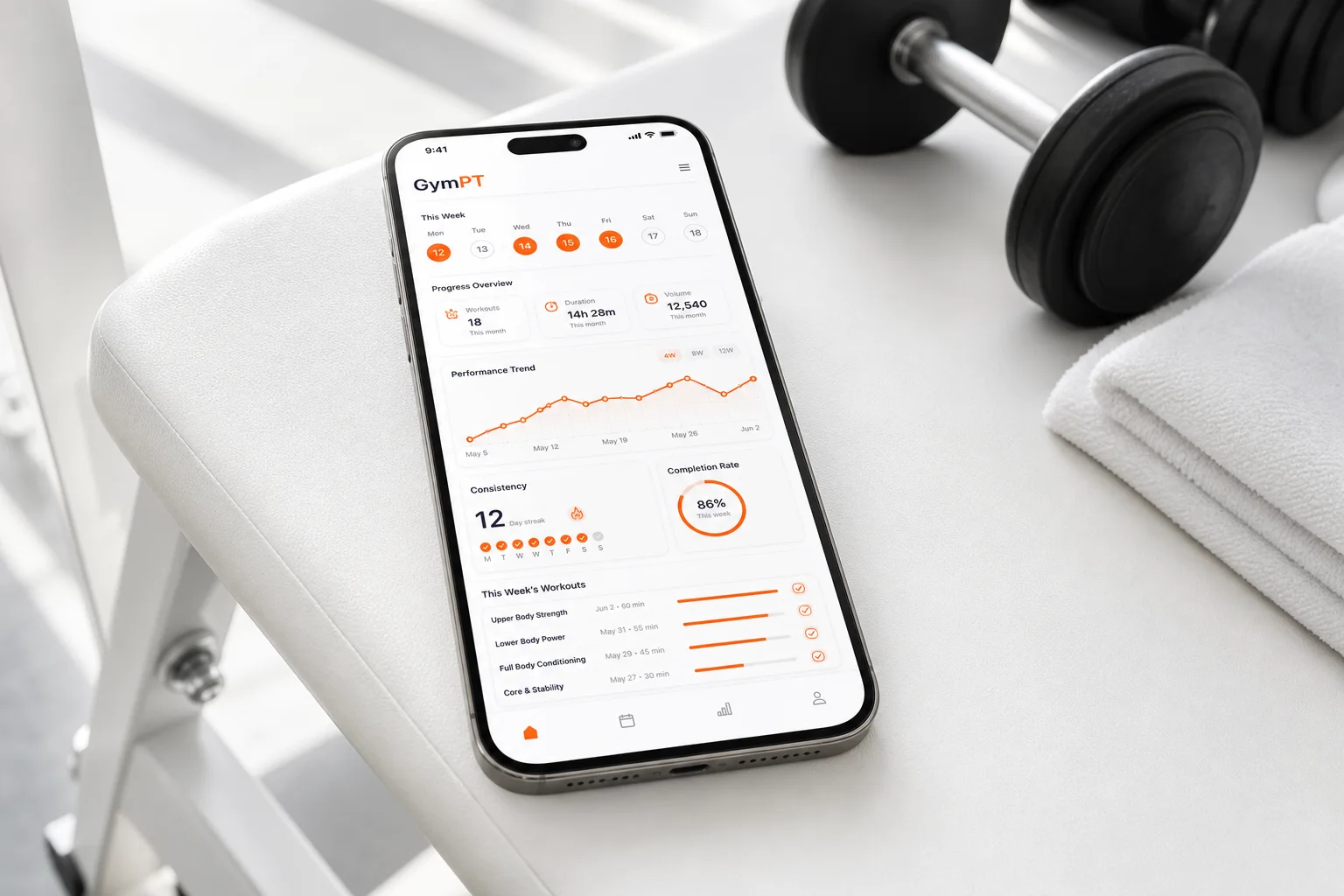
Why a fitness progress app matters more than a perfect plan
A good training plan is only useful if you can see whether it is working. That is why a fitness progress app is so valuable: it turns scattered workouts into clear feedback. Instead of guessing, you can review your training logs, compare performance over time, and make better decisions about when to push, when to recover, and when to adjust your plan.
That matters because consistency is what drives results. Public health guidance from the WHO and CDC continues to emphasize regular physical activity, including muscle-strengthening work, as a foundation for health and long-term progress. A progress-focused app helps you stay aligned with that bigger picture by making your effort visible week after week.
What a fitness progress app should actually track
Not every metric is useful. The best apps focus on the signals that help you train better, not just the numbers that look impressive.
- Workout logs: exercises, sets, reps, load, rest time, and notes.
- Performance trends: whether your lifts, pace, or session quality are improving over time.
- Consistency: how many sessions you complete each week and how often you miss planned workouts.
- Recovery patterns: signs that volume or intensity may be too high or too low.
- Body and goal context: measurements, photos, or body analysis when they support the goal.
For strength training, this is especially useful because progressive overload depends on small, repeatable improvements. Recent ACSM guidance continues to support structured resistance training prescription and progression as a core part of effective training.
Why logs beat memory every time
Most people remember the highlight of a workout, not the details. But details matter. If you lifted 80 kg for 8 reps last week and 82.5 kg for 8 reps this week, that is real progress. If your reps dropped because you slept poorly or rushed the session, that is useful too.
Training logs help you answer practical questions:
- Did I actually increase load, reps, or control?
- Am I repeating the same workout without adapting?
- Which exercises are moving forward and which are stalled?
- Am I recovering well enough to train hard again?
This is where a fitness progress app becomes more than a digital notebook. It becomes a decision tool.
How progress reports keep you motivated without guessing
Weekly or monthly reports are useful because they show the story behind the sessions. A single workout can feel average, but a report can reveal that your total training volume is up, your attendance is more consistent, or your top sets are getting stronger.
That kind of feedback matters for motivation. The CDC notes that physical activity can improve sleep, reduce anxiety, and support long-term health, while WHO recommends at least 150 minutes of moderate-intensity activity per week for adults, plus muscle-strengthening work on 2 or more days weekly. Seeing your own progress makes those recommendations feel more actionable and less abstract.
What to look for in performance trends
Progress is not always linear. Some weeks you will add weight. Other weeks you will hold steady while your technique improves. A smart app helps you spot the trend instead of overreacting to one session.
Useful trends to watch
- Strength trend: Are your main lifts moving up over 4 to 8 weeks?
- Volume trend: Are you doing more quality work without burning out?
- Adherence trend: Are you completing the plan more often than before?
- Recovery trend: Are you repeating good sessions instead of constantly feeling flat?
- Goal trend: Are your actions matching your goal, whether that is muscle gain, fat loss, or general fitness?
WHO guidance also makes clear that physical activity benefits go beyond fitness appearance, including better functional health, lower disease risk, and improved well-being. That is why trend tracking should support both performance and sustainability.
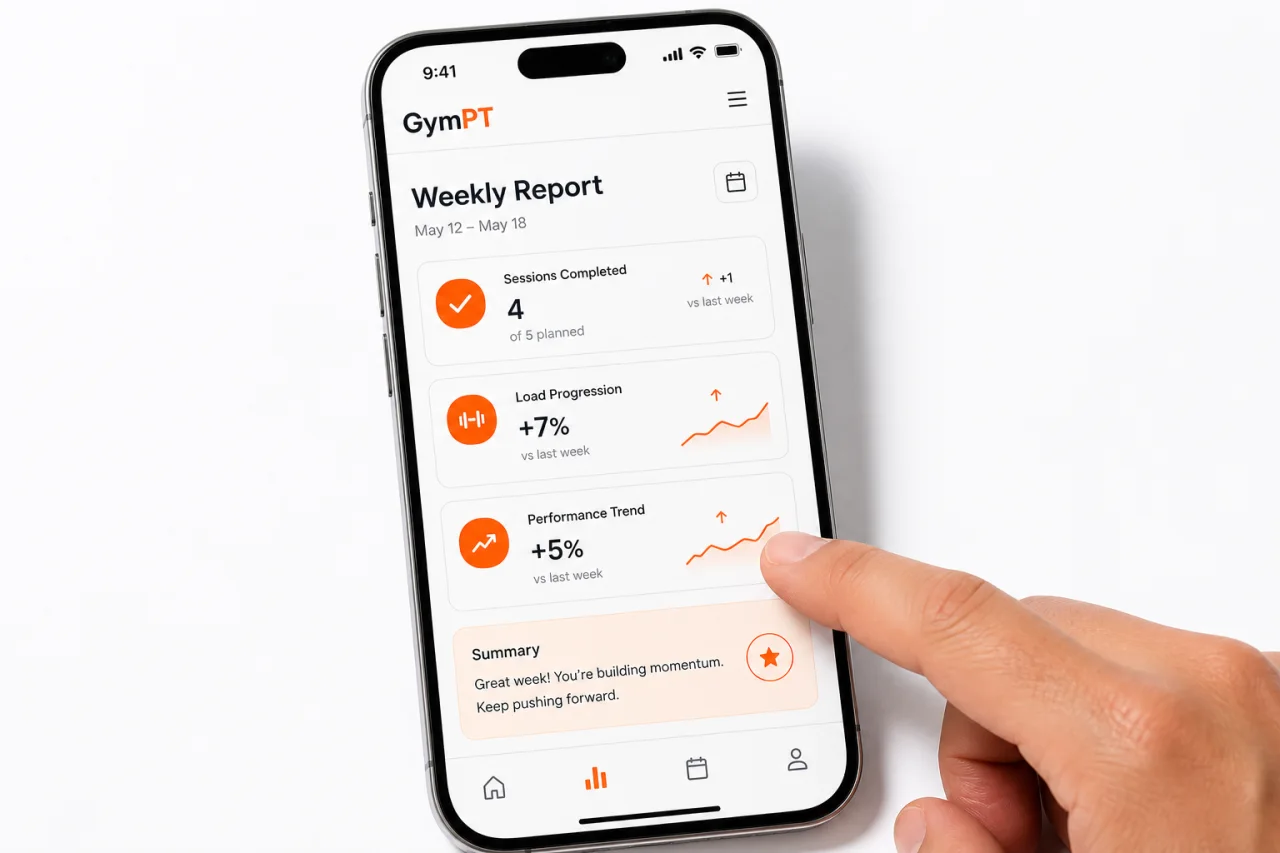
How GymPT helps you turn data into action
GymPT is built for people who want more than a static plan. It combines personalized workout planning, AI coach chat, body analysis, equipment-based training, workout tracking, and progress insights so you can see what is happening and respond intelligently.
Instead of asking, “Did I do enough?” you can ask better questions:
- Should I increase load next session?
- Is this exercise still the right fit for my equipment?
- Do I need more recovery before the next hard day?
- Is my weekly consistency strong enough to support my goal?
That is the real value of a fitness progress app: it helps you make the next training decision with more confidence.
How to use progress tracking without overcomplicating it
You do not need to track everything. In fact, too many metrics can make progress harder to understand. Start with a simple system and build from there.
- Log every workout. Capture the basics: exercise, sets, reps, load, and notes.
- Review one weekly summary. Look for attendance, top-set changes, and missed sessions.
- Track one primary goal metric. For example, strength, body composition, or workout consistency.
- Adjust one variable at a time. Change load, reps, volume, or frequency gradually.
- Use trends, not emotions. One bad session does not mean the plan failed.
This approach keeps your tracking useful and sustainable. It also matches the broader public-health message: regular activity matters, and consistency is easier to maintain when progress is visible.
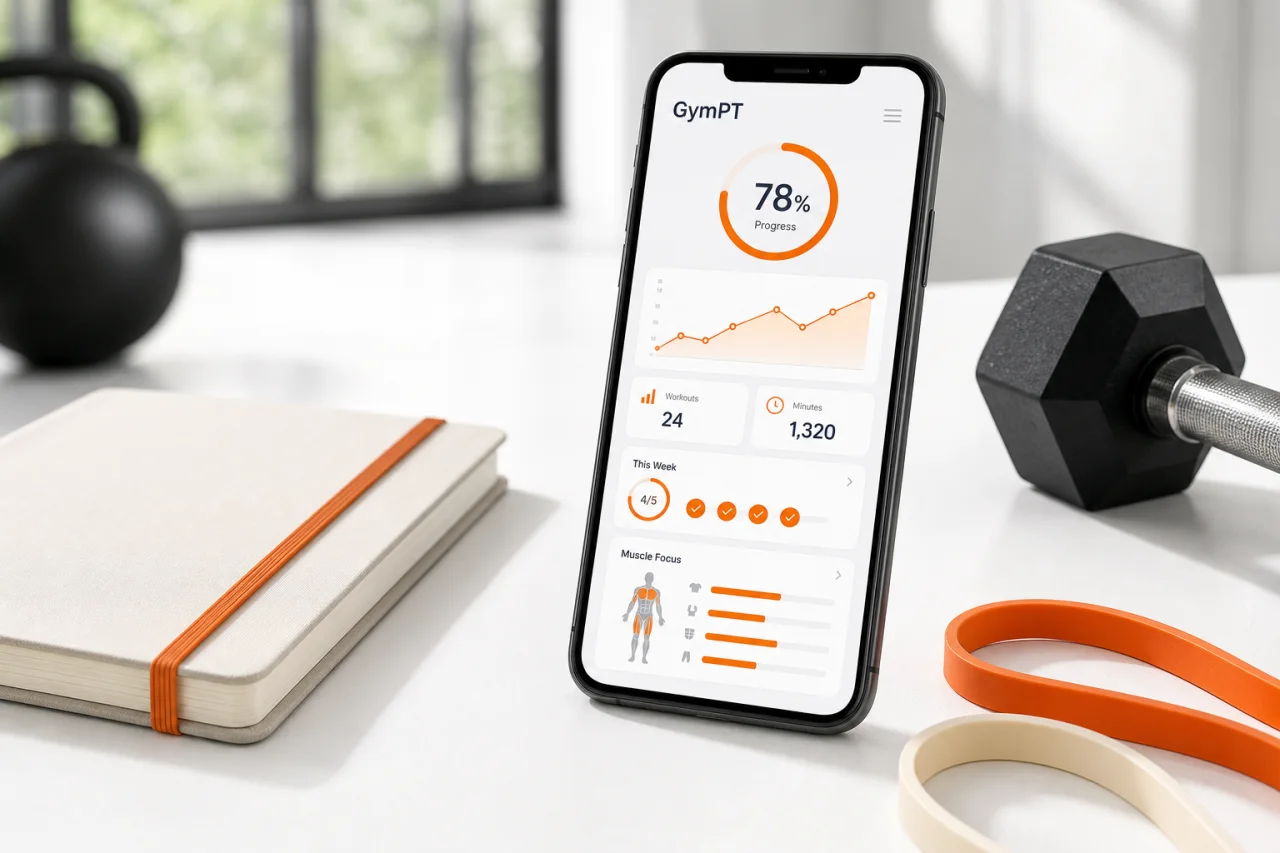
Who benefits most from a fitness progress app?
Almost anyone can benefit, but it is especially useful if you:
- train with a specific goal and want measurable feedback,
- use different equipment and need adaptable programming,
- struggle to stay consistent without reminders and structure,
- want to understand whether your workouts are actually improving, or
- prefer a simple, visual way to stay motivated.
If you have ever wondered whether your training is working, a progress app gives you the answer in a format you can act on.
Final takeaway
A fitness progress app should do more than store workouts. It should help you understand your logs, read your reports, spot performance trends, and stay consistent long enough to see results. When progress is visible, training becomes easier to manage and easier to trust.
GymPT is designed for exactly that: personalized plans, smart coaching, workout tracking, body analysis, and progress insights in one place. If you want better training decisions, start by making your progress easier to see.