personalized fitness coach
What a Personalized Fitness Coach Actually Does for Your Training
A personalized fitness coach does more than hand you a plan. It adapts training to your goal, equipment, schedule, and progress so you can stay consistent.
What a personalized fitness coach really does
A personalized fitness coach is not just a workout generator. The real job is to turn your goal, schedule, equipment, and current training level into a plan you can actually follow. That matters because physical activity recommendations are broad, but training decisions are personal: the right weekly volume, exercise selection, and progression depend on the person in front of you, not a generic template.
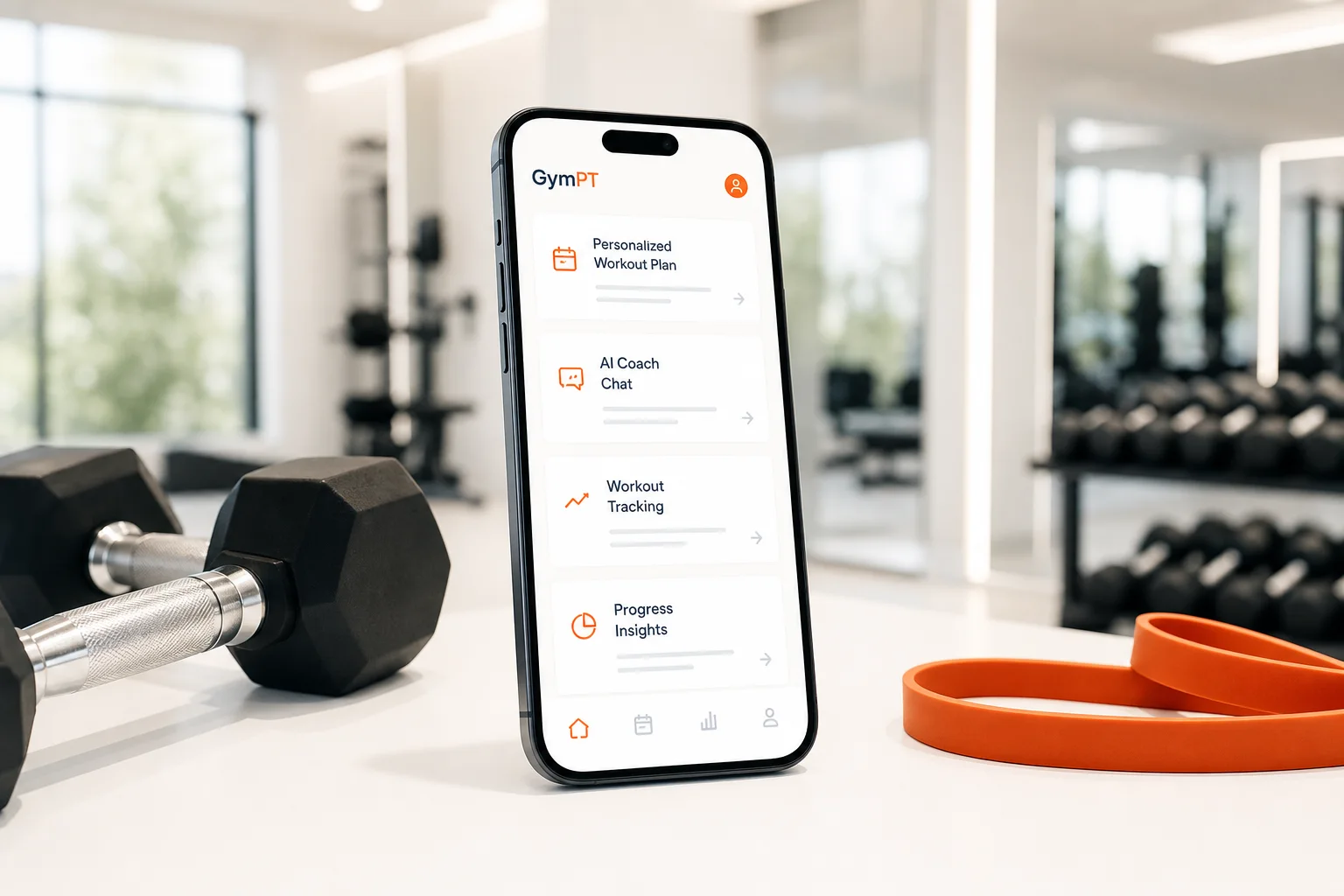
That is where AI can help. A good AI coach can organize your inputs, adjust your plan when your routine changes, and keep your training aligned with your goal. GymPT is built for that practical role: personalized workout plans, AI coach chat, body analysis, equipment-based training, workout tracking, and progress insights that help you make better decisions week by week.
Why generic plans often stop working
Most static plans fail for simple reasons. They assume you always have the same equipment, the same recovery, and the same amount of time. In real life, those things change. A personalized fitness coach helps you adapt without losing momentum.
- Different goals need different training: fat loss, muscle gain, strength, and general fitness do not use the same structure.
- Different schedules need different volume: three short sessions can be better than a plan you cannot complete.
- Different equipment changes exercise choice: dumbbells, machines, cables, and bodyweight all create different options.
- Different progress rates need different adjustments: if a workout is too easy or too hard, the plan should respond.
WHO guidance also makes the bigger point clear: regular physical activity supports health, and adults should accumulate at least 150 minutes of moderate-intensity activity per week or an equivalent amount of vigorous activity. The best plan is the one that helps you stay consistent enough to reach that target and build from there.
How AI supports a personalized fitness coach
AI is useful when it removes friction from coaching. It can help you start faster, stay organized, and make small adjustments without rebuilding everything from scratch. In practice, that means a personalized fitness coach powered by AI can do four things well.
1. Build a plan around your real constraints
Instead of asking you to fit into a fixed program, AI can build around your available days, preferred exercises, and equipment. That is especially helpful if you train at home one week and in a full gym the next.
2. Keep progression visible
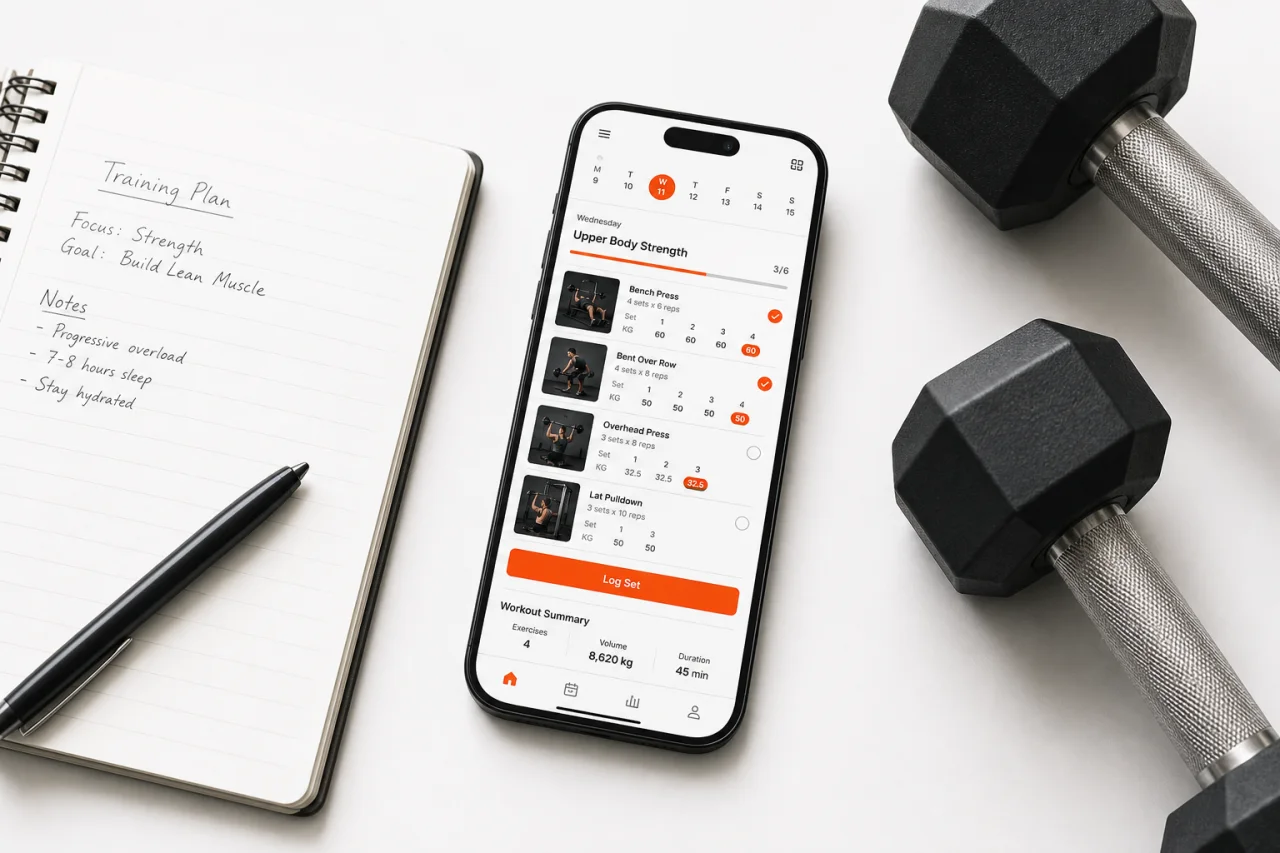
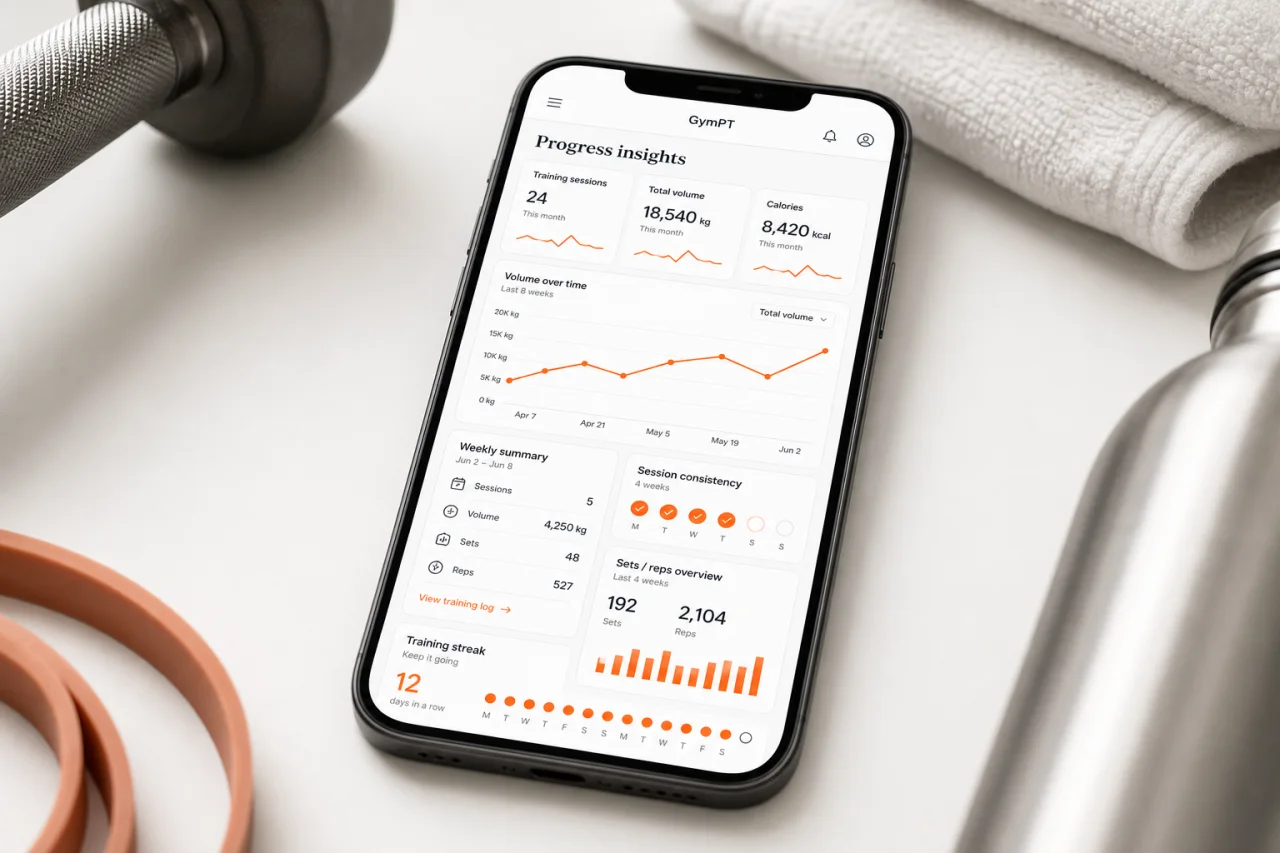
Progress is easier to manage when your workouts are logged. With workout tracking, you can see whether loads, reps, sets, or consistency are improving. That makes the next adjustment more objective and less guesswork.
3. Respond to feedback quickly
If a movement feels awkward, a session runs long, or recovery is lagging, an AI coach can help you modify the plan. That does not replace judgment, but it does make coaching more responsive.
4. Turn body and performance data into action
Body analysis and progress insights are most useful when they lead to a clear next step. For example, if training volume is stable but performance is flat, the plan may need a different exercise selection, more recovery, or a better weekly structure.
What to look for in a personalized fitness coach app
Not every app that says “personalized” actually coaches well. A useful app should help you train, not just decorate a calendar. Look for these features:
- Goal-based planning: the app should adapt to your target, not force one style of training.
- Equipment awareness: it should match workouts to what you actually have access to.
- Workout tracking: logging should be simple enough that you keep using it.
- Progress insights: the app should show trends, not just isolated workouts.
- Coach chat: you should be able to ask questions and get practical guidance when something changes.
GymPT is designed around those basics. It is not trying to replace your effort; it is trying to make your effort more effective by helping you choose the right workout, at the right time, with the right level of progression.
How to use AI coaching without overcomplicating training
The best coaching tools keep things simple. If you want a personalized fitness coach to work for you, use it to answer a few key questions every week:
- Did I complete the sessions I planned?
- Were the exercises realistic for my equipment and schedule?
- Did the workouts feel too easy, too hard, or about right?
- Is my progress moving in the direction I want?
- What should change next week?
That approach keeps the focus on execution. AI is most valuable when it helps you make one or two smart adjustments instead of constantly reinventing your program.
Who benefits most from a personalized fitness coach?
A personalized fitness coach is useful for beginners who need structure, busy people who need efficiency, and experienced lifters who want better organization. It is also helpful for anyone who trains in changing environments, because equipment-based training can be adapted more easily when the plan is built around what is available.
In other words, the value is not just “more personalization.” The value is better follow-through. A plan that matches your life is easier to repeat, and repeatable training is what creates progress.
Final takeaway
A personalized fitness coach should help you train with more clarity, not more complexity. The best version uses your goal, equipment, schedule, and progress data to make training easier to follow and easier to improve. That is the practical role AI can play in coaching, and it is the reason apps like GymPT can be useful for people who want structure without rigidity.
If you want a plan that adapts as you train, start with the basics: a clear goal, honest tracking, and a coach that can adjust with you.