gym equipment workout plan
Gym Equipment Workout Plan: How to Match Exercises to the Machines, Dumbbells, and Cables You Have
A good gym equipment workout plan removes guesswork. Learn how to match exercises to the equipment you have, build balanced sessions, and keep progressing.
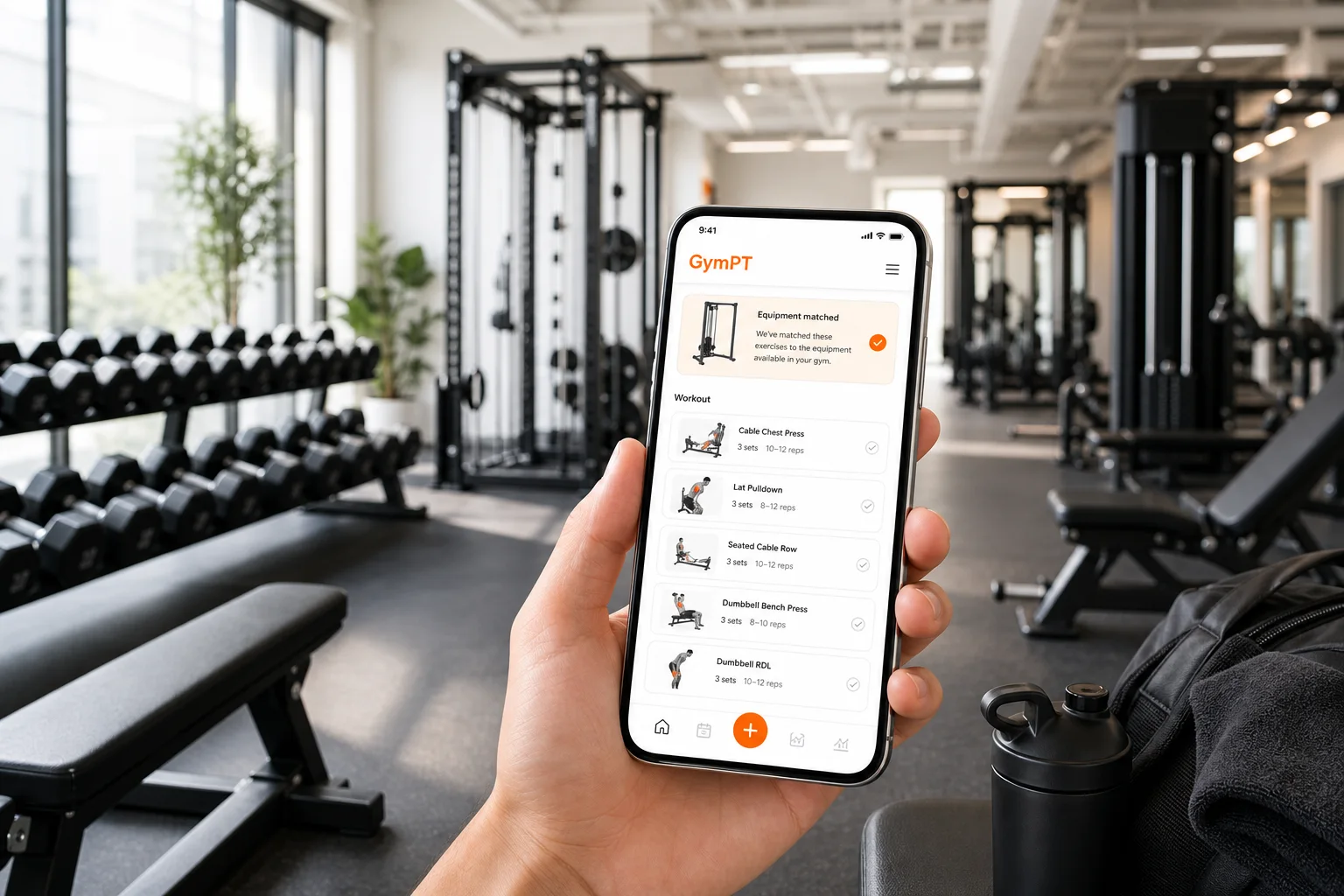
Gym equipment workout plan: why matching exercises to equipment matters
A gym equipment workout plan works best when the exercises fit the tools in front of you. If your plan calls for a barbell squat but your gym is crowded, or it asks for a cable fly when your gym has no cable station, the workout becomes harder to follow than it needs to be. Matching exercises to available equipment keeps training simple, repeatable, and easier to progress.
That is the real advantage of equipment-based training: less decision fatigue, fewer skipped sets, and a clearer path from one session to the next. Public health guidance also supports regular muscle-strengthening work for adults, and recent resistance-training guidance continues to emphasize that effective training can be built with a range of tools, from free weights to machines and home-based equipment.
Start with the equipment you actually have
Before you write the plan, list the equipment you can reliably use. That usually falls into a few categories:
- Machines: leg press, chest press, lat pulldown, seated row, leg curl, leg extension
- Free weights: dumbbells, barbells, plates, benches
- Cables: adjustable pulleys, rope attachments, handles
- Bodyweight tools: pull-up bars, dip stations, benches, boxes
- Small accessories: bands, mats, straps, collars
Once you know what is available, build around movement patterns instead of random exercises. Every solid plan should cover a squat pattern, hinge pattern, push, pull, and core work. That makes it much easier to swap one exercise for another without breaking the structure of the workout.
Use movement patterns, not just exercise names
For example, a squat pattern can be a barbell back squat, goblet squat, hack squat, or leg press. A horizontal push can be a bench press, machine chest press, or dumbbell press. A vertical pull can be a lat pulldown, assisted pull-up, or pull-up. When the pattern stays the same, the plan stays balanced even if the equipment changes.
How to build a gym equipment workout plan that is easy to follow
The simplest way to build a reliable plan is to choose one main exercise for each movement pattern, then add one or two accessories that use the same equipment zone. That reduces walking around the gym and makes your session feel organized.
- Pick the main lift first. Choose the best available option for your goal and skill level.
- Choose a backup option. If the station is taken, have a second exercise ready.
- Keep similar equipment together. For example, pair dumbbell presses with dumbbell rows.
- Use the same setup for several weeks. Repeating the same structure makes progress easier to measure.
- Track load, reps, and effort. Small improvements matter more than constantly changing exercises.
This approach also fits the way many evidence-based strength programs are written: a few well-chosen exercises, enough weekly work, and steady progression over time. The exact tools matter less than consistency, effort, and a plan you can actually repeat.
Example: a simple equipment-based full-body session
If your gym has dumbbells, a cable station, and a few machines, you can build a clean full-body workout like this:
- Lower body: leg press or goblet squat
- Upper push: machine chest press or dumbbell bench press
- Upper pull: seated cable row or one-arm dumbbell row
- Hinge: Romanian deadlift with dumbbells or barbell
- Core: cable Pallof press or plank
That is enough to train the major muscle groups without overcomplicating the session. If you train three days per week, you can repeat the same structure and gradually increase reps or load. If you train four or five days per week, you can split the same patterns across upper and lower sessions.
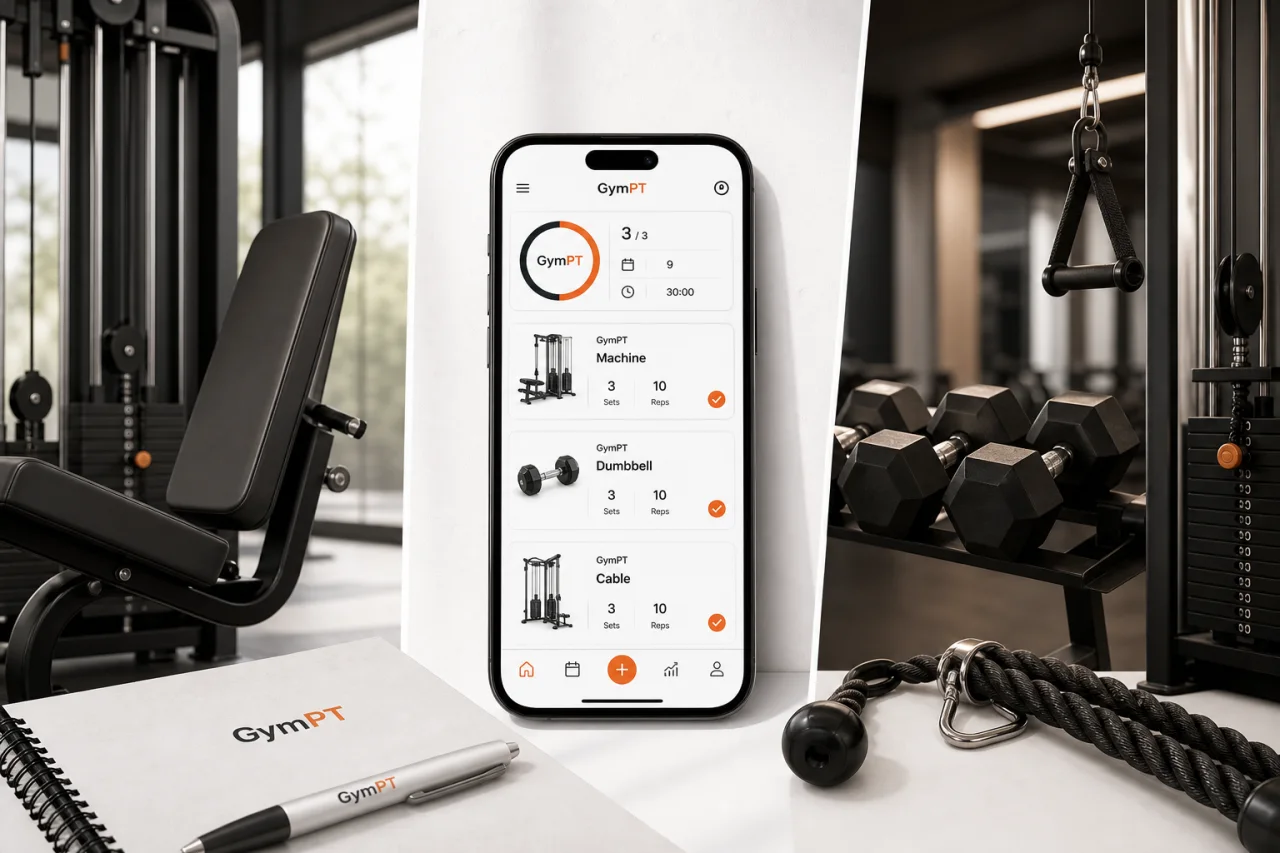
How to choose the right exercise when equipment is limited
When a gym is busy or the equipment is limited, use this order of priority:
- Choose the closest pattern match. If you planned a barbell squat, a leg press or hack squat is a good substitute.
- Choose the most stable option you can perform well. Good form matters more than forcing a complicated variation.
- Choose the option you can progress. If you cannot add reps or weight over time, the exercise may not be the best fit.
- Choose the option you can repeat. A good plan is one you can follow week after week.
This is where a personalized workout plan helps. Instead of guessing, you can match your training to the equipment you have today and still keep the same overall structure.
Good swaps keep the training goal the same
Here are a few practical swaps:
- Barbell bench press → machine chest press or dumbbell press
- Pull-up → assisted pull-up or lat pulldown
- Back squat → goblet squat or leg press
- Barbell row → seated cable row or chest-supported machine row
- Barbell hip hinge → dumbbell Romanian deadlift
The goal is not to find a perfect clone. The goal is to keep the same muscle action, training stimulus, and progression path.
How many exercises should a gym equipment workout plan include?
For most people, five to seven exercises per session is enough. That gives you room for the main lifts, a few accessories, and core work without turning the workout into a marathon. Public guidance recommends muscle-strengthening activity at least two days per week, and many adults do well with a simple full-body or upper/lower structure that repeats the same key patterns.
If your goal is strength, keep the plan focused on a few big lifts and track them carefully. If your goal is muscle growth, add a little more accessory volume around the same equipment. If your goal is general fitness, keep the plan balanced and easy to recover from.
How GymPT makes equipment-based training easier
GymPT is built for the exact problem this article solves. Instead of forcing a generic plan onto your gym, GymPT can create a personalized workout plan based on the equipment you have, help you adjust exercises when a station is busy, and keep your sessions organized with workout tracking and progress insights.
That means you can open the app, see what fits your gym, and train with less guesswork. Over time, the AI coach chat can help you refine exercise selection, while body analysis and progress tracking help you see whether the plan is actually moving you forward.
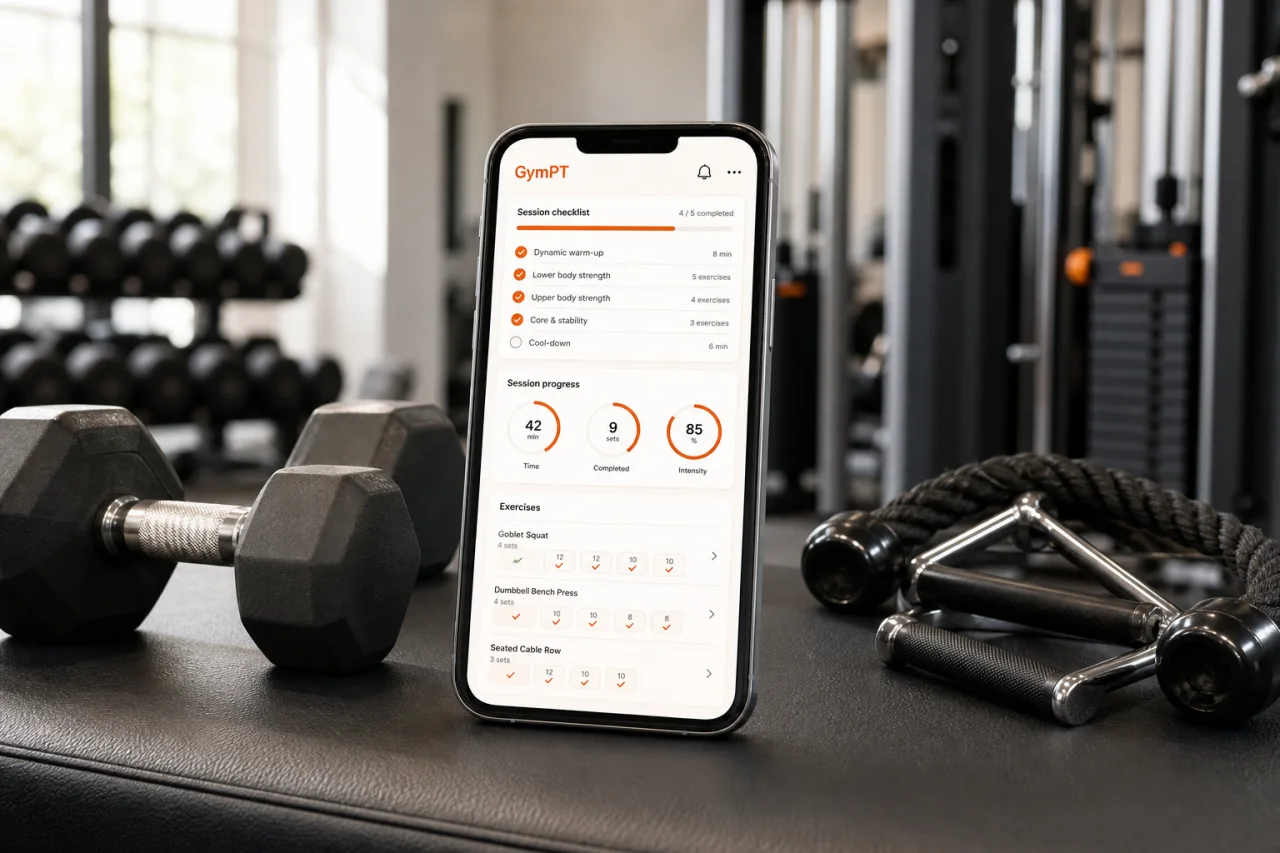
A simple checklist for your next gym session
- Know which equipment is available before you start.
- Match each exercise to a movement pattern.
- Keep a backup option for every main lift.
- Repeat the same structure long enough to measure progress.
- Log your sets, reps, and load so the plan can improve.
If you want a gym equipment workout plan that feels easier to follow, start with the equipment you have and build from there. The best plan is not the most complicated one. It is the one you can repeat, progress, and stick with.
GymPT tip: when your equipment changes, your plan should adapt without losing structure. That is how training stays practical.