resistance band workout plan
Resistance Band Workout Plan: How to Build a Flexible Routine Around the Equipment You Have
A resistance band workout plan works best when it matches the equipment you actually have. Learn how to build a simple, progressive routine you can follow anywhere.
Why a resistance band workout plan works so well
A good resistance band workout plan removes the biggest barrier to consistency: guesswork. When your exercises match the equipment you already have, it becomes much easier to start, stay organized, and repeat the plan week after week. That matters because adults are recommended to do muscle-strengthening activity at least two days per week, and resistance bands are a valid way to do it.
Resistance bands are especially useful when you want a plan that is portable, affordable, and easy to adapt to different spaces. They also make it simple to scale exercises up or down by changing band tension, stance, or range of motion. That flexibility is one reason they fit so well into a practical training routine.
What makes band training easier to follow than a generic plan
Many workout plans fail because they assume access to equipment you do not have. A better approach is to build around the tools available in your home, office, or gym bag. If you only have bands, your plan should use movements that bands do well: presses, rows, squats, hinges, curls, triceps work, and core anti-rotation drills.
That equipment-first approach helps in three ways:
- Less friction: you can begin without rearranging your day.
- Better exercise selection: every movement fits the resistance you can actually create.
- More consistency: the plan feels realistic, so you are more likely to repeat it.
GymPT uses this same logic: match the workout to the equipment, then build progression on top of it.
How to build a resistance band workout plan step by step
1. Pick your weekly structure
Start with a schedule you can repeat. For most people, two to four training days per week is enough to build a solid routine. If you are also doing cardio, keep your band sessions on the days you can recover well.
2. Choose movement patterns, not random exercises
Instead of collecting isolated moves, cover the major patterns:
- Squat: banded squat or sit-to-stand
- Hinge: banded Romanian deadlift or good morning
- Push: chest press or overhead press
- Pull: row or face pull
- Carry or brace: Pallof press, dead bug, or plank variation
This keeps the plan balanced and helps you train the major muscle groups consistently.
3. Set a simple rep target
For general strength work, a practical starting point is 8 to 12 repetitions per set, with at least one set per exercise and often two to three sets if you want more training volume. The last few reps should feel challenging while still controlled.
4. Progress in small, trackable ways
Progress does not have to mean heavier weights. With bands, you can progress by:
- using a stronger band
- moving farther from the anchor point
- slowing the lowering phase
- adding a set
- adding reps before increasing resistance
If you track these changes, your plan becomes much easier to improve over time.
A simple resistance band workout plan you can actually follow
Here is a straightforward two-day template. You can repeat it weekly and build from there.
Day 1: Lower body and push
- Banded squat — 2 to 3 sets of 8 to 12 reps
- Banded Romanian deadlift — 2 to 3 sets of 8 to 12 reps
- Banded chest press — 2 to 3 sets of 8 to 12 reps
- Banded overhead press — 2 sets of 8 to 12 reps
- Pallof press — 2 sets of 10 to 12 reps per side
Day 2: Pull and full body
- Banded row — 2 to 3 sets of 8 to 12 reps
- Banded split squat — 2 to 3 sets of 8 to 10 reps per leg
- Band pull-apart or face pull — 2 to 3 sets of 12 to 15 reps
- Banded curl — 2 sets of 10 to 15 reps
- Dead bug with band tension — 2 sets of 8 to 10 reps per side
If you want a third day, repeat the full-body session and reduce the volume slightly so recovery stays manageable.
How to choose the right band for each exercise
Not every band should feel the same. A lighter band is often better for shoulder work, warm-ups, and higher-rep accessory exercises. A heavier band is usually better for squats, hinges, and rows. If the band is so light that you can do far more than 15 reps without strain, it is probably too easy for your main sets.
A good rule: choose a band that lets you complete your target reps with control, but makes the final reps noticeably harder. That is the sweet spot for a useful training stimulus.
Common mistakes to avoid
- Using only arm exercises: a complete plan should train legs, hips, back, chest, shoulders, and core.
- Skipping progression: repeating the same easy band forever leads to stagnation.
- Choosing too many exercises: a short, repeatable plan is easier to stick to.
- Ignoring setup: anchor points, stance, and band length change the difficulty more than many people expect.
- Training without tracking: if you do not record reps, sets, and band level, it is hard to know whether you are improving.
How GymPT helps you stay consistent
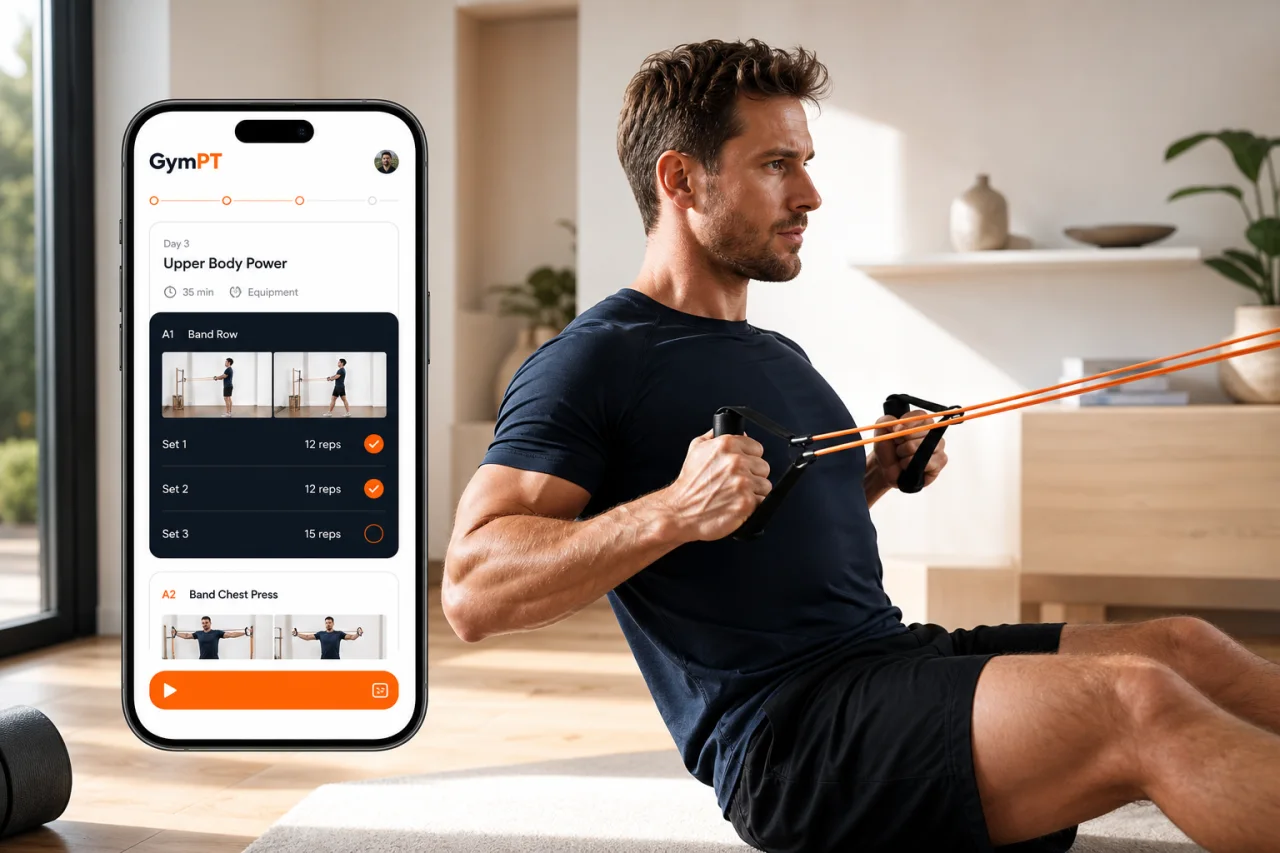
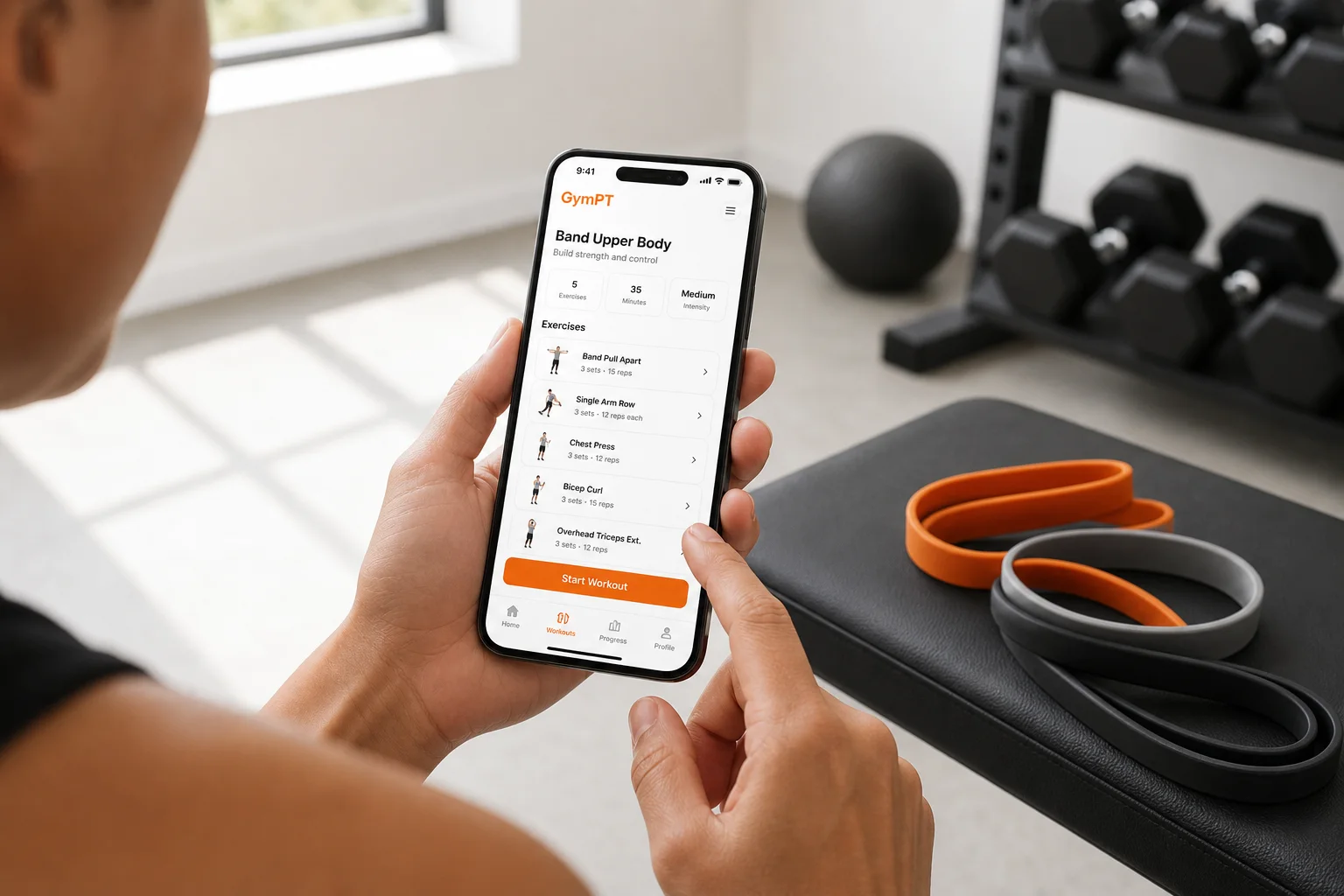
GymPT makes a resistance band workout plan easier to follow by turning your available equipment into a personalized routine. You can tell the app what bands you have, how many days you want to train, and what your goal is. Then GymPT can build a plan that fits your setup instead of forcing you into a generic template.
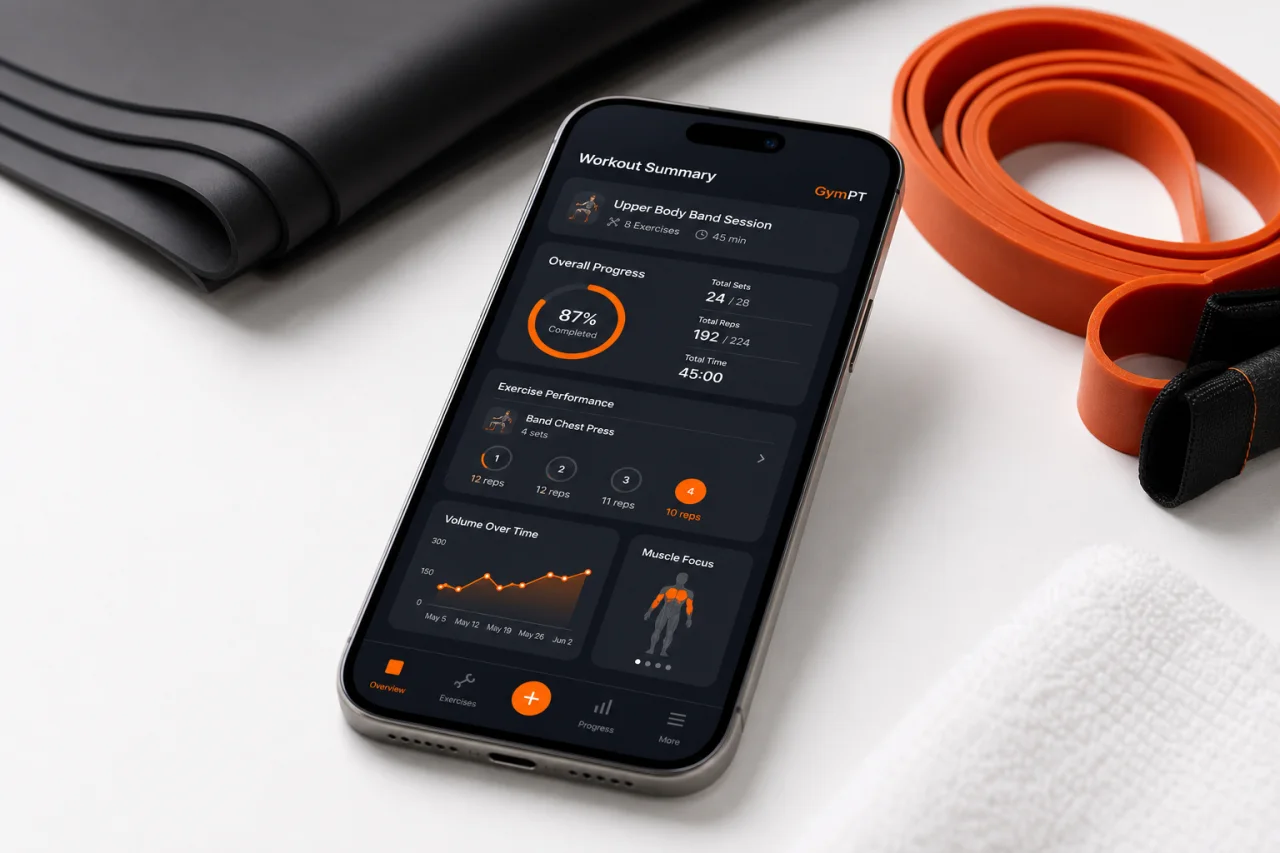
It also helps you keep momentum with AI coach chat, workout tracking, and progress insights. That means you can adjust your plan when your schedule changes, your band tension feels too easy, or you want to add more volume without starting from scratch.
When to update your plan
Update your plan when one of these happens:
- your current band feels too easy for most exercises
- you can complete the top end of your rep range with perfect form
- your schedule changes and you need fewer or shorter sessions
- you add new equipment, like a door anchor or heavier band
- you want to shift from general fitness to more strength-focused training
The best plan is not the most complicated one. It is the one that matches your equipment, fits your week, and gives you a clear way to progress.
Final takeaway
A strong resistance band workout plan is simple, specific, and built around the equipment you actually have. When you match exercises to your bands, set a realistic weekly structure, and track small progressions, you make strength training much easier to follow. That is exactly the kind of plan GymPT is designed to help you build.
Ready to train with what you have? Build your next band-based routine with GymPT and keep it progressing week by week.