cable machine workout plan
Cable Machine Workout Plan: How to Build a Flexible Routine Around the Equipment You Have
A cable machine workout plan works best when every exercise matches the equipment you actually have. Here’s how to build a simple, effective routine that is easy to follow and easy to progress.
Cable Machine Workout Plan: Start With the Equipment, Not the Guesswork
A good cable machine workout plan is not just a list of exercises. It is a plan that fits the station you actually have access to, so you can train without constantly swapping movements or improvising mid-session. That matters because adults are recommended to do muscle-strengthening activity at least two days per week, and the easier a plan is to follow, the more likely you are to stick with it. 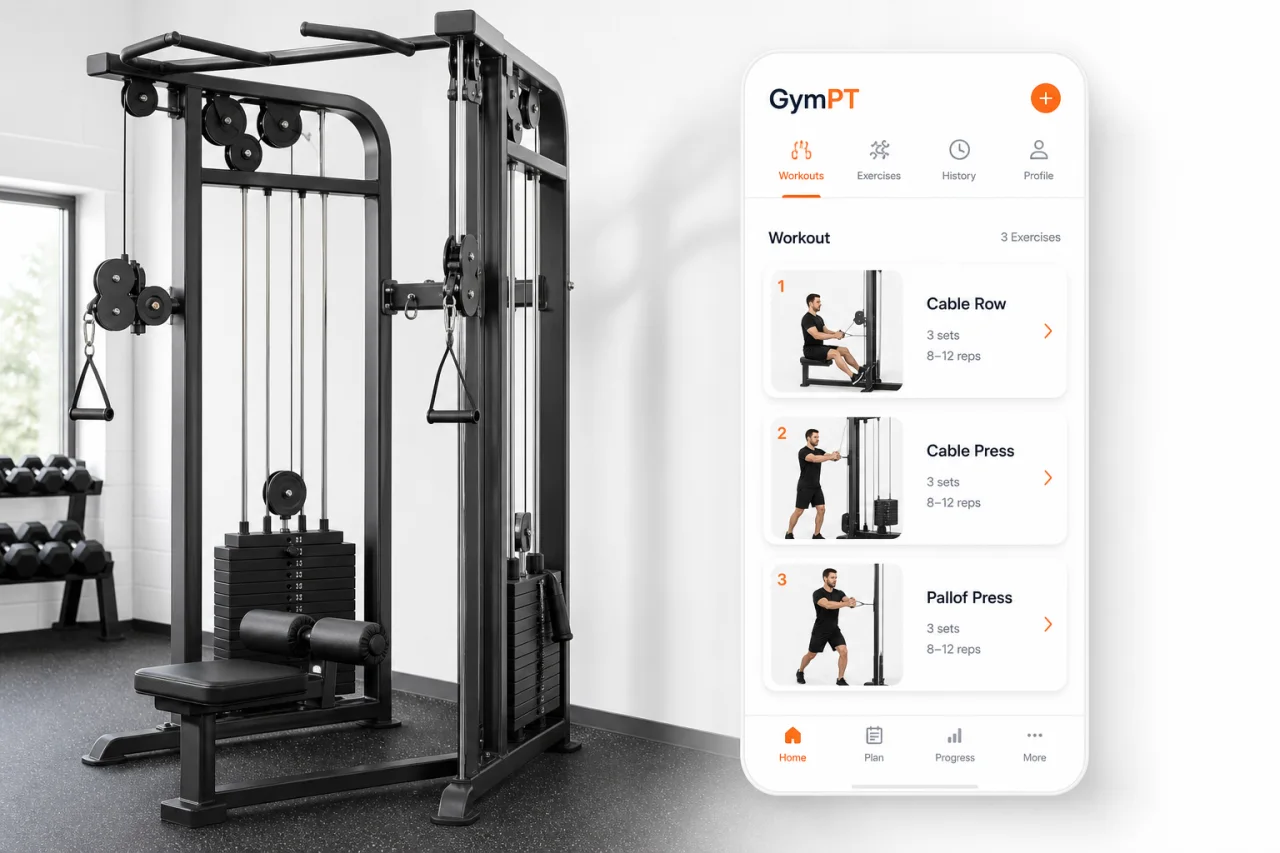
Cable machines are especially useful because they let you train the same movement patterns with smooth resistance, easy load changes, and a wide range of attachments. If your goal is consistency, the smartest approach is to build around the machine first, then choose exercises that match your space, handles, and training level.
Why cable training is so easy to follow
Cable training works well for people who want structure. Instead of hunting for dumbbells, benches, or open floor space, you can often complete an entire session at one station. That makes it easier to keep rest times tight, track progress, and repeat the same workout week after week.
It also helps with exercise selection. When your plan is built around the equipment you have, you spend less time deciding what to do and more time actually training. That is one reason equipment-based training is so practical for busy gym sessions.
How to build a cable machine workout plan that actually works
The best cable machine workout plan covers the major movement patterns, not just random isolation work. A simple structure is:
- One push movement for chest, shoulders, or triceps
- One pull movement for back or rear delts
- One squat or lunge pattern for legs
- One hinge pattern for glutes and hamstrings
- One core exercise for trunk stability
That structure keeps the workout balanced and makes it easier to progress over time. If you only have one cable stack, you can still build a full session by choosing exercises that use the same station from different angles.
Example cable exercise choices by movement pattern
- Push: cable chest press, standing cable fly, cable shoulder press
- Pull: seated cable row, standing row, face pull, straight-arm pulldown
- Legs: cable squat, cable reverse lunge, cable pull-through
- Core: Pallof press, cable chop, cable crunch
If your gym has only a few attachments, do not overcomplicate it. A rope, straight bar, and single handle can cover most needs.
A simple cable workout routine you can repeat each week
Here is a practical full-body template you can use two or three times per week. It is simple enough to repeat, but flexible enough to adjust based on your equipment and recovery.
- Cable chest press — 3 sets of 8 to 12 reps
- Seated cable row — 3 sets of 8 to 12 reps
- Cable squat or cable reverse lunge — 3 sets of 10 to 12 reps
- Cable pull-through — 3 sets of 10 to 15 reps
- Face pull — 2 to 3 sets of 12 to 15 reps
- Pallof press — 2 to 3 sets of 10 to 12 reps per side
This is not the only way to train, but it is a strong starting point. If you want a shorter session, keep the first four movements and rotate the last two across the week.
How to progress without changing the whole plan
Progress should be easy to see. With cable training, the simplest progression is to keep the same exercise and add a little more work over time. You can do that by:
- Adding 1 to 2 reps before increasing weight
- Increasing the load once you hit the top of your rep range
- Adding a set to one main movement
- Slowing the lowering phase for more control
- Improving range of motion without losing form
If your plan changes every week, it becomes hard to know whether you are improving. Repeating the same cable exercises for several weeks gives you cleaner progress data and makes your training easier to track.
How to match the plan to the cable station you actually have
Not every gym cable setup is the same. Some have dual adjustable pulleys, some have a single stack, and some only offer a few fixed attachments. The best plan is the one that fits your environment.
- If you have dual cables: use presses, rows, flys, chops, and split-stance work.
- If you have one stack: prioritize rows, pulldowns, pull-throughs, curls, triceps work, and core drills.
- If the station is busy: build a backup list of alternate cable exercises that use the same attachment.
This is where equipment-based training becomes valuable. Matching exercises to available equipment makes the workout easier to follow, reduces downtime, and helps you stay consistent even in a crowded gym.
Common mistakes to avoid
Most cable plans fail for simple reasons, not because cables are ineffective. Watch out for these mistakes:
- Too many exercises: a long list looks impressive but is harder to repeat.
- No progression plan: if you never increase reps or load, the workout stalls.
- Only doing isolation work: arms and shoulders matter, but so do legs, back, and core.
- Ignoring setup time: if a movement takes too long to set up, you may skip it.
- Changing exercises too often: consistency is what makes progress visible.
How GymPT helps you stay on track
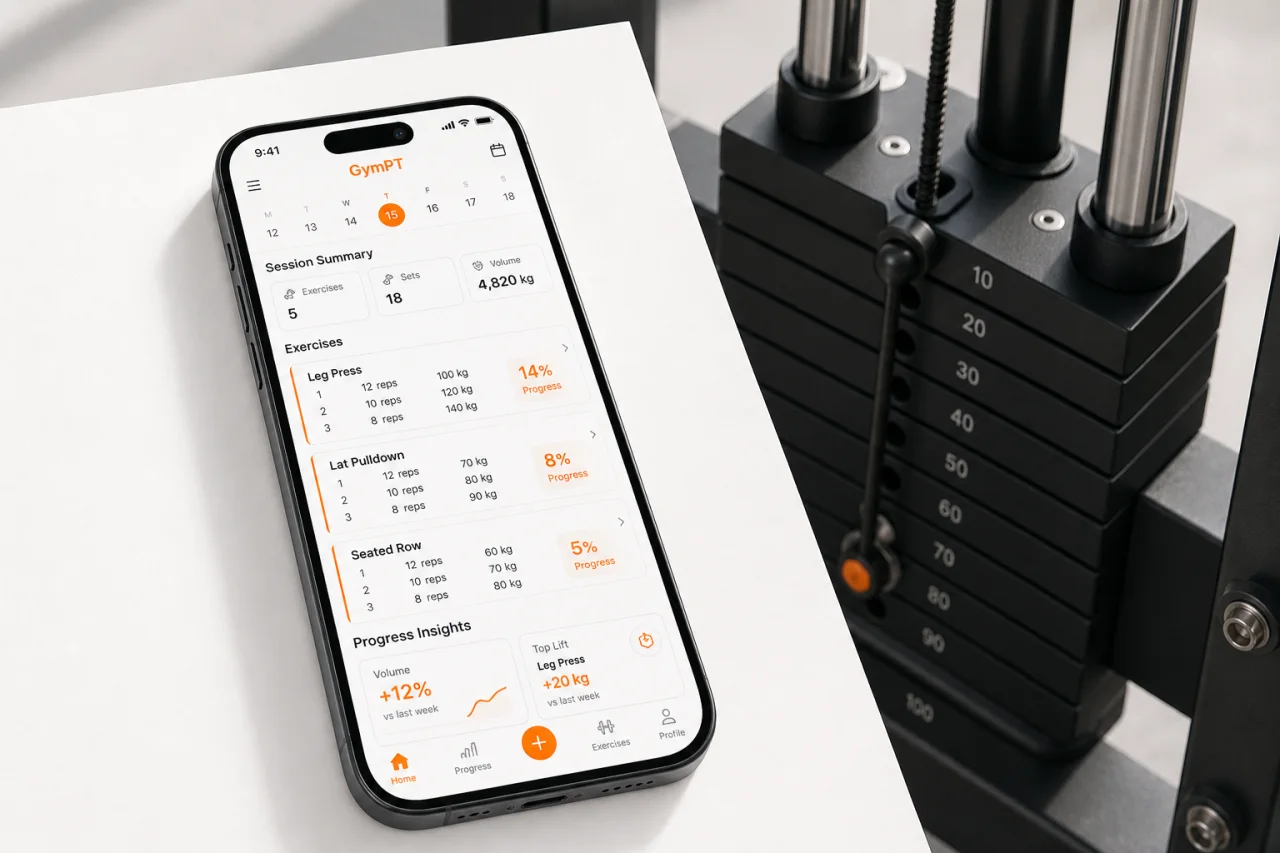
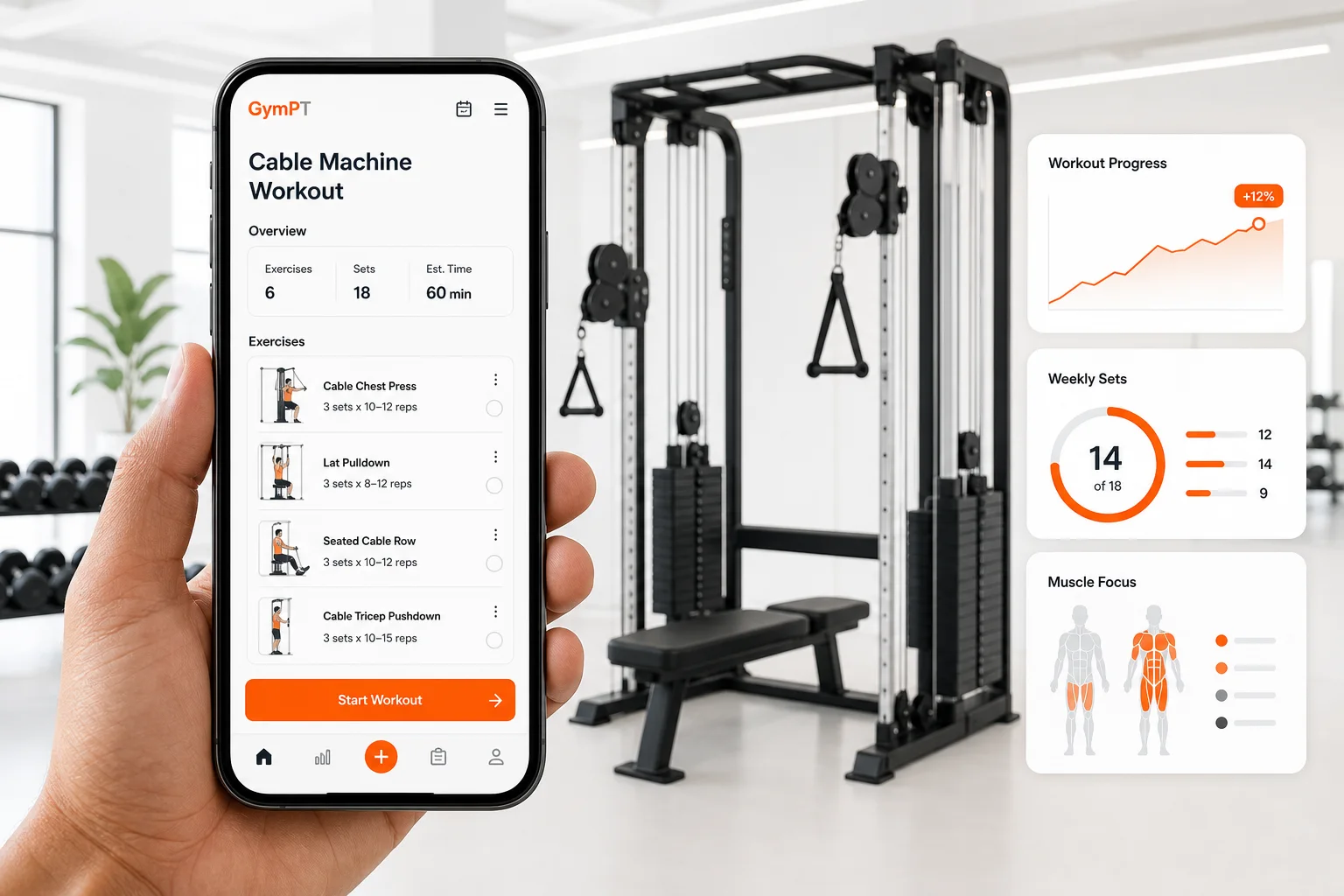
GymPT makes cable training easier by turning your available equipment into a plan you can actually follow. You can build a workout around the machines in your gym, get AI coach guidance when you are unsure about exercise choice, track your sessions, and review progress insights without rebuilding the routine from scratch every week.
If you want a plan that feels practical instead of random, that is the real advantage: the workout matches the equipment, and the equipment matches your routine.
Bottom line
A strong cable machine workout plan is simple, repeatable, and built around the station you have access to. Focus on the main movement patterns, keep the exercise list short, and progress gradually. When your plan fits your equipment, training becomes easier to follow and much easier to sustain.
Related reading: if you want to compare this approach with other equipment styles, see our guides on machine based workout plan, dumbbell workout plan, strength training program, and no equipment workout plan.