machine based workout plan
Machine Based Workout Plan: How to Match Exercises to the Equipment You Have
A machine based workout plan can make training easier to follow, easier to track, and easier to repeat. Learn how to match exercises to the equipment you actually have.
Machine Based Workout Plan: Why Equipment Matching Makes Training Easier
A machine based workout plan is one of the simplest ways to make training feel clear from the first session. Instead of guessing which exercises to do, you build your routine around the machines available in your gym. That means less setup, fewer technique barriers, and a plan that is easier to repeat week after week.
This approach works especially well if you want structure without overthinking. It can also help you stay consistent, because the workout is built around what you can actually use, not what looks ideal on paper. For most adults, regular muscle-strengthening work matters alongside aerobic activity, and the easiest plan is often the one you can follow consistently.
What a machine based workout plan is best for
Machine training is not “better” than free weights for everyone, but it is often easier to organize. Machines guide the movement path, reduce the need to balance a load, and make exercise selection more straightforward. That can be useful for beginners, busy gym-goers, or anyone returning to training after time away.
- Beginners who want a lower-friction start
- People training in busy gyms who need quick exercise swaps
- Lifters who want repeatability and simple progression
- Anyone who prefers clear setup over complex movement choices
CDC guidance also emphasizes that adults need both aerobic work and muscle-strengthening activity each week, with strength training on at least two days. A machine-based routine can make that requirement easier to meet because the exercise list is easy to standardize.
How to build a machine based workout plan step by step
1. Start with the machines your gym actually has
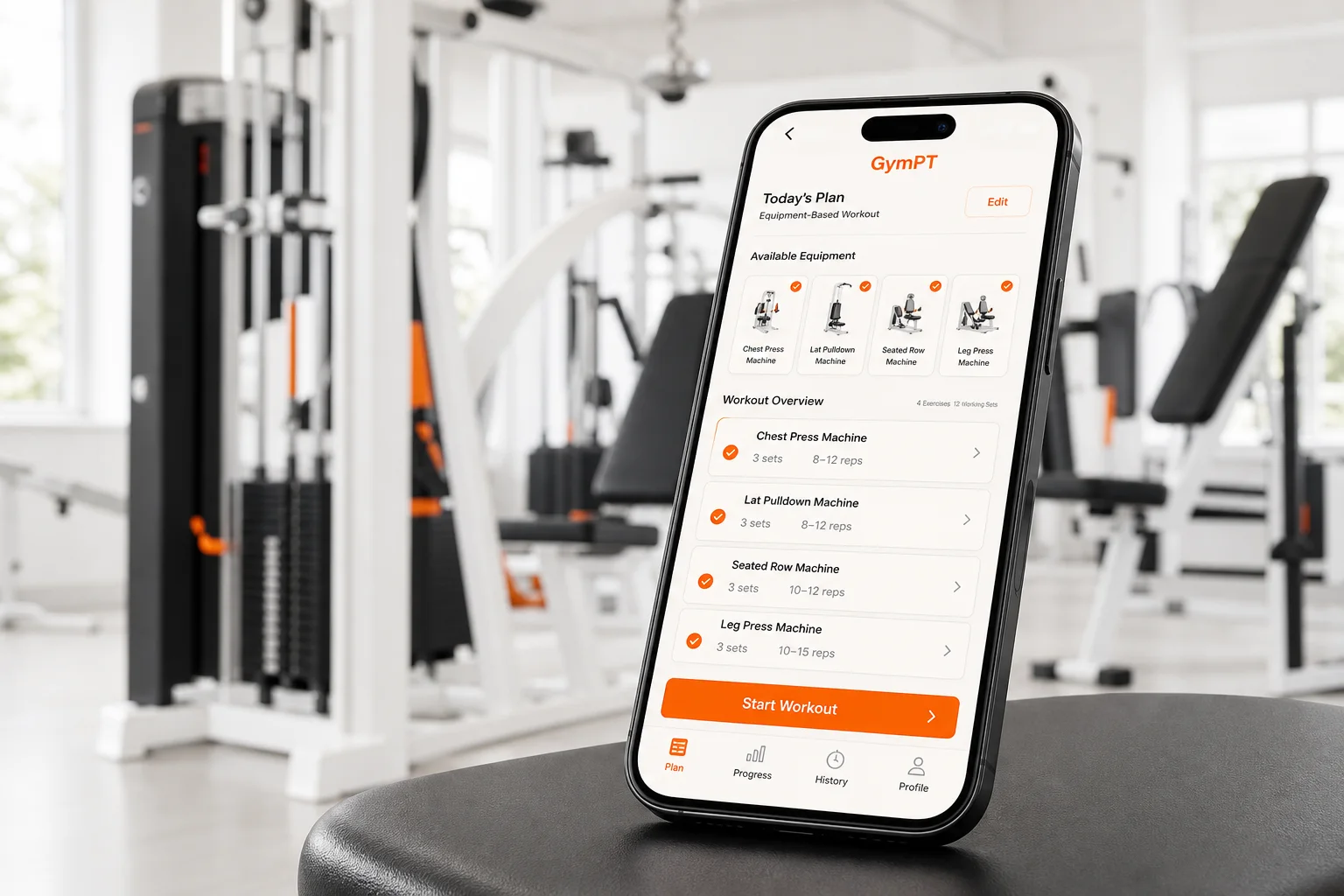
Before you write the plan, walk the floor and list the equipment you can reliably access. A good plan is built around reality. If your gym has a leg press, chest press, lat pulldown, seated row, shoulder press, and cable station, you already have enough to build a full routine.
GymPT can help here by matching exercises to available equipment, so your plan reflects the machines in front of you instead of a generic template.
2. Cover the major movement patterns
Rather than picking random exercises, choose one machine for each major pattern:
- Squat or leg press pattern: leg press, hack squat, or smith machine squat
- Hinge pattern: cable pull-through, back extension machine, or machine hip hinge variation
- Horizontal push: chest press or pec deck press
- Horizontal pull: seated row
- Vertical push: shoulder press
- Vertical pull: lat pulldown
- Core: cable crunch, rotary torso, or machine-supported trunk work
This structure keeps the plan balanced and reduces the chance that you overtrain one area while neglecting another.
3. Keep the exercise list short
One of the biggest advantages of a machine based workout plan is simplicity. You do not need 12 exercises per session. Most people do better with a concise list they can repeat and progress.
A practical session might include 5 to 7 movements, with 2 to 4 sets each. That is enough to train the body well without turning the workout into a long equipment scavenger hunt.
4. Use a progression rule you can track
Machines make progression easier because the load is usually easy to adjust. Pick one rule and stick to it:
- Add 1 to 2 reps before increasing weight
- Increase the stack by the smallest available jump when you hit the top of your rep range
- Keep the same weight and improve control, range of motion, or consistency first
That kind of repeatable structure is useful because progress is easier to see when the exercise setup stays the same.
A simple machine based workout routine example
Here is a straightforward full-body example you can adapt to most commercial gyms:
- Leg press — 3 sets of 8 to 12 reps
- Seated chest press — 3 sets of 8 to 12 reps
- Lat pulldown — 3 sets of 8 to 12 reps
- Seated row — 2 to 3 sets of 10 to 12 reps
- Shoulder press machine — 2 to 3 sets of 8 to 12 reps
- Cable crunch — 2 to 3 sets of 10 to 15 reps
If you train three days per week, you can repeat this structure and make small changes in load or reps over time. If you train four days per week, split the same movement patterns across upper and lower sessions.
How to choose the right machine when options overlap
Many gyms have more than one machine for the same muscle group. The best choice is usually the one that lets you train with the best combination of comfort, stability, and repeatability.
- Choose the machine you can set up fastest if adherence is your main goal
- Choose the machine that feels most stable if you are still learning the movement
- Choose the machine with the clearest progression path if you want easy tracking
- Choose the machine that fits your body well if another option feels awkward or limited
The point is not to find the “perfect” machine. The point is to build a plan you can repeat without friction.
Common mistakes to avoid
- Building the plan around random favorites instead of movement patterns
- Using too many exercises and making the workout hard to finish
- Changing machines every session, which makes progress harder to track
- Ignoring lower-body work and overloading upper-body machines only
- Skipping progression and doing the same weights forever
A machine based workout plan should feel simple, not lazy. Simplicity works when it still covers the whole body and progresses over time.
How GymPT makes machine based training easier
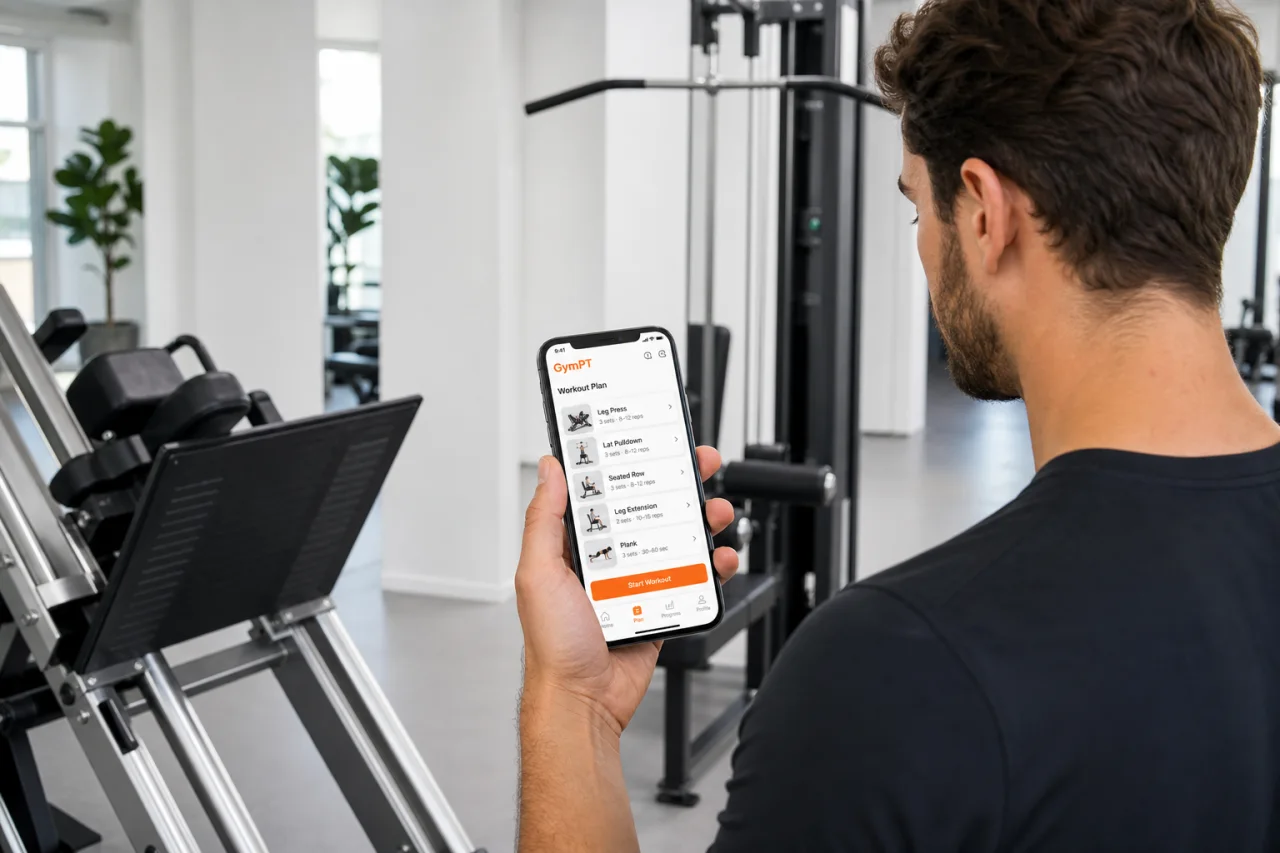
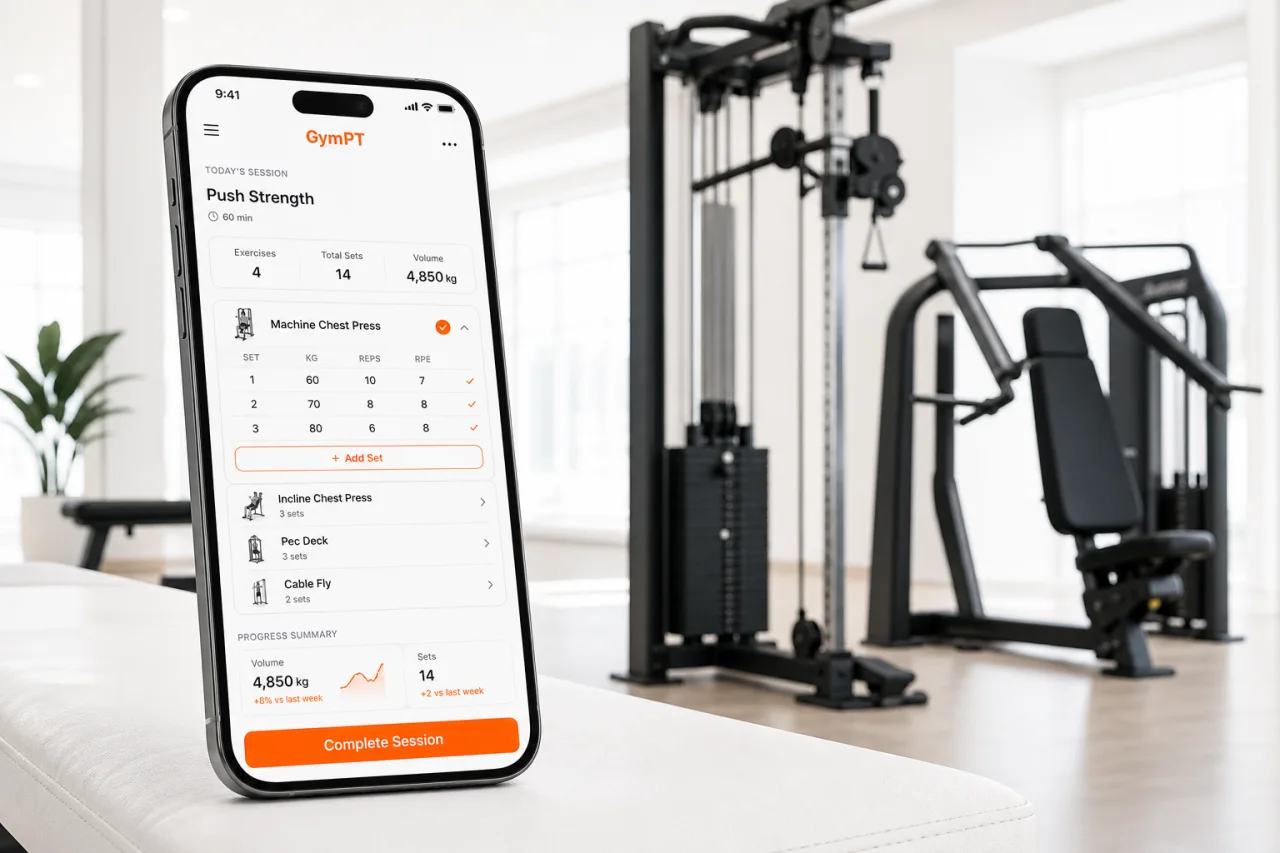
GymPT is built for people who want a plan that matches their real gym setup. Instead of forcing a generic routine, it can create a personalized workout plan based on the equipment you have, track your sessions, and show progress insights over time.
That matters because the best plan is the one you can actually follow. If your gym has limited machines, GymPT can adapt. If your schedule changes, it can adjust. If you want help choosing the next exercise or load, the AI coach chat can guide you without making the process complicated.
When a machine based workout plan is the smartest choice
This style of training is especially useful if you want:
- A clear routine with less decision fatigue
- Easy exercise swaps when equipment is busy
- A plan that is simple to track and repeat
- More confidence in the gym without overcomplicating things
For many people, that is exactly what makes training sustainable. A machine based workout plan removes unnecessary guesswork so you can focus on showing up, doing the work, and improving week by week.
Bottom line: if your goal is consistency, a machine based workout plan can be one of the most practical ways to train. Match the exercises to the equipment you have, keep the routine balanced, and progress it in small, trackable steps.
If you want help turning your gym’s machines into a personalized routine, GymPT can build the plan for you.