dumbbell workout plan
Dumbbell Workout Plan: How to Build a Simple, Effective Routine With Limited Equipment
A dumbbell workout plan works best when it matches the equipment you actually have. Learn how to build a simple routine for strength, muscle, and consistency.
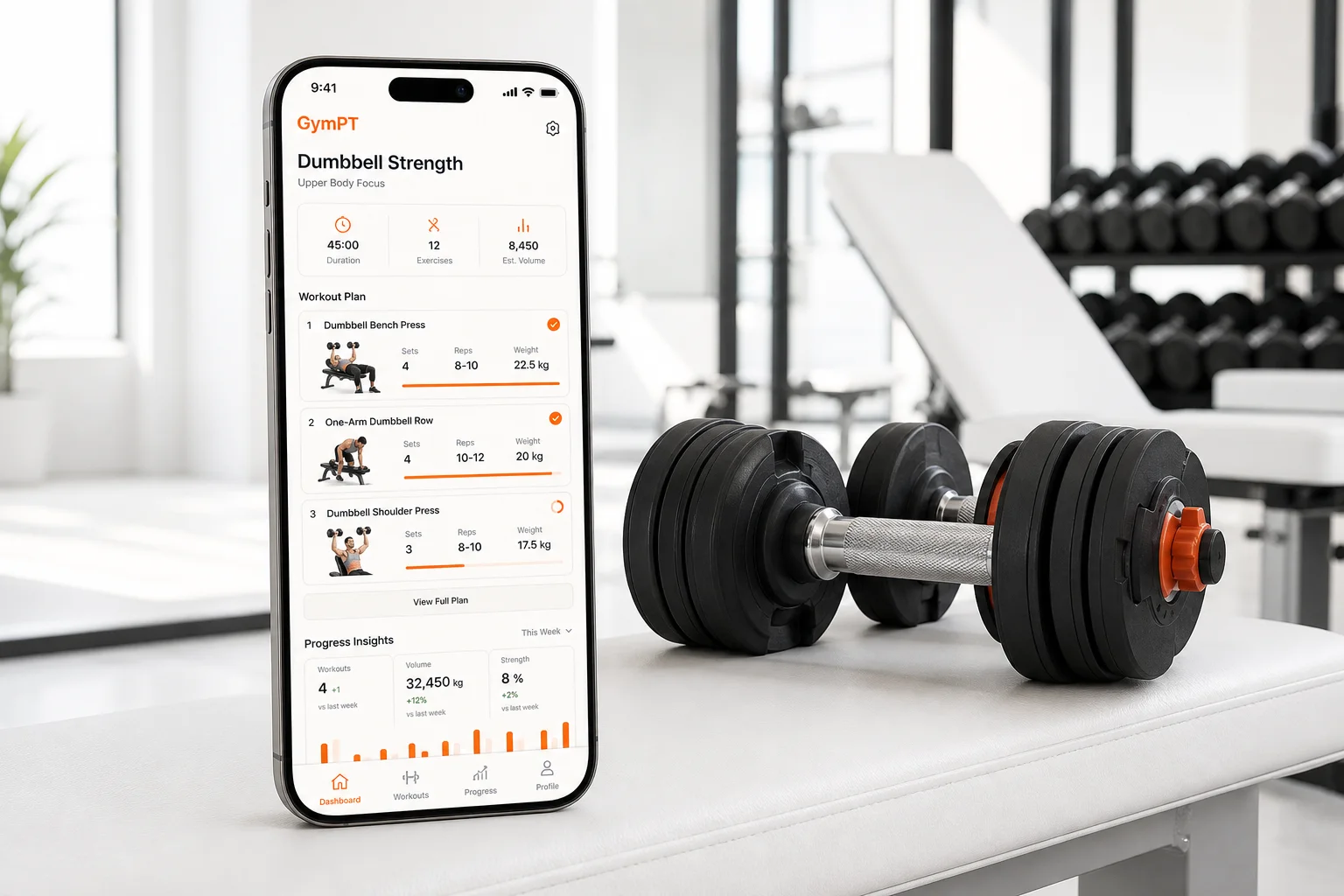
Dumbbell workout plan: why equipment-matched training is easier to follow
If you only have dumbbells, your plan should be built around dumbbell exercises that cover the major movement patterns: squat, hinge, push, pull, carry, and core. That sounds simple, but it is the reason a dumbbell workout plan is often easier to stick to than a generic gym template. When the exercise list matches your equipment, you spend less time improvising and more time training with purpose.
Current resistance-training guidance continues to emphasize consistency, regular whole-body training, and enough weekly work to drive progress. Research also shows that multiple sets generally outperform single sets for strength and muscle gains, while training close to failure can help when volume is appropriate. In practice, that means your dumbbell plan should be simple enough to repeat and structured enough to progress.
What makes a good dumbbell workout plan?
A good plan does three things well:
- Matches your equipment: every exercise can be done with the dumbbells you own or have access to.
- Covers the whole body: legs, hips, back, chest, shoulders, arms, and core all get trained across the week.
- Progresses over time: you add reps, load, sets, or better control instead of repeating the same workout forever.
The NHS recommends working all major muscle groups at least two days per week, which fits well with a dumbbell-based routine. ACSM’s updated resistance-training guidance also highlights the value of consistent training and practical programming over complicated methods.
How to choose dumbbell exercises that actually fit your plan
Instead of building your workout around random exercises, build it around movement patterns. That makes the plan easier to follow and easier to adjust if your dumbbells are light, heavy, adjustable, or limited in number.
1. Squat pattern
Use goblet squats, front-loaded squats, or split squats. These train your quads, glutes, and trunk without needing a barbell.
2. Hinge pattern
Use dumbbell Romanian deadlifts, single-leg RDLs, or dumbbell hip hinges. These are your main posterior-chain builders.
3. Push pattern
Use dumbbell bench presses, floor presses, incline presses, or overhead presses. If you train at home, the floor press is especially useful because it needs very little setup.
4. Pull pattern
Use one-arm dumbbell rows, chest-supported rows, or rear-delt fly variations. Pulling volume matters because it balances pressing and helps build the upper back.
5. Carry and core pattern
Use farmer carries, suitcase carries, dead bugs, or weighted planks. These are simple, effective finishers that improve control and bracing.
When your available equipment is limited, the best exercise is often the one you can repeat with good form and steady progression. That is why equipment-based training is so useful: it removes friction and keeps the plan realistic.
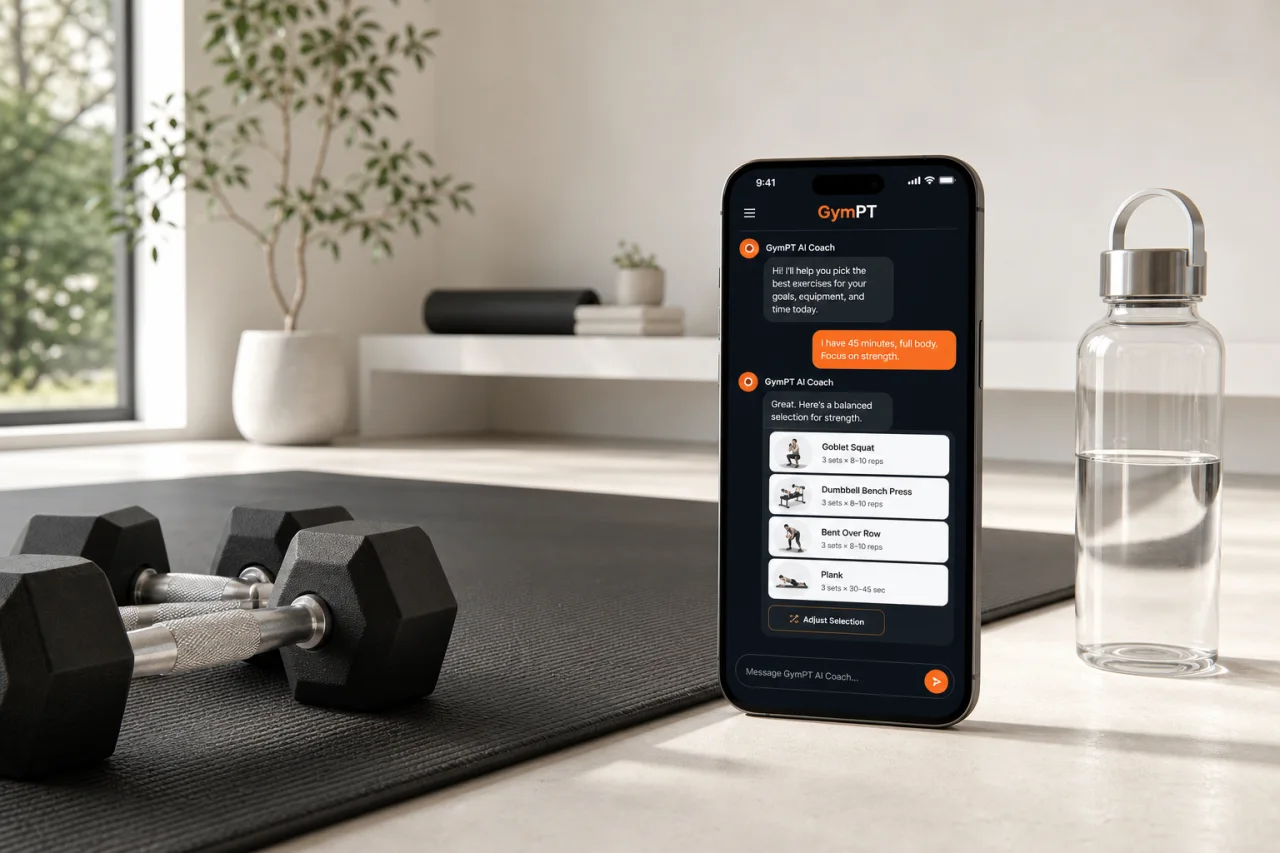
A simple dumbbell workout plan you can actually repeat
If you want a practical starting point, use a 3-day full-body structure. It gives you enough weekly frequency to practice the main lifts without making the week feel crowded.
Day 1
- Goblet squat — 3 sets of 8 to 12 reps
- Dumbbell floor press — 3 sets of 8 to 12 reps
- One-arm dumbbell row — 3 sets of 10 to 12 reps per side
- Dumbbell Romanian deadlift — 2 to 3 sets of 8 to 12 reps
- Farmer carry — 3 rounds of 30 to 45 seconds
Day 2
- Split squat — 3 sets of 8 to 10 reps per side
- Standing dumbbell overhead press — 3 sets of 6 to 10 reps
- Chest-supported row or bent-over row — 3 sets of 8 to 12 reps
- Glute bridge with dumbbell — 2 to 3 sets of 10 to 15 reps
- Dead bug — 2 to 3 sets of 8 to 12 reps per side
Day 3
- Goblet squat or front-foot elevated split squat — 3 sets of 8 to 12 reps
- Incline dumbbell press or floor press — 3 sets of 8 to 12 reps
- Rear-delt fly — 2 to 3 sets of 12 to 15 reps
- Single-leg RDL — 2 to 3 sets of 8 to 10 reps per side
- Suitcase carry — 3 rounds of 30 to 45 seconds per side
This is not the only way to train, but it is a strong template because it covers the whole body, repeats key patterns, and keeps the exercise list short enough to remember. That matters more than people think. The best plan is the one you can follow next week, not just the one that looks impressive on paper.
How hard should dumbbell sets feel?
For most people, the last few reps of a set should feel challenging while still controlled. You do not need to turn every set into a maximal effort test. Research suggests that training close to failure can be useful, but it is not magic by itself; volume, exercise selection, and consistency still matter.
A practical rule:
- Stop with about 1 to 3 reps left in reserve on most sets.
- Use slightly harder effort on the final set of an exercise if recovery is good.
- Keep form clean before adding more load or more reps.
If your dumbbells are light, use slower lowering phases, pauses, unilateral work, or higher reps. If they are heavy, keep the rep range lower and focus on crisp technique.
How to progress your dumbbell workout plan
Progression is where many dumbbell routines fail. People repeat the same weights and reps for months, then wonder why results stall. A better approach is to use one progression method at a time.
- Add reps first. For example, move from 8 reps to 10 reps before increasing weight.
- Add load next. Once you hit the top of your rep range with good form, increase the dumbbells slightly.
- Add a set if needed. If recovery is good and progress slows, add one set to a main lift.
- Improve control. Use a slower eccentric or a brief pause to make lighter dumbbells more effective.
That approach aligns with the broader evidence that multiple sets and sensible weekly volume support better strength and muscle outcomes than minimal work alone.
Common mistakes to avoid
- Too many exercises: a long list makes the plan harder to repeat.
- Only pressing, no pulling: balance matters for upper-body development.
- Skipping legs: lower-body work should not disappear just because you have dumbbells.
- Changing the plan every week: progress needs repetition.
- Using random weights: track your loads so you can see improvement.
How GymPT helps you build a better dumbbell workout plan
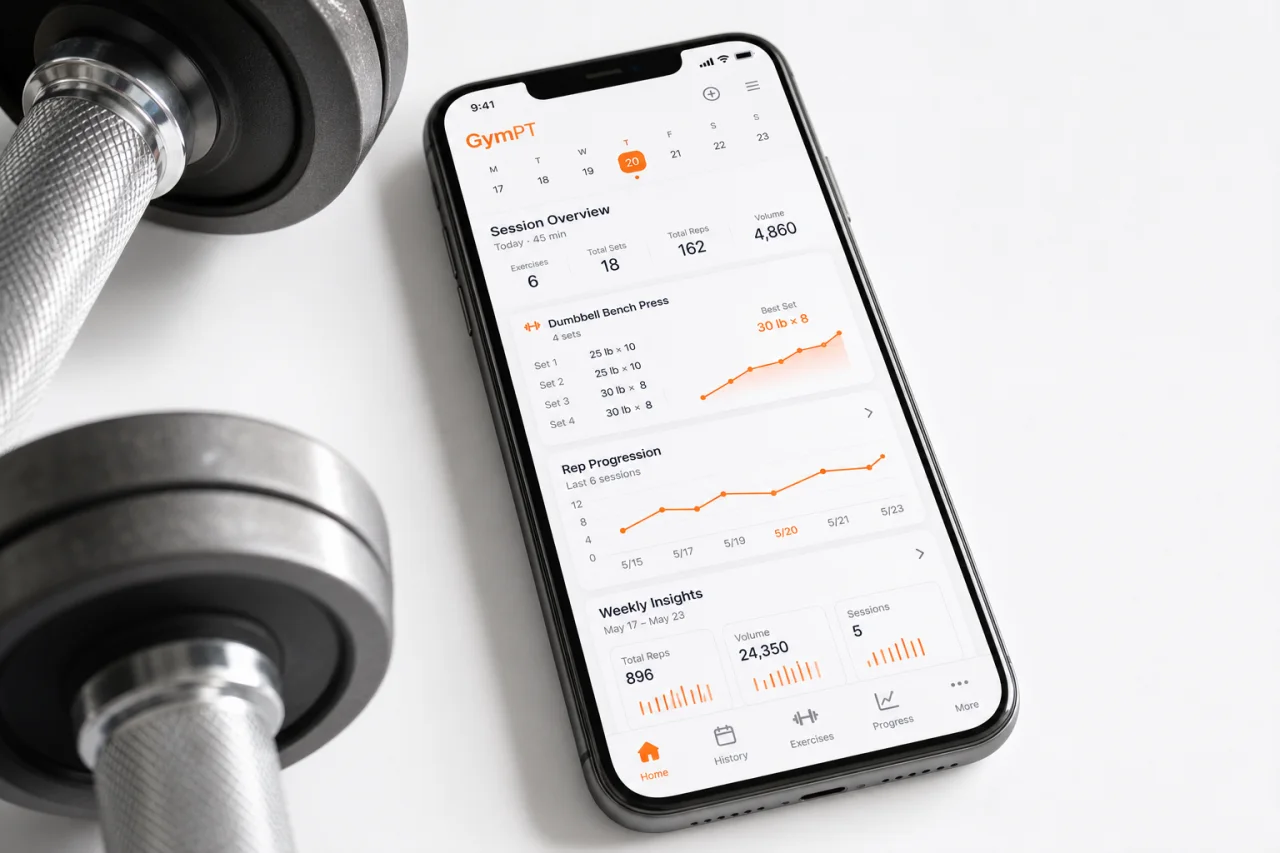
GymPT makes dumbbell training easier because it can build a plan around the equipment you actually have, then adapt it as your strength changes. Instead of guessing what to do next, you can get a personalized dumbbell workout plan, ask the AI coach for exercise guidance, track your sessions, and review progress insights over time.
That is especially useful if you train at home, in a small gym, or with a limited set of dumbbells. When the plan matches the equipment, the workout becomes simpler to start and easier to finish.
Bottom line
A strong dumbbell workout plan does not need fancy exercises or a huge list of movements. It needs the right movement patterns, enough weekly volume, and a progression method you can repeat. Keep the plan short, train the whole body, and make sure every exercise fits the dumbbells you actually have. That is how a simple plan becomes a sustainable one.
If you want help turning your equipment into a real training plan, GymPT can build it for you.