upper lower workout split
Upper Lower Workout Split: A Smarter Weekly Structure for Recovery and Progress
An upper lower workout split is one of the simplest ways to train hard, recover well, and keep progressing. Here’s how to structure it, adapt it, and make it fit your week.
Upper Lower Workout Split: A Smarter Weekly Structure for Recovery and Progress
An upper lower workout split is one of the most practical ways to organize strength training. Instead of trying to train everything in one session, you divide the week into upper-body days and lower-body days. That gives you a clear structure, enough recovery between sessions, and a simple way to keep progressing without overcomplicating your plan.
For many lifters, the real advantage is not just convenience. It is balance. You can train each major muscle group more than once per week, manage fatigue better, and adjust the plan around your schedule, equipment, and goals.

What an upper lower split actually looks like
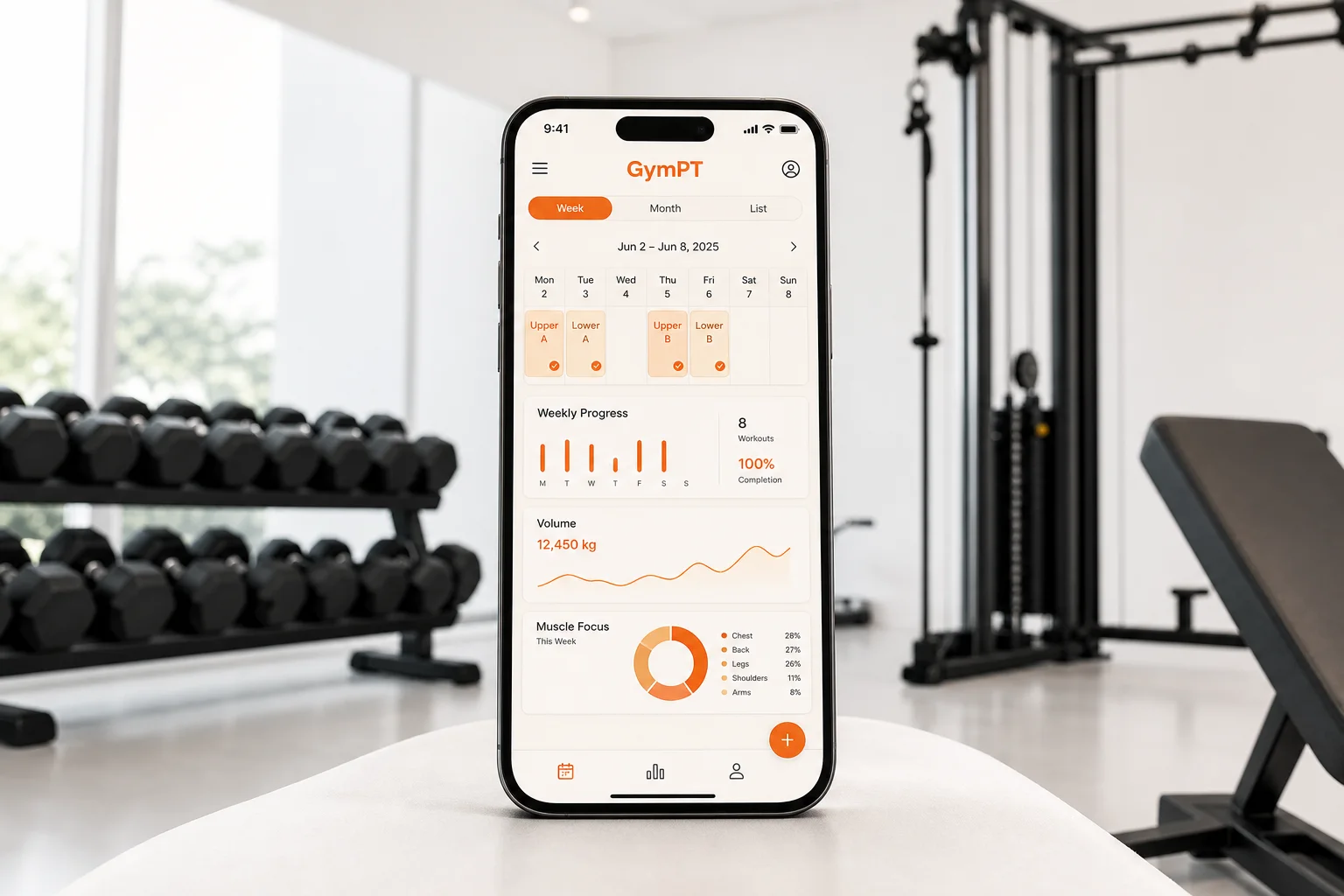
The basic idea is straightforward: alternate upper-body and lower-body sessions across the week. A common version is a 4 day upper lower split:
- Monday: Upper body
- Tuesday: Lower body
- Thursday: Upper body
- Friday: Lower body
You can also run it on a 2-day or 3-day schedule if your week is busy. The structure matters less than the pattern: train hard, recover, repeat.
That recovery window is important. Major health organizations recommend muscle-strengthening work for the major muscle groups on at least 2 days per week, and resistance-training guidance commonly supports nonconsecutive training days for beginners and intermediate lifters alike.
Why the upper lower workout split works so well
1. It gives you enough frequency to improve
Training each muscle group twice weekly is a strong default for many people because it creates repeated practice and repeated stimulus without forcing marathon sessions. That is especially useful if your goal is muscle gain, general strength, or steady recomposition.
2. It makes recovery easier to manage
When you separate upper and lower work, you reduce overlap. Your pressing muscles are not fighting your squat session, and your legs are not carrying the full load of a total-body workout every time. That can make it easier to keep effort high on the main lifts.
3. It fits real life better than rigid templates
Some weeks you have four training days. Some weeks you only have two or three. An upper lower split is flexible enough to scale up or down without abandoning the whole plan. That is one reason it works well for people who want structure but do not want a plan that breaks the moment life gets busy.
Who should use an upper lower split?
An upper lower workout split is a strong choice if you want:
- a simple weekly structure you can follow consistently
- more recovery than a high-frequency body-part split
- more training quality than a single weekly full-body session
- a plan that can support strength, hypertrophy, or general fitness
It is especially useful for intermediate lifters, busy professionals, and anyone who wants a plan that is easy to track. Beginners can use it too, but they may do better with fewer exercises per session and a stronger focus on technique.
How to build your weekly structure
The best upper lower workout split is the one you can recover from and repeat. Start with the number of days you can realistically train, then build the week around that.
Option 1: 4 day upper lower split
This is the classic version and often the best starting point for people who want steady progress.
- Upper A: bench press or dumbbell press, row, overhead press, pulldown, arms
- Lower A: squat pattern, hinge pattern, split squat, calf work, core
- Upper B: incline press, pull-up or pulldown, chest-supported row, lateral raise, arms
- Lower B: deadlift variation, leg press or front squat, hamstring curl, glute work, core
This setup gives you enough volume to grow while leaving room to recover between sessions.
Option 2: 3 day upper lower split
If you can only train three days, you can still use the same logic. One simple approach is:
- Week 1: Upper, Lower, Upper
- Week 2: Lower, Upper, Lower
This keeps the split balanced over time and works well for people who want consistency without a strict 4-day commitment.
Option 3: 2 day upper lower split
If your schedule is tight, two focused sessions can still be effective. In that case, prioritize compound lifts and keep the session efficient. You will not maximize every variable, but you can absolutely maintain and improve.
How much volume should you use?
Volume should match your goal and recovery capacity. A useful rule is to start with a manageable number of hard sets per muscle group each week, then add volume only if you are recovering well and still progressing.
For hypertrophy, many evidence-based programs land around moderate weekly volume per muscle group, often built from multiple exercises across two sessions. For strength, the emphasis shifts more toward load, quality reps, and skill practice on the main lifts. ACSM’s updated guidance also emphasizes training all major muscle groups at least twice per week and building volume gradually.
A practical starting point for most lifters is:
- Big muscle groups: 8-12 hard sets per week
- Smaller muscle groups: 4-8 hard sets per week
- Frequency: split that volume across two weekly sessions
If performance drops, soreness lingers too long, or motivation crashes, the issue is often too much volume too soon.
How to choose exercises for each day
Think in movement patterns, not just body parts. That keeps the plan balanced and easier to adapt to available equipment.
Upper body movement patterns
- Horizontal press: bench press, dumbbell press, machine press
- Horizontal pull: cable row, dumbbell row, chest-supported row
- Vertical press: overhead press, machine shoulder press
- Vertical pull: pull-up, lat pulldown
- Accessory work: lateral raises, curls, triceps extensions
Lower body movement patterns
- Knee-dominant: squat, hack squat, leg press, split squat
- Hip-dominant: Romanian deadlift, deadlift variation, hip thrust
- Single-leg work: lunges, step-ups, Bulgarian split squats
- Accessory work: leg curl, calf raise, core training
If you train in a gym with limited equipment, you can still build a strong upper lower workout split by matching the movement pattern to what is available. That is where a smart plan is better than a fixed template.
How to know if your split is working
A good plan should make progress visible. Look for these signs:
- you are adding reps, load, or better form over time
- your sessions feel challenging but repeatable
- you recover well enough to train the next session
- your weekly schedule feels sustainable
If you are always exhausted, skipping sessions, or stalling on the same lifts, the split may need adjustment. That could mean fewer exercises, less volume, a different training order, or more rest between lower-body days.
How GymPT can adapt an upper lower split to you
The best upper lower workout split is not the most complicated one. It is the one that fits your body, your equipment, and your week. GymPT helps you turn the structure into a plan that actually adapts.
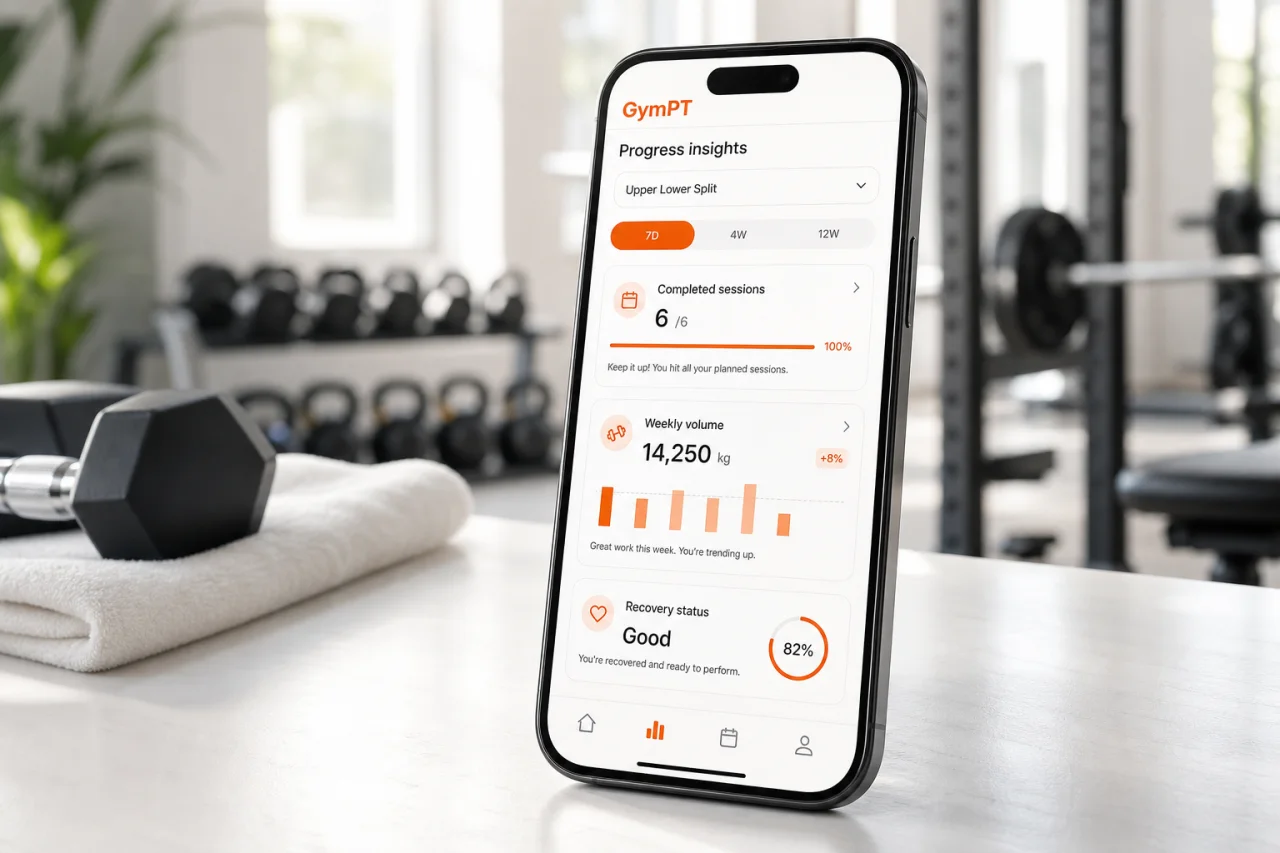
With GymPT, you can build an upper lower split around your available equipment, track workouts automatically, and use progress insights to decide when to increase volume or back off. If your recovery changes, your schedule shifts, or your goals move from strength to muscle gain, the plan can change with you.
That matters because training is not static. Your plan should respond to your real life, not fight it.
Simple sample week to get started
- Upper A: 4-5 exercises, focus on pressing and rowing
- Lower A: squat pattern, hinge pattern, one single-leg movement
- Rest or light activity: walking, mobility, easy cardio
- Upper B: vertical press, vertical pull, accessory work
- Lower B: deadlift variation, leg press or split squat, hamstrings and calves
- Weekend: rest, recovery, or optional conditioning
Keep the first version simple. You can always add more later. The goal is to create a weekly rhythm you can repeat long enough to see results.
Final takeaway
An upper lower workout split is a strong choice if you want a plan that balances frequency, recovery, and flexibility. It works because it is simple enough to follow and adaptable enough to fit different goals, schedules, and equipment setups.
If you want a training week that is easier to recover from than a body-part split and more structured than random workouts, this is one of the best places to start.