full body workout plan
Full Body Workout Plan: How to Build a Weekly Routine That Fits Your Goals
A full body workout plan works best when it matches your recovery, schedule, and goal. Learn how to structure the week, choose exercises, and adapt over time.
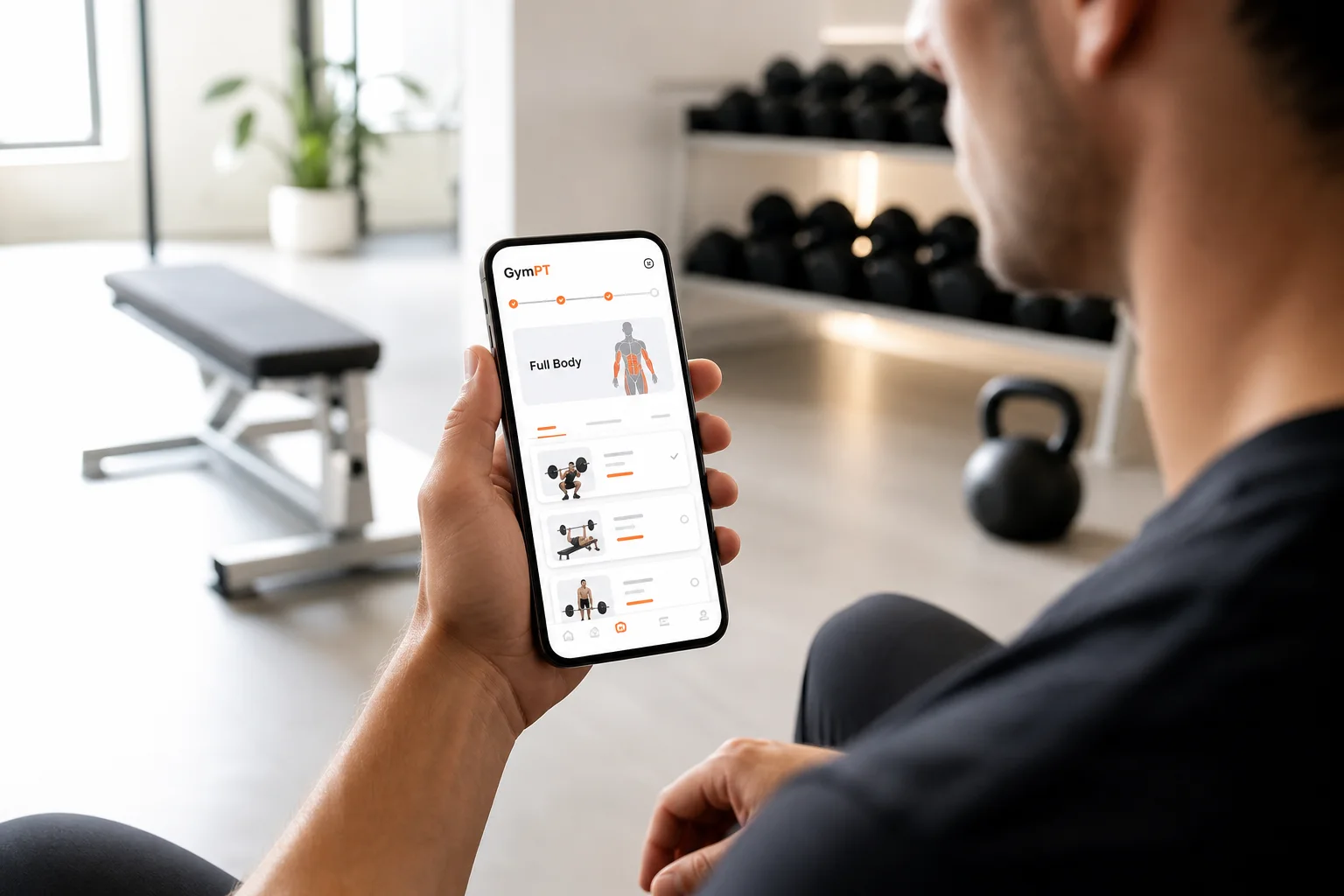
Why a full body workout plan works so well
A full body workout plan is one of the most practical ways to train when you want steady progress without overcomplicating your week. Instead of dedicating separate days to one muscle group, you train the major movement patterns across multiple sessions. That gives you more chances to practice the basics, spread your weekly work more evenly, and adjust training around real life.
This approach is especially useful if you want a plan that can flex with your schedule. Public health guidance recommends that adults include muscle-strengthening activity on at least 2 days per week, alongside regular aerobic activity. A full body structure makes that easy to organize because each session can cover the whole body while still leaving room for recovery.
For many people, the biggest advantage is consistency. A plan is easier to follow when it is simple enough to repeat, but flexible enough to adapt when work, travel, or fatigue gets in the way.
How many days per week should you train?
The best weekly structure depends on your goal, experience, and recovery. For beginners, training the full body 2 to 3 times per week is a strong starting point because it creates regular practice without demanding too much recovery. NSCA guidance notes that novice lifters often do well with nonconsecutive full body sessions, such as Monday, Wednesday, and Friday.
If you are more experienced, a full body plan can still work well. A 2024 systematic review and meta-analysis found that split and full-body routines produced similar strength and muscle growth when total training volume was matched. In other words, the weekly structure matters less than whether the plan is well programmed and recoverable.
That is why the right answer is not “full body is best for everyone.” The better question is: how many sessions can you recover from and repeat consistently?
Simple weekly options
- 2 days per week: Best for busy schedules, beginners, or people returning to training.
- 3 days per week: A balanced option for most people who want steady progress and enough recovery.
- 4 days per week: Useful if you want shorter sessions and more total weekly volume, but still like full body frequency.
If you are unsure, start with 3 days. It is often the easiest balance between training stimulus and recovery.
What a smart full body workout plan should include
A good plan does not just list exercises. It organizes the week so each session has a purpose. A strong full body workout plan usually includes these movement patterns:
- Squat pattern: squat, leg press, goblet squat
- Hinge pattern: Romanian deadlift, hip thrust, back extension
- Push pattern: bench press, dumbbell press, overhead press
- Pull pattern: row, lat pulldown, assisted pull-up
- Core and carry work: plank variations, dead bug, farmer carry
You do not need to hit every pattern with the same volume in every session. In fact, rotating emphasis across the week often works better. One day can be more lower-body focused, another more upper-body focused, while still remaining a full body session overall.
That structure helps you manage fatigue. It also makes it easier to train hard enough to progress without turning every workout into a marathon.
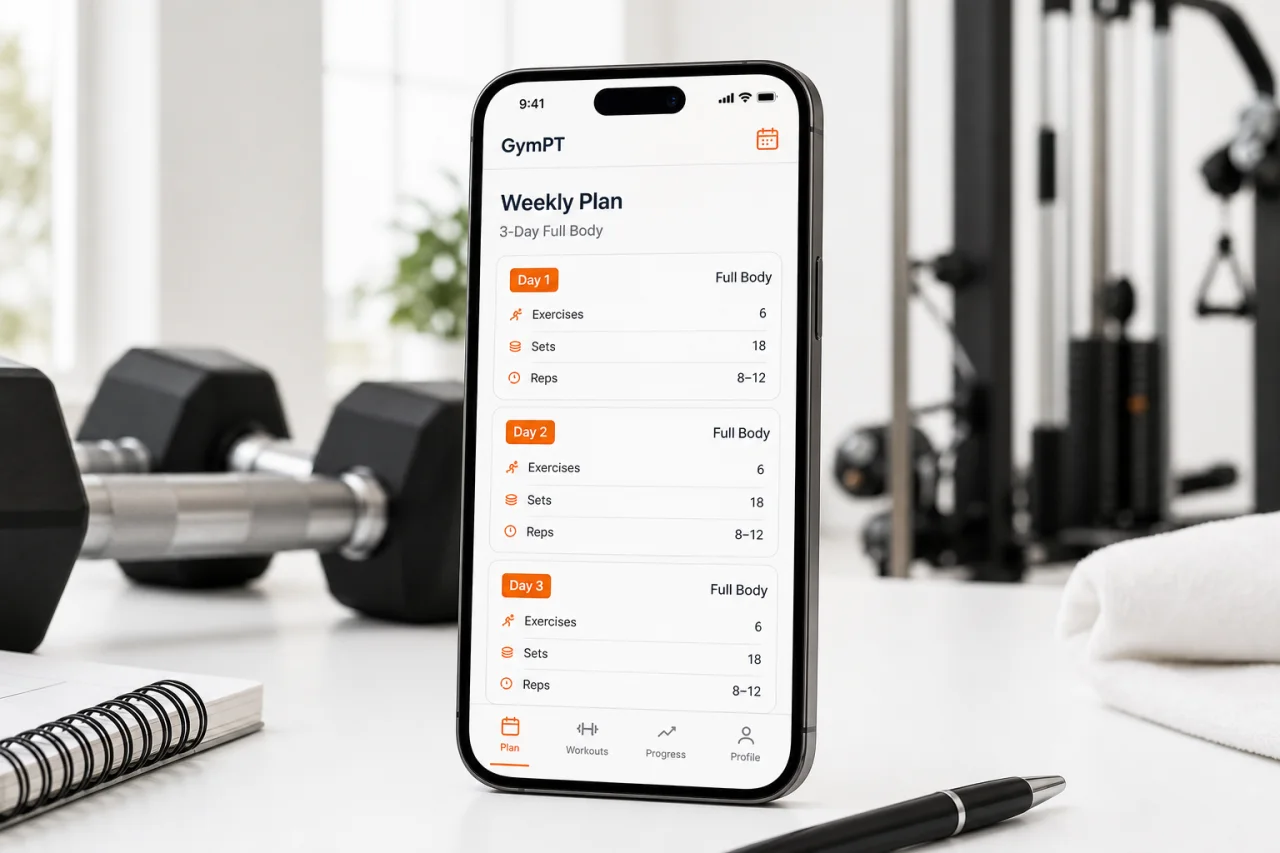
How to balance effort, volume, and recovery
Progress comes from the right amount of work repeated over time. Too little and nothing changes. Too much and recovery starts to break down. The goal is to find the middle ground where you can train hard, recover well, and come back ready for the next session.
For most people, the simplest rule is this: leave some reps in reserve on most sets, especially on compound lifts. You should finish feeling challenged, not destroyed. That makes it easier to keep quality high across the week.
Sleep matters here too. NIH guidance notes that most adults need 7 to 9 hours of sleep per night, and sleeping less than 7 hours is linked with more health issues. If your sleep is poor, your training plan may need to be lighter or less frequent until recovery improves.
Recovery is not a bonus feature. It is part of the plan.
Signs your plan may be too aggressive
- Your performance drops for several sessions in a row
- You feel unusually sore before every workout
- You dread training because every session feels maximal
- You cannot maintain good form on your main lifts
- You are not sleeping or eating enough to support the workload
If those signs show up, reduce volume first before you abandon the plan entirely.
How to adapt the plan to your goal
A full body workout plan should change depending on what you want most. The same weekly structure can support different outcomes if you adjust exercise selection, set count, and intensity.
For muscle gain
Use moderate-to-higher weekly volume, focus on controlled technique, and keep most sets in a challenging but repeatable range. Prioritize progressive overload by adding reps, load, or sets gradually over time.
For fat loss
Keep strength training in the plan so you maintain muscle while you increase overall activity. Pair your workouts with a realistic amount of weekly movement and a schedule you can sustain.
For beginners
Keep the exercise list short. Choose stable movements, repeat them often, and build confidence before adding complexity. A beginner plan should feel learnable, not random.
For busy schedules
Use fewer exercises per session and keep the plan efficient. A 45-minute full body workout done consistently is usually better than a perfect 90-minute plan you cannot maintain.
This is where an adaptive workout plan becomes valuable. Instead of forcing the same template every week, you adjust the plan to match your energy, schedule, and progress.
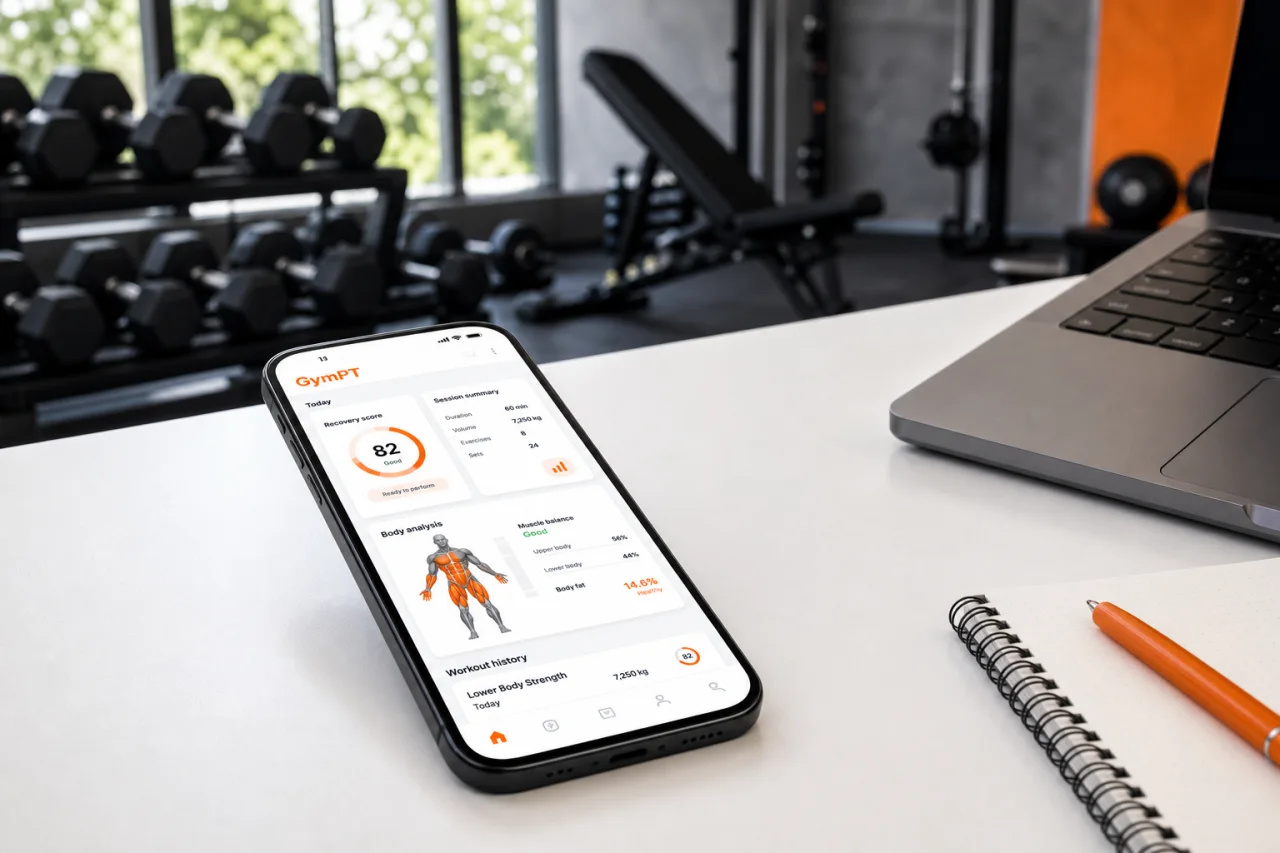
Example weekly full body workout plan
Here is a simple 3-day structure you can use as a starting point:
- Day 1: Squat pattern, horizontal push, horizontal pull, core
- Day 2: Hinge pattern, vertical push, vertical pull, carry
- Day 3: Single-leg work, incline press, row variation, core
Each day should include a warm-up, 4 to 6 main exercises, and enough rest to keep your form solid. If you train at a gym, you can use barbells, dumbbells, cables, or machines depending on what equipment is available. The best choice is the one that lets you train safely and consistently.
As you improve, you can increase load, add a set, or slightly raise training frequency. The key is to make changes gradually so the plan stays recoverable.
How GymPT helps you keep the plan personal
A static template can be a good start, but it often fails when your schedule, recovery, or equipment changes. GymPT is built for that gap. It can create a personalized workout plan based on your goals, available equipment, and training history, then help you adjust it as your progress changes.
With AI coach chat, workout tracking, body analysis, and progress insights, you can see whether your full body workout plan is actually working instead of guessing. That makes it easier to decide when to push, when to hold steady, and when to recover.
If you want a plan that behaves more like a coach than a template, that is the real advantage.
Bottom line
The best full body workout plan is the one you can repeat, recover from, and improve over time. For most people, that means 2 to 3 weekly sessions, a clear movement pattern structure, and enough flexibility to adapt when life changes.
Start simple, track your training, and adjust based on real feedback. That is how a full body plan becomes sustainable progress instead of another short-lived routine.
Ready to build yours? Use GymPT to generate a plan that fits your goal, equipment, and recovery.