push pull legs workout plan
Push Pull Legs Workout Plan: How to Build a Weekly Split That Fits Your Recovery
A push pull legs workout plan works best when it matches your recovery, training age, and weekly schedule. Learn how to structure it, adjust it, and keep progressing.
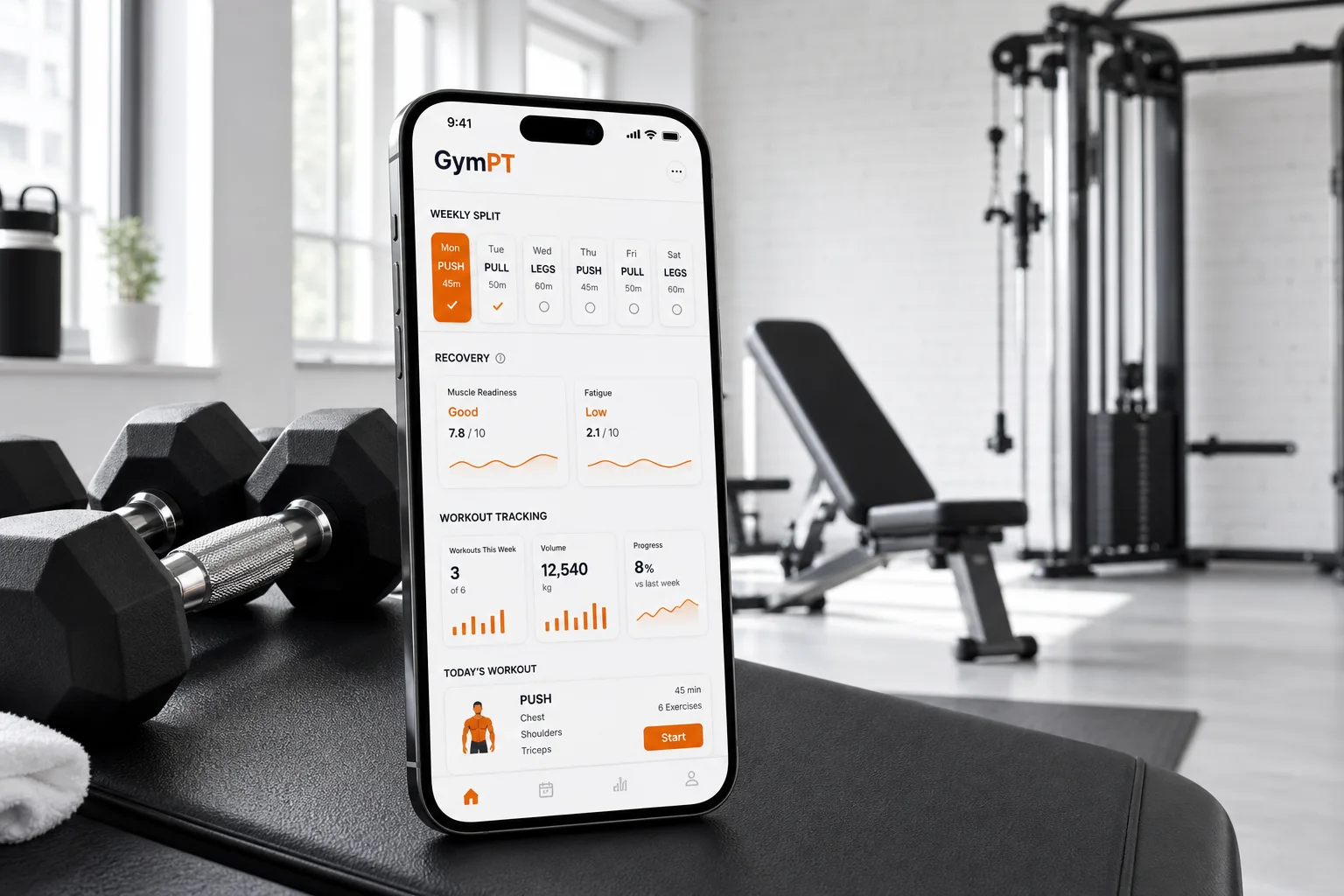
Push Pull Legs Workout Plan: the weekly split that scales with you
A push pull legs workout plan is popular for a reason: it organizes training around movement patterns, makes weekly planning simple, and gives you enough flexibility to grow without turning every session into guesswork. The real value is not just the split itself. It is how you match the split to your recovery, your schedule, and your current training level.
If you have ever copied a PPL template and then felt wrecked by week two, the problem was probably not the idea. It was the setup. A good plan should tell you what to train, how often to train it, and when to back off so you can keep progressing instead of just surviving workouts.
What a push pull legs split actually does
The push pull legs structure groups exercises by the main action they train:
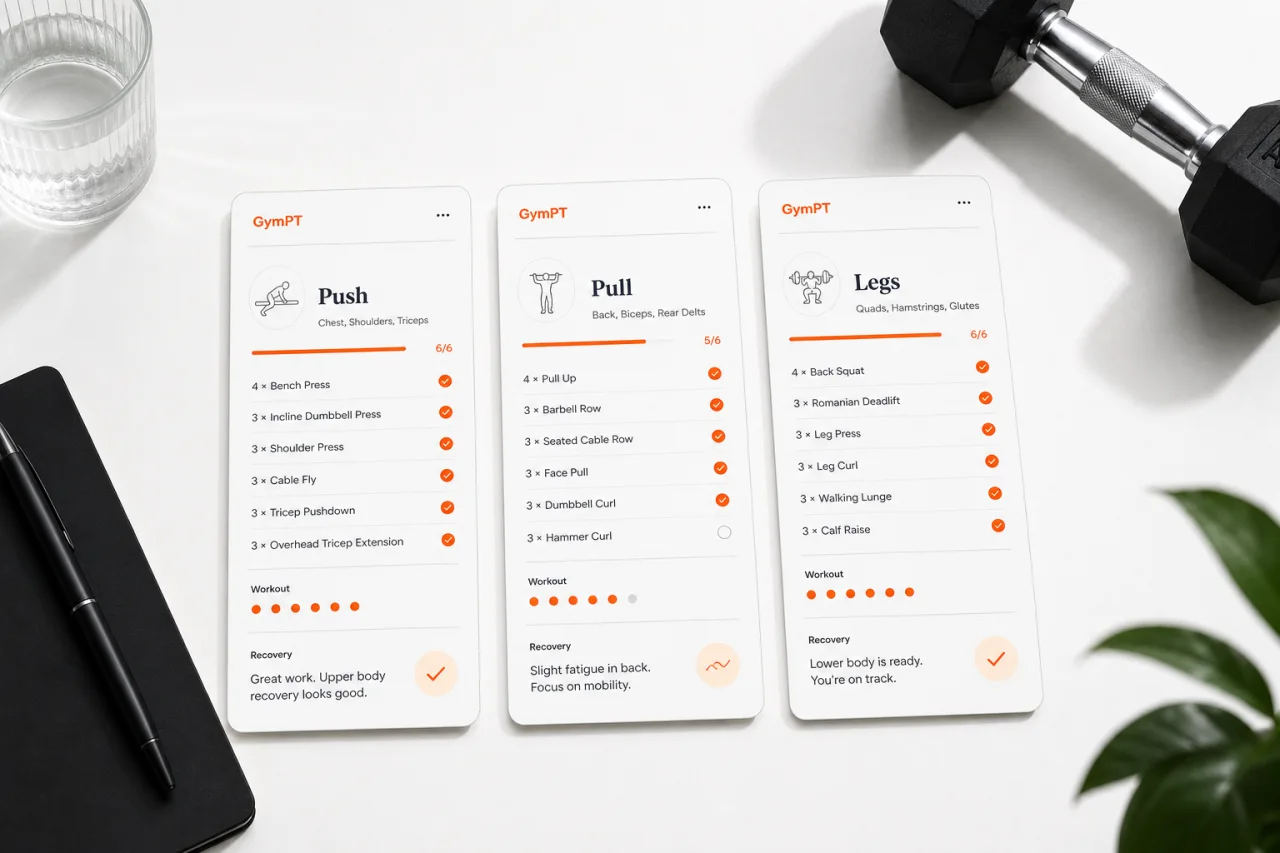
- Push: chest, shoulders, and triceps
- Pull: back, rear delts, and biceps
- Legs: quads, hamstrings, glutes, calves, and core
That organization makes it easier to manage fatigue. Pressing movements tend to overlap with each other, pulling movements overlap with each other, and leg work creates its own recovery demand. When you separate those stressors, you can train harder with better focus.
For most adults, muscle-strengthening work on at least two days per week is a solid baseline, and a PPL split can easily meet that while still leaving room for cardio and rest. Public health guidance also supports regular muscle-strengthening activity alongside weekly aerobic work.
Who a push pull legs workout plan works best for
A PPL split is especially useful if you want a plan that can grow with you. It is often a strong fit for:
- Beginners who want structure without a complicated body-part rotation
- Intermediate lifters who need more weekly volume than a simple full-body plan
- Busy people who may train 3, 4, 5, or 6 days depending on the week
- Hypertrophy-focused lifters who want a clear way to distribute sets across the week
If you are brand new to lifting, a simpler plan may be easier to recover from at first. But if you already know the basics and want a repeatable weekly structure, PPL is one of the cleanest ways to organize training.
How to choose the right weekly structure
The best push pull legs workout plan is the one you can recover from consistently. That usually means choosing the number of training days based on your real schedule, not your ideal schedule.
3 days per week
If you can only train three days, use one push day, one pull day, and one legs day. This is the simplest version of PPL and works well when life is busy. The tradeoff is lower weekly volume, so each session needs to be focused.
4 days per week
A 4-day version usually means rotating the split across the week and repeating one session type the next week. This is a smart middle ground if you want more training than a 3-day plan but still need extra recovery time.
5 to 6 days per week
This is the classic PPL setup for people who recover well and want higher weekly volume. You can run push, pull, legs, rest, then repeat, or simply cycle through the split across six training days. This works best when sleep, nutrition, and stress are under control.
Research reviews and position statements from major exercise organizations consistently support using weekly volume, effort, and recovery to guide resistance training design rather than relying on a single universal template.
A simple push pull legs workout plan template
Here is a practical starting point you can adapt.
Push day
- Bench press or machine chest press
- Incline dumbbell press
- Overhead press
- Lateral raise
- Triceps pushdown or overhead extension
Pull day
- Lat pulldown or assisted pull-up
- Row variation
- Chest-supported row or cable row
- Rear delt fly
- Biceps curl variation
Leg day
- Squat or leg press
- Romanian deadlift or hip hinge variation
- Split squat or lunge
- Leg curl
- Calf raise
- Core movement
For most lifters, the exact exercise selection matters less than the pattern: one or two big lifts, then accessories that support the main work. That keeps the session efficient and easier to progress.
How much volume should you use?
Volume is one of the biggest reasons a PPL split works. Instead of cramming everything into one long session, you spread sets across the week so each muscle gets enough work without the workout becoming chaotic.
A good starting point is to use a moderate number of hard sets per muscle group each week, then adjust based on recovery and progress. If you are consistently adding reps, load, or control, your volume is probably in the right range. If performance drops, soreness lingers too long, or motivation crashes, the plan may be too aggressive.
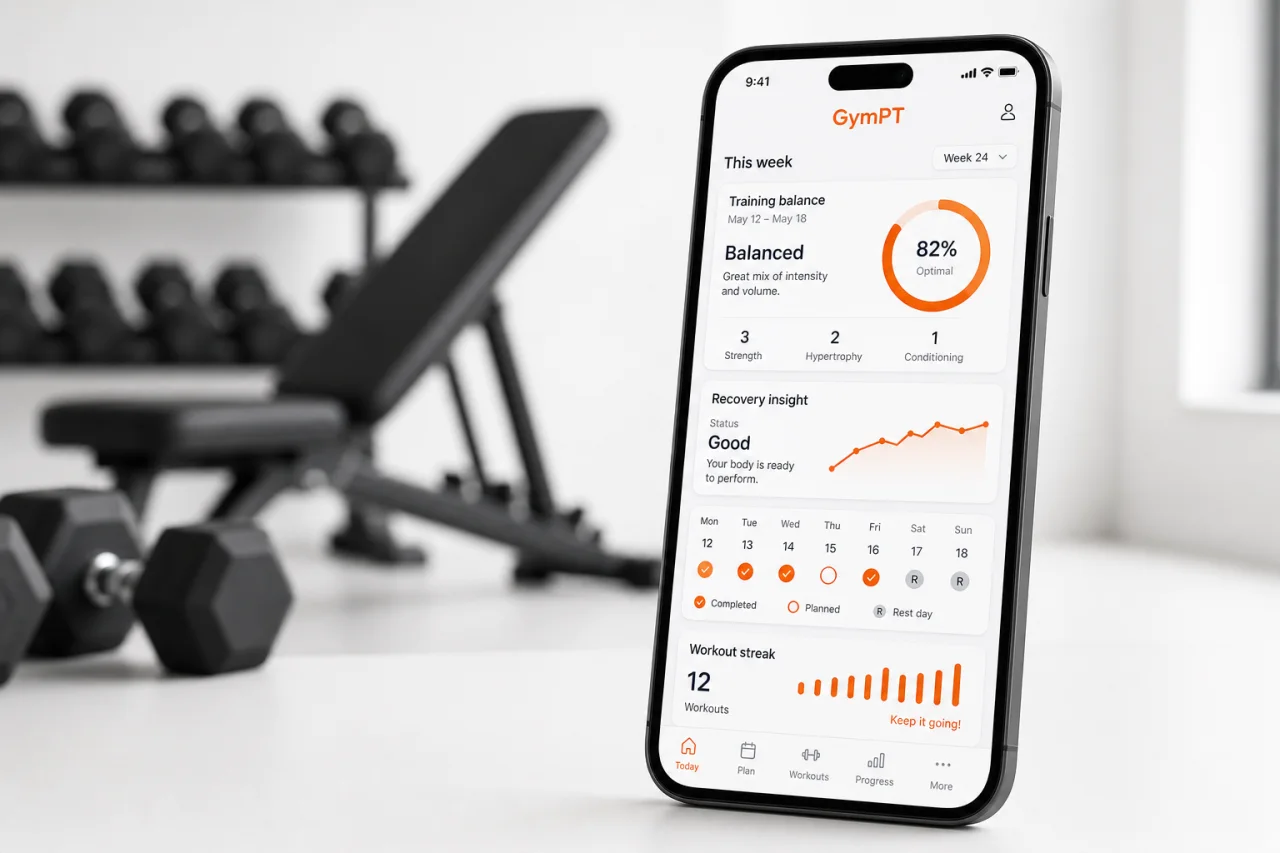
That is where a smart training app can help. GymPT can track your workouts, show progress trends, and adjust your plan when your recovery or schedule changes instead of forcing you to guess.
Recovery is what makes the split work
A push pull legs workout plan only works if the recovery side is built in. Training creates the stimulus, but recovery is what lets you adapt.
Pay attention to these basics:
- Sleep: poor sleep usually shows up as weaker sessions and slower recovery
- Rest days: use them strategically, not as an afterthought
- Exercise overlap: heavy pressing and shoulder work can interfere with each other if volume is too high
- Leg fatigue: a hard leg day can affect the next 24 to 48 hours more than people expect
WHO guidance recommends regular muscle-strengthening activity across the week, and that lines up well with a split that gives each muscle group enough stimulus while still leaving room to recover.
How to adapt PPL to your goal
If your goal is muscle gain
Use more weekly sets, keep most sets close to challenging effort, and repeat the split often enough to practice the main lifts. A 5- or 6-day version usually works well if recovery is strong.
If your goal is strength
Keep the main lifts more specific, use slightly lower rep ranges on compound movements, and avoid turning every session into a high-fatigue marathon. Strength-focused PPL plans often benefit from fewer exercises and more quality on the main lifts.
If your goal is fat loss
Keep the split, but make it easier to sustain. The goal is to preserve muscle and performance while you manage overall energy intake. A 3- or 4-day PPL can be easier to recover from when calories are lower.
If your goal is consistency
Choose the version you can repeat for months, not the one that looks best on paper. A plan that fits your life will beat a perfect plan you abandon after two weeks.
Common mistakes to avoid
- Doing too much too soon: more is not always better if recovery falls apart
- Ignoring progression: the split is only useful if you are tracking load, reps, or effort
- Training every set to failure: that can make recovery harder than necessary
- Copying an advanced plan as a beginner: start with a version you can actually recover from
- Never adjusting the schedule: a good plan should adapt when your week changes
How GymPT makes a push pull legs workout plan easier to follow
GymPT is built for people who want structure without rigidity. Instead of locking you into a static template, it helps you create a personalized plan based on your goals, available equipment, and training frequency.
That means you can:
- build a PPL split around the days you can realistically train
- switch exercises based on the equipment you have access to
- track workouts and see whether your plan is actually progressing
- use AI coach chat to adjust volume, recovery, or exercise selection when needed
- review progress insights so you can make decisions from data, not guesswork
If your schedule changes from week to week, that flexibility matters. A push pull legs workout plan should support consistency, not punish you for having a real life.
Bottom line
The best push pull legs workout plan is not the most complicated one. It is the one that matches your recovery, fits your week, and gives you a clear way to progress. Start with a structure you can sustain, keep your volume appropriate, and adjust the plan when your body or schedule tells you to.
When the split is built around your actual life, it becomes much easier to train hard, recover well, and keep moving forward.
Ready to build your own PPL plan? GymPT can turn your goals, equipment, and schedule into a personalized weekly structure you can follow and improve.
Frequently asked questions
Is a push pull legs workout plan good for beginners?
Yes, but beginners often do better with a simpler version first. A 3-day PPL can work well if the sessions are kept focused and recovery is managed carefully.
How many days a week should I do PPL?
It depends on your schedule and recovery. Three days is the simplest version, while five or six days is better for people who can recover from more weekly volume.
Can I do cardio with a push pull legs split?
Yes. Just place cardio so it does not interfere with your hardest lifting sessions. Many people do best with moderate cardio on rest days or after lifting.
How do I know if my PPL plan is working?
Look for steady progress in reps, load, exercise quality, and recovery. If performance is improving and you feel ready for the next session, the plan is probably on track.