weekly workout planner
Weekly Workout Planner: Build a Plan That Fits Your Real Life
A weekly workout planner works best when it balances training, recovery, and real-life constraints. Here’s how to structure one that adapts to your goals.
Weekly workout planner: the simplest way to make training consistent
A good weekly workout planner does more than fill calendar boxes. It helps you decide what to train, when to recover, and how to stay consistent when life gets busy. The best plans are not the most complicated ones. They are the ones you can actually follow for weeks at a time.
If your plan keeps falling apart, the issue is usually not motivation. It is structure. A weekly plan should match your goal, your schedule, your equipment, and your recovery capacity. That is why a smart plan changes with you instead of forcing you into the same template every week.
What a weekly workout planner should include
A useful weekly plan answers five questions:
- What is the goal? Fat loss, muscle gain, strength, general fitness, or a mix.
- How many days can you train? Three, four, five, or six sessions.
- What type of sessions fit best? Strength, cardio, mobility, or conditioning.
- Where are the recovery days? Rest is part of the plan, not a break from it.
- How will you track progress? Reps, load, time, effort, or consistency.
That last point matters. If you do not track anything, it becomes hard to know whether your plan is working or just keeping you busy.
Start with the weekly minimums, then build around them
For general health, adults should aim for at least 150 minutes of moderate-intensity activity each week, or 75 minutes of vigorous activity, plus muscle-strengthening work on at least 2 days per week. That gives you a strong baseline for a weekly structure. From there, you can add more volume if your goal is performance, muscle gain, or fat loss support.
A practical weekly workout planner often starts with two anchors:
- 2 to 4 strength sessions for muscle and strength progress
- 2 to 3 cardio or conditioning sessions for heart health, work capacity, or calorie burn
You do not need to hit every category every day. The goal is to distribute effort so you can train hard enough to improve without running yourself into the ground.
Choose a training split that matches your schedule
The best split is the one that fits your week and your recovery. Here are a few simple options:
3-day weekly workout planner
Best for beginners, busy schedules, or people returning to training.
- Day 1: Full-body strength
- Day 2: Cardio or mobility
- Day 3: Full-body strength
- Day 4: Rest or light activity
- Day 5: Full-body strength
- Day 6: Optional cardio
- Day 7: Rest
4-day weekly workout planner
Best for steady progress with enough recovery.
- Day 1: Upper body
- Day 2: Lower body
- Day 3: Rest or cardio
- Day 4: Upper body
- Day 5: Lower body
- Day 6: Optional conditioning
- Day 7: Rest
5-day weekly workout planner
Best for people who want more specialization.
- 2 strength days for upper body
- 2 strength days for lower body
- 1 conditioning or accessory day
- 2 recovery-focused days spread across the week
More days do not automatically mean better results. If your recovery is poor, a smaller plan with better execution will usually beat a bigger plan you cannot sustain.
How to place recovery days without losing momentum
Recovery is where adaptation happens. If you train hard every day, your weekly workout planner becomes a fatigue planner. That is not the same thing.
Use recovery days to reduce total stress, not to stop moving completely. Good recovery options include walking, mobility work, easy cycling, stretching, or a lighter technique session. If your legs are still sore after a lower-body day, do not force another hard lower-body session just because the calendar says so.
A simple rule: place your hardest sessions when you are freshest, and separate similar muscle groups when possible. For example, avoid stacking two very demanding leg days back to back unless your volume is low and your recovery is excellent.
Make the plan adapt to your goal
A weekly workout planner should change based on what you want most right now.
If your goal is fat loss
Keep strength training in the plan so you can preserve muscle while increasing total activity. Add cardio in a way you can recover from and repeat. The best fat-loss plan is one you can follow consistently, not one that leaves you exhausted by Wednesday.
If your goal is muscle gain
Prioritize enough weekly strength volume, repeat key lifts often enough to improve, and protect recovery. Muscle growth depends on repeated quality training sessions, not random workouts.
If your goal is strength
Put your most important lifts early in the week or early in the session. Keep accessory work supportive, not so large that it steals energy from the main lifts.
If your goal is general fitness
Blend strength, cardio, and mobility across the week. This is where a balanced schedule often works best because it supports health, energy, and long-term consistency.
How to know if your weekly plan is too much
Many people think they need a more aggressive plan when they actually need a better one. Your weekly workout planner may be too demanding if you notice:
- Performance dropping for several sessions in a row
- Persistent soreness that never fully clears
- Low motivation before nearly every workout
- Sleep or energy getting worse as training volume rises
- Missing sessions because the plan feels unrealistic
If that happens, reduce volume before you reduce consistency. Fewer high-quality sessions are better than a packed schedule you keep abandoning.
How GymPT helps you build a weekly workout planner that adapts
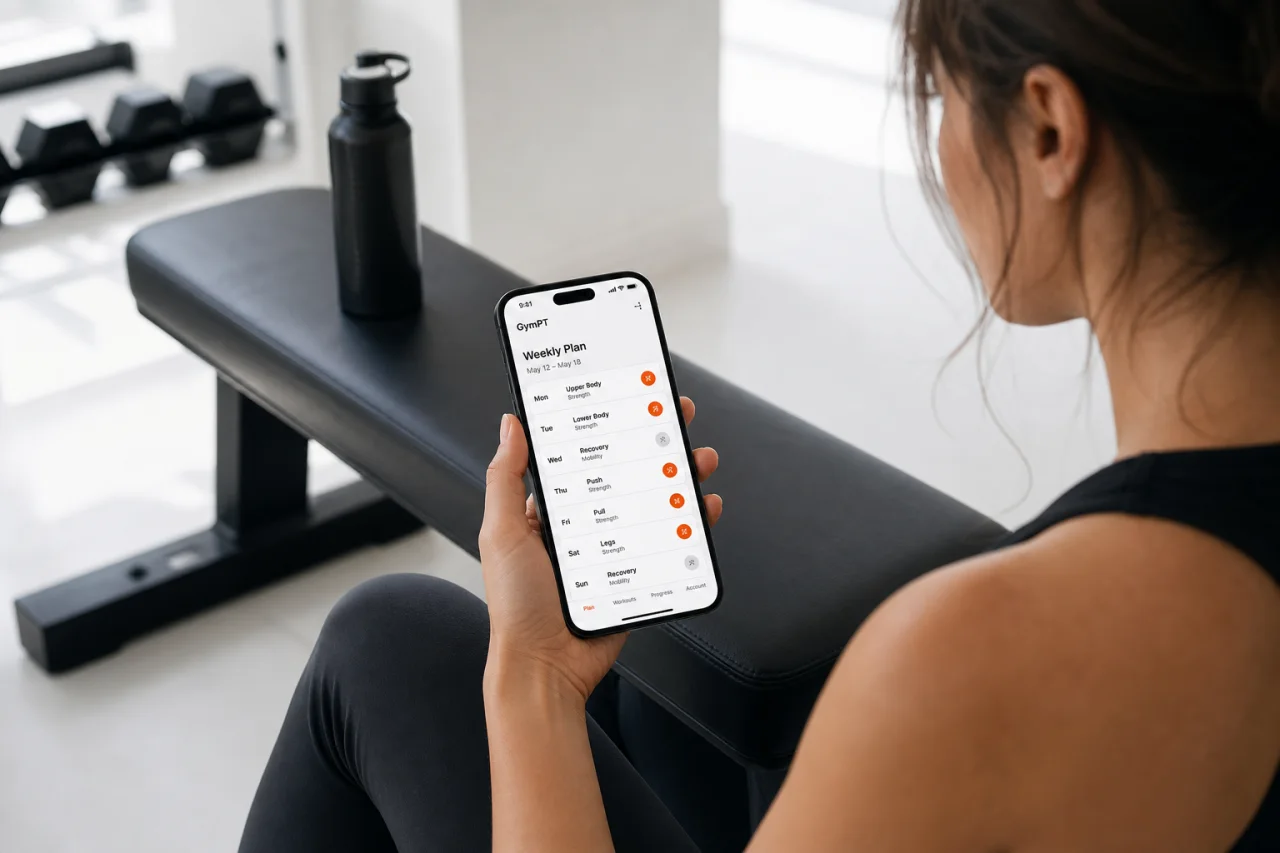
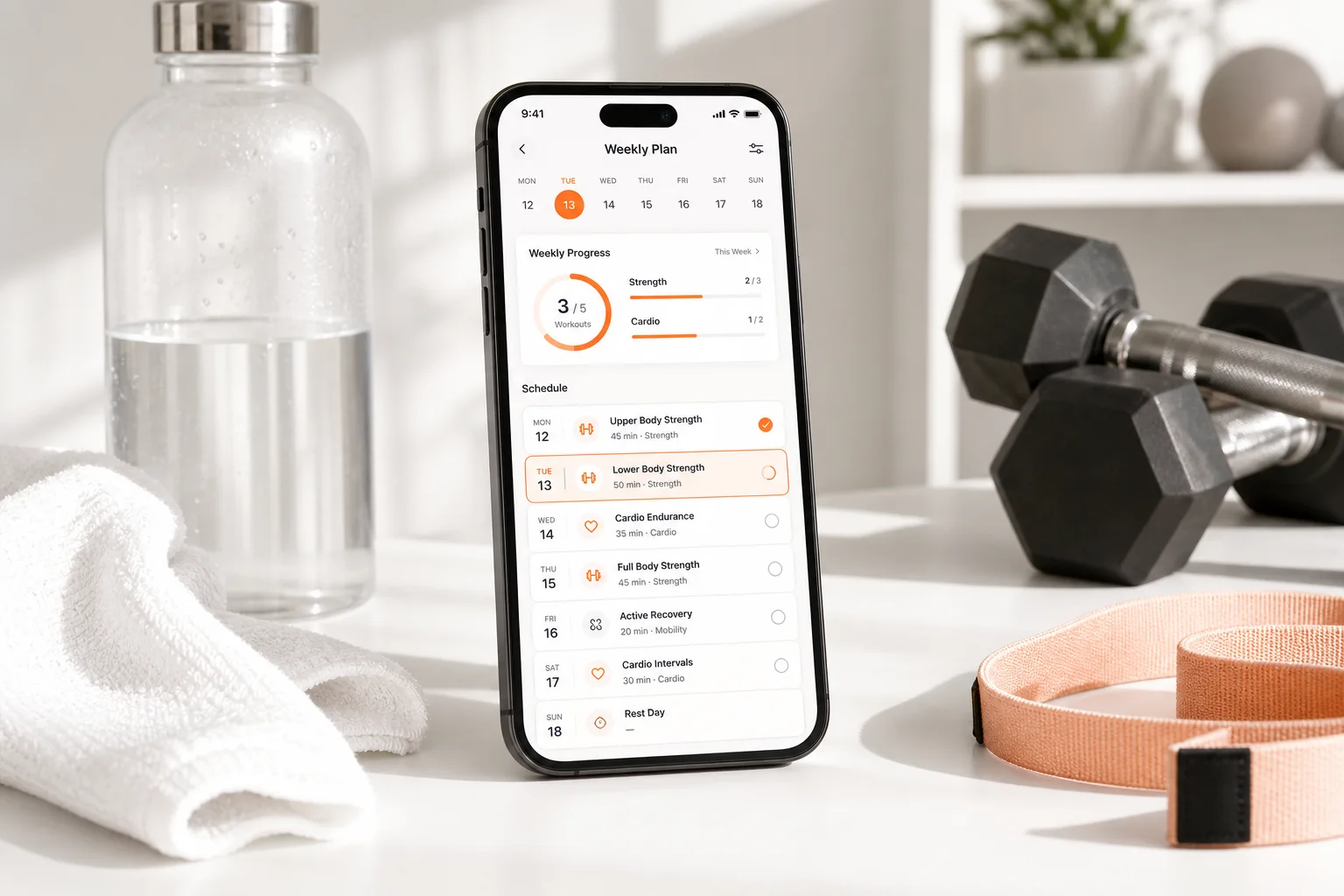
GymPT makes weekly planning easier because it can turn your goal, equipment, and schedule into a plan you can actually use. Instead of guessing how to split your week, you can build a plan that adjusts around your available days, training level, and recovery.
That matters because a good plan is not static. If you miss a session, feel unusually fatigued, or want to shift focus from strength to conditioning, your weekly structure should adapt without breaking the whole week.
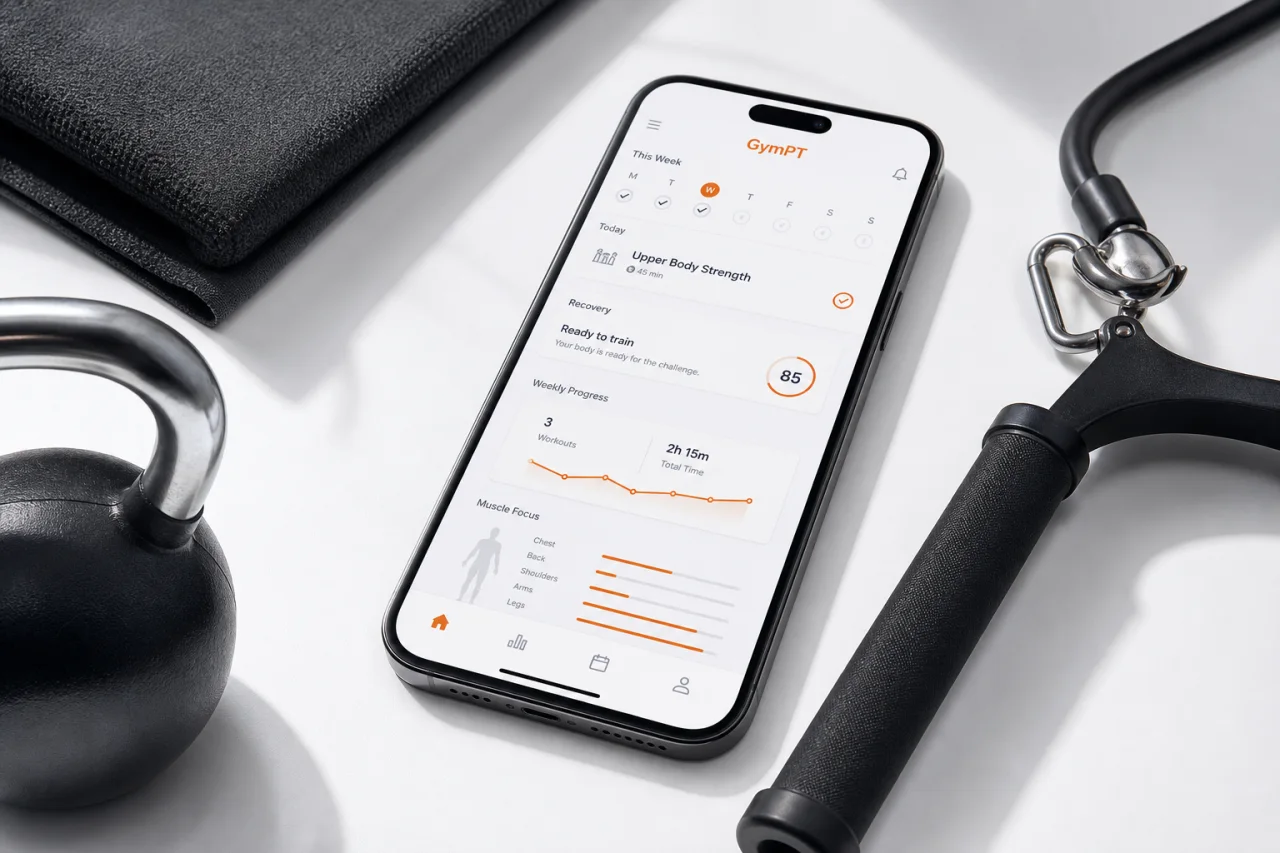
With GymPT, you can also track workouts, review progress insights, and use AI coach chat to make small adjustments when your week changes. That is often the difference between a plan that looks good on paper and one that works in real life.
A simple weekly workout planner template
If you want a starting point, use this:
- Pick your main goal for the next 4 to 8 weeks.
- Choose 3 to 5 training days based on your schedule.
- Place strength sessions first if muscle or strength matters most.
- Add cardio or conditioning where it supports, not disrupts, recovery.
- Leave at least 1 true rest day or a very light active recovery day.
- Track one or two key metrics so you can see progress.
- Review the week every 7 days and adjust the next one.
The best weekly workout planner is not the one with the most rules. It is the one that helps you train hard enough to improve, recover well enough to repeat it, and stay flexible enough to keep going.
Ready to build yours? Start with a plan that matches your goal, your equipment, and your real schedule, then let it adapt as your week changes.