exercise tracking app
Exercise Tracking App: How Logs, Reports, and Trends Turn Workouts Into Progress
An exercise tracking app does more than store workouts. It helps you log sessions, spot performance trends, stay consistent, and make better training decisions week after week.
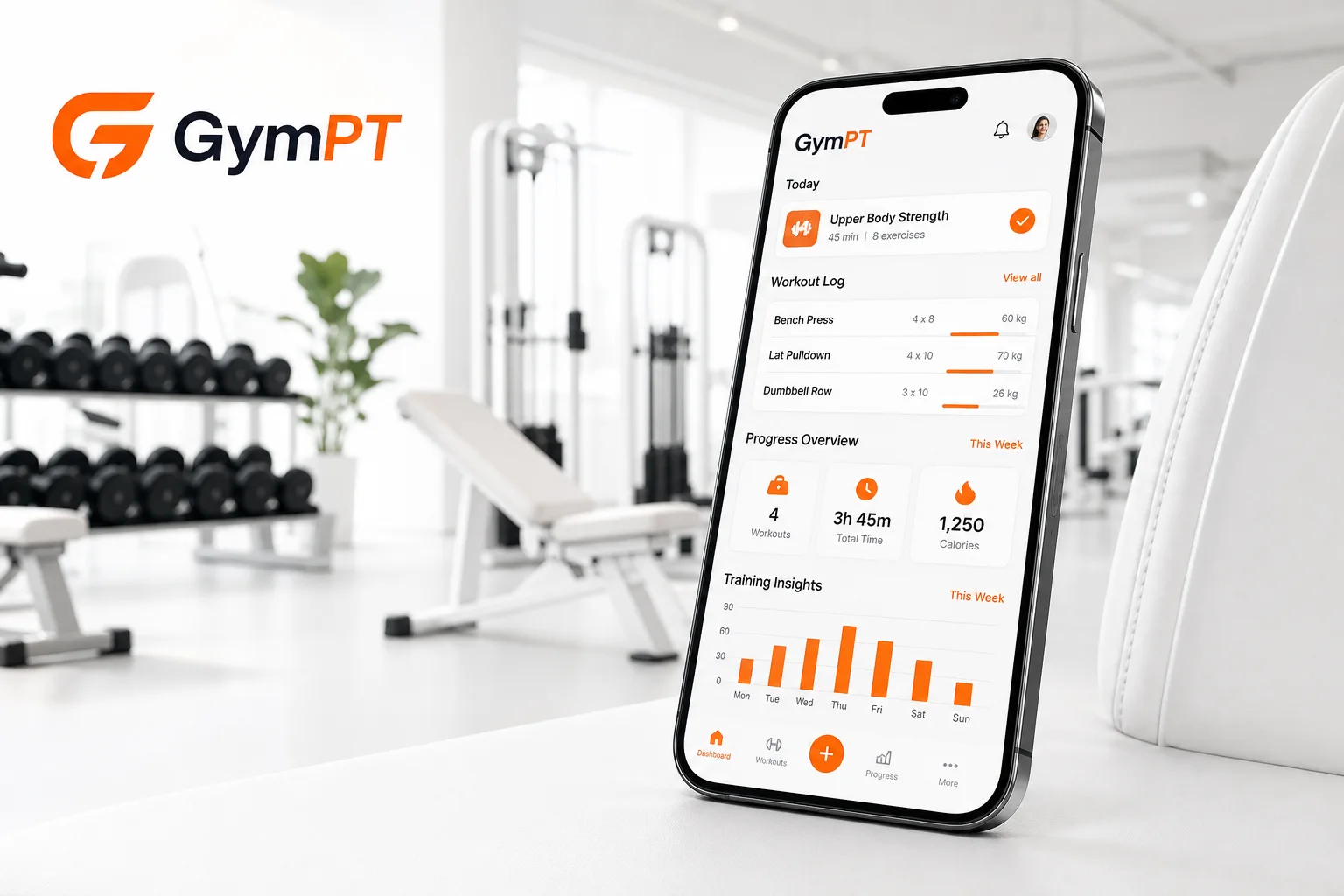
Why an exercise tracking app matters more than a notes app
If you want better results from training, an exercise tracking app is not just a digital notebook. It is a feedback system. Good logs show what you did, reports show what is changing, and trends help you decide what to do next. That matters because progress in fitness is rarely obvious from one workout. It shows up across weeks: more reps, better load tolerance, steadier consistency, and fewer missed sessions.
Public health guidance still points to the same foundation: adults should aim for regular aerobic activity and muscle-strengthening work each week. Tracking makes that easier to execute because it turns a broad goal into a visible routine. When you can see your training history, it becomes much easier to stay on course and adjust before momentum slips.
GymPT is built for that exact job. It helps you plan workouts, log them, review progress, and adapt training based on what you actually completed—not what you hoped to do.
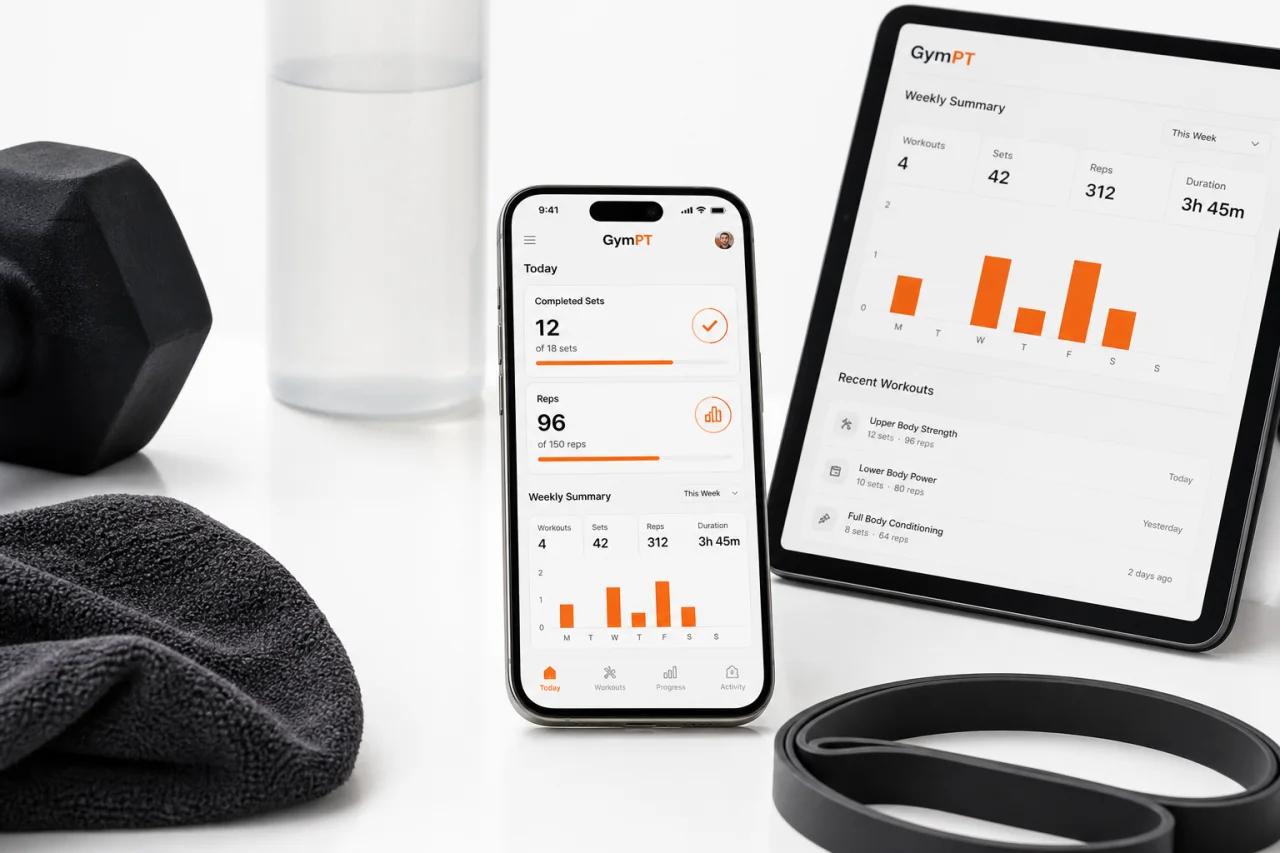
What the best workout logs should capture
A useful log is more than exercise names. It should capture the details that explain performance:
- Exercise: what movement you performed.
- Sets and reps: how much work you completed.
- Load or resistance: the weight, machine setting, band tension, or bodyweight variation.
- Effort: how hard the set felt.
- Rest time: especially useful when performance changes from session to session.
- Notes: pain-free range, form cues, energy level, or equipment availability.
That level of detail helps you answer practical questions later. Did your squat improve because you added weight, or because you rested longer? Did your upper-body session stall because the exercise was too hard, or because you were under-recovered? A good log makes those patterns visible.
For strength training, progression is usually about gradually increasing the training stimulus over time. That can mean more weight, more reps, more sets, better technique, or more total work. An exercise tracking app makes those changes easier to see and repeat.
How progress reports help you train smarter
Logs are useful, but reports are where the real coaching starts. A strong progress report should answer three questions:
- What improved?
- What stalled?
- What should change next?
That might look like a weekly summary of total workouts completed, average reps on key lifts, or how often you trained each muscle group. It could also show missed sessions, repeated plateaus, or a drop in volume after a busy week. Those patterns matter because consistency is one of the biggest predictors of long-term progress.
CDC guidance emphasizes that adults benefit from both aerobic and muscle-strengthening activity, and that some activity is better than none. A progress report helps you stay close to that baseline even when life gets busy.
GymPT uses progress insights to make your training easier to manage. Instead of guessing whether your plan is working, you can see whether your workload, frequency, and completion rate are moving in the right direction.
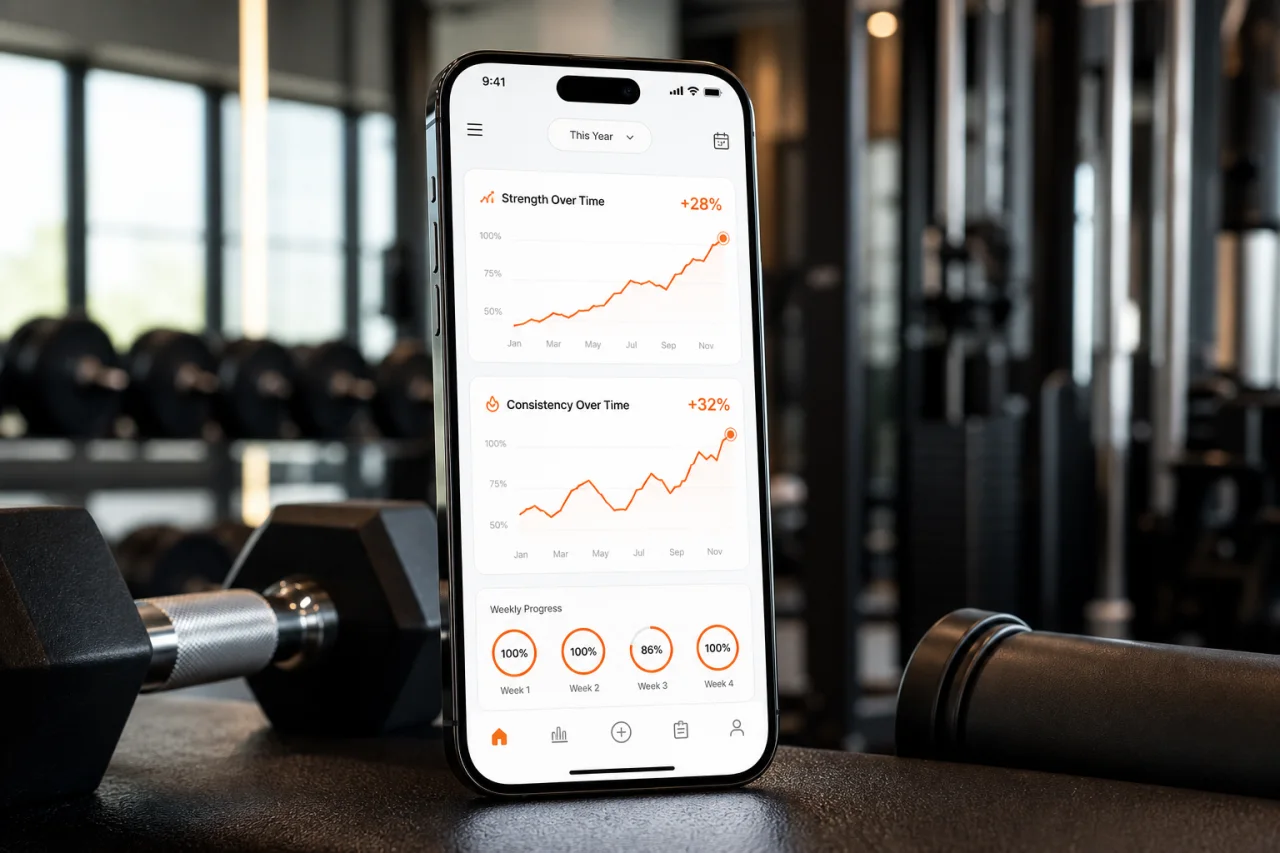
Why training trends beat single-workout snapshots
One workout can be a bad day. A trend is a pattern.
That distinction is important. Maybe you lifted less this week because you slept poorly. Maybe your cardio pace dipped because you were recovering from a hard leg session. Maybe your total weekly volume is still rising even though one session felt flat. A tracking app helps you avoid overreacting to one off day and underreacting to a real plateau.
Useful trends to watch include:
- Weekly workout frequency
- Total sets per muscle group
- Rep quality or rep range consistency
- Load progression on key lifts
- Missed sessions and recovery gaps
WHO and CDC guidance both support regular physical activity across the week, and WHO notes that adults should accumulate at least 150 minutes of moderate-intensity activity or 75 minutes of vigorous activity weekly, plus muscle-strengthening work. A trend view helps you see whether your real training behavior matches that target.
How an exercise tracking app improves consistency
Consistency is easier when the next step is obvious. That is where an app can help most. Instead of opening a blank notebook and deciding everything from scratch, you open a plan, see your last session, and continue from there.
That reduces friction in three ways:
- Less decision fatigue: you do not have to rebuild the workout every time.
- Less guesswork: you know what you did last session.
- More accountability: missed workouts are visible, not forgotten.
For many people, that is the difference between “I work out sometimes” and “I have a system.” And systems are easier to maintain than motivation alone.
GymPT supports that system with personalized workout plans, AI coach chat, equipment-based training, and workout tracking in one place. That means your plan, your logs, and your next recommendation all stay connected.
What to look for when choosing an exercise tracking app
If you are comparing apps, focus on features that support real training decisions, not just flashy dashboards.
- Easy logging: fast enough to use during a busy session.
- Clear history: you can review past workouts without digging.
- Actionable reports: summaries that help you adjust training.
- Flexible training support: works with dumbbells, machines, cables, bodyweight, or mixed equipment.
- Personalization: adapts to your goals, schedule, and available equipment.
- Coach-style guidance: helps you decide what to do next.
If an app only stores data, it is a record. If it helps you interpret that data, it becomes a training tool.
How to use tracking without overcomplicating your training
The best tracking habit is simple and repeatable. Start with the minimum data you need to make better decisions:
- Log every workout as soon as you finish.
- Track the main lifts or movements that matter most to your goal.
- Review your weekly summary once per week.
- Look for one change at a time: more reps, more load, better consistency, or better recovery.
- Adjust your next week based on the pattern, not the emotion of one session.
If you do that consistently, your app becomes more valuable over time. The longer the history, the easier it is to see what actually works for your body, schedule, and equipment.
Bottom line
An exercise tracking app helps you do three things well: log workouts accurately, understand progress through reports, and stay consistent long enough to see results. That is why tracking is not just about record-keeping. It is about making better training decisions.
If you want a smarter way to train, GymPT brings together workout plans, AI coaching, equipment-based programming, tracking, and progress insights so you can stop guessing and start improving.
Ready to turn your workouts into a clear progression plan? Start tracking with GymPT and make every session easier to build on.