beginner strength training plan
Beginner Strength Training Plan: A Simple 3-Day Start for New Gym Users
A beginner strength training plan should feel simple, safe, and repeatable. Here’s a confidence-building 3-day routine you can actually follow.
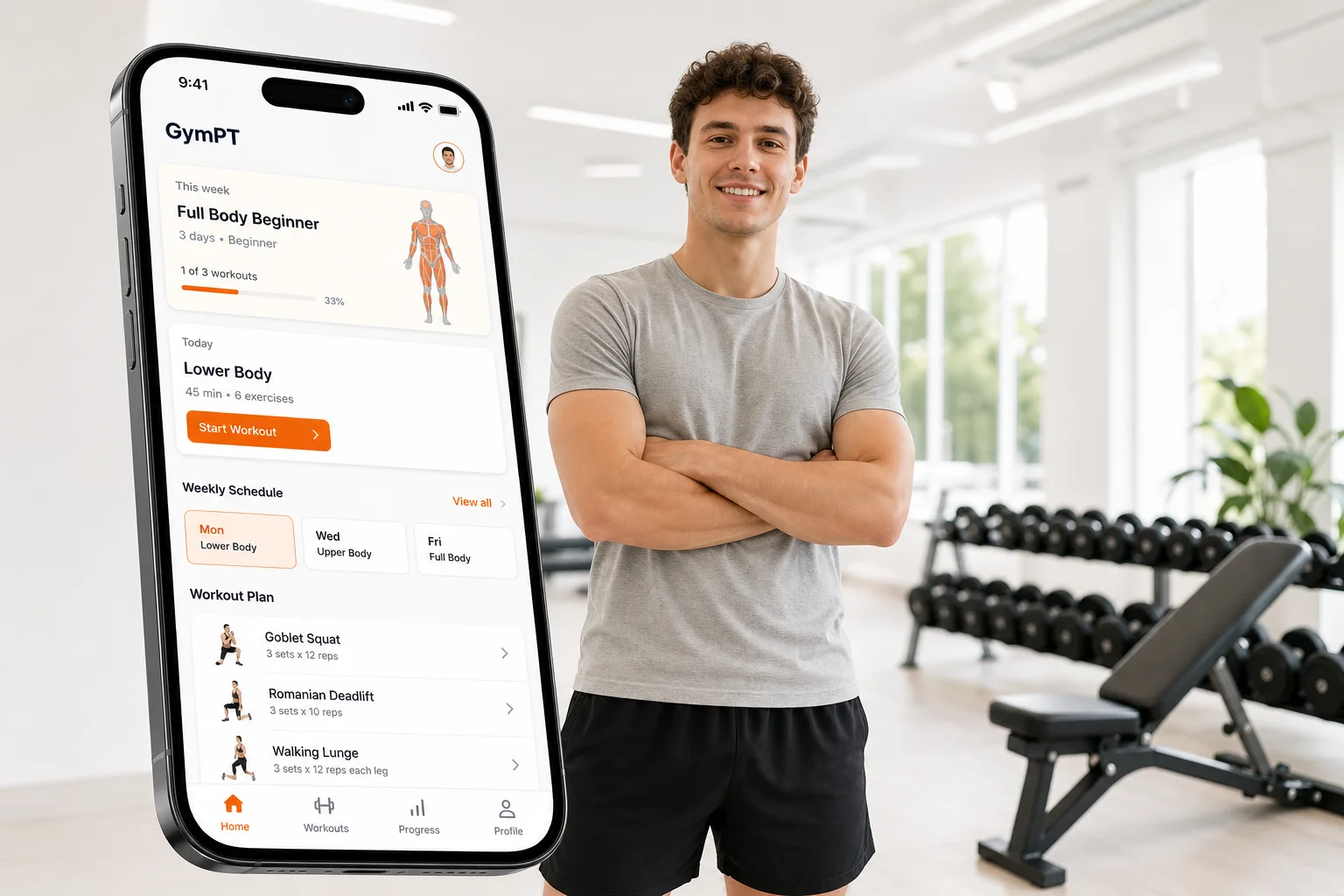
Beginner Strength Training Plan: Start Simple and Build Confidence
If you are new to lifting, the best beginner strength training plan is not the most complicated one. It is the one you can repeat, recover from, and improve week after week. For most beginners, that means training all major muscle groups, keeping the exercise list short, and using a schedule you can realistically maintain.
Public health guidance for adults recommends muscle-strengthening activity at least two days per week, alongside regular aerobic activity. A simple 3-day routine is an easy way to meet that target while leaving room for recovery and skill practice.
What a good beginner plan should do
A beginner plan should help you learn movement patterns, not just chase fatigue. The goal is to build a base of strength with enough structure to stay consistent and enough flexibility to avoid burnout.
- Train the whole body so you practice pushing, pulling, squatting, hinging, and carrying.
- Keep volume modest so soreness does not wreck your next session.
- Use repeatable exercises so you can improve technique and track progress.
- Leave a little in the tank on most sets so you finish feeling capable, not crushed.
That approach matches current guidance that beginners should train major muscle groups regularly and build gradually over time.
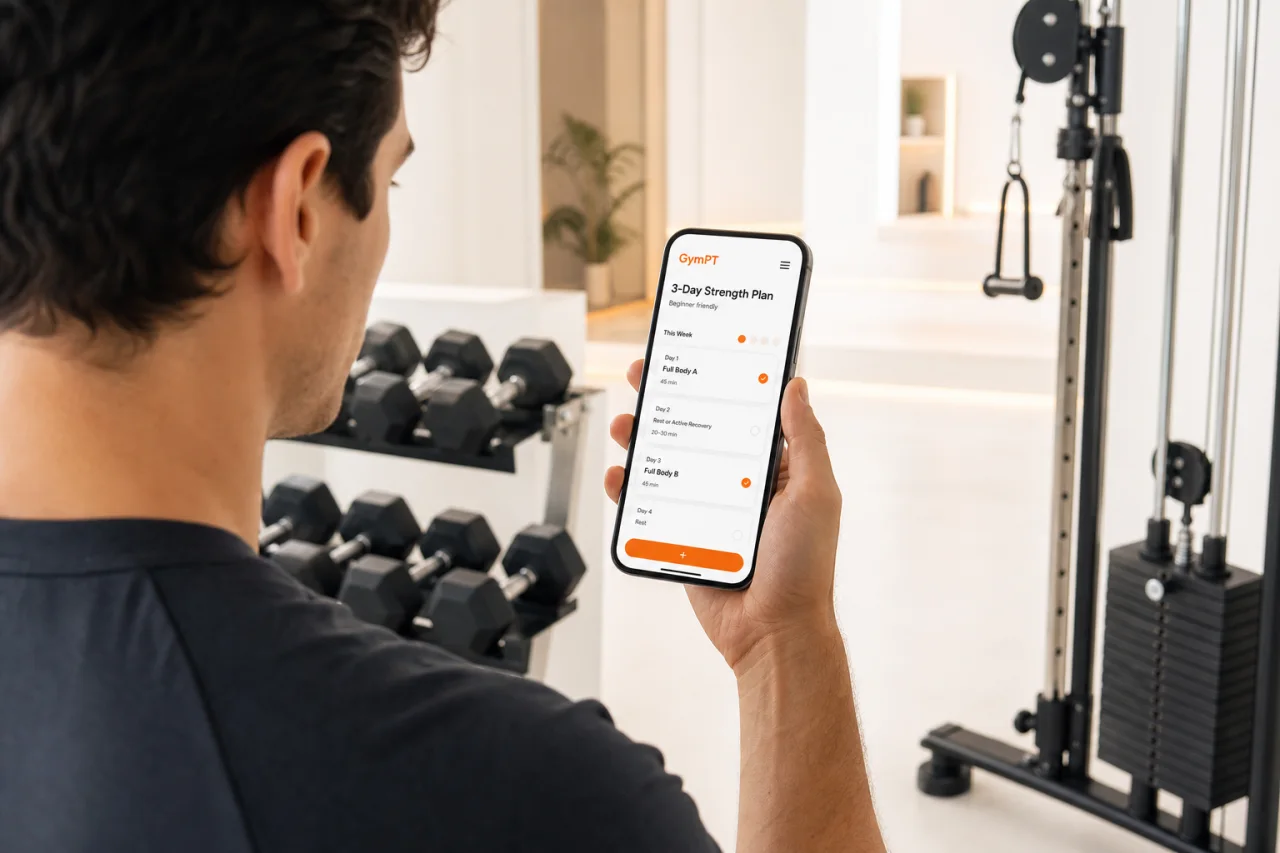
A simple 3-day beginner strength training plan
Train on non-consecutive days, such as Monday, Wednesday, and Friday. If you are very new, start with 2 days per week for the first two weeks, then move to 3 days when the routine feels manageable.
Day 1
- Goblet squat — 2 sets of 8 to 10 reps
- Dumbbell bench press or machine chest press — 2 sets of 8 to 10 reps
- Lat pulldown or assisted row — 2 sets of 8 to 10 reps
- Glute bridge — 2 sets of 10 to 12 reps
- Plank — 2 holds of 20 to 30 seconds
Day 2
- Leg press or split squat — 2 sets of 8 to 10 reps
- Seated shoulder press — 2 sets of 8 to 10 reps
- Cable row or dumbbell row — 2 sets of 8 to 10 reps
- Romanian deadlift with light dumbbells — 2 sets of 8 to 10 reps
- Dead bug — 2 sets of 6 to 8 reps per side
Day 3
- Bodyweight squat or hack squat machine — 2 sets of 10 reps
- Incline push-up or chest press — 2 sets of 8 to 10 reps
- Assisted pull-up or pulldown — 2 sets of 8 to 10 reps
- Hip hinge movement — 2 sets of 8 to 10 reps
- Farmer carry — 2 walks of 20 to 30 seconds
Rest about 60 to 90 seconds between sets. If your form breaks down, use a lighter load or stop the set earlier.
How to choose the right weight
Your first goal is not to find your max. It is to find a load that lets you complete the target reps with good control. A practical rule: finish each set feeling like you could do about 2 to 3 more reps if you had to.
- If you could do many more reps, the weight is probably too light.
- If your form changes early, the weight is too heavy.
- If the last rep is challenging but clean, you are in the right zone.
This keeps the plan safe, confidence-building, and easier to progress from. It also fits the general recommendation to build gradually rather than jump too quickly.
How to progress without overthinking it
Progression should be simple enough that you can follow it without a spreadsheet. Use one of these methods:
- Add reps first. If you did 2 sets of 8, try 2 sets of 9 next time.
- Then add weight. When you reach the top of the rep range with solid form, increase the load slightly.
- Keep the same exercises for 4 to 6 weeks. That gives you enough time to learn the movements and see real progress.
If a workout feels unusually hard, keep the weight the same and focus on clean reps. Consistency matters more than forcing progress every session.
How much cardio should beginners do?
Strength training is the focus here, but it works best alongside regular movement. Adults are generally advised to aim for 150 minutes of moderate-intensity activity per week, plus muscle-strengthening work on at least 2 days. Walking, cycling, or easy incline treadmill work can fit around your lifting days without interfering with recovery.
Common beginner mistakes to avoid
- Doing too much too soon. More exercises do not automatically mean better results.
- Changing the plan every week. Beginners improve faster when they repeat the basics.
- Skipping warm-ups. A few minutes of light cardio and ramp-up sets can make the first working set feel much smoother.
- Training to failure on every set. That usually creates more fatigue than benefit for new lifters.
- Ignoring recovery. Sleep, food, and rest days are part of the plan.
How GymPT helps beginners stay on track
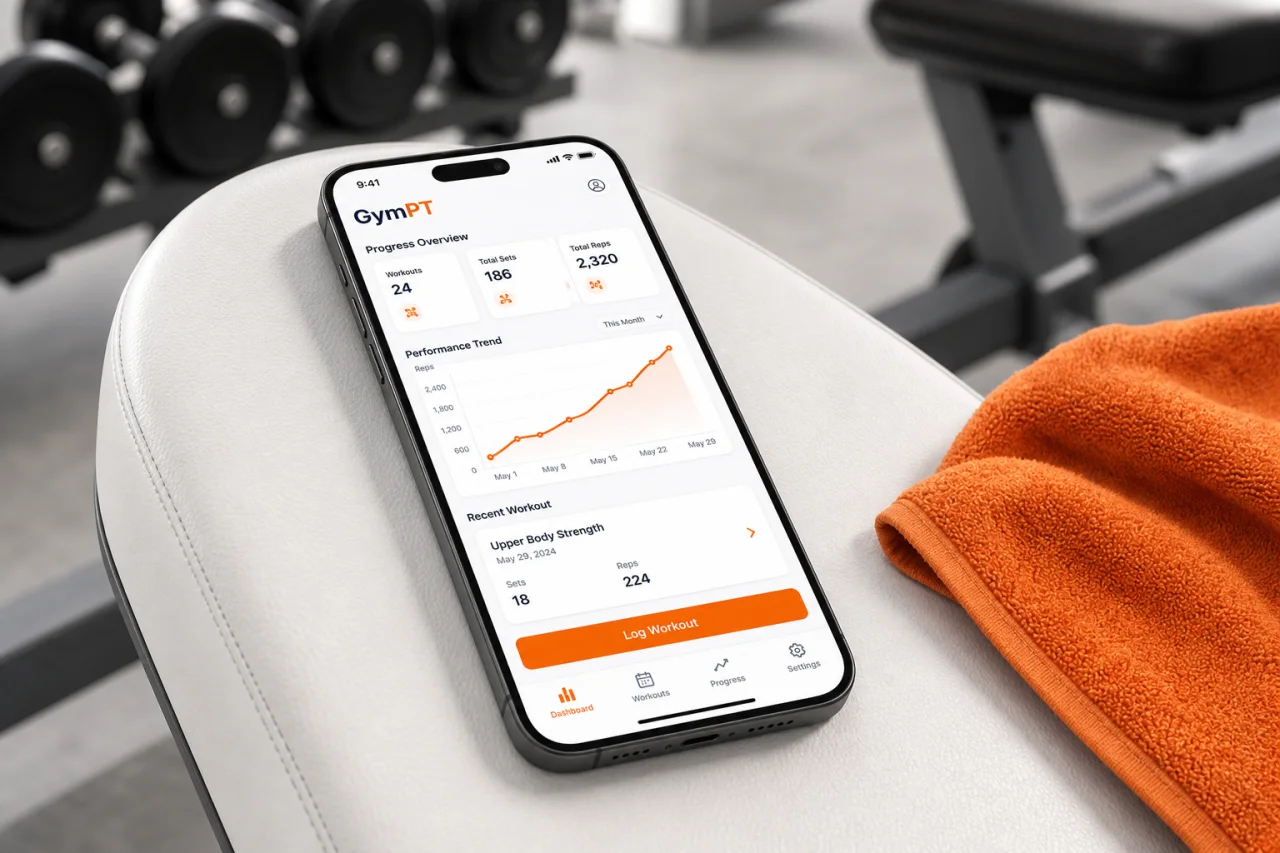
GymPT makes a beginner plan easier to follow because it can adapt the routine to your equipment, schedule, and confidence level. You can use AI coach chat to ask what to do next, track workouts so you do not repeat guesswork, and review progress insights to see whether you are actually getting stronger.
If you train at a gym with limited equipment, GymPT can also help you swap exercises without losing the structure of the plan. That matters because the best plan is the one you can keep doing.
When to make the plan harder
After 4 to 6 weeks, you may be ready for a slightly more demanding plan if:
- you finish workouts with energy left over,
- your form is stable on the main lifts,
- you recover well between sessions, and
- you can add reps or weight without losing control.
At that point, you can add a third set to a few exercises, increase load gradually, or move to a more specific split. Until then, keep the plan simple and let consistency do the work.
Final takeaway
The best beginner strength training plan is not flashy. It is short, repeatable, and built around full-body movements that help you learn the basics safely. Start with 2 to 3 sessions per week, use manageable weights, and progress slowly. That is how beginners build strength with confidence.
If you want a plan that adjusts to your equipment and tracks your progress automatically, GymPT can help you turn this simple structure into a routine you will actually follow.