dumbbell only workout plan
Dumbbell Only Workout Plan: How to Build a Smarter Routine With Limited Equipment
A dumbbell-only setup can still build strength, muscle, and consistency. Learn how to choose exercises, structure your week, and progress with GymPT.
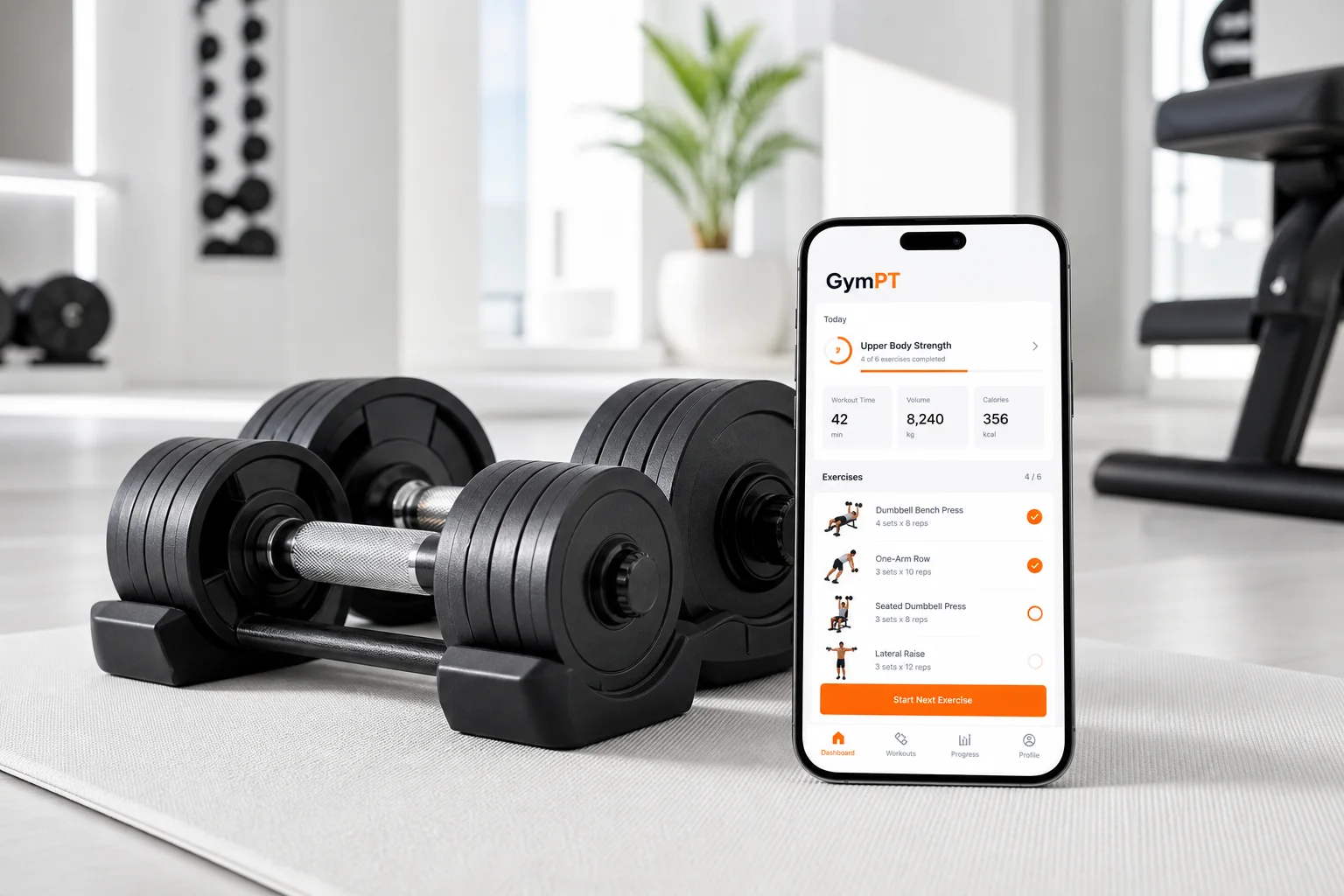
Dumbbell Only Workout Plan: What Makes It Work
A dumbbell only workout plan is not a compromise. It is a practical way to train when you have limited equipment, limited time, or a home setup that needs to do more with less. Dumbbells are versatile enough to cover pressing, rowing, squatting, hinging, carrying, and core work, which means you can build a complete routine without a full gym.
The key is not finding the “perfect” exercise list. The key is choosing movements that cover the major patterns, then progressing them in a way you can repeat week after week. That is where a smart plan beats a random list of dumbbell exercises.
Why Dumbbells Are Enough for a Strong Program
Public health guidelines recommend regular muscle-strengthening activity as part of weekly training, and resistance training guidance from major fitness organizations supports using free weights as an effective option for strength and muscle development. In practice, dumbbells work well because they let you train one side at a time, adjust range of motion, and scale effort with load, reps, tempo, and rest.
That flexibility matters. If your equipment is limited, your plan should be built around what you can actually repeat consistently. A good dumbbell workout plan can still support strength, muscle gain, and general fitness when the weekly structure is solid and the exercises are chosen well.
How to Build Your Dumbbell Only Workout Plan
Start by covering these movement patterns:
- Squat pattern: goblet squat, front-foot elevated split squat, or dumbbell squat variation
- Hinge pattern: dumbbell Romanian deadlift, single-leg RDL, or dumbbell deadlift
- Push pattern: dumbbell bench press, floor press, overhead press, or incline press
- Pull pattern: one-arm dumbbell row, chest-supported row, or bent-over row
- Carry pattern: farmer carry or suitcase carry
- Core pattern: dead bug, plank, side plank, or loaded carry variations
If your dumbbells are light, use unilateral work, slower lowering phases, pauses, and higher reps to keep the set challenging. If your dumbbells are heavy, focus on controlled form and lower rep ranges for the main lifts.
Choose the right weekly split
Most people do well with one of three setups:
- 3 days per week: full-body training on Monday, Wednesday, and Friday
- 4 days per week: upper/lower split
- 5 days per week: body-part or movement-focused split for more volume
If you are training with only dumbbells, a full-body plan is often the easiest way to stay balanced. It gives each muscle group enough weekly exposure without making any single session too long.
Use a simple progression rule
Progression is what turns a dumbbell only workout plan into a real training plan. Use one of these methods:
- Add reps first until you reach the top of your target range.
- Add load when you can complete all sets with good form.
- Add a set if recovery is good and you need more weekly volume.
- Slow the tempo or add pauses if the dumbbells are too light.
A simple target is to keep most working sets in a challenging but repeatable effort range. You should finish with enough control to keep technique clean, but not so easy that the set stops being productive.
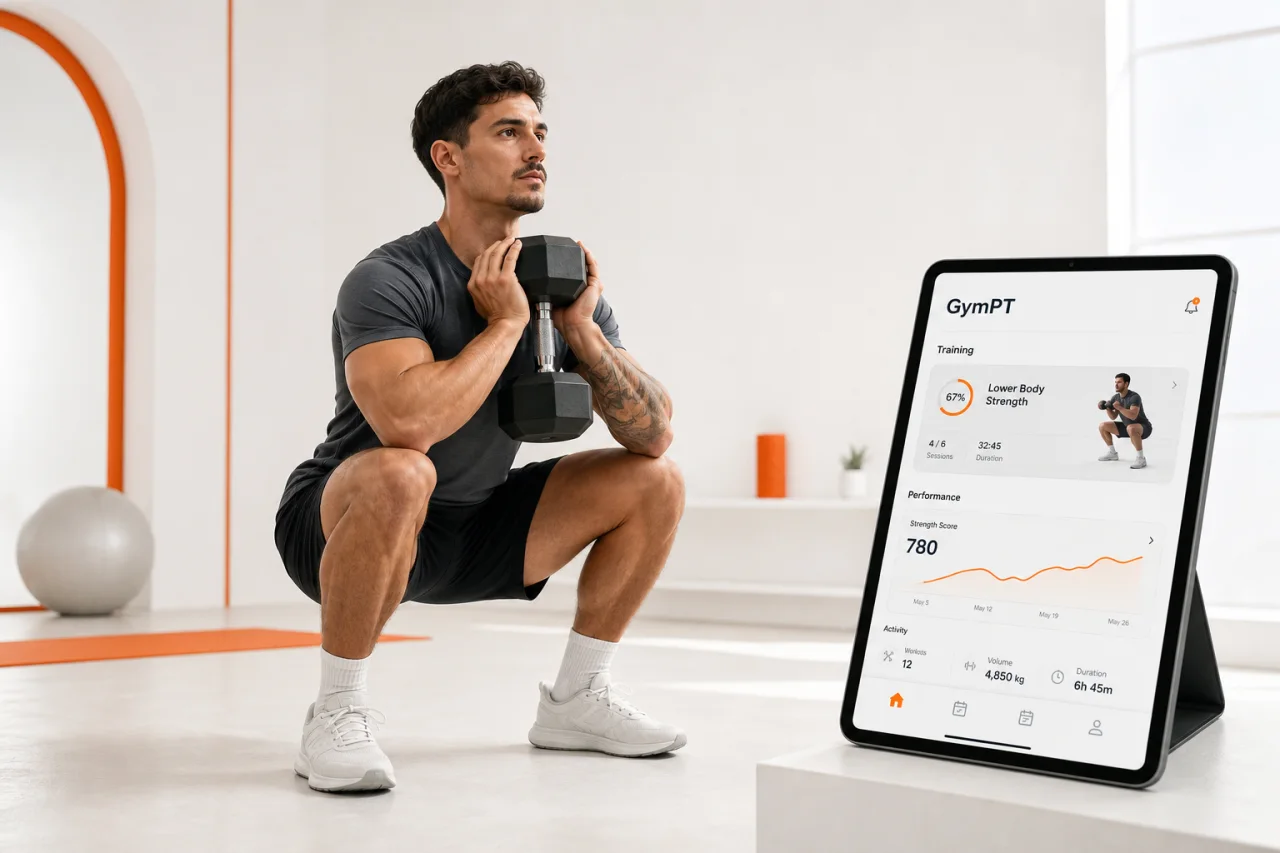
A Sample Dumbbell Only Workout Plan
Here is a straightforward 3-day structure you can adapt to your equipment and experience level.
Day 1: Full Body A
- Goblet squat — 3 sets of 8 to 12 reps
- Dumbbell bench press or floor press — 3 sets of 8 to 12 reps
- One-arm dumbbell row — 3 sets of 10 to 12 reps per side
- Dumbbell Romanian deadlift — 3 sets of 8 to 12 reps
- Plank — 3 sets of 30 to 45 seconds
Day 2: Full Body B
- Split squat — 3 sets of 8 to 10 reps per side
- Overhead press — 3 sets of 6 to 10 reps
- Chest-supported row or bent-over row — 3 sets of 8 to 12 reps
- Single-leg RDL — 3 sets of 8 to 10 reps per side
- Suitcase carry — 3 rounds of 20 to 40 meters per side
Day 3: Full Body C
- Goblet squat with pause — 3 sets of 10 reps
- Incline dumbbell press or floor press — 3 sets of 8 to 12 reps
- Renegade row or one-arm row — 3 sets of 8 to 10 reps per side
- Dumbbell hip hinge variation — 3 sets of 10 to 12 reps
- Side plank — 3 sets of 20 to 40 seconds per side
This template is balanced, repeatable, and easy to adjust. If you only have one pair of dumbbells, you can still make it work by changing stance, tempo, and unilateral loading.
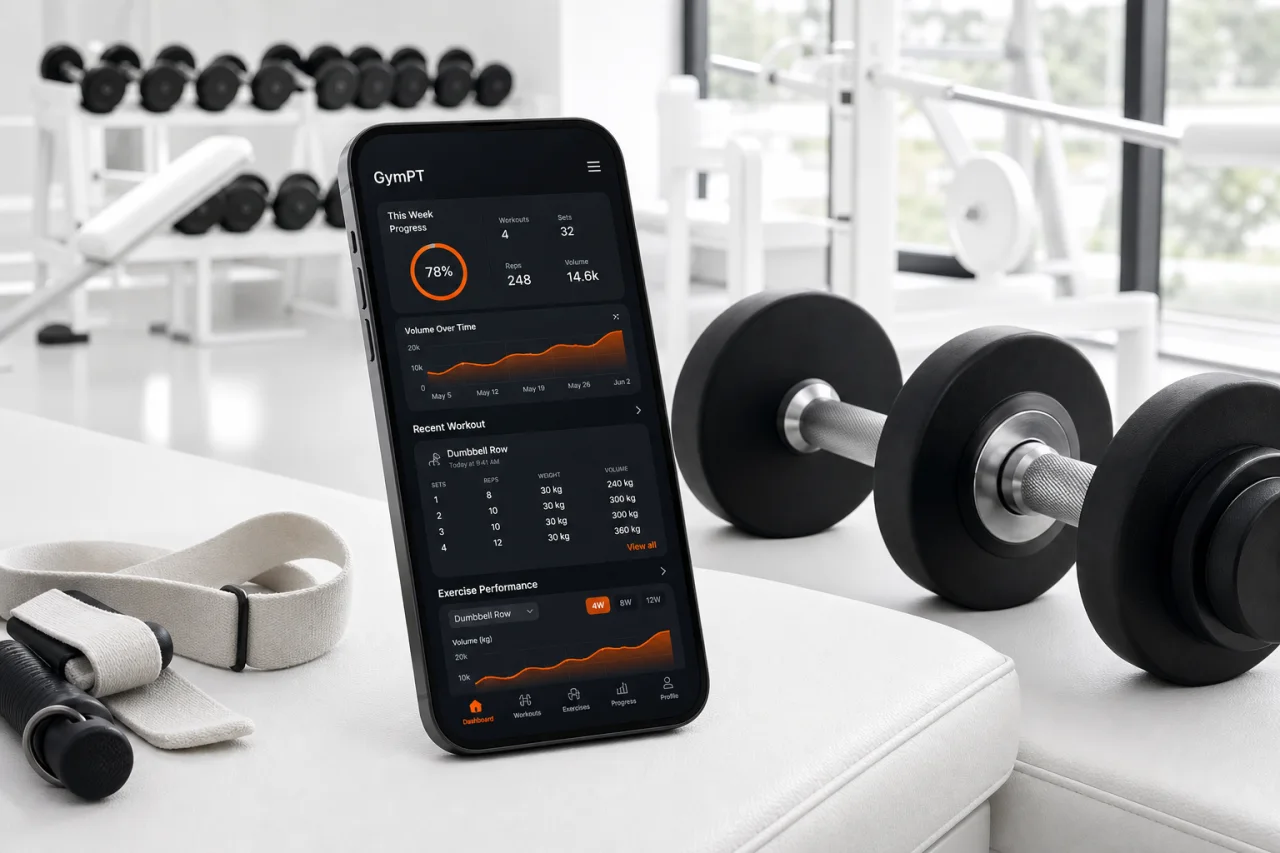
How to Adapt the Plan to Your Dumbbells
Not every dumbbell setup is the same. Your plan should match the equipment you actually have.
If your dumbbells are too light
- Use single-leg or single-arm exercises
- Slow the lowering phase to 3 to 5 seconds
- Add pauses at the bottom of the movement
- Increase reps before adding more sets
If your dumbbells are too heavy
- Use lower reps on compound lifts
- Choose floor presses instead of deep pressing angles
- Reduce range of motion only if needed for safety and control
- Keep accessory work simple and stable
If you train at home
- Use floor space for carries, split squats, and core work
- Keep the routine short enough to repeat consistently
- Track your sessions so you know when to progress
The best plan is the one that fits your equipment, your schedule, and your recovery. That is why a dumbbell-only routine should be built around constraints, not copied from a full-gym program.
Common Mistakes to Avoid
- Only doing presses and curls instead of training the full body
- Skipping rows, which leaves your pulling volume too low
- Changing exercises every workout so progress is hard to measure
- Using random rep ranges without a progression plan
- Training too hard every session and making recovery the bottleneck
If you want results, keep the exercise menu stable long enough to measure improvement. Then adjust one variable at a time.
How GymPT Helps You Turn Dumbbells Into a Real Plan
GymPT can turn your available equipment into a personalized workout plan instead of a generic template. Tell it what dumbbells you have, how many days you can train, and what your goal is. GymPT can then build a routine that matches your setup, track your workouts, and show progress trends over time.
That matters because a dumbbell only workout plan works best when it evolves with you. If your reps go up, your form improves, or your schedule changes, GymPT can help you update the plan without starting over.
For many lifters, the smartest approach is simple: use the equipment you have, train the movement patterns that matter, and let your plan adapt as you get stronger.
Bottom Line
A dumbbell only workout plan can be effective, efficient, and sustainable when it covers the major movement patterns and uses a clear progression system. You do not need a full gym to make meaningful progress. You need a plan that fits your equipment and a way to keep improving it.
If you want help building that plan, GymPT can match your dumbbells to your goals and turn them into a structured routine you can actually follow.