back workout plan
Back Workout Plan: Build a Stronger Back With Smarter Weekly Progression
A practical back workout plan should train your lats, upper back, and spinal erectors with enough volume to progress without beating up your lower back. Here’s how to structure it.
Back Workout Plan: what a good plan should actually do
A good back workout plan does more than “hit lats.” It should train the whole back in a way that is strong, balanced, and repeatable: vertical pulling for the lats, horizontal rowing for the upper back, and controlled hip-hinge work for the spinal erectors. The goal is not to destroy your lower back in one session. The goal is to build enough quality weekly work that you can recover, progress, and keep training consistently.
That approach matches current resistance-training guidance: consistency matters most, training all major muscle groups regularly is important, and volume should be matched to your goal and recovery capacity. For muscle growth, a practical target is roughly 10 sets per muscle group per week, adjusted to your experience level and exercise selection.
How to structure back training for better results
Think of your back session in three parts:
- Vertical pull to emphasize the lats and shoulder adduction.
- Horizontal row to build the mid-back, rear delts, and scapular control.
- Hip hinge or back extension pattern to train the spinal erectors and posterior chain without overloading them too early.
This structure gives you coverage without turning every exercise into the same movement. It also makes it easier to progress because each exercise has a clear job.
Best exercise categories to include
- Vertical pulls: pull-ups, assisted pull-ups, lat pulldowns
- Rows: chest-supported rows, cable rows, dumbbell rows, machine rows
- Rear-delt and upper-back work: face pulls, reverse flyes, high rows
- Spinal erector work: back extensions, Romanian deadlifts, good mornings with light-to-moderate load
If you want a simple rule: use at least one exercise where you pull the weight toward your torso, one where you pull from overhead, and one where you train the back of the trunk to resist bending.
A simple back workout plan you can actually follow
Here is a practical two-day weekly setup for most gym users. It gives you enough frequency to improve while keeping fatigue manageable.
Back Day A: lat focus
- Lat pulldown — 3 sets of 8-12 reps
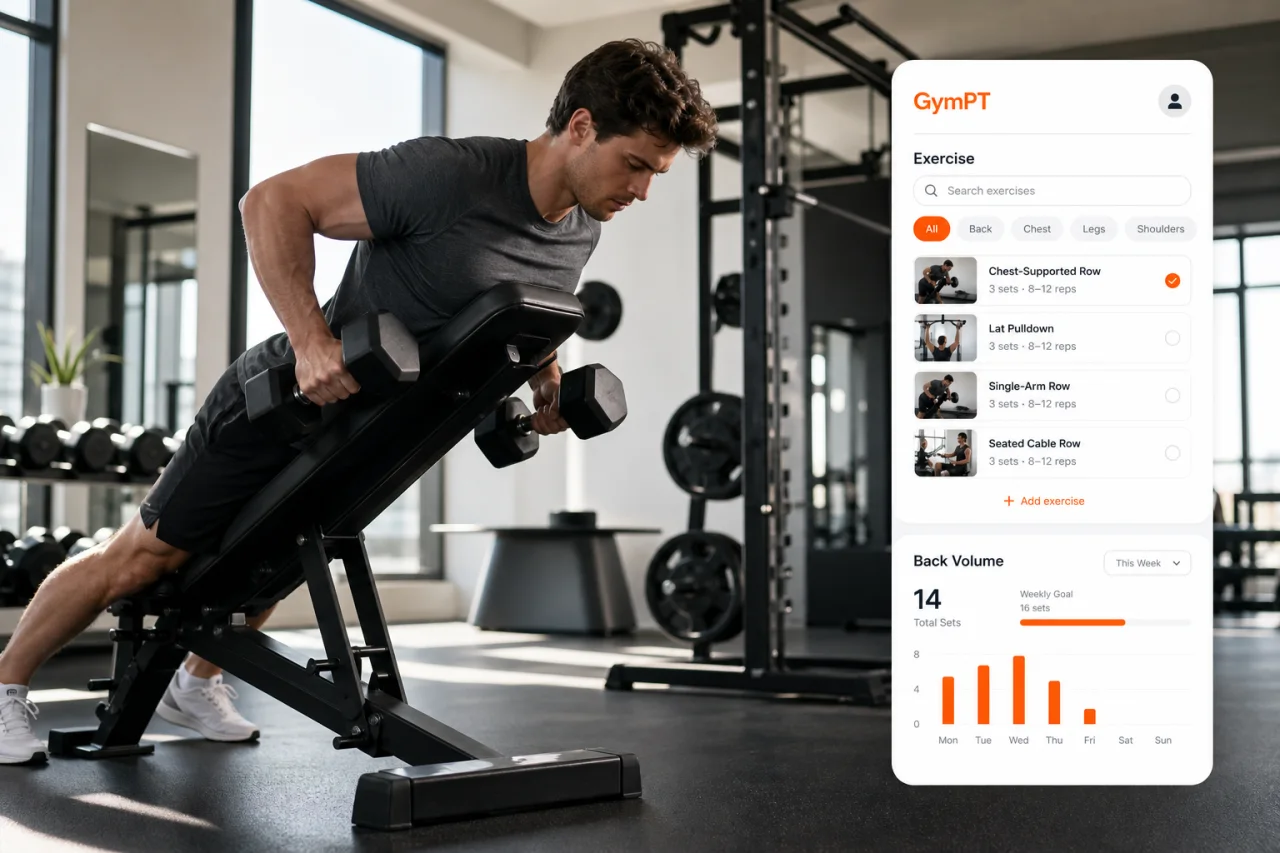
- Chest-supported row — 3 sets of 8-12 reps
- Single-arm cable row — 2 sets of 10-12 reps per side
- Face pull — 2 sets of 12-15 reps
- Back extension — 2 sets of 10-15 reps
Back Day B: upper-back and hinge focus
- Assisted pull-up or pull-up — 3 sets of 5-8 reps
- Seated cable row — 3 sets of 8-12 reps
- Machine high row — 2 sets of 10-12 reps
- Reverse flye — 2 sets of 12-15 reps
- Romanian deadlift — 2-3 sets of 6-10 reps
If you train back only once per week, combine the two days into one session and reduce total sets slightly. If you train back more often, split the volume across two or three sessions so each workout stays high quality.
How many sets and reps should you use?
For most people, back training works well in the 6-15 rep range, with heavier work reserved for pull-ups, rows, and hinges when technique is solid. A useful starting point is:
- Beginners: 6-10 total back sets per week
- Intermediate lifters: 10-14 total back sets per week
- Advanced lifters: 14+ sets per week if recovery is good
That weekly volume should be spread across exercises that feel stable and repeatable. Research on resistance training volume supports using sets as a practical way to track hypertrophy work, and newer guidance emphasizes that the best plan is the one you can sustain long enough to progress.
How to progress without wrecking your recovery
Progression should be simple. You do not need a complicated system to get stronger.
- Add reps first: stay in the rep range and build from the low end to the high end.
- Then add load: once you hit the top of the range with good form, increase the weight slightly.
- Keep 1-3 reps in reserve: most sets should be challenging, but not sloppy.
- Use stable exercises for volume: chest-supported rows and machines are useful when you want more back work with less lower-back fatigue.
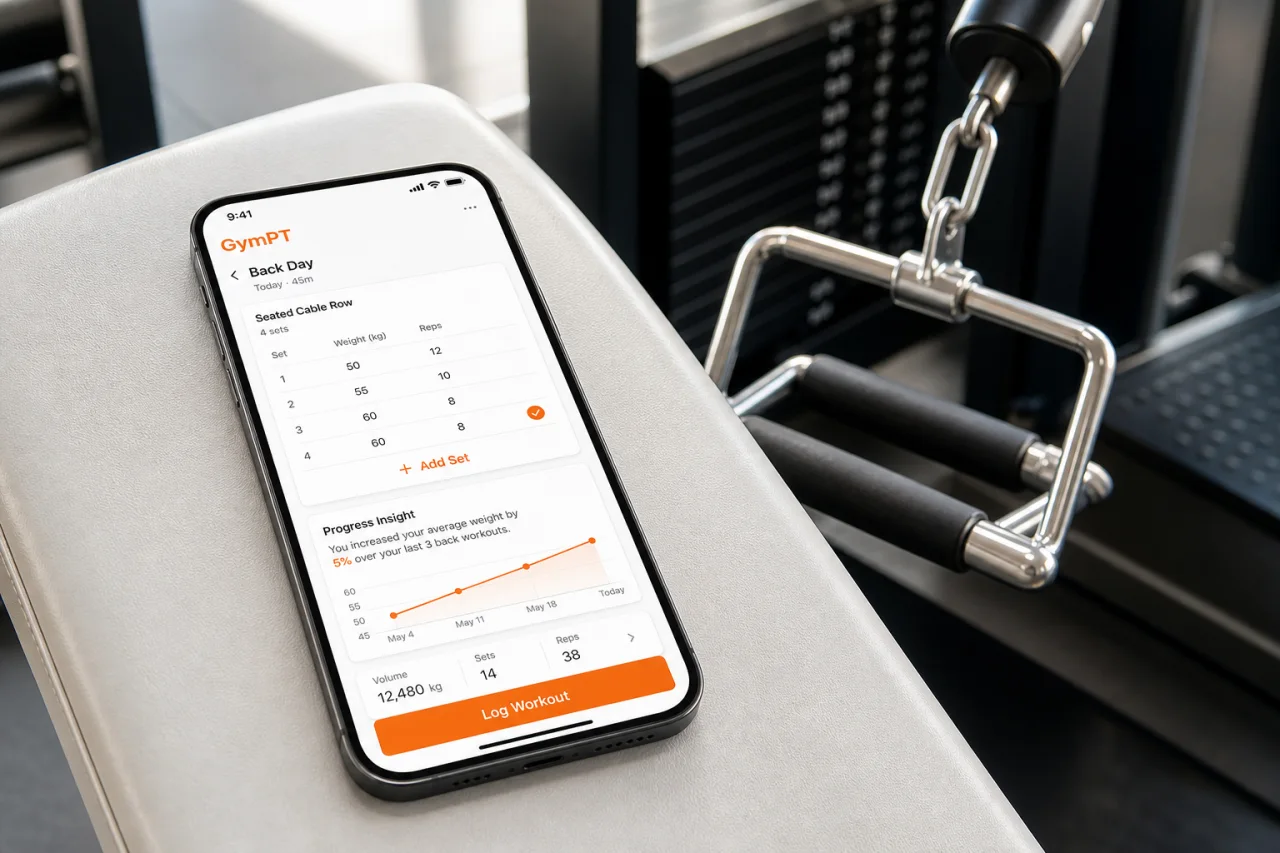
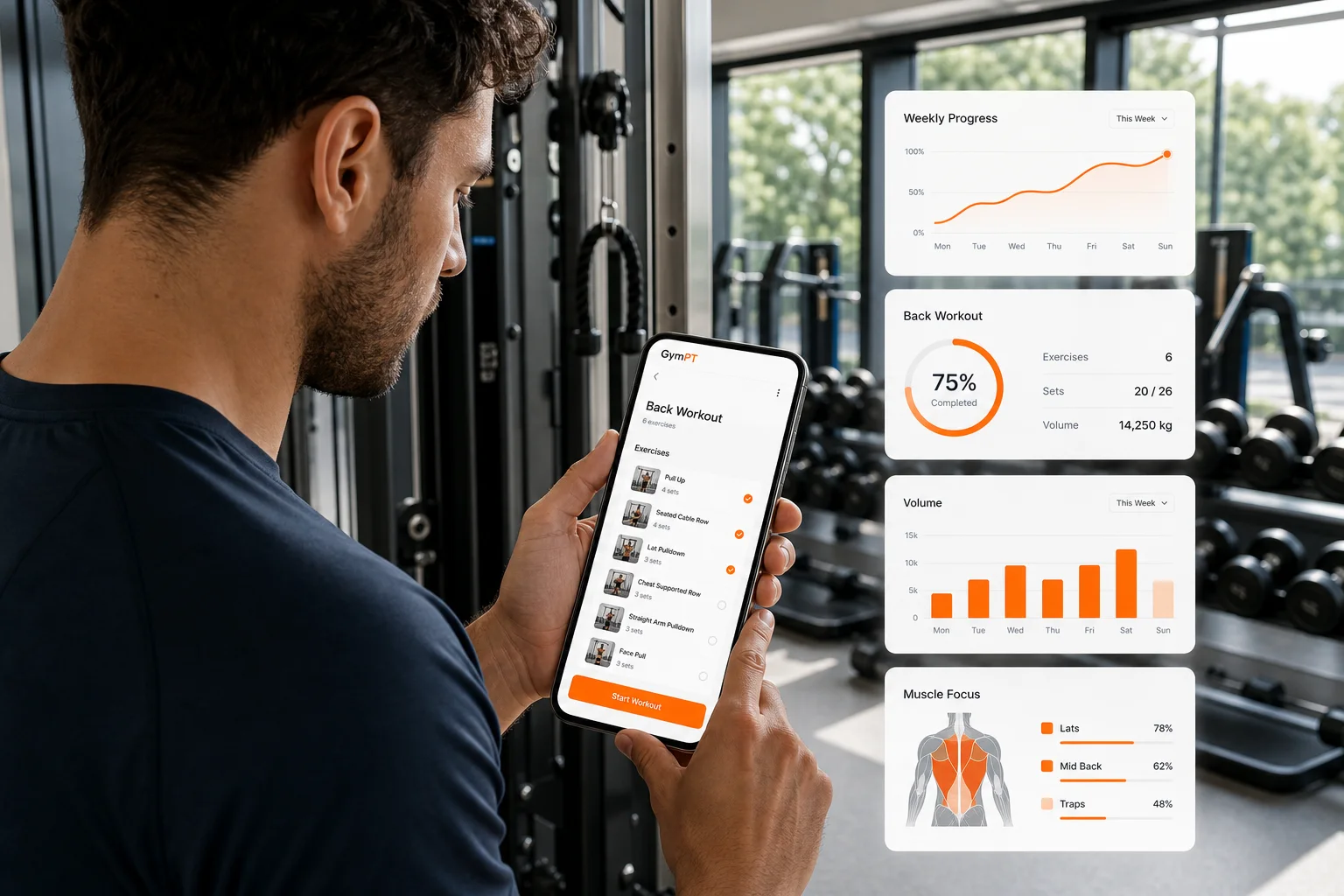
This is where an app like GymPT helps. You can log your sets, see whether your pulling volume is actually increasing, and adjust the plan before progress stalls.
Form cues that make back exercises more effective
Back training often fails because the movement becomes too fast or too loose. Use these cues:
- Pull with your elbows, not just your hands.
- Keep your ribs stacked instead of flaring hard on every rep.
- Let the shoulder blades move naturally, but do not shrug every row.
- Control the lowering phase for 2-3 seconds when possible.
- Stop a set when form starts to change, especially on hinges and back extensions.
For rows and pulldowns, a full range of motion usually works best when it is controlled. For hinge-based work, the priority is a neutral spine and a load you can own.
Common mistakes in a back workout plan
- Only doing pulldowns: this overemphasizes one pattern and leaves the upper back undertrained.
- Only doing rows: you miss a major vertical pulling stimulus.
- Using too much lower-back loading: too many unsupported rows and heavy hinges can create fatigue before the back is fully trained.
- Chasing failure on every set: this can reduce quality and make recovery harder.
- Changing exercises every week: progression becomes hard to measure.
A better strategy is to keep your main lifts stable for several weeks, then adjust one variable at a time.
Who should be more careful with back training?
If you have a history of back pain, start conservatively and choose exercises that feel stable and controlled. Public health guidance generally supports staying active and using exercise carefully for back pain, but you should stop if pain worsens and seek professional advice when needed. In practice, that means favoring supported rows, lighter hinges, and gradual progression instead of aggressive loading.
Back training should feel challenging in the muscles, not alarming in the joints or spine.
How GymPT can help you build a better back routine
GymPT can turn this into a personalized plan based on your equipment, training frequency, and recovery. If you have access to cables and machines, GymPT can bias your plan toward stable volume. If you train at home, it can swap in bands, dumbbells, or bodyweight options. You can also use AI coach chat to ask whether your weekly back volume is too low, too high, or just right.
The best back workout plan is not the hardest one. It is the one that gives you enough quality pulling, enough recovery, and enough consistency to improve week after week.
Quick back workout checklist
- Include one vertical pull, one row, and one hinge or extension pattern.
- Train back 1-2 times per week for most goals.
- Start with 6-10 weekly sets if you are new, then build up gradually.
- Use stable exercises to manage fatigue.
- Progress reps first, then load.
Bottom line: a smart back workout plan is balanced, measurable, and recoverable. Build around solid movement patterns, track your work, and let progression happen over time.