leg workout plan
Leg Workout Plan: Build Stronger Legs With a Smarter Weekly Structure
A practical leg workout plan should train quads, hamstrings, glutes, calves, and single-leg stability without wrecking recovery. Here’s how to build one.
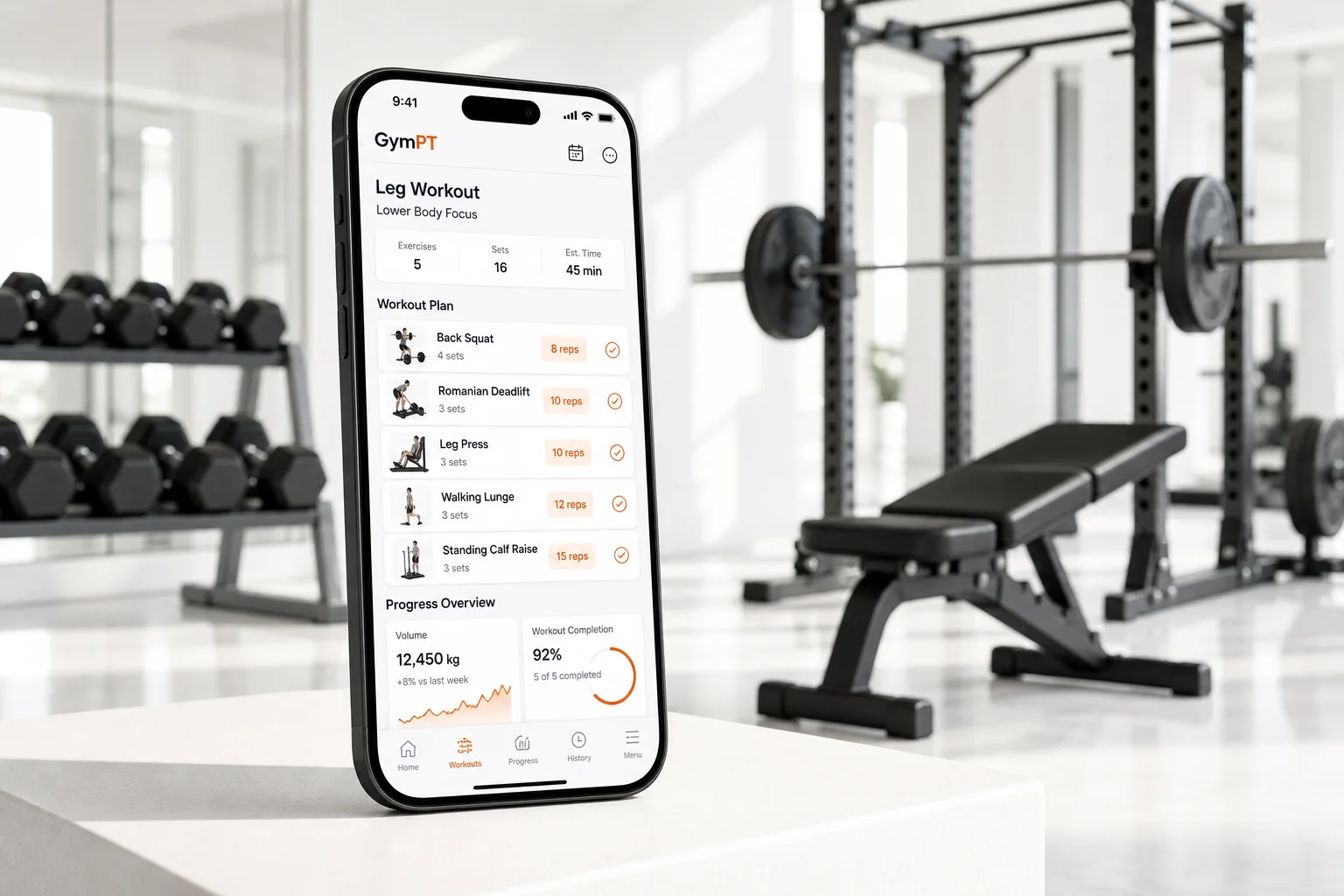
Why a leg workout plan needs structure
A good leg workout plan does more than make leg day hard. It gives your lower body enough work to grow stronger, while still leaving you fresh enough to train again next week. That matters because adults are generally advised to do muscle-strengthening activity at least two days per week, and lower-body training is one of the best ways to cover major muscle groups efficiently.
The goal is simple: train the quads, hamstrings, glutes, calves, and single-leg stabilizers with enough volume and progression to improve over time. If you only chase fatigue, you usually end up sore, inconsistent, and stuck. If you build the session around movement patterns, recovery, and load progression, you get better results with less guesswork.
In this guide, you’ll learn how to build a leg day routine that works for beginners and intermediate lifters alike, whether you train with machines, dumbbells, barbells, or a mix of equipment.
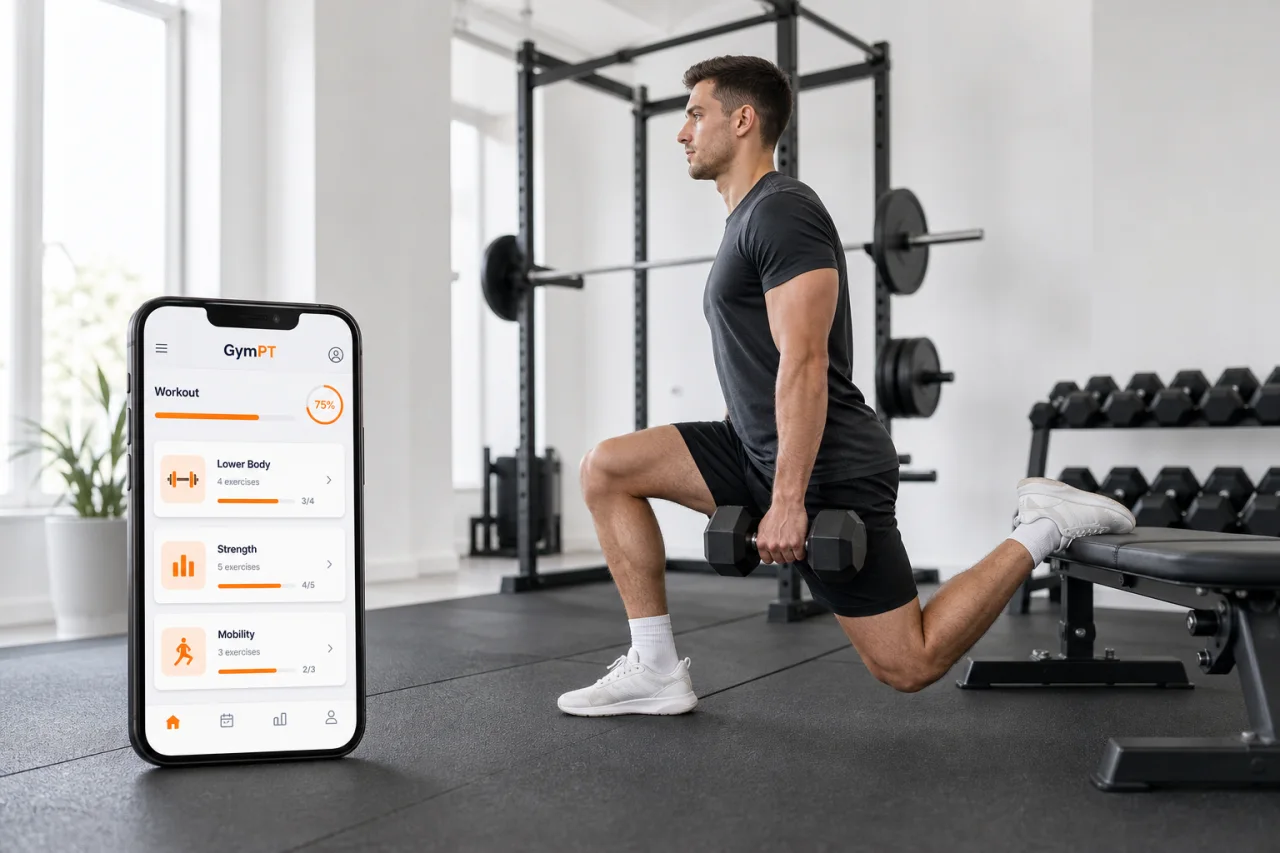
The 5 movement patterns every lower body workout should cover
Instead of picking random exercises, organize your lower body workout around five patterns. This keeps the plan balanced and helps you avoid overtraining one area while neglecting another.
- Knee-dominant squat pattern: targets quads and glutes.
- Hip hinge pattern: targets hamstrings, glutes, and posterior chain.
- Single-leg pattern: improves balance, symmetry, and stability.
- Glute-focused pattern: adds extra work for hip extension strength.
- Calf work: supports ankle strength and lower-leg development.
A complete leg training session does not need every pattern in one workout, but your weekly plan should cover all of them. That is the difference between a random leg day and a real training plan.
A simple leg workout plan you can repeat each week
If you train legs once per week, make that session full and focused. If you train legs twice per week, split the work so each session has a clear purpose. Here is a practical structure that works well for most gym users.
Option 1: One leg day per week
- Squat or leg press: 3-4 sets of 6-10 reps
- Romanian deadlift or hip hinge: 3-4 sets of 6-10 reps
- Bulgarian split squat or walking lunge: 2-3 sets of 8-12 reps per leg
- Leg curl: 2-3 sets of 10-15 reps
- Calf raise: 3-4 sets of 10-20 reps
Option 2: Two leg days per week
Day A: Quad emphasis
- Squat or hack squat: 3-4 sets of 5-8 reps
- Leg press: 3 sets of 8-12 reps
- Split squat: 2-3 sets of 8-12 reps per leg
- Leg extension: 2-3 sets of 12-15 reps
- Calf raise: 3 sets of 12-20 reps
Day B: Posterior chain emphasis
- Romanian deadlift: 3-4 sets of 6-10 reps
- Hip thrust or glute bridge: 3 sets of 8-12 reps
- Seated or lying leg curl: 3 sets of 10-15 reps
- Reverse lunge or step-up: 2-3 sets of 8-12 reps per leg
- Calf raise: 3 sets of 12-20 reps
This split is effective because it spreads stress across the week instead of forcing every lower-body exercise into one exhausting session.
How to choose the right exercises for your equipment
The best leg workout plan is the one you can actually repeat. Exercise selection should match the equipment you have access to and the movement you can perform well.
- Barbell available: back squat, front squat, Romanian deadlift, hip thrust.
- Machines available: leg press, hack squat, leg extension, leg curl, calf raise machine.
- Dumbbells only: goblet squat, split squat, step-up, dumbbell Romanian deadlift, walking lunge.
- Limited equipment: bodyweight squat, tempo split squat, single-leg glute bridge, calf raise, step-up.
If you are unsure which version fits your body and setup, GymPT can help build a plan around the equipment you have and adjust it as you progress.
How hard should leg day feel?
Leg training should be challenging, but not chaotic. A useful rule is to finish most working sets with about 1-3 reps left in reserve. That means the set is hard, but your technique stays controlled.
For compound lifts like squats and Romanian deadlifts, keep the first few sets crisp and repeatable. For isolation work like leg extensions, leg curls, and calf raises, you can push closer to failure more often because the fatigue cost is usually lower.
If your form breaks down early, the load is too heavy or the exercise choice is too advanced for your current level. Good training is repeatable training.
How to progress your leg training without stalling
Progression is what turns a leg day routine into a real plan. You do not need to add weight every session. You just need a clear way to improve over time.
- Add reps first: stay in a rep range and try to hit the top end before increasing load.
- Add load gradually: once you own the rep range, increase weight by the smallest practical jump.
- Add a set: if recovery is good and progress slows, add one set to a key lift.
- Improve control: use a fuller range of motion and cleaner tempo before chasing heavier numbers.
A simple progression model works well: keep the same exercises for 4-6 weeks, track your sets and reps, and aim to beat last week by a small amount. That is enough to drive progress without constantly changing the plan.
Common leg day mistakes that slow progress
Many lifters make leg day harder than it needs to be. These mistakes are common, but easy to fix.
- Doing too many exercises: more is not always better. Focus on the highest-value movements first.
- Skipping hamstrings: a quad-only plan creates imbalance and limits lower-body development.
- Never training single-leg work: split squats and lunges help fix side-to-side differences.
- Using the same rep range forever: mix heavier compound work with moderate and higher-rep accessory work.
- Ignoring recovery: if your next session suffers, reduce volume before adding more.
Remember: a strong leg workout plan should improve performance over time, not just create soreness.
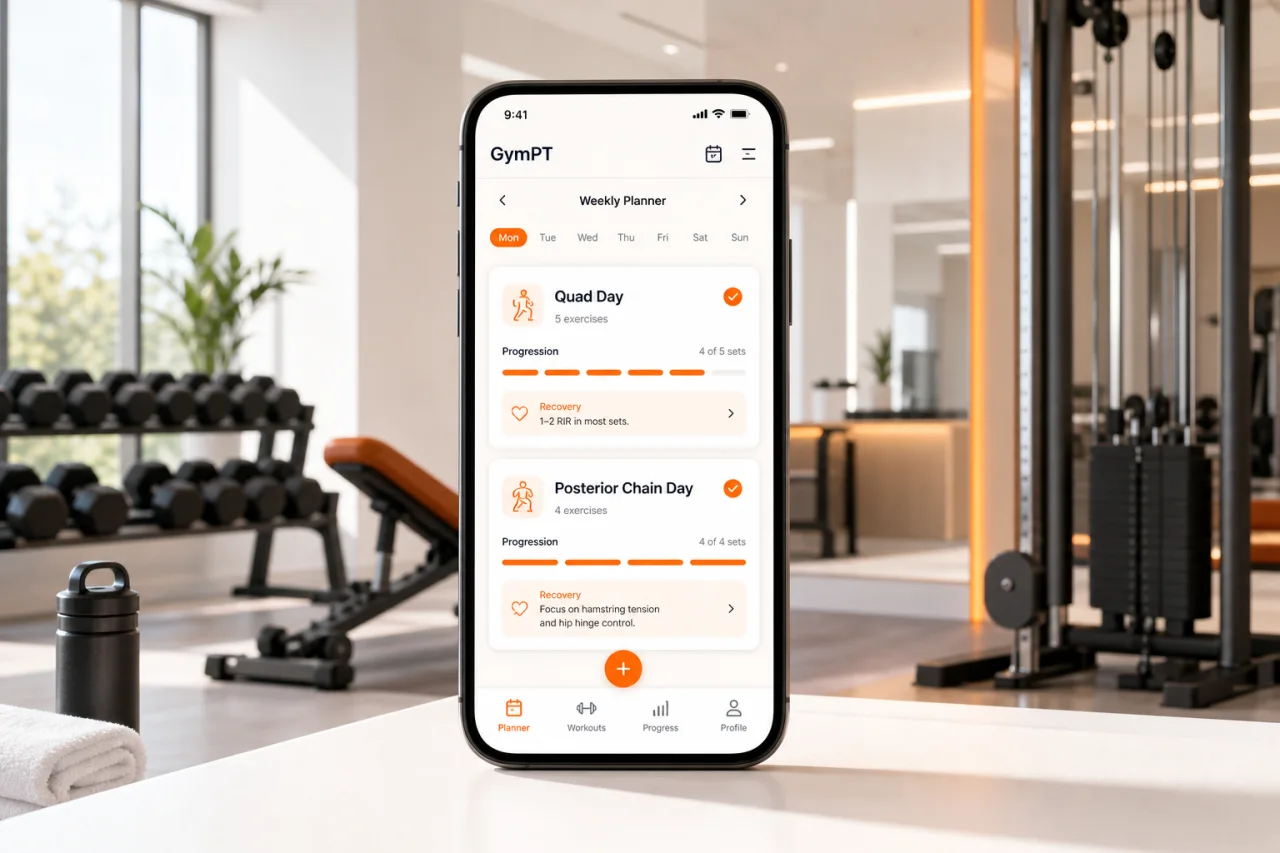
How to fit leg day into your weekly schedule
The best weekly setup depends on how often you train. If you lift three days per week, one dedicated leg day may be enough. If you train four to six days per week, two lower-body sessions often work better because they let you split quad and posterior-chain work.
Here are three simple options:
- 3-day plan: one full lower-body session, plus upper-body days.
- 4-day plan: two lower-body days and two upper-body days.
- 5-6 day plan: one quad-focused day, one posterior-chain-focused day, plus upper-body or accessory work.
If your legs are still sore when the next lower-body session arrives, reduce the number of hard sets before you reduce frequency. Often the issue is too much volume, not too many training days.
When to use GymPT for your leg workout plan
GymPT is useful when you want a plan that adapts to your equipment, schedule, and training level. You can use it to build a lower body workout, track your lifts, and see whether your leg training is actually progressing week to week.
That matters because the best plan is not the one that looks impressive on paper. It is the one you can follow consistently, recover from, and improve over time.
Bottom line
A smart leg workout plan is balanced, repeatable, and progressive. Cover the main movement patterns, choose exercises that match your equipment, train hard enough to stimulate adaptation, and track your progress so you know when to add load or volume. If you do that consistently, leg day becomes a reliable driver of strength and muscle growth instead of a weekly guessing game.