glute workout plan
Glute Workout Plan: Build Stronger Glutes With a Smarter Weekly Structure
A practical glute workout plan should do more than chase a burn. Learn how to structure weekly volume, choose the right exercises, and progress safely.
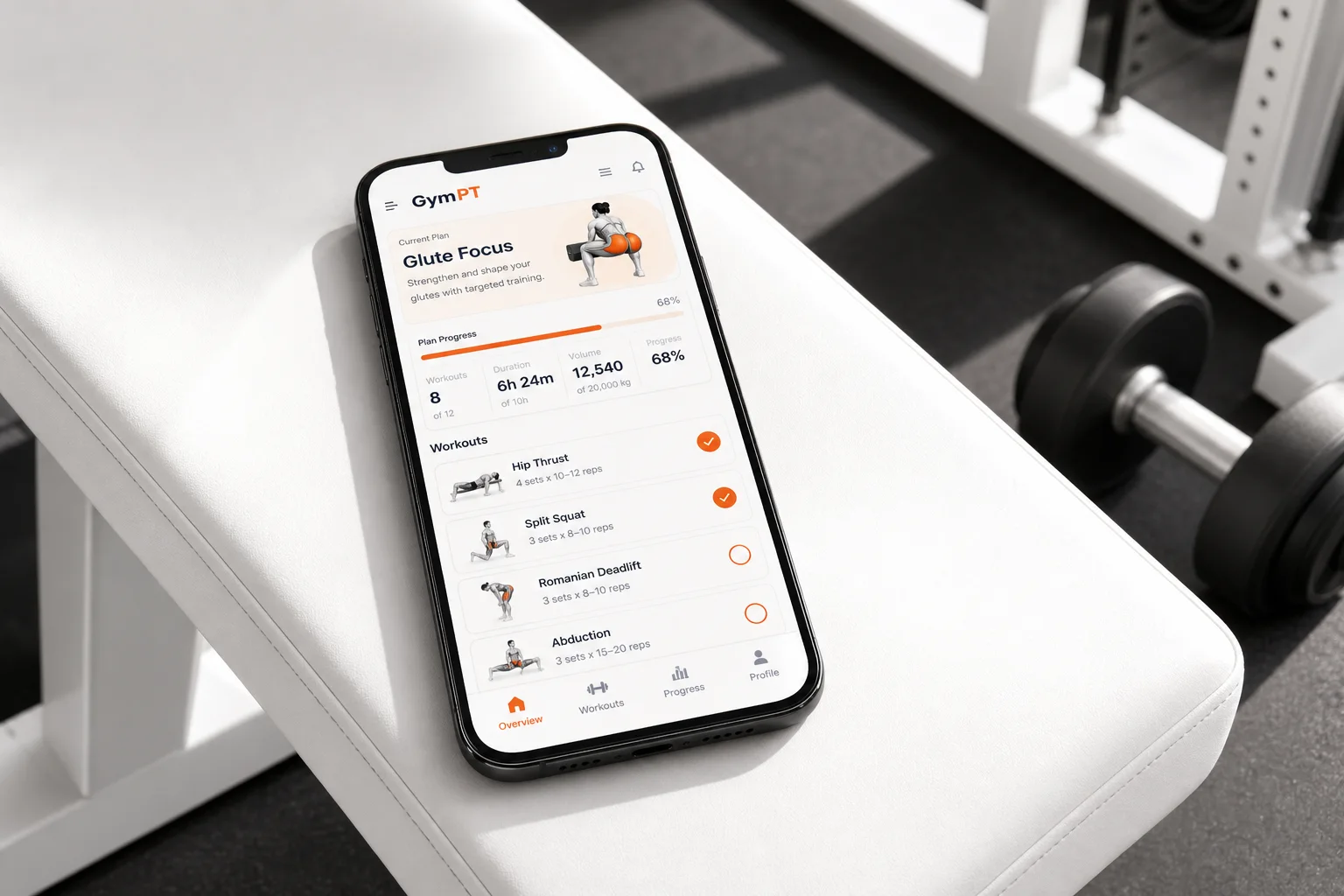
Glute Workout Plan: What Actually Makes It Work
A good glute workout plan is not just a list of popular exercises. It is a weekly structure that gives your glutes enough hard work, enough variety, and enough recovery to adapt. The best plans combine hip extension, squat or lunge patterns, and abduction work so you train the glutes from more than one angle.
That matters because the glutes do more than “look good.” They help with hip extension, hip stability, and force transfer in movements like squats, lunges, running, and jumping. Research and coaching guidance also suggest that exercises such as hip thrusts, split squats, lunges, step-ups, deadlifts, and squats can all produce strong glute stimulus when they are loaded and progressed well.
If your goal is stronger, fuller glutes, the answer is usually not more random exercises. It is a plan you can repeat, track, and improve.
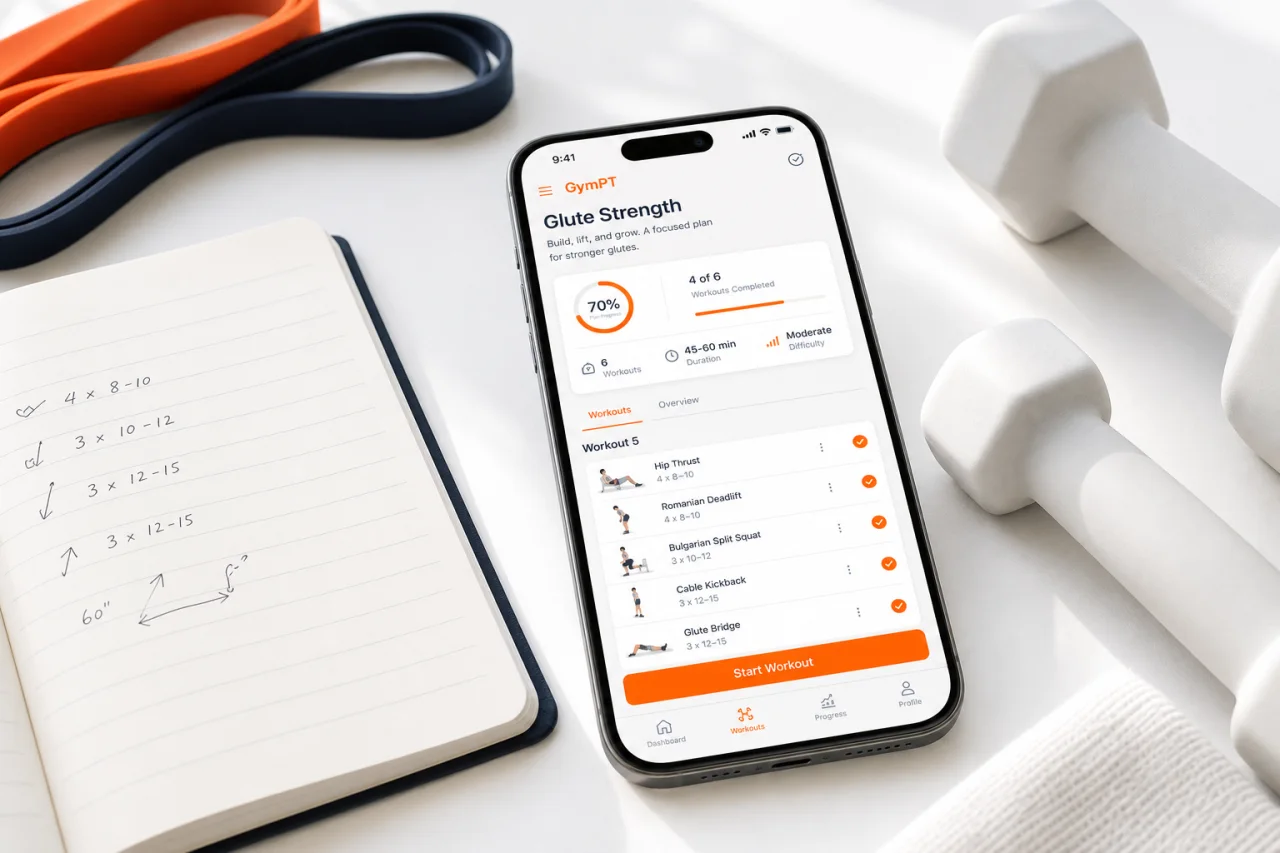
How Much Glute Training Do You Need?
For most lifters, glute progress starts with a manageable weekly volume and consistent effort. A practical target is to train the glutes 2 to 3 times per week and build toward roughly 10 or more hard sets per week for the glutes if recovery is good. That volume can come from direct glute work plus compound lower-body lifts that heavily involve the glutes.
Instead of trying to max out every session, think in terms of quality sets. A set counts when it is challenging enough to create a training signal, usually with a few reps left in reserve rather than stopping far too early. For many people, this is the difference between “feeling the burn” and actually building muscle.
- Beginner: 6 to 8 hard glute-focused sets per week
- Intermediate: 8 to 12 hard glute-focused sets per week
- Advanced: 12 to 16+ hard glute-focused sets per week if recovery is strong
If your lower body is also trained hard on leg days, count those exercises toward your total. A glute workout plan should fit your whole week, not live in isolation.
The Best Exercise Mix for Glute Growth
The most effective glute training usually includes four movement types. Each one covers a different job the glutes perform.
1. Thrust and bridge patterns
Hip thrusts and glute bridges are useful because they load the glutes strongly through hip extension. They are often a top choice when you want a direct glute stimulus with relatively low technical complexity.
2. Squat and lunge patterns
Split squats, lunges, and step-ups challenge the glutes through a deeper range of motion and single-leg control. These are especially useful if you want glute development that carries over to athletic movement and everyday stability.
3. Hinge patterns
Romanian deadlifts and similar hinge exercises train the glutes together with the hamstrings. They are valuable for building the posterior chain and for teaching strong hip movement.
4. Abduction and stability work
Band walks, cable abductions, and machine abductions help train the glute medius and other stabilizers. These exercises are not a replacement for heavy compound work, but they can round out a balanced glute training week.
A smart glute workout plan uses all four categories across the week instead of repeating the same movement over and over.
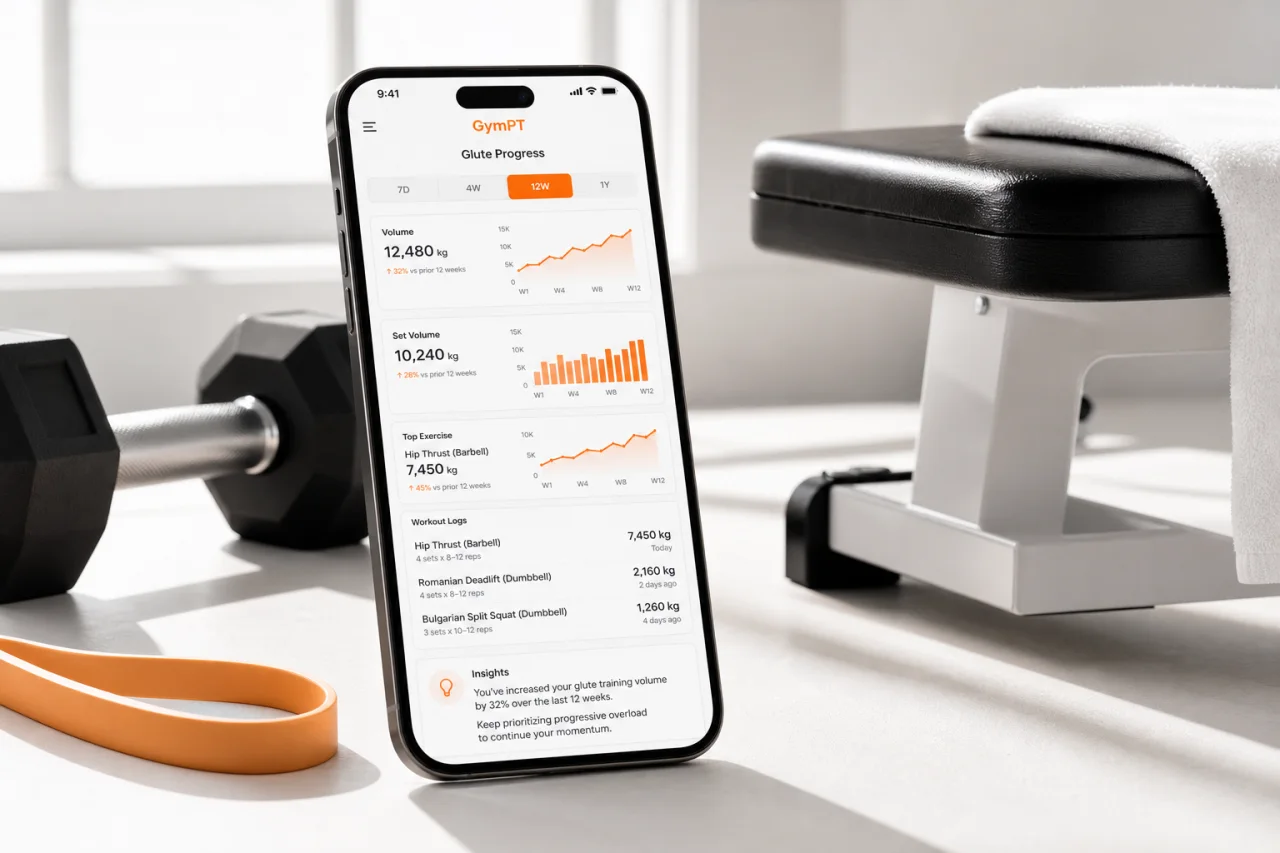
A Simple 3-Day Glute Workout Plan
This sample plan is built for people who want a practical structure they can repeat and progress. It works well if your main goal is glute growth, but it also leaves room for recovery.
Day 1: Heavy glute focus
- Barbell hip thrust — 4 sets of 6 to 8 reps
- Romanian deadlift — 3 sets of 8 to 10 reps
- Bulgarian split squat — 3 sets of 8 to 10 reps per leg
- Cable or machine hip abduction — 2 to 3 sets of 12 to 20 reps
Day 2: Unilateral control and range of motion
- Step-up — 3 sets of 8 to 10 reps per leg
- Walking lunge or reverse lunge — 3 sets of 10 to 12 reps per leg
- Glute bridge — 3 sets of 10 to 15 reps
- Band lateral walk — 2 to 3 sets of 15 to 25 steps each way
Day 3: Volume and pump
- Hip thrust variation — 3 sets of 10 to 12 reps
- Goblet squat or hack squat — 3 sets of 8 to 12 reps
- Single-leg RDL — 3 sets of 8 to 10 reps per leg
- Abduction machine or cable abduction — 3 sets of 15 to 20 reps
This gives you a mix of heavy tension, unilateral work, and higher-rep accessory work. That combination is often easier to recover from than trying to do only one style of training.
How to Progress Without Burning Out
Progression is what turns a decent routine into a real glute workout plan. If the exercises never get harder, your body has little reason to adapt.
Use one of these progression methods at a time:
- Add reps until you reach the top of the target range, then add load.
- Add load while keeping form and range of motion consistent.
- Add a set only when recovery, sleep, and performance are stable.
- Improve control by using a slower lowering phase or cleaner technique.
A simple rule: if you can complete every set with the same weight and the last reps still feel controlled, you probably have room to progress. If performance drops sharply from set to set, your volume may be too high or your recovery too low.
Form Cues That Make Glute Work Better
Small technique changes can make a big difference in how much the glutes contribute.
- Use full hip extension without over-arching your lower back.
- Keep pressure through the whole foot on squats, lunges, and step-ups.
- Control the lowering phase instead of dropping into the bottom position.
- Choose a stance that feels stable and lets you move through a useful range of motion.
- Train close enough to effort that the last reps are challenging but still technically clean.
If you only chase a glute “burn,” you may miss the bigger training signal. Good glute training should feel demanding, but it should also look repeatable.
Common Mistakes in Glute Training
Many people stall because their plan looks busy but is not actually structured.
- Doing too many exercises in one session and never progressing any of them
- Skipping heavy work and relying only on bands or light isolation exercises
- Training glutes hard every day without enough recovery
- Using poor range of motion on thrusts, squats, or lunges
- Ignoring unilateral work that builds stability and balance
If your glutes are always sore but not getting stronger, the plan may be too random or too fatiguing. Better results usually come from fewer exercises, better execution, and clearer progression.
How GymPT Helps You Build a Better Glute Plan
GymPT makes it easier to turn this structure into a plan that fits your body, equipment, and schedule. You can build a glute workout plan around the tools you actually have, track your sets and reps, and adjust the plan as your performance changes.
That is especially useful if you want to train glutes at home, in a full gym, or with limited equipment. Instead of guessing, you can use your workout history and progress insights to decide when to add load, when to increase volume, and when to recover.
If you want a plan that adapts with you, GymPT can help you keep the structure while changing the details.
Final Takeaway
The best glute workout plan is simple enough to follow and smart enough to progress. Train the glutes 2 to 3 times per week, use a mix of thrust, squat, hinge, and abduction patterns, and build volume gradually. When your plan is structured, your glutes have a much better chance to grow.
Start with a repeatable routine, track your numbers, and make each week slightly better than the last.
Related reading: if you are building a broader lower-body routine, you may also want to explore Beginner Strength Training Plan, Full Body Workout Plan, Strength Training Program, and Exercise Tracking App.