core workout routine
Core Workout Routine: Build a Stronger Midsection With Safer Progression
Learn how to build a core workout routine that improves stability, supports lifting, and progresses safely with simple exercise choices and clear weekly structure.
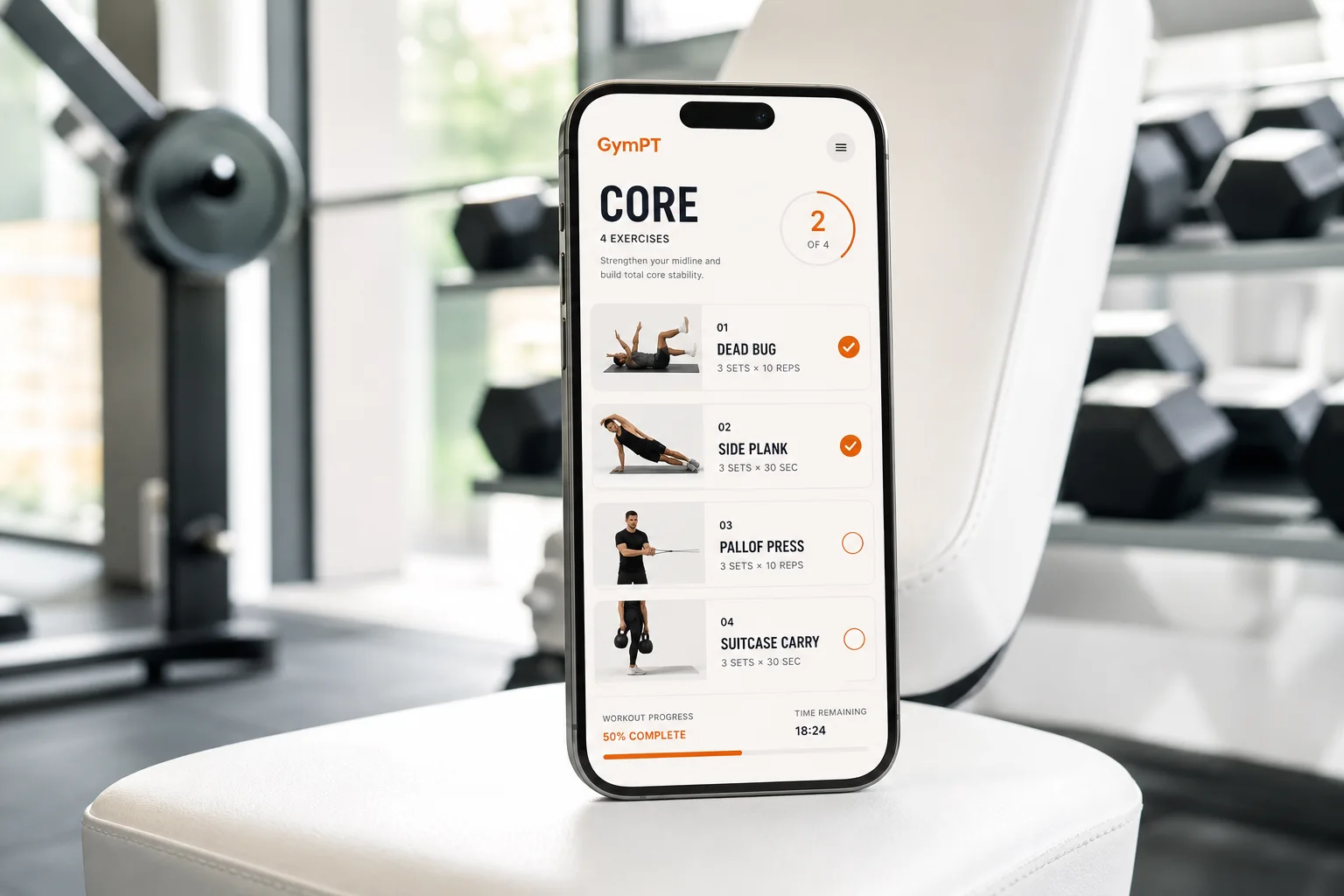
Core Workout Routine: What It Should Actually Do
A good core workout routine is not just about chasing a burn in your abs. The core’s job is to help you resist movement, transfer force, and keep your trunk stable while you squat, hinge, press, carry, run, and rotate. That means the best routine trains more than one pattern: anti-extension, anti-rotation, anti-lateral flexion, and controlled flexion or rotation when appropriate.
Research on core training consistently points to improvements in balance, trunk function, and some performance outcomes when core work is programmed with structure instead of random high-rep ab exercises. In practice, that means choosing exercises you can control, then progressing them over time rather than simply adding more reps forever.
What a Strong Core Routine Should Include
If you want a routine that carries over to real training, build it around these four buckets:
- Anti-extension: keeps your lower back from arching excessively, like in dead bugs or planks.
- Anti-rotation: helps you resist twisting, like in Pallof presses or cable holds.
- Anti-lateral flexion: helps you stay upright under uneven load, like in side planks or suitcase carries.
- Controlled flexion and rotation: useful when done with intent and good form, such as crunch variations or cable chops.
This approach is more useful than repeating the same crunches every session because it trains the trunk to stabilize in different directions. That is the kind of strength most lifters, runners, and general gym users actually need.
A Simple Core Workout Routine You Can Use
Use this as a practical template 2 to 3 times per week. Keep the effort moderate, the form strict, and the rest short enough to stay focused.
Option A: Beginner Core Workout Routine
- Dead bug — 2 to 3 sets of 6 to 10 reps per side
- Front plank — 2 to 3 sets of 20 to 40 seconds
- Side plank — 2 to 3 sets of 15 to 30 seconds per side
- Bird dog — 2 to 3 sets of 6 to 8 reps per side
Option B: Intermediate Core Stability Training
- Dead bug with band pull — 2 to 3 sets of 8 reps per side
- Pallof press — 2 to 4 sets of 8 to 12 reps per side
- Side plank with reach — 2 to 3 sets of 20 to 35 seconds per side
- Suitcase carry — 3 to 4 walks of 20 to 40 meters per side
If you train abs after lifting, this routine fits well at the end of a session. If you want a dedicated core day, keep the total work short and high quality. Core training works best when it supports your main program instead of exhausting you before it.
How to Progress Without Losing Form
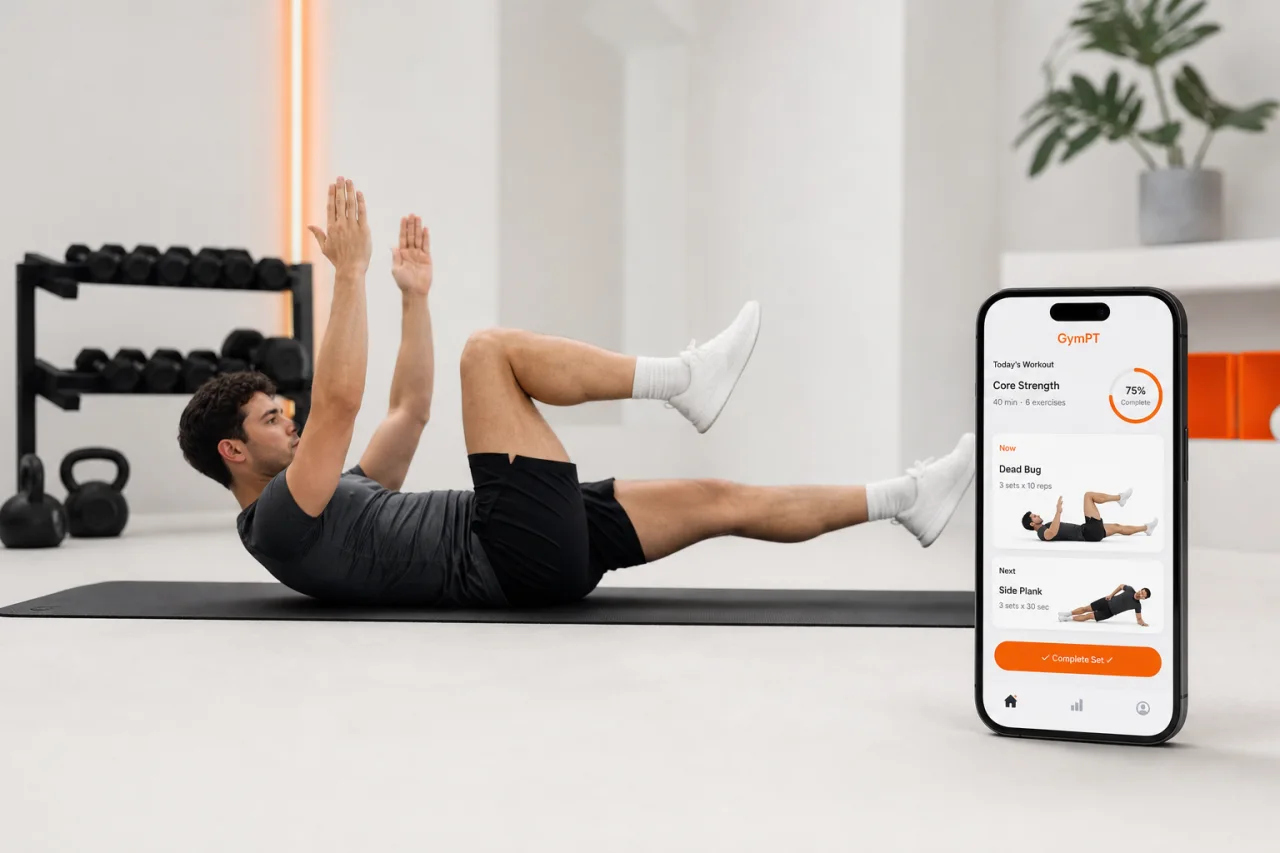
The biggest mistake in an ab workout routine is progressing too fast. Instead of jumping straight to harder movements, use this order:
- Increase hold time while keeping perfect position.
- Add reps only if the movement stays controlled.
- Slow the tempo to make each rep more demanding.
- Increase leverage by extending the arms or legs.
- Add load with cables, dumbbells, or carries.
A useful rule: if your lower back starts taking over, the exercise is too hard for your current level. Step back one progression and own the position first. That is safer and usually more effective than forcing a harder variation too early.
How Often Should You Train Core?
For most people, 2 to 4 short sessions per week is enough. You do not need a long core workout every day. In fact, a few focused sets done consistently usually beat a marathon ab session done once in a while.
A simple weekly structure looks like this:
- 2 days per week: 10 to 15 minutes after strength training
- 3 days per week: 8 to 12 minutes with fewer exercises per session
- 4 days per week: very small doses, such as one anti-extension and one anti-rotation drill
If your main goal is muscle gain or strength, core work should support your bigger lifts, not replace them. If your goal is better stability for sports or daily movement, consistency matters more than exercise variety.
Common Core Training Mistakes
- Only doing crunches: this misses anti-rotation and anti-lateral flexion work.
- Chasing fatigue instead of control: shaky reps are not better reps.
- Training too hard too soon: advanced variations can reduce quality if you are not ready.
- Ignoring breathing: bracing and controlled exhalation help you keep position.
- Never tracking progress: if you do not log sets, reps, and hold times, you cannot tell whether the routine is improving.
Core work should feel challenging, but it should not turn into sloppy spinal movement. Quality is the point.
How GymPT Helps You Build a Better Core Workout Routine
GymPT makes core training easier to personalize. You can build a routine based on your equipment, training days, and current level, then adjust it as you improve. If you want a body-part split, GymPT can place core work into your weekly plan without crowding out your main lifts. If you train at home or in a full gym, it can match exercises to the equipment you actually have.
GymPT also helps you stay consistent with workout tracking and progress insights. That matters because core training improves fastest when you can see what changed: longer planks, cleaner Pallof presses, better carries, or more controlled reps. If you are unsure which variation to use, the AI coach chat can help you choose a safer next step.
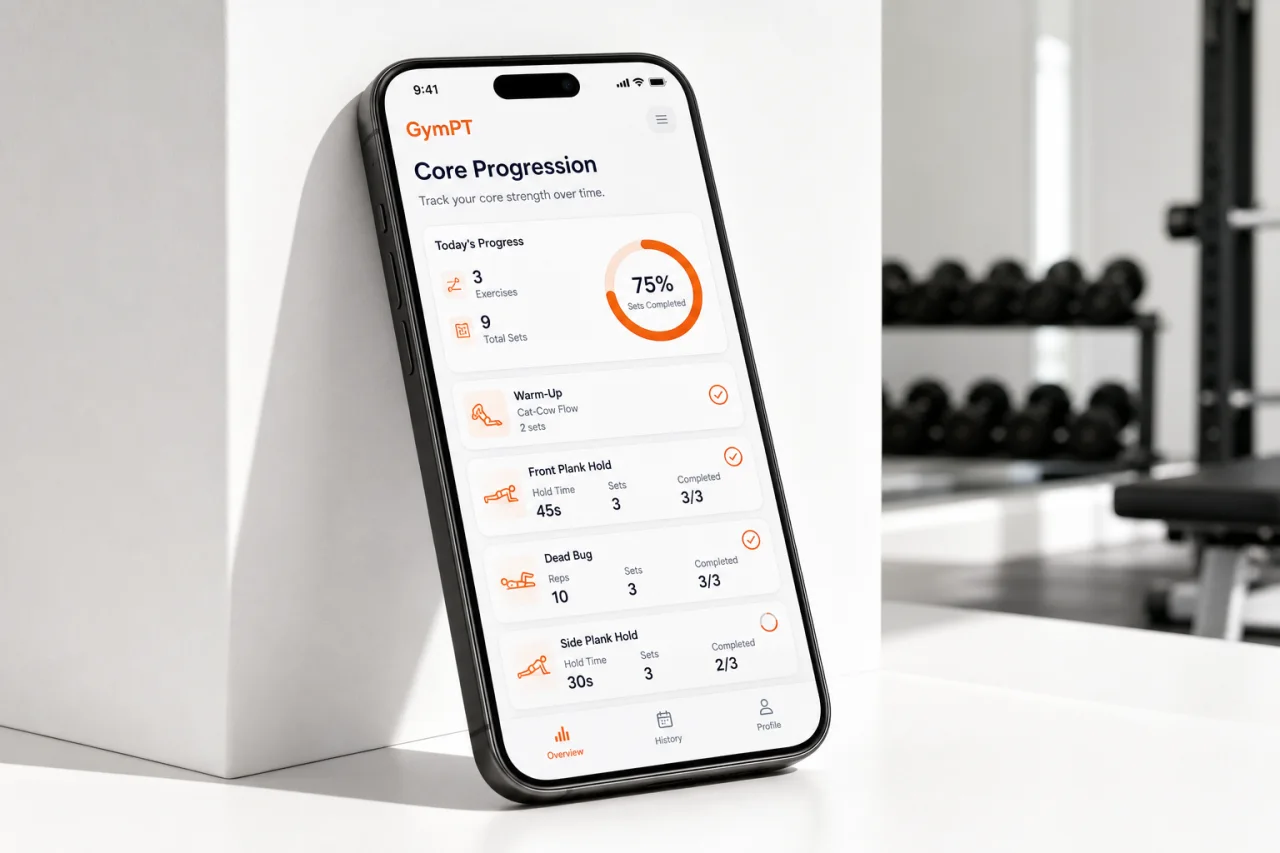
Sample 10-Minute Core Finisher
Use this after upper body or lower body training:
- Dead bug — 8 reps per side
- Side plank — 20 seconds per side
- Pallof press — 10 reps per side
- Suitcase carry — 30 meters per side
Complete 2 rounds with controlled rest. If your form breaks, reduce the difficulty before adding more volume.
Final Takeaway
The best core workout routine is simple, balanced, and progressive. Train the trunk to resist movement, not just to burn. Start with stable positions, add challenge gradually, and track your work so you can improve week by week. That is how core training becomes useful for lifting, sports, and everyday movement.
Ready to build your own plan? Use GymPT to generate a personalized core routine, match it to your equipment, and track your progress over time.