body composition tracking app
Body Composition Tracking App: How to Read Your Data and Train Smarter
A body composition tracking app can help you turn scans, measurements, and workout data into better training decisions. Learn what to track, what to ignore, and how GymPT helps you act on the trends.
Body composition tracking app: what it should actually help you do
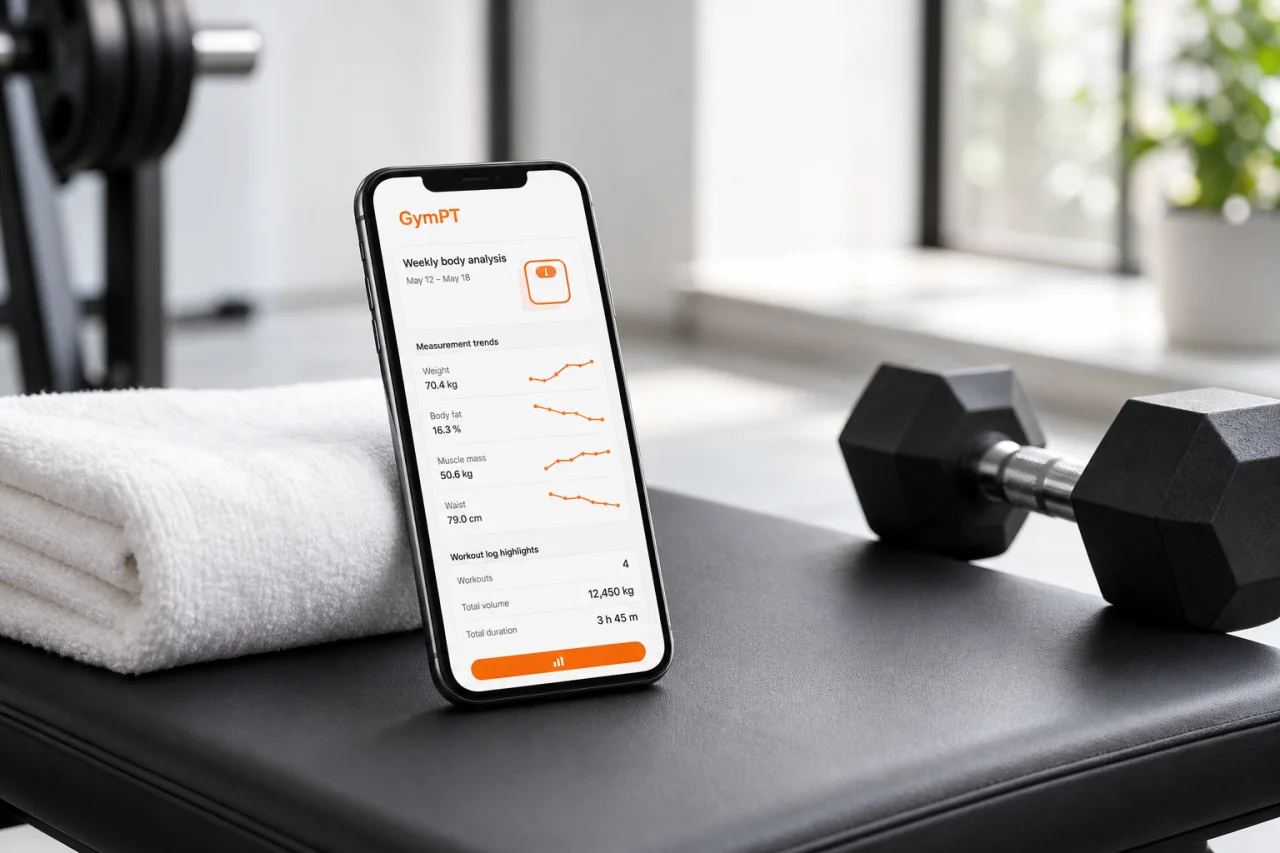
A body composition tracking app is most useful when it helps you make better training decisions, not when it turns every small fluctuation into a problem. Your weight, measurements, and scan results can all move for normal reasons such as hydration, food intake, sleep, and training stress. The real value comes from spotting trends over time and using them to adjust your workouts, recovery, and consistency.
That is why GymPT treats body analysis as fitness guidance only. It helps you connect your scan data with your training plan, so you can focus on what changes your physique in practice: progressive overload, enough weekly training, recovery, and adherence.
What to track in a body composition tracking app
Not every metric deserves equal attention. The best apps help you organize a few useful signals and ignore the noise.
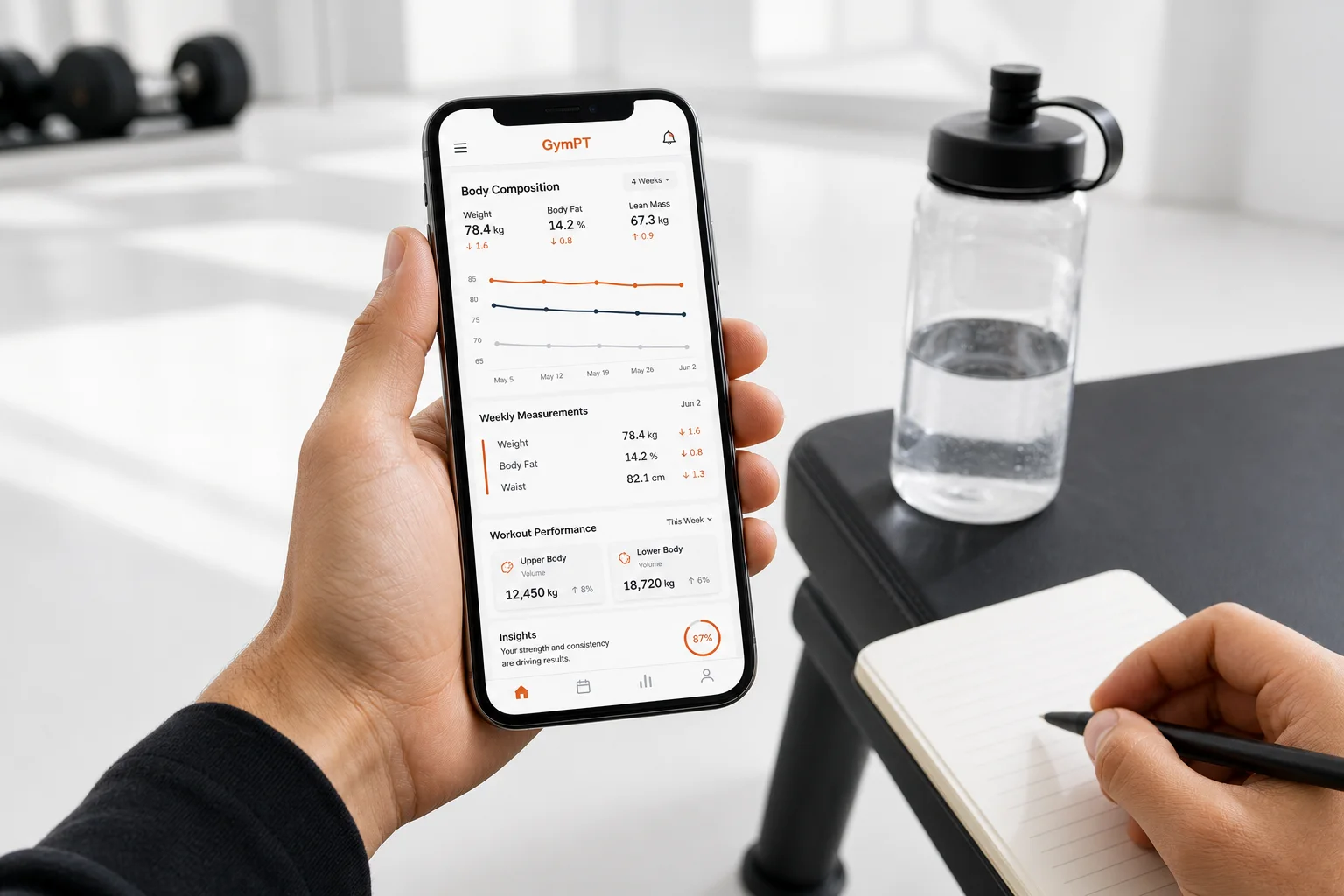
- Body weight trend over weeks, not single days.
- Body fat percentage tracking as a directional estimate, not a diagnosis.
- Lean mass trend to see whether your training and nutrition are supporting muscle retention or gain.
- Waist and other measurements for a simple reality check on visual change.
- Workout performance such as reps, load, and volume, because strength progress often leads body changes.
- Recovery signals like sleep, soreness, and fatigue when your app supports them.
If your app includes progress photos, use them as a visual reference only. They are most helpful when you compare the same pose, lighting, distance, and time of day.
How to read body composition trends without overreacting
Daily changes can be misleading. A better approach is to review your data on a weekly or biweekly rhythm and ask one question: Is the trend moving in the direction I want?
If your goal is fat loss
Look for a gradual downward trend in body weight, waist measurements, or body fat estimates while keeping training performance as stable as possible. If strength is dropping fast, your deficit may be too aggressive or recovery may be too low.
If your goal is muscle gain
Look for stable or slowly rising scale weight, improving gym performance, and measurements that support growth. A small increase in body fat can happen during a gain phase, but the trend should still match your goal and training output.
If your goal is recomposition
Recomposition is slower and easier to miss if you only check the scale. In this case, a body composition tracking app is most useful when it combines measurements, photos, and workout logs so you can see whether you are getting stronger while your shape gradually changes.
Why training data matters as much as scan data
Body composition does not change in isolation. It responds to the quality of your training week. Public health guidance recommends regular aerobic activity and muscle-strengthening work each week, and strength training should challenge major muscle groups consistently. That means your app should not only show body data; it should also help you train in a way that supports the trend you want.
GymPT connects body analysis with your workout plan, so you can see whether your training volume, exercise selection, and progression match your goal. If your body data stalls, the answer is often not “scan harder.” It is usually “train more consistently, recover better, or adjust the plan.”
How GymPT turns body analysis into better decisions
GymPT is built for people who want practical guidance, not guesswork. It uses your body analysis, workout history, and equipment access to help you build a plan that fits your goal and your real schedule.
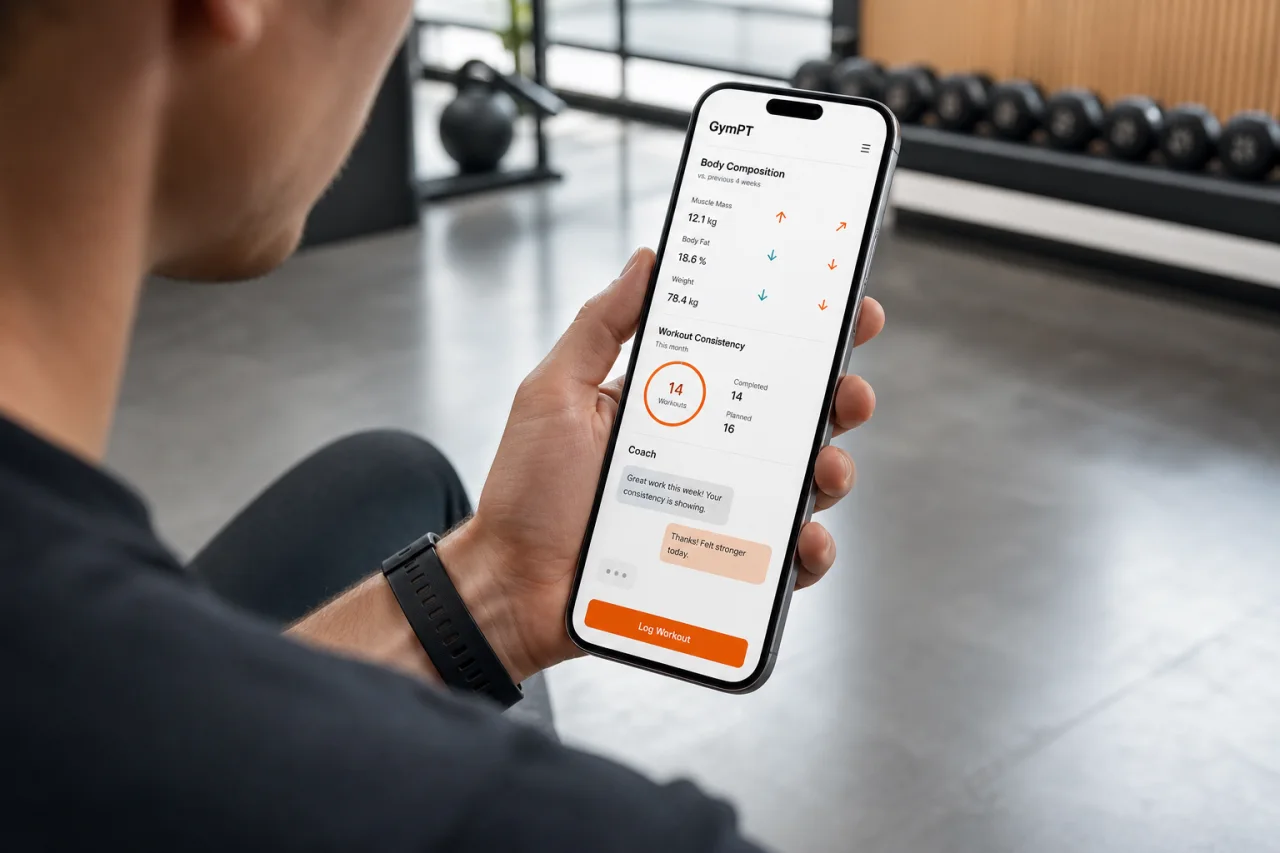
- AI coach chat helps you interpret trends and decide what to change next.
- Personalized workout plans keep training aligned with fat loss, muscle gain, or recomposition.
- Workout tracking shows whether your performance is moving in the right direction.
- Progress insights help you connect body changes with training consistency.
- Equipment-based training makes the plan realistic for the gym setup you actually have.
That combination matters because the best body composition tracking app is not just a dashboard. It is a decision tool.
A simple weekly workflow you can follow
- Check your body data once a week under similar conditions.
- Review your workout log for strength, volume, and consistency.
- Compare the trend to your goal instead of reacting to one reading.
- Adjust one variable at a time if progress slows: calories, training volume, recovery, or exercise selection.
- Keep the plan long enough to see a real trend before making another change.
This approach keeps you focused on the process that actually changes body composition: repeated training, enough recovery, and steady execution.
What a good app should never do
A useful app should not make you panic over a single scan, promise instant transformation, or present body analysis as a medical diagnosis. It should help you understand patterns, stay consistent, and make smarter training choices.
If you want a body composition tracking app that supports those decisions, GymPT gives you the structure to turn data into action.
Final takeaway
Body composition tracking works best when it is tied to training. Track the right metrics, review trends instead of daily noise, and use your app to make one clear adjustment at a time. That is how you turn data into progress.
Ready to train with more clarity? Use GymPT to connect body analysis, workout tracking, and personalized coaching in one place.