workout report app
Workout Report App: How Logs, Reports, and Trends Turn Training Into Progress
A workout report app helps you see what your training is really doing. Learn how logs, reports, and trends improve consistency, performance, and motivation.
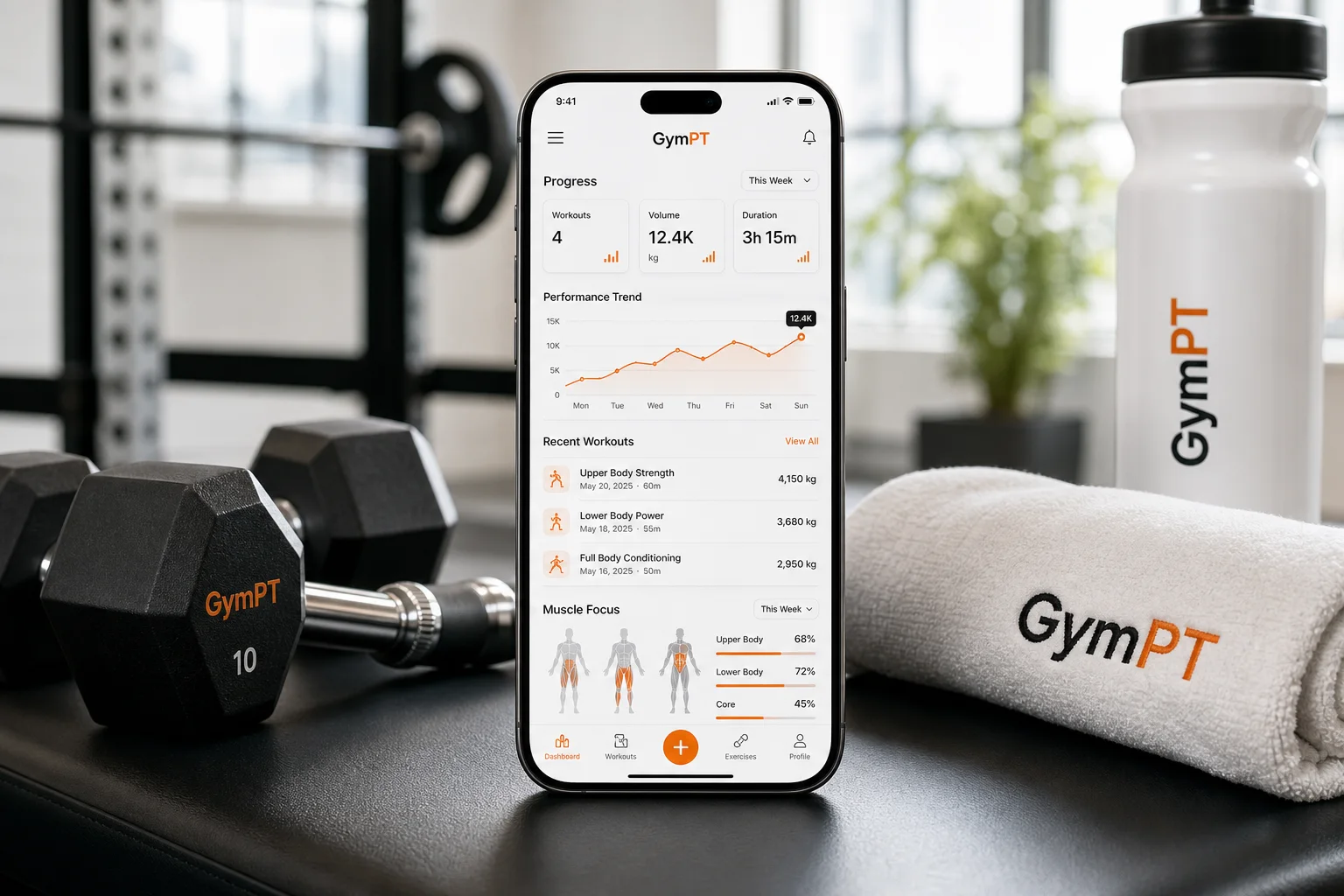
Why a workout report app matters more than a workout log
A workout report app does more than store sets and reps. It turns raw workout logs into clear feedback you can use to train better. That matters because progress is easier to maintain when you can see what changed, what improved, and what needs adjustment. In practice, a good report helps you spot trends in consistency, performance, and recovery instead of guessing from memory.
That is especially useful if your goal is to build strength, improve muscle growth, or simply stay consistent long enough to make training a habit. Public health guidance from the World Health Organization emphasizes that regular physical activity supports overall health, and strength training is part of that bigger picture. A report-based app helps you keep that activity structured and measurable.
What a useful workout report should show
Not every fitness app report is actually helpful. The best ones answer a few simple questions:
- Did I train consistently? Weekly frequency matters more than a perfect single session.
- Did performance improve? Look for more reps, more load, better control, or shorter rest times.
- Am I recovering well? Repeated drops in performance can signal that your plan needs adjustment.
- What patterns repeat? Missed sessions, stalled lifts, and uneven effort are easier to fix when they are visible.
That is the real value of a workout report app: it converts scattered workout logs into a simple story about your training.
How logs become reports, and reports become better decisions
Workout logs are the input. Reports are the interpretation. Trends are the decision-making layer.
For example, if you log three weeks of squats and your reps stay flat while your effort feels higher, a report can show that you may need a lighter week, a different rep range, or better exercise selection. If your upper-body sessions are frequent but your lower-body sessions keep getting skipped, the report can show a consistency gap before it becomes a long-term plateau.
That kind of self-monitoring is useful because behavior change is easier when feedback is immediate and specific. In exercise science, structured tracking is commonly used to support adherence and progression, and ACSM’s evidence-based guidance on resistance training emphasizes the importance of planned progression and appropriate prescription.
The 4 report metrics that matter most
If you want a report that actually improves training, focus on these four metrics first.
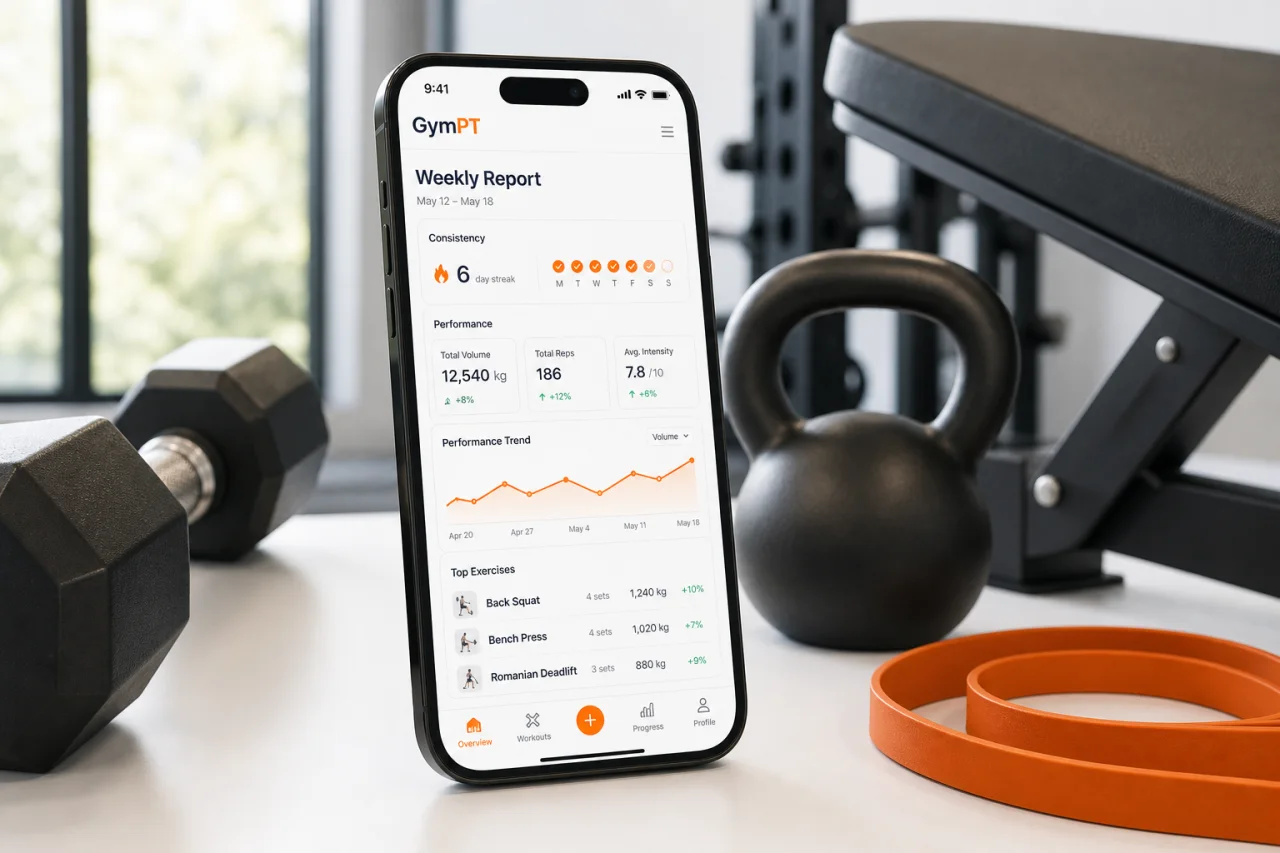
1. Consistency
How many sessions did you complete compared with your plan? Consistency is the foundation of progress. A report should make missed workouts obvious without making you feel lost.
2. Volume
Volume is the total amount of work you perform. Even simple summaries of sets, reps, and load can show whether your training is gradually increasing or quietly shrinking.
3. Performance trend
Are your main lifts moving up over time? A useful report highlights whether strength is rising, stable, or stalling.
4. Recovery signals
If your performance drops across multiple sessions, your report should help you notice the pattern early. That can guide smarter changes to rest, exercise order, or weekly structure.
How GymPT turns workout reports into action
GymPT is built for people who want more than a static log. It combines workout tracking, AI coach chat, body analysis, equipment-based training, and progress insights so your data can actually guide your next session.
Instead of asking, “What did I do last week?” you can ask, “What should I do next?” That shift matters. A report is useful only if it helps you make a better training decision today.
With GymPT, you can use your workout report to:
- review completed sessions and training frequency,
- spot performance trends across exercises and weeks,
- adjust plans based on available equipment,
- check whether your routine matches your current goal, and
- stay motivated by seeing progress in a clear format.
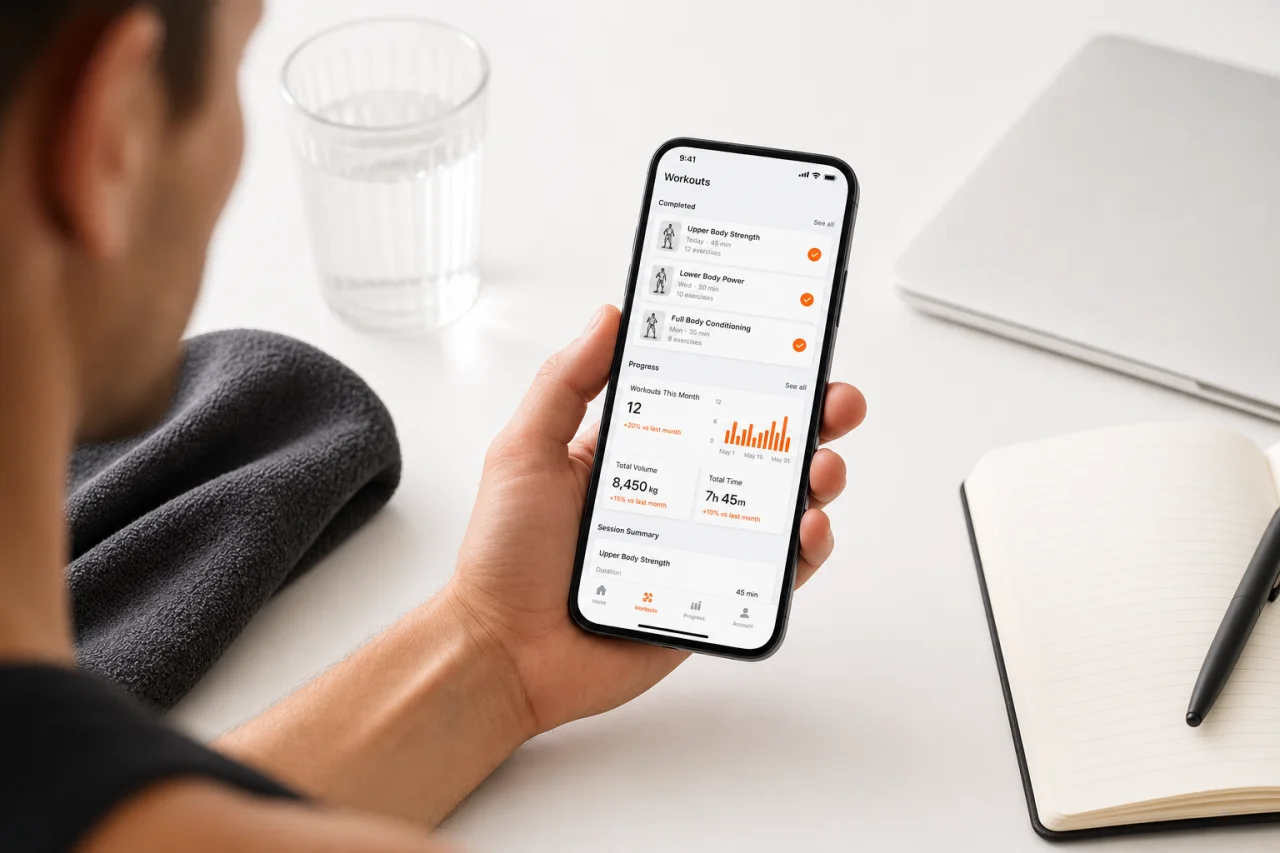
How to read your report without overthinking it
You do not need to analyze every number. Start with a simple weekly review:
- Check attendance. Did you complete the sessions you planned?
- Look for one win. A rep PR, better form, or a more complete week all count.
- Find one problem. Missed workouts, repeated fatigue, or a stalled lift should stand out.
- Make one change. Adjust only one thing at a time so you can see what works.
This approach keeps the report useful instead of overwhelming. The goal is not to collect data for its own sake. The goal is to train with more clarity.
Why reports improve motivation
Motivation often drops when progress feels invisible. A workout report app solves that by making small gains easier to see. That can be especially helpful during phases when body changes are slow but performance is still improving.
Seeing a clean record of completed workouts can also reinforce identity: you are not just someone who “tries to work out,” you are someone who follows through. That feedback loop is one reason tracking tools can support consistency over time.
Who benefits most from a workout report app?
A workout report app is useful for almost anyone, but it is especially valuable if you:
- miss workouts unless you have a clear plan,
- want to build strength with measurable progression,
- train with limited equipment and need to adapt often,
- like data but do not want to manage spreadsheets, or
- need a simple way to stay accountable.
If that sounds familiar, a report-based system can make your training feel more organized and less random.
How to choose the right workout report app
When comparing apps, look for these features:
- Clear workout logs that are fast to enter after training.
- Readable reports that summarize trends instead of dumping raw data.
- Progress insights that help you understand what changed.
- Flexible training support for different equipment and goals.
- Coaching guidance that helps you act on the data.
If an app only records workouts but never helps you interpret them, it is a logbook. If it helps you see patterns and make better decisions, it is a true workout report app.
Final takeaway
The best workout report app does not just count sessions. It helps you understand your training, stay consistent, and make smarter adjustments before progress stalls. That is why logs, reports, and trends matter: they turn effort into feedback, and feedback into better workouts.
If you want a simpler way to train with more clarity, GymPT gives you the structure, tracking, and insights to do it.