best shoulder exercises
Best Shoulder Exercises: A Smarter Guide to Stronger Delts
A practical shoulder-training guide with the best shoulder exercises, clear form cues, weekly volume tips, and easier alternatives for beginners.
Best Shoulder Exercises: Build Stronger Delts Without Guesswork
If you want the best shoulder exercises, don’t start by chasing the heaviest dumbbells. Start by training the shoulder from the angles it actually uses: pressing, raising, and stabilizing. A good shoulder plan should build the front delts, side delts, rear delts, and the smaller muscles that help the joint move well under load.
This guide keeps things simple and practical. You’ll get the best shoulder exercises for size and strength, form cues that reduce sloppy reps, beginner-friendly alternatives, and volume tips you can use in a real weekly plan. That makes it easier to train shoulders with purpose instead of just doing random presses.
What Makes a Shoulder Exercise “Best”?
The best shoulder exercises do one or more of three jobs:
- Press the arm overhead or slightly in front of the body.
- Raise the arm out to the side or in a controlled arc.
- Stabilize the shoulder blade and upper arm so the joint stays controlled.
For most lifters, a smart shoulder workout includes a vertical press, a lateral raise pattern, and at least one rear-delt or upper-back movement. That combination gives you better balance than pressing alone.
The 9 Best Shoulder Exercises
1. Dumbbell Overhead Press
This is one of the most useful shoulder builders because it trains the delts through a strong pressing pattern.
- How to do it: Hold dumbbells at shoulder height, brace your core, and press up until your arms are straight without shrugging hard.
- Form cue: Keep ribs down and avoid leaning back to finish the rep.
- Beginner alternative: Seated machine shoulder press.
2. Machine Shoulder Press
Great for beginners or anyone who wants a more stable pressing path. It reduces balance demands so you can focus on effort and control.
- How to do it: Set the seat so handles start around chin to shoulder level, then press smoothly overhead.
- Form cue: Stop short of locking your shoulders into an uncomfortable range.
- Beginner alternative: Use a lighter load and slower tempo.
3. Seated Dumbbell Shoulder Press
Seated pressing makes it easier to keep your torso still, which is helpful if standing presses turn into a full-body lean.
- How to do it: Sit tall, press in a controlled line, and lower until elbows are just below shoulder level if comfortable.
- Form cue: Don’t flare your elbows straight out at 90 degrees if that feels rough on your shoulders.
4. Lateral Raise
If you want rounder-looking shoulders, this is a must. Side delts often need direct work because pressing alone does not fully train them.
- How to do it: Raise the dumbbells out to the sides with a slight elbow bend and stop around shoulder height.
- Form cue: Lead with the elbows, not the hands.
- Beginner alternative: Cable lateral raise or very light dumbbells.
5. Cable Lateral Raise
Cables keep tension more consistent through the lift, which many people find easier to feel in the side delts.
- How to do it: Stand slightly away from the stack and lift in a smooth arc.
- Form cue: Avoid swinging your torso to cheat the weight up.
6. Rear Delt Fly
Rear delts help balance all the pressing and front-delt work many people already do. They also support better shoulder posture during upper-body training.
- How to do it: Hinge slightly at the hips, keep a soft bend in the elbows, and open the arms wide.
- Form cue: Think “reach out,” not “yank back.”
- Beginner alternative: Reverse pec deck machine.
7. Face Pull
Face pulls are a strong choice when you want rear delt and upper-back work in one movement.
- How to do it: Pull the rope toward your face with elbows high and finish by squeezing the upper back.
- Form cue: Keep the neck relaxed and avoid turning it into a lower-back exercise.
8. Scaption Raise
Scaption means lifting the arms slightly forward of the body rather than straight out to the side. Many lifters find this angle smooth and shoulder-friendly.
- How to do it: Raise light dumbbells in a “V” shape about 30 degrees forward of the body.
- Form cue: Use lighter weight than you think you need.
9. Push-Up Plus
This is not a pure shoulder-builder, but it trains serratus anterior and scapular control, which matter for healthy pressing mechanics.
- How to do it: At the top of a push-up, push the floor away so the shoulder blades move forward slightly.
- Form cue: Keep the elbows locked softly and the torso rigid.
- Beginner alternative: Incline push-up plus on a bench.
How Many Sets and Reps Should You Do?
For most healthy adults, a simple shoulder plan works well when you combine moderate weekly volume with good technique. A practical target is:
- Pressing: 2 to 4 sets of 6 to 10 reps
- Lateral raises: 2 to 4 sets of 10 to 20 reps
- Rear delt work: 2 to 4 sets of 10 to 20 reps
If your goal is muscle growth, aim for enough weekly work to challenge the delts without turning every session into a grind. A useful rule is to start with about 6 to 10 hard sets per week for shoulders, then add volume only if recovery and performance stay strong.
Train shoulders 1 to 2 times per week for most beginners. If your chest and back days already include pressing or pulling, count that work too. Shoulders do not need to be smashed from every angle in every session to grow.
A Beginner-Friendly Shoulder Workout
- Machine shoulder press — 3 sets of 8 reps
- Dumbbell lateral raise — 3 sets of 12 to 15 reps
- Rear delt fly — 3 sets of 12 to 15 reps
- Face pull — 2 sets of 15 reps
Rest 60 to 90 seconds on raises and 90 to 120 seconds on presses. Keep 1 to 3 reps in reserve on most sets so your form stays clean.
Common Shoulder Training Mistakes
- Using too much weight on raises: If you have to swing, the side delts are not doing the work.
- Pressing with a huge back arch: This often turns a shoulder press into a lower-back compensation pattern.
- Ignoring rear delts: Front-delt work is already built into many chest and pressing sessions.
- Chasing pain: A hard set should feel challenging, not sharp or unstable.
- Doing only one exercise: Shoulders respond better to a mix of pressing, raising, and stabilization work.
How to Choose the Right Shoulder Exercises for You
If you are a beginner, start with a stable press, a lateral raise, and a rear-delt movement. If you train at home, dumbbells and resistance bands can cover most of the same patterns. If you train in a gym, cables and machines can make it easier to keep tension and control.
If overhead pressing feels awkward, use a machine press, a neutral-grip dumbbell press, or a landmine-style press if your gym has the setup. The best shoulder exercises are the ones you can perform consistently with good range, good control, and enough effort to progress.
Shoulder Training Tips That Actually Help
- Warm up with lighter sets: Two or three ramp-up sets make pressing feel smoother.
- Control the lowering phase: A 2-second descent is often enough.
- Use full but comfortable range: Don’t force painful positions.
- Progress slowly: Add reps first, then load.
- Track your workouts: If you do not record sets and reps, it is hard to know what is improving.
How GymPT Can Help You Train Shoulders Smarter
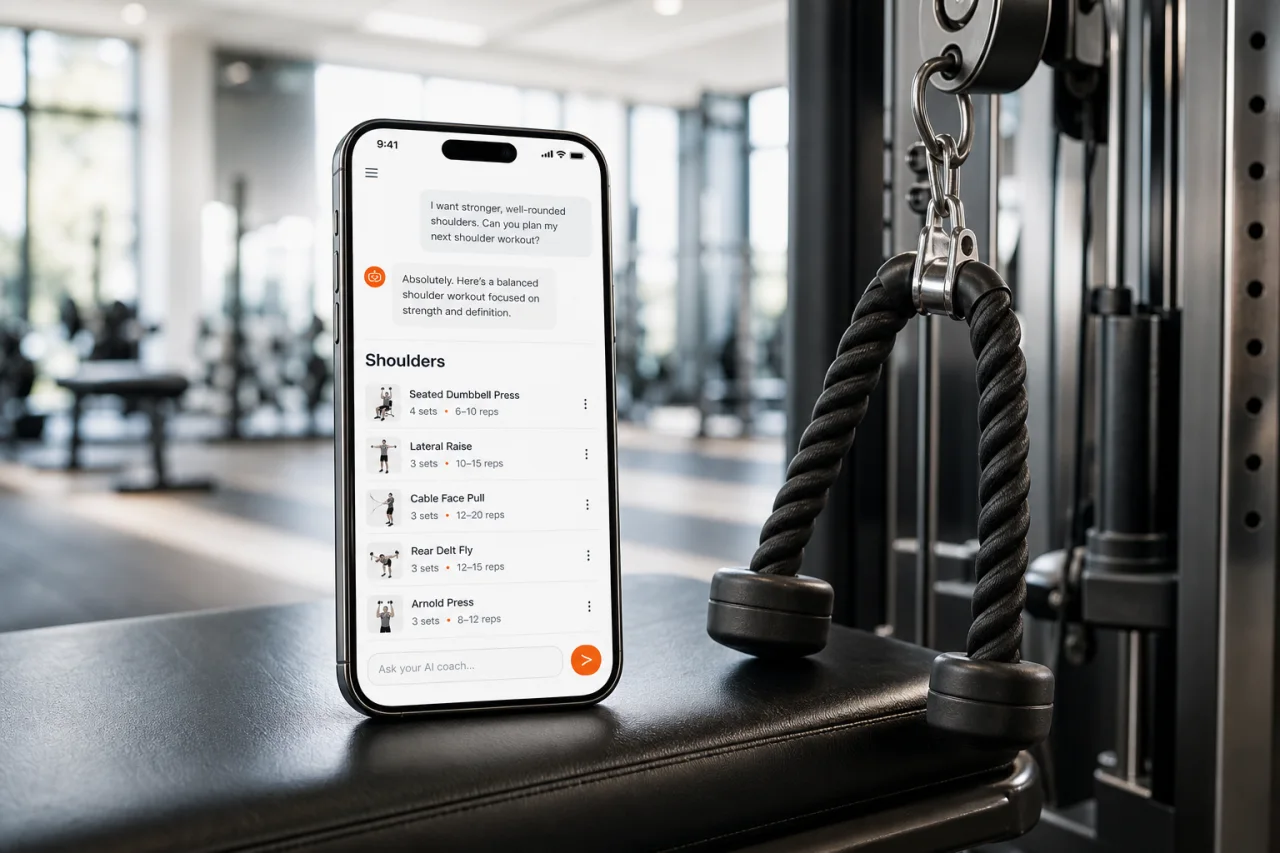
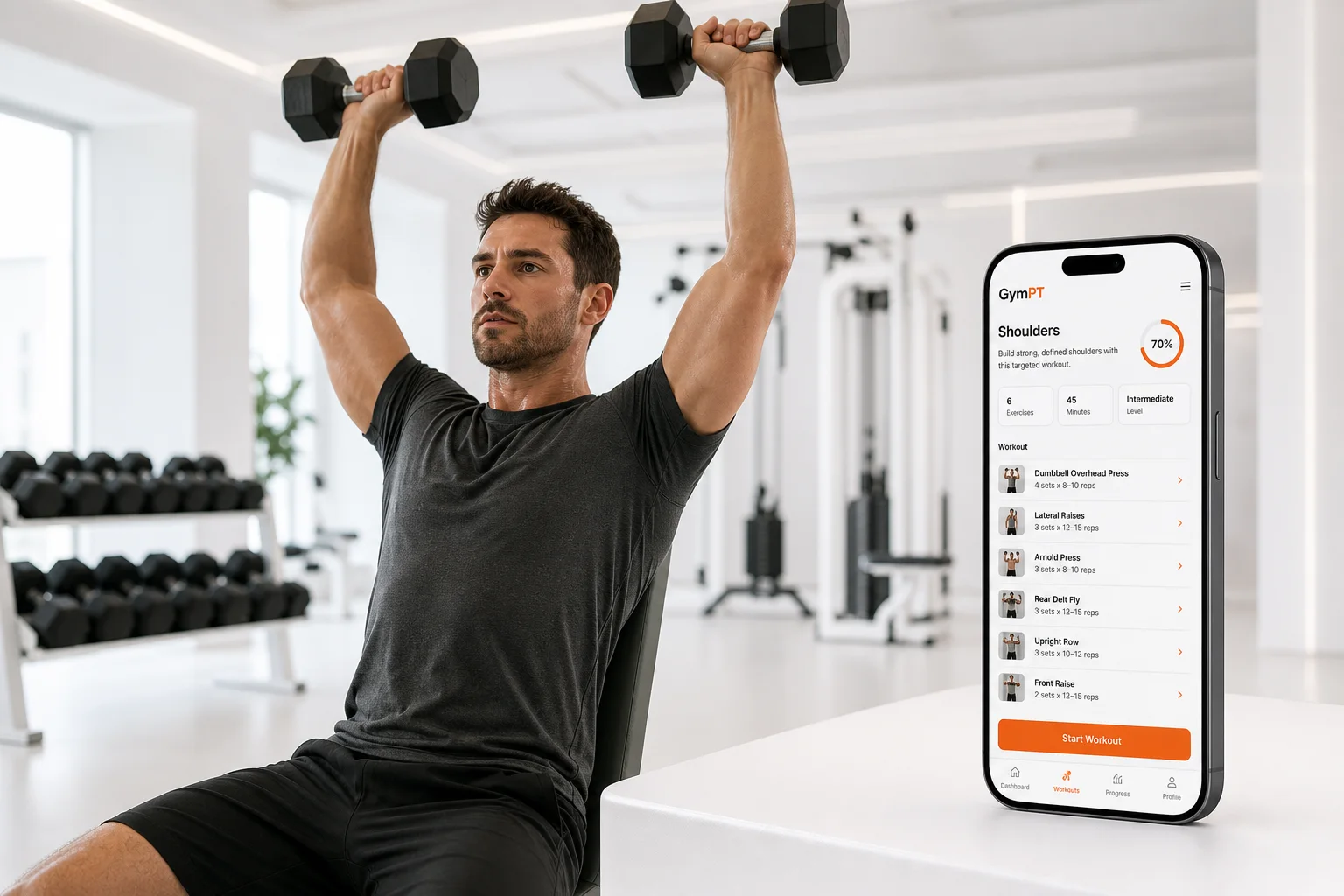
GymPT can turn this advice into a plan you can actually follow. Use it to build a personalized shoulder workout, choose exercises based on the equipment you have, track your sets and reps, and adjust volume as you get stronger. If you want a coach-like system instead of guessing, that is the point.
For a balanced upper-body plan, you can also pair shoulder work with chest workout for beginners, back workout for beginners, and cable machine exercises for beginners. If you want more lower-body balance in the week, see best legs exercises.
Final Takeaway
The best shoulder exercises are not just the ones that burn the most. They are the ones that train pressing strength, side-delt size, rear-delt balance, and shoulder control in a way you can repeat week after week. Start with a press, add a raise, include rear-delt work, and keep your form honest. That is how shoulders get stronger without unnecessary chaos.