cable machine exercises for beginners
Cable Machine Exercises for Beginners: A Smarter Starter Plan
Cable machines are one of the easiest ways for beginners to train with control, variety, and clear progression. Here’s how to choose the right exercises and build a smarter plan around the equipment in your gym.
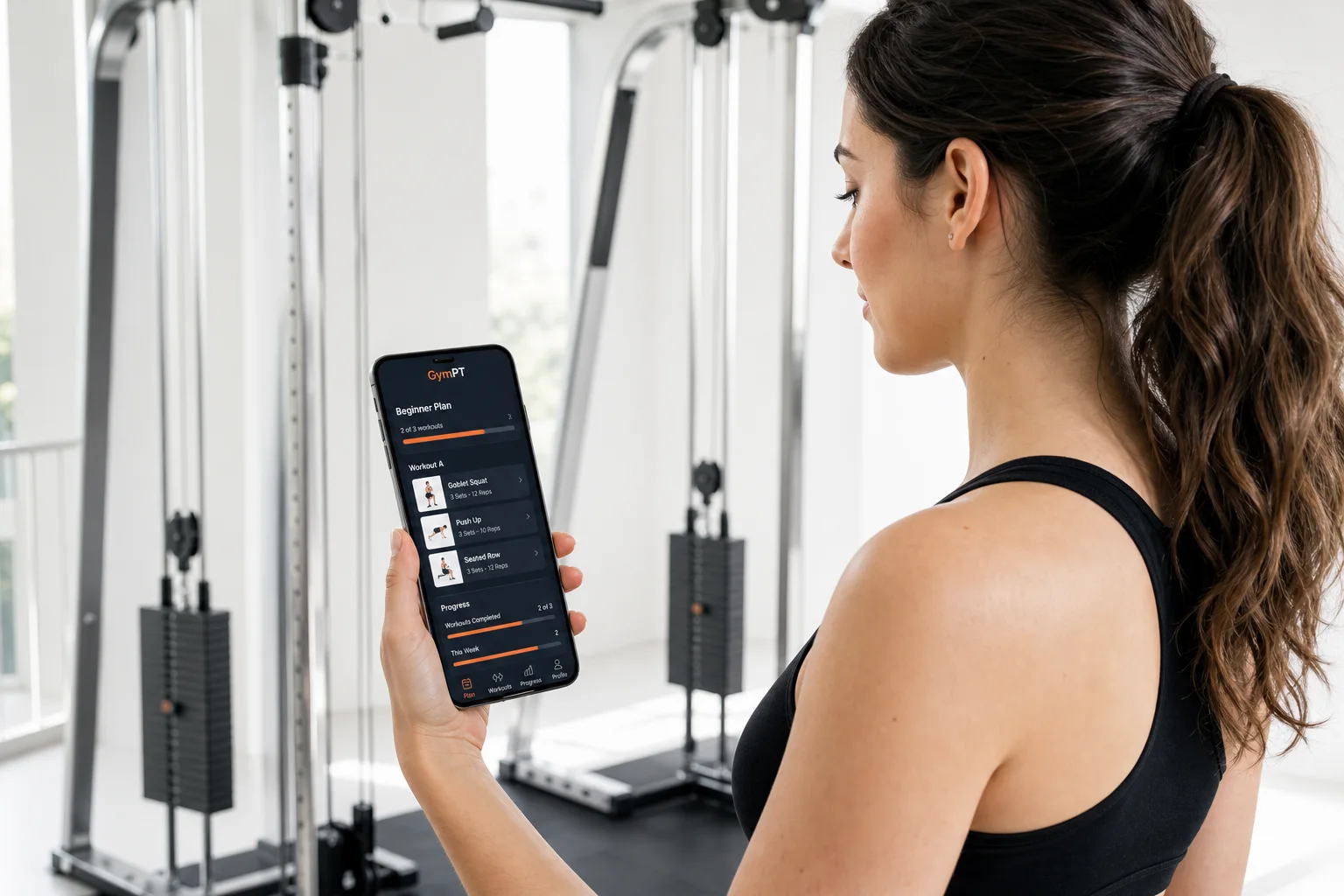
Cable Machine Exercises for Beginners: Start Simple, Train Smart
If you are looking for cable machine exercises for beginners, the good news is that cable stations are one of the most beginner-friendly tools in the gym. They give you smooth resistance, easy setup options, and enough variety to train your whole body without needing to master complicated lifts on day one.
The best beginner plan is not the one with the most exercises. It is the one that matches your current skill level, the equipment available, and the muscles you want to train. That is exactly where GymPT helps: it can build a plan around the cable station you have, then adjust exercise selection, volume, and progression as you improve.
Why cable machines work well for beginners
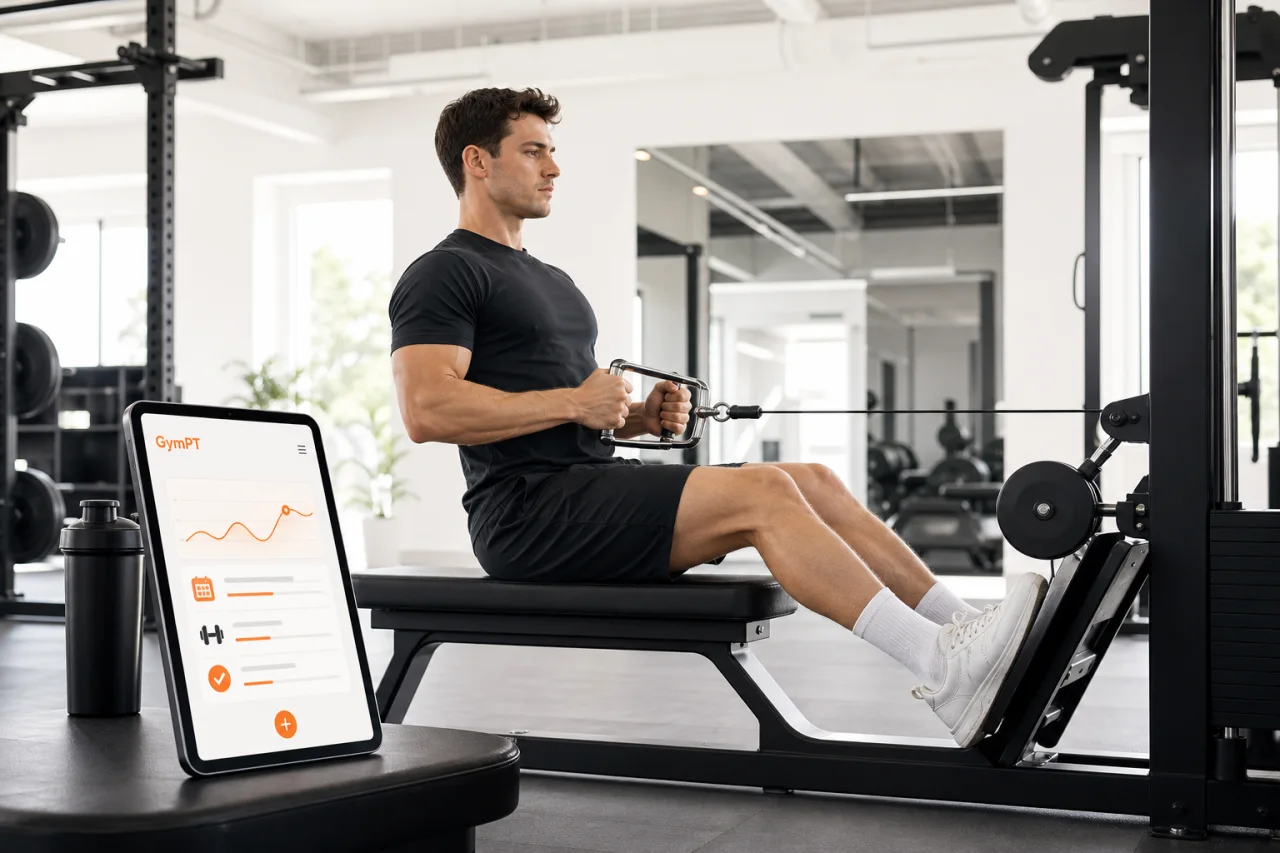
Cable machines are useful because the resistance stays steady through the movement, which makes it easier to learn control and keep tension on the target muscle. For beginners, that can make form practice feel more predictable than some free-weight exercises.
- Easy to scale: you can start light and add weight gradually.
- Simple to learn: many cable moves follow natural push, pull, and arm patterns.
- Good for full-body training: one station can cover chest, back, shoulders, arms, core, and legs.
- Helpful for consistency: the setup is repeatable, so it is easier to track progress.
Health guidance for adults also supports regular muscle-strengthening work at least two days per week, with gradual progression and good technique. That makes cable training a practical fit for a beginner routine.
How to choose the right cable exercises
When you are new, choose exercises based on movement patterns, not just body parts. A balanced beginner session usually includes a push, a pull, a lower-body movement, and one core exercise.
Use this simple selection rule
- Pick one horizontal push for chest or shoulders.
- Pick one horizontal pull for back posture and upper-back strength.
- Pick one arm exercise if you want extra biceps or triceps work.
- Pick one lower-body or core move to round out the session.
If your gym has only one cable stack, that is still enough. You can use different handles, body positions, and angles to change the exercise without changing the machine.
Best beginner cable machine exercises
These are the most useful starter options because they are easy to learn, easy to load, and easy to progress.
1. Seated cable row
A strong beginner pull exercise for the upper back. Sit tall, keep your chest lifted, and pull the handle toward your torso with control. Avoid leaning back to “cheat” the weight.
2. Cable chest press
A beginner-friendly push movement that trains the chest, shoulders, and triceps. Set the handles around chest height, press forward smoothly, and keep your ribs from flaring.
3. Triceps pushdown
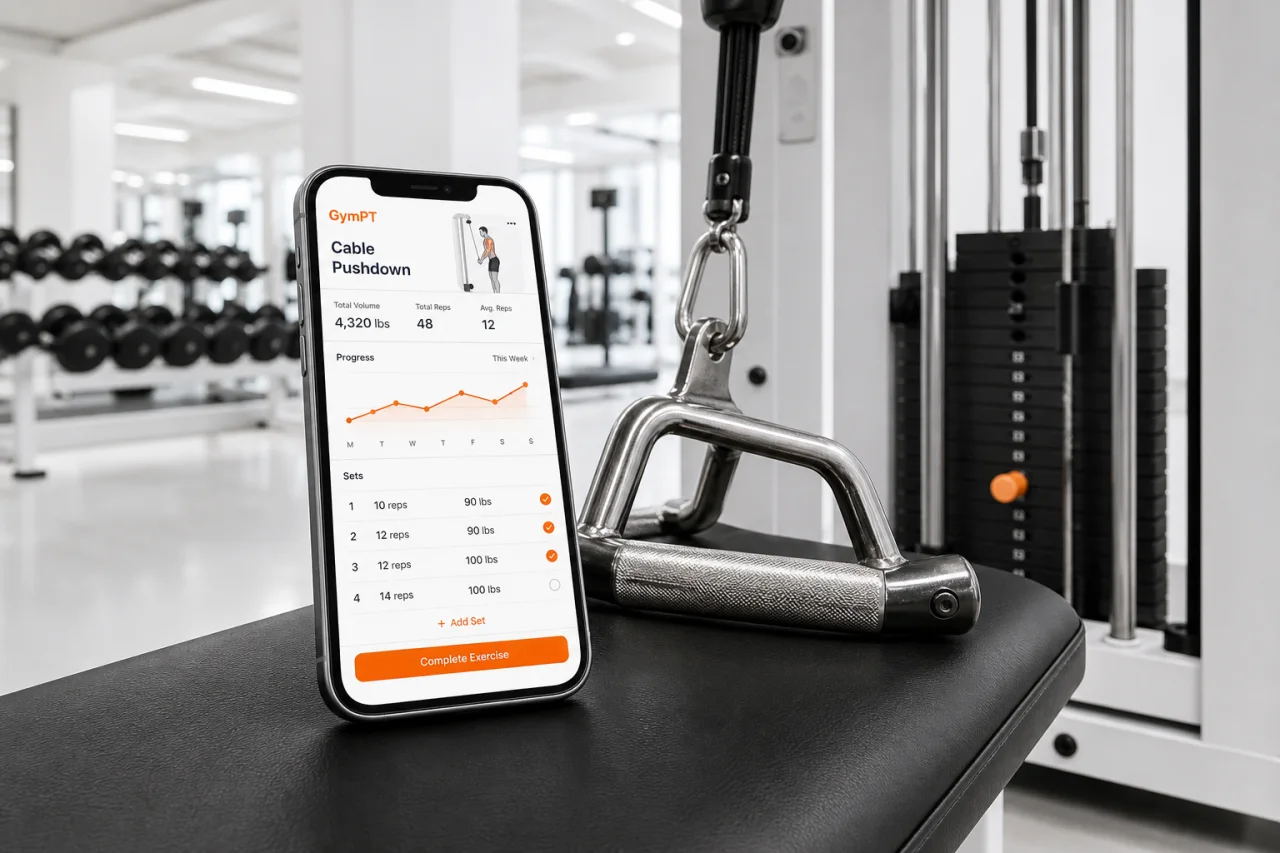
One of the simplest arm exercises on a cable machine. Keep your elbows close to your sides and move only the forearms. This is a great choice if you want a clean, low-complexity accessory lift.
4. Cable biceps curl
Use a straight bar or handle attachment and curl with your elbows mostly fixed. This gives beginners a controlled way to train the arms without swinging.
5. Cable face pull
A smart upper-back and rear-delt exercise that helps balance pressing work. Pull toward the upper face with control and keep the shoulders from shrugging up.
6. Cable pull-through
A useful hip-hinge pattern for glutes and hamstrings. Step away from the stack, hinge at the hips, and drive the hips forward without rounding the back.
7. Cable Pallof press
A beginner core exercise that trains anti-rotation. Press the handle straight out from the chest and resist twisting. It is simple, effective, and easy to scale.
A simple cable machine workout for beginners
If you want a straightforward session, start with this full-body template. It is designed to be easy to follow and easy to repeat.
- Seated cable row: 2 sets of 10 to 12 reps
- Cable chest press: 2 sets of 10 to 12 reps
- Cable pull-through: 2 sets of 10 to 12 reps
- Triceps pushdown: 2 sets of 12 to 15 reps
- Cable biceps curl: 2 sets of 12 to 15 reps
- Pallof press: 2 sets of 8 to 10 reps per side
Rest for about 60 to 90 seconds between sets. Choose a load that feels challenging by the last few reps, but still lets you keep clean form. If your technique breaks down, reduce the weight before adding more.
How to progress without overcomplicating it
Beginners often make progress fastest when they keep the plan simple. You do not need to change exercises every week. Instead, repeat the same movements long enough to learn them well.
Use this progression method
- First: master the setup and movement path.
- Next: add reps while keeping the same weight.
- Then: increase the weight slightly once the top of your rep range feels controlled.
- Finally: add one extra set only if recovery and form stay strong.
This approach works well because it keeps the focus on technique, not ego lifting. For beginners, that usually means better consistency and fewer frustrating workouts.
Common mistakes to avoid on cable machines
Cable stations are beginner-friendly, but they still reward good habits. Watch out for these common issues:
- Using too much weight: if you have to jerk the handle, the load is too heavy.
- Changing your body position mid-set: keep your stance stable and repeatable.
- Letting the shoulders creep up: stay relaxed and controlled.
- Rushing the return phase: lower the weight slowly to keep tension and control.
- Doing only arm work: include rows, presses, and core work for balance.
If you are unsure whether your form is solid, GymPT can help you structure the session around your available equipment and training level, so you are not guessing every time you walk into the gym.
How GymPT adapts cable training to your gym
One of the biggest beginner problems is not motivation. It is equipment mismatch. Some gyms have a dual cable station, some have a single stack, and some have attachments that change from day to day. GymPT solves that by building your plan around what you actually have.
- Equipment-based training: choose cable-only or mixed equipment plans.
- Personalized exercise selection: swap in alternatives when a station is busy.
- Workout tracking: see what you lifted last time and progress with purpose.
- Progress insights: understand when to add reps, load, or recovery.
- AI coach chat: ask what to do if a cable machine is taken or a movement feels awkward.
That means your plan stays useful even when the gym is crowded or your equipment changes.
Sample beginner cable workout split
If you train two or three days per week, you can keep things very simple:
- Day 1: rows, chest press, triceps pushdown, Pallof press
- Day 2: pull-throughs, face pulls, biceps curls, chest press
- Day 3: rows, pull-throughs, triceps pushdown, Pallof press
That gives you enough repetition to learn the movements while still covering the major muscle groups. It also fits well with general strength-training guidance that recommends working all major muscle groups at least twice per week.
Final takeaway
Cable machines are a great starting point because they are versatile, approachable, and easy to progress. If you keep your plan focused on a few core movement patterns, you can build strength without feeling overwhelmed.
Start with a small set of exercises, use good form, and progress slowly. Then let GymPT adapt the plan to your equipment, your schedule, and your current level so every workout feels more intentional.
Ready to train smarter? Build your next cable-based workout with GymPT and turn one machine into a complete beginner plan.