machines only workout plan
Machines Only Workout Plan: How to Build a Smarter Routine Around the Equipment You Have
A machines only workout plan can be simple, safe, and effective when you match exercises to the equipment you have and progress them the right way.
Machines Only Workout Plan: A Practical Way to Train With Confidence
If you want a machines only workout plan, you do not need a complicated split or a long exercise list. You need a clear structure, a few reliable movement patterns, and a way to progress week to week. That is especially useful if your gym is crowded, you are new to lifting, or you simply prefer the stability and simplicity of machines.
Machines can make training easier to learn because they guide the path of motion and reduce the need to balance the load. That does not make them “easy” in the wrong sense; it just makes them more predictable. For many people, that predictability helps them train harder with better form and less guesswork.
The key is not to build a random list of machine exercises. The key is to build a plan around movement patterns: squat, hinge, push, pull, and carry or core work. When those patterns are covered across the week, you can train your whole body efficiently even if you only use machines.
What a good machines only workout plan should do
A smart plan should cover all major muscle groups, fit your schedule, and leave room for progression. Public health guidance recommends muscle-strengthening work at least two days per week for adults, and strength training should involve all major muscle groups. For most lifters, that means your machine plan should include legs, hips, back, chest, shoulders, arms, and trunk work across the week.
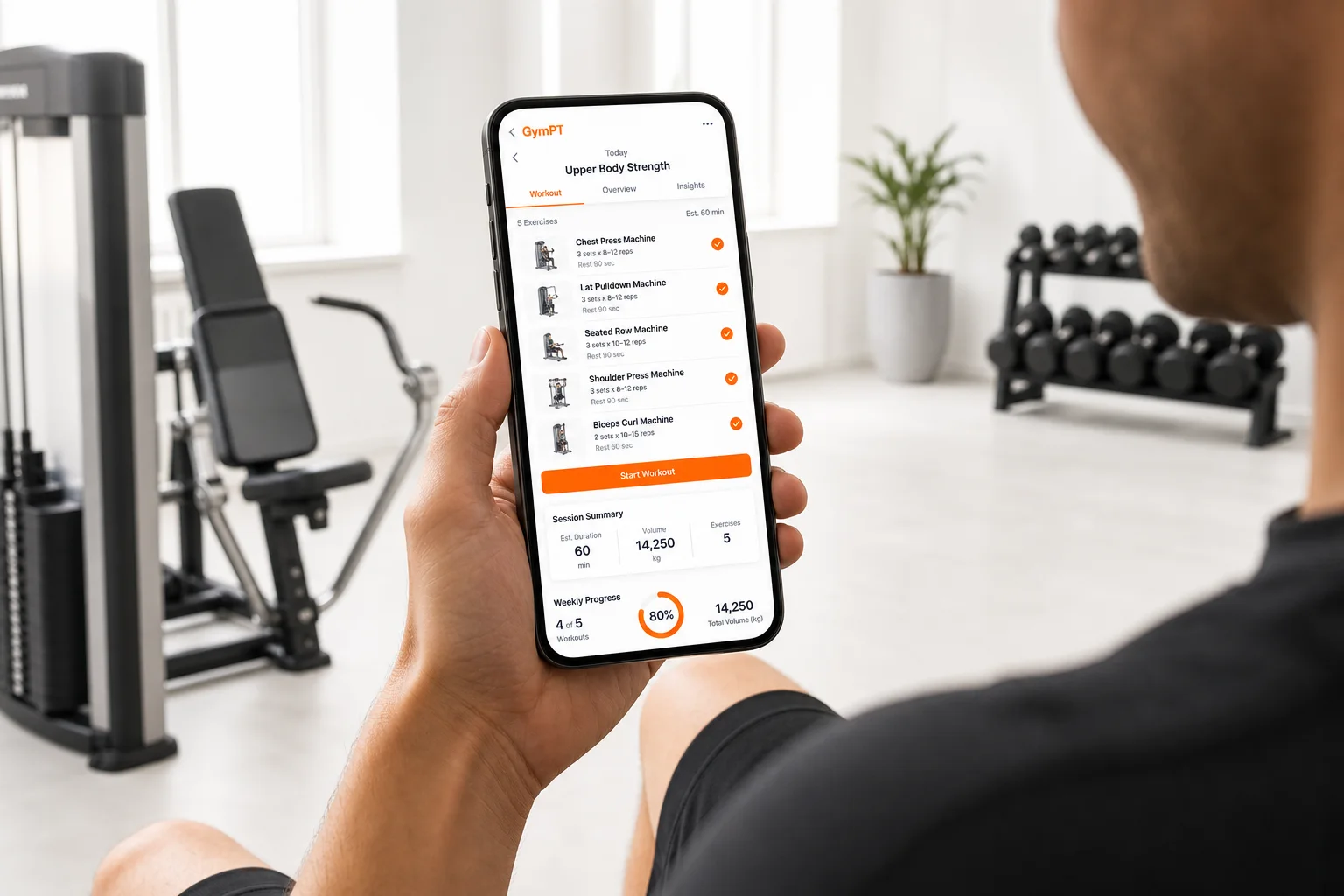
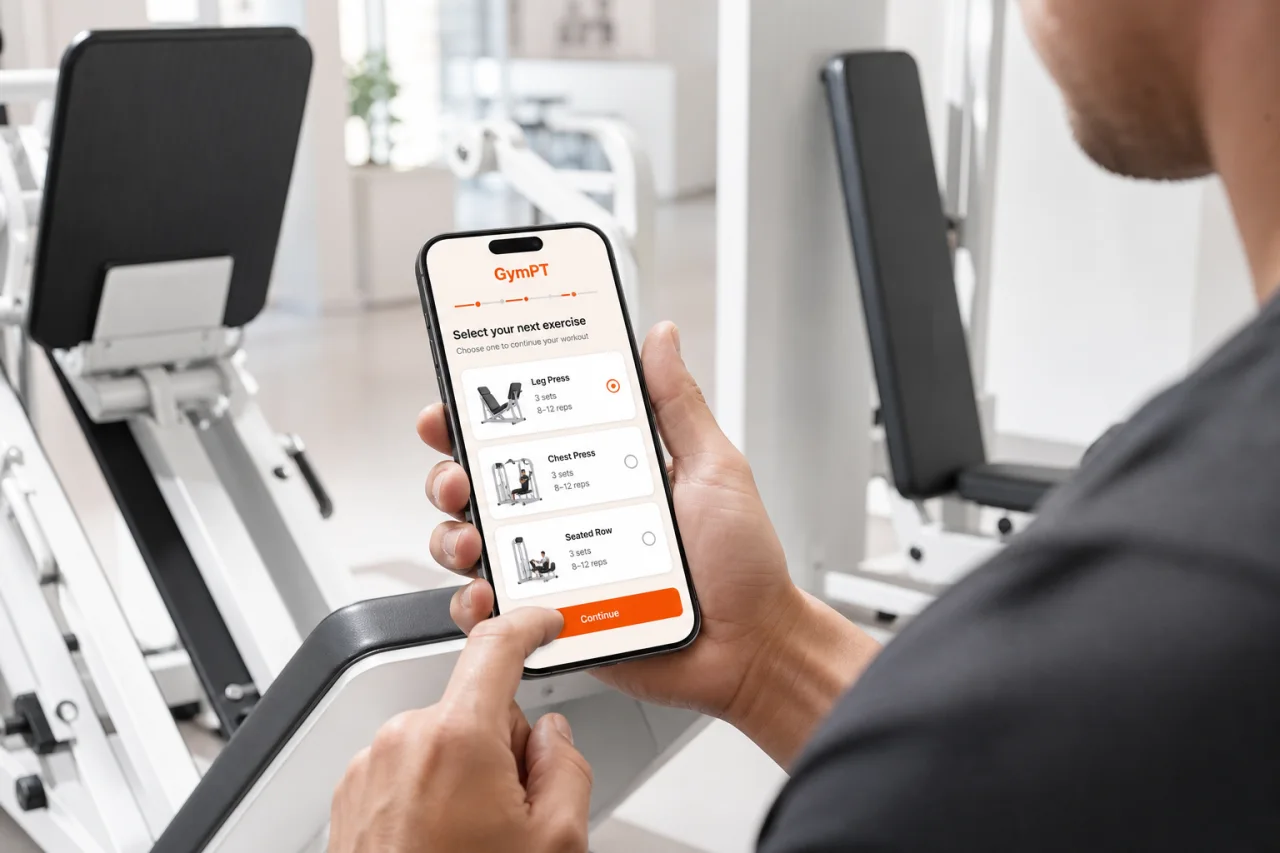
It should also be realistic. A plan that uses only the machines available in your gym is easier to follow than a “perfect” program you cannot actually complete. GymPT is useful here because it can adapt your workout to the exact equipment you have on hand and adjust the plan when your gym setup changes.
How to choose the right machine exercises
Start by matching each movement pattern to one or two machines. You do not need five versions of the same exercise. You need enough variety to train the body well without making the session confusing.
1. Lower-body push
- Leg press
- Hack squat or pendulum squat
- Smith machine squat, if your gym counts that as a machine option
These exercises train the quads, glutes, and overall leg strength. If you are building a beginner-friendly plan, the leg press is often the easiest place to start.
2. Lower-body hinge
- Seated or lying leg curl
- Hip thrust machine
- Back extension machine
Hinge-focused work helps train the hamstrings, glutes, and posterior chain. Many machine-only plans forget this category and become too quad-dominant.
3. Horizontal push
- Chest press machine
- Incline chest press machine
- Pec deck, as an accessory movement
These are your main chest and triceps builders. If your chest press machine feels too easy, slow the lowering phase, add a pause, or increase the load gradually.
4. Horizontal pull
- Seated row machine
- Chest-supported row machine
- Rear delt machine, as a support movement
Rows balance pressing volume and help train the upper back. A machine-only plan should usually include at least as much pulling as pressing.
5. Vertical push and pull
- Shoulder press machine
- Lat pulldown machine
These two machines cover the shoulders and lats well. They are especially useful if you want a full-body routine without needing free weights.
6. Arms and trunk
- Biceps curl machine
- Triceps extension machine
- Ab crunch machine
- Rotary torso machine, used carefully and with control
These are optional, but they can make a plan feel more complete. Keep them as accessories after your main lifts.
A simple weekly structure you can actually follow
Most people do well with either a 2-day, 3-day, or 4-day machine plan. If you want the simplest version, start with full-body training three days per week. That gives you enough frequency to practice the movements and enough recovery to progress.
3-day machines only workout plan example
- Day 1: Leg press, chest press, seated row, leg curl, shoulder press, ab crunch
- Day 2: Hack squat, lat pulldown, incline chest press, hip thrust machine, rear delt machine, triceps extension
- Day 3: Leg press or squat machine, chest-supported row, shoulder press, leg curl, pec deck, biceps curl
Use 2 to 4 sets per exercise. For most machine lifts, a rep range of about 8 to 12 is a practical starting point, with some accessory work a little higher if it feels better on your joints and matches your goal. The CDC notes that muscle-strengthening work should challenge the muscle enough that another repetition would be difficult without help.
If you prefer a 4-day split, you can separate upper and lower body. That works well if your sessions need to be shorter or if your gym is busy and you want fewer exercises per workout.
How hard should machine exercises feel?
A machine-only plan works best when the sets are challenging but controlled. You should usually finish a set with a small amount of effort left, not with sloppy reps. If every set feels like a warm-up, the plan is too easy. If your form breaks down early, the load is too heavy.
A simple rule: choose a weight that lets you stay in the target rep range with good form, then stop when you feel you could maybe do one or two more reps. That keeps the work productive without turning every set into a grind.
How to progress without guessing
Progression is where many machine plans fail. People repeat the same weights for months because the machines feel stable and familiar. The fix is simple: track your reps, load, and effort.
Use a progression method like this:
- Pick a rep range, such as 8 to 12.
- Keep the same weight until you can hit the top of the range on all sets with clean form.
- Then increase the weight slightly and repeat the process.
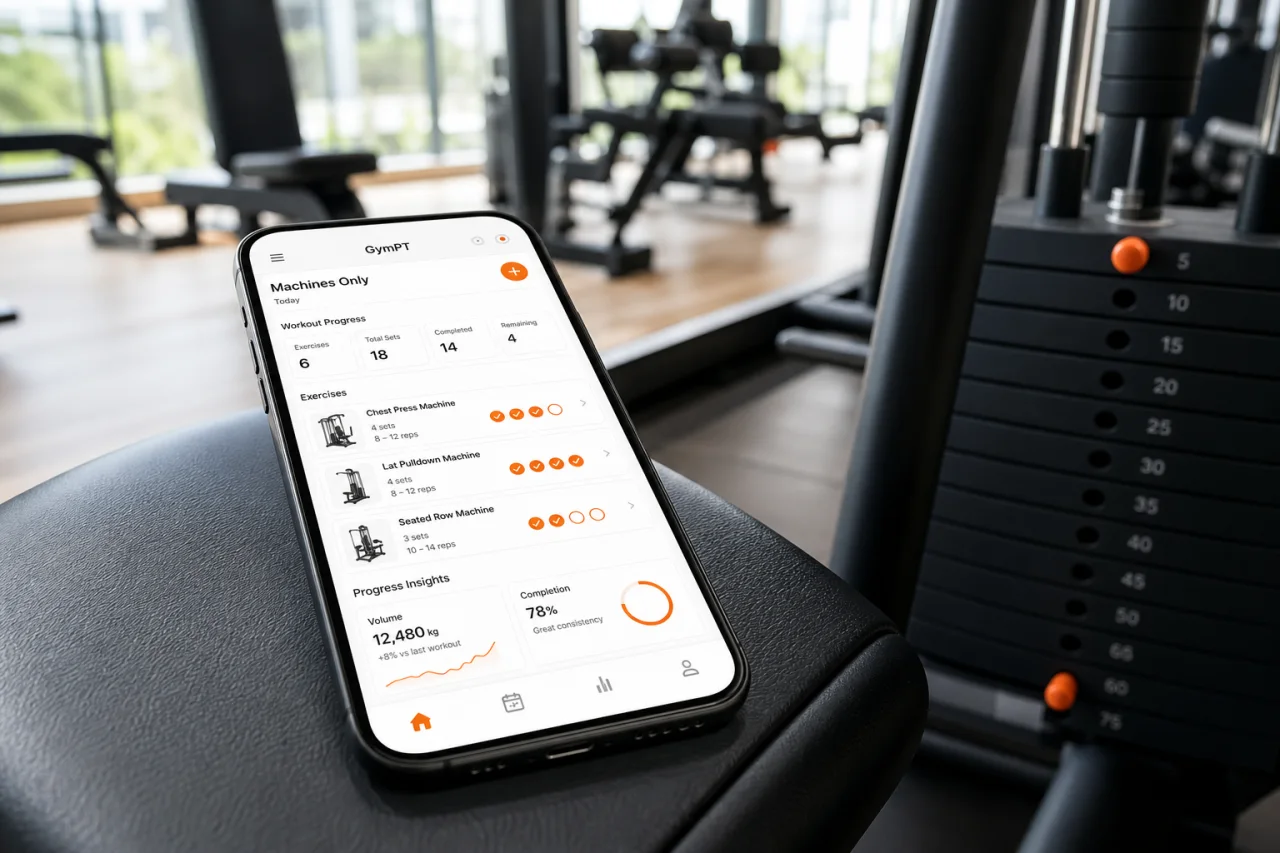
This is one of the easiest ways to make a machine workout plan effective over time. GymPT can help by logging your sessions, spotting stalled lifts, and suggesting the next step based on your recent performance.
Common mistakes in machine-only training
- Skipping pulling work: Too much pressing and not enough rowing can create an unbalanced plan.
- Using only isolation exercises: Curls and extensions are useful, but they should not replace big machine lifts.
- Changing exercises too often: Progress is easier to track when the core lifts stay consistent.
- Training every set to failure: That can make recovery harder and reduce workout quality.
- Ignoring lower body and trunk work: A complete plan should train more than just chest and arms.
How GymPT helps you adapt the plan to your gym
One of the biggest advantages of an AI coach is flexibility. If your gym has a leg press but no hack squat, GymPT can swap in a similar movement. If the chest press machine is taken, it can suggest a nearby alternative that still fits your plan. If you only have a few machines available, it can build around them instead of forcing a generic routine.
That matters because the best workout plan is the one you can repeat consistently. GymPT also helps you track workouts, review progress, and adjust volume when your recovery or schedule changes. In practice, that means your machine plan stays useful instead of becoming stale.
Sample beginner-friendly machines only workout plan
Here is a simple full-body template you can use as a starting point:
- Leg press: 3 sets of 8 to 12 reps
- Chest press machine: 3 sets of 8 to 12 reps
- Seated row machine: 3 sets of 8 to 12 reps
- Leg curl machine: 2 to 3 sets of 10 to 15 reps
- Shoulder press machine: 2 to 3 sets of 8 to 12 reps
- Ab crunch machine: 2 to 3 sets of 10 to 15 reps
Rest long enough to keep your form solid, usually around 60 to 120 seconds for most machine exercises. If a lift is especially demanding, take a little longer.
When a machines only workout plan is the right choice
This style of training is a strong fit if you are new to lifting, want a low-confusion routine, need a plan that works in a busy gym, or prefer a more stable setup than free weights. It is also useful when you want to focus on consistency first and complexity later.
The best machine plan is not the one with the most exercises. It is the one that covers the basics, fits your equipment, and progresses over time. If you want help building that version for your gym, GymPT can turn your available machines into a personalized plan you can actually follow.
Bottom line: a machines only workout plan can absolutely build strength and muscle when it is balanced, tracked, and progressed with intention.
Frequently asked questions
Can you build muscle with only machines?
Yes. If you train hard enough, cover the major movement patterns, and progress the load or reps over time, machines can support effective muscle-building training.
How many machine exercises should I do per workout?
Most people do well with 5 to 7 exercises in a full-body session, depending on how many sets they perform and how much time they have.
Is a machine-only plan good for beginners?
Yes. Machines are often a good starting point because they reduce coordination demands and make it easier to learn basic strength training habits.