lat pulldown machine exercises for beginners
Lat Pulldown Machine Exercises for Beginners: 7 Smart Ways to Train Your Back
A beginner-friendly guide to lat pulldown machine exercises, including form cues, smart variations, and how GymPT adapts your plan to the equipment you have.
Lat pulldown machine exercises for beginners: the simplest way to build a stronger back
If you are new to strength training, lat pulldown machine exercises for beginners are one of the easiest ways to learn a safe pulling pattern. The machine gives you a stable setup, a clear path of motion, and enough control to focus on your back instead of balancing the weight. That makes it a strong choice for beginners who want to train the lats, upper back, and arms with good form.
Most beginner plans do not need a complicated back day. They need a few reliable movements, a manageable load, and a way to progress without guessing. That is where a machine-based approach works well: you can adjust the seat, choose a grip, and use the same exercise to build confidence week after week.
Why the lat pulldown is a smart beginner exercise
The lat pulldown is a vertical pulling exercise. In simple terms, you pull the handle down toward your upper chest while keeping your torso controlled. This pattern helps train the latissimus dorsi, along with other muscles that assist pulling and shoulder stability. Beginner-friendly exercise libraries and strength guidance from major health organizations support starting with simple, repeatable strength movements and building consistency first.
For beginners, the biggest advantage is not just muscle work. It is learning how to:
- set up on a machine correctly,
- brace your torso without over-arching your lower back,
- pull with control instead of momentum,
- and stop each set before form breaks down.
How to set up the machine correctly
Before you start adding variations, get the basic setup right. A good setup makes every lat pulldown variation easier to learn and safer to repeat.
- Adjust the seat so your thighs are secured under the pads.
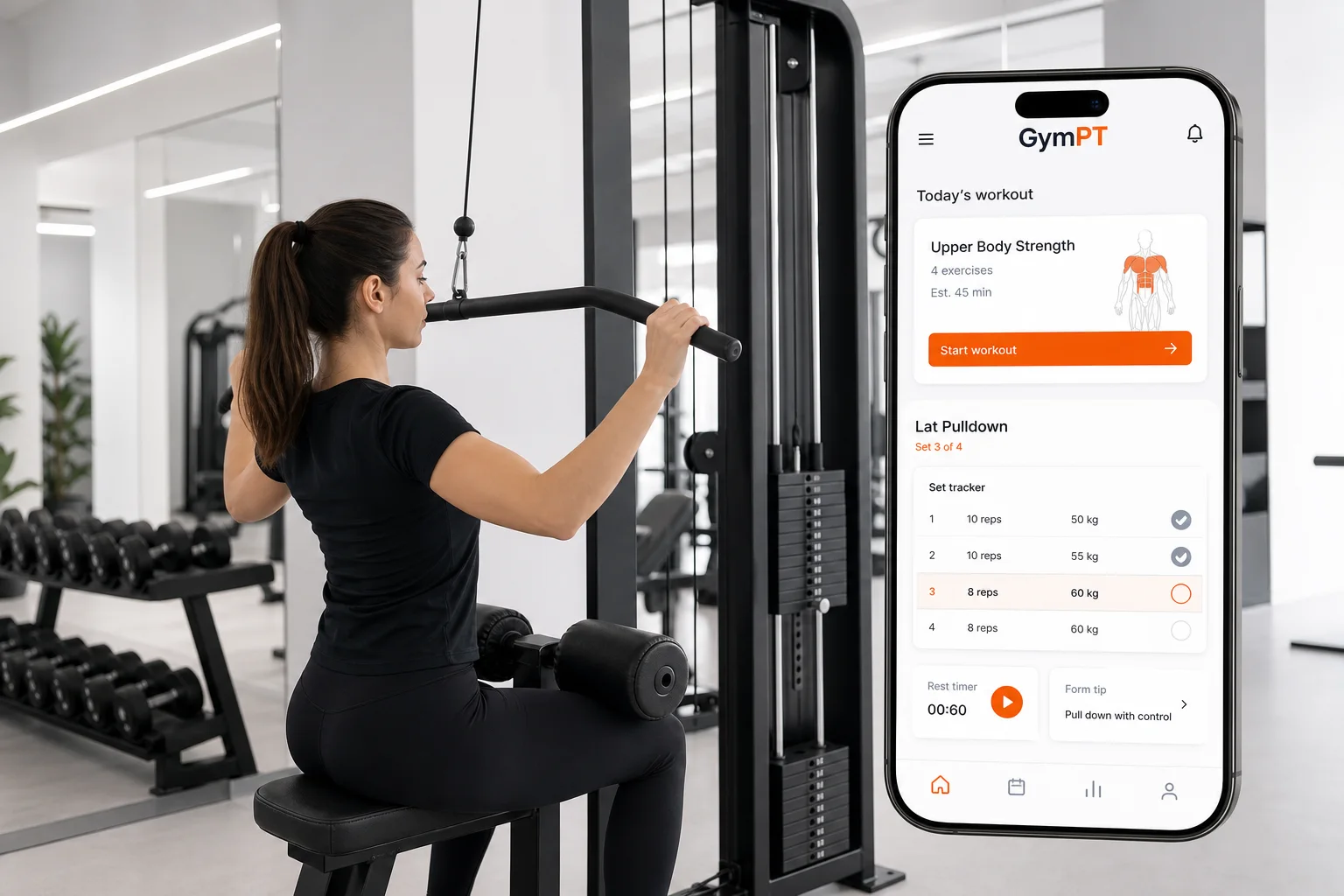
- Choose a grip that lets your hands sit slightly wider than shoulder width for a standard pulldown.
- Sit tall with your chest lifted and ribs stacked over your pelvis.
- Start with straight arms and relaxed shoulders, not shrugged up toward your ears.
- Pull the bar down toward the upper chest with control, then return slowly.
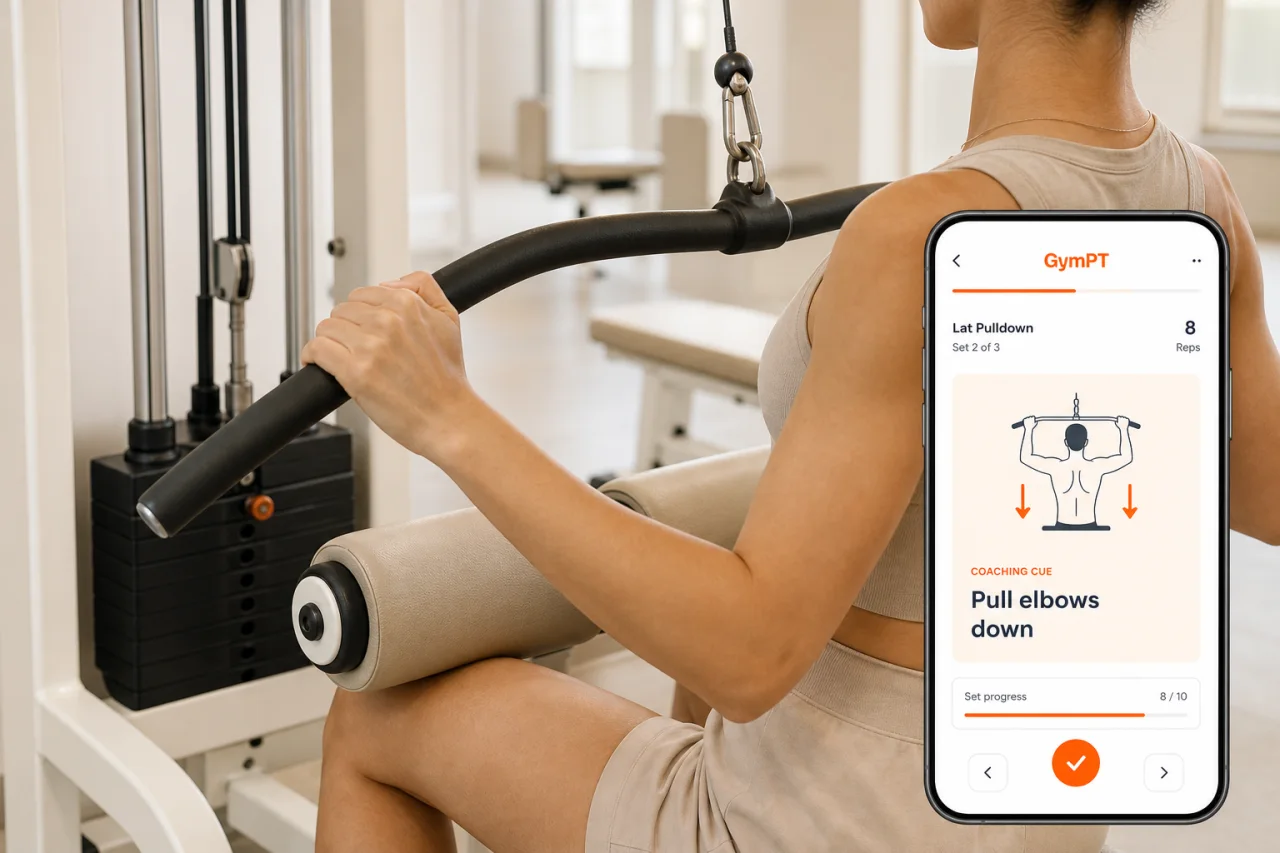
A useful beginner cue is: pull elbows down, not hands back. That helps you think about the back muscles doing the work instead of turning the movement into a biceps curl.
7 lat pulldown machine exercises for beginners
These variations are beginner-friendly because they keep the same core pulling pattern while changing the grip, angle, or difficulty. You do not need all seven in one workout. Pick one or two that match your current ability and the equipment available.
1. Standard wide-grip lat pulldown
This is the classic version and a great starting point if the machine feels comfortable. Use a controlled tempo and stop the bar near the upper chest. Keep your torso mostly upright and avoid swinging backward.
2. Neutral-grip lat pulldown
If your machine has parallel handles, this is often easier on the shoulders and easier to control. Many beginners find the neutral grip more natural because the elbows track in a comfortable path.
3. Underhand lat pulldown
An underhand grip shifts the feel of the exercise and often brings the biceps in more. It can be a useful variation, but beginners should keep the load light and focus on smooth control rather than heavy weight.
4. Single-arm lat pulldown
Training one side at a time can help you notice differences between your left and right sides. It also makes it easier to feel the lat working through the full range of motion. Use a lighter load than you would with both arms together.
5. Close-grip pulldown
A closer grip can feel more compact and easier to control. This is a good option if a wide grip feels awkward or if you want a simpler setup while you learn the movement.
6. Slow-eccentric lat pulldown
Lower the handle slowly for 3 to 4 seconds. This is one of the best beginner progressions because it increases control without requiring a huge jump in weight. It also helps you learn where your shoulders and elbows should be during the return phase.
7. Half-kneeling cable pulldown
If your gym has a cable station instead of a dedicated pulldown machine, this is a smart substitute. The half-kneeling position reduces cheating and makes it easier to keep your torso stable. It is especially useful when you want to build a beginner back routine around the equipment you actually have.
Common mistakes beginners should avoid
Most lat pulldown mistakes come from trying to move too much weight too soon. If you want better results, keep the exercise clean and repeatable.
- Leaning back too far and turning the movement into a row.
- Pulling behind the neck instead of toward the upper chest.
- Using momentum to start each rep.
- Letting the shoulders shrug up during the pull.
- Cutting the range of motion short before the arms fully extend.
A simple rule: if you cannot lower the weight under control, it is too heavy for beginner training.
How many sets and reps should a beginner do?
For most beginners, a practical starting point is 2 to 3 sets of 8 to 12 reps with a load that leaves a few reps in reserve. That gives you enough practice to learn the movement without turning every set into a grind.
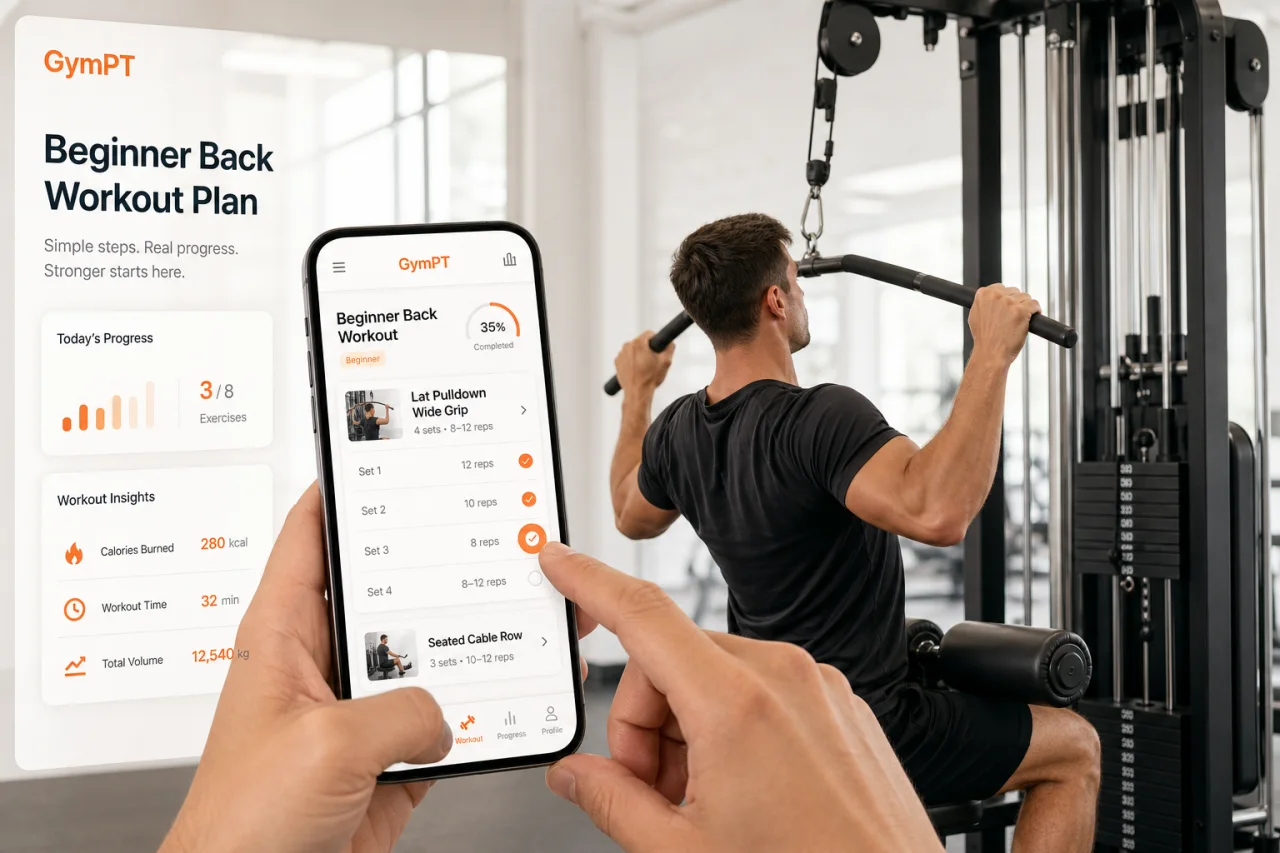
If you are using GymPT, the app can adjust this based on your experience level, recovery, and available equipment. For example, if you only have a pulldown machine, GymPT can build a back session around that station. If you also have cables, dumbbells, or bodyweight options, it can mix in complementary exercises so your plan stays balanced.
A simple beginner back session using the lat pulldown
Here is a straightforward workout you can use as a starting template:
- Lat pulldown — 3 sets of 8 to 12 reps
- Single-arm pulldown — 2 sets of 10 reps per side
- Seated cable row or machine row — 2 to 3 sets of 8 to 12 reps
- Face pull or rear-delt cable pull — 2 sets of 12 to 15 reps
This gives you a mix of vertical pulling and horizontal pulling, which is helpful for balanced back training. If your gym is crowded or your equipment is limited, GymPT can swap in alternatives automatically so you still complete a useful session.
How GymPT helps you choose the right version
Beginners often do not need more exercises. They need the right exercise at the right difficulty. GymPT is built for that. It can look at your equipment, your training history, and your progress to decide whether you should stay with a standard pulldown, move to a single-arm version, or add a slower tempo for more control.
That matters because the best plan is the one you can repeat. If your gym has only one lat pulldown machine, GymPT can build around it. If you train at home with limited gear, it can replace the machine with cable or band-based pulling patterns while keeping the same training goal.
When to progress to a harder variation
You are ready to progress when you can complete all your reps with:
- stable torso position,
- smooth shoulder movement,
- full control on the way back up,
- and no need to swing or lean back hard.
At that point, you can increase the load slightly, slow the lowering phase, or move to a unilateral version. Progress should feel small and repeatable, not dramatic.
Final takeaway
Lat pulldown machine exercises for beginners work best when you keep them simple, controlled, and matched to the equipment you have. Start with a clean setup, use a manageable load, and focus on consistent reps before chasing heavier weight. That is the fastest way to turn one machine into a reliable back-building tool.
If you want a plan that adapts to your gym setup automatically, GymPT can build your workout around the equipment you have and keep your progress moving in the right direction.