full body workout with cable machine
Full Body Workout With Cable Machine: Build a Smarter Plan Around One Station
A cable machine can cover your whole body if you choose the right movement patterns, organize exercises well, and progress them consistently. Here’s how to build a practical full body workout with cable machine training—and how GymPT can adapt it to your equipment and goals.
Full Body Workout With Cable Machine: What Makes It Work
A full body workout with cable machine training can be one of the most efficient ways to train when you want variety, smooth resistance, and a compact setup. A single cable station can cover your major movement patterns: squat or lunge, hinge, push, pull, carry-style core work, and isolation work when needed.
The key is not trying to do everything with cables. The key is choosing exercises that cover the whole body with enough balance to train legs, hips, back, chest, shoulders, arms, and core across the week. Public health guidance recommends adults include muscle-strengthening work at least two days per week and train all major muscle groups. That makes a cable station a practical fit for a simple, repeatable routine.
If you want the plan to feel effective, think in movement patterns instead of random exercises. That makes it easier to adjust the workout when your gym is busy, your cable station is occupied, or your available attachments change.
Why Cable Machines Are So Useful for Full Body Training
Cable machines are flexible because they let you change the line of pull, body position, and range of motion without changing the whole setup. Research on cable-based training shows that muscle use, joint angles, and range of motion can vary even when the exercise looks similar, which is one reason cables are so adaptable for full body programming.
That flexibility matters for three reasons:
- Easy exercise swaps: You can move from a squat pattern to a split squat, from a row to a pulldown, or from a press to a fly without leaving the station.
- Consistent tension: Cables can keep resistance flowing through much of the movement, which is useful for controlled hypertrophy work.
- Simple progression: Small weight jumps, rep increases, and tempo changes are easy to track.
For most lifters, that means less setup time and more actual training time.
How to Build a Full Body Cable Workout
A good full body cable session should cover the main patterns in a logical order. A practical structure is:
- Lower-body compound pattern
- Upper-body pull
- Upper-body push
- Second lower-body or unilateral pattern
- Core or accessory work
Exercise order matters because larger, more demanding movements are usually best done earlier, when you are fresh. ACSM guidance recommends sequencing exercises to preserve intensity, with larger muscle groups and multi-joint exercises before smaller, single-joint work.
That does not mean every workout must be identical. It means your first few exercises should do the heavy lifting for the session.
Sample Full Body Workout With Cable Machine
Use this as a starting point if you have one cable station and want a balanced session:
- Cable squat or cable goblet squat — 3 sets of 8-12 reps
- Standing cable row — 3 sets of 8-12 reps
- Standing cable chest press — 3 sets of 8-12 reps
- Cable Romanian deadlift — 3 sets of 8-12 reps
- Cable split squat — 2-3 sets of 8-10 reps per leg
- Face pull or cable rear delt fly — 2-3 sets of 12-15 reps
- Pallof press or cable wood chop — 2-3 sets of 10-12 reps per side
This is not the only way to train, but it gives you a strong base: legs, back, chest, hips, shoulders, and core all get attention in one session.
The Best Cable Exercises for Each Movement Pattern
If you want to build your own plan, start by matching one exercise to each pattern. That keeps the workout balanced even if your gym only has one functional trainer.
1. Squat or knee-dominant pattern
Good options include cable squats, cable front squats, and cable split squats. These train the quads and glutes while also challenging balance and trunk control.
2. Hinge or hip-dominant pattern
Cable Romanian deadlifts, pull-throughs, and cable good mornings are useful here. They emphasize the glutes and hamstrings while teaching you to control the hips.
3. Horizontal pull
Standing cable rows, one-arm cable rows, and seated cable rows are the easiest choices for the back. They are also simple to scale by changing stance, grip, or torso angle.
4. Horizontal push
Standing cable chest press and single-arm cable press variations are excellent for chest, shoulders, and triceps. If you want more shoulder stability work, use a split stance and press one arm at a time.
5. Vertical pull
High-to-low pulldowns and kneeling cable pulldowns can help cover the lats and upper back when your station allows it.
6. Shoulder and upper-back accessory work
Face pulls, lateral raises, and rear delt flys are useful for shoulder balance and posture-friendly volume.
7. Core and anti-rotation work
Pallof presses, cable chops, and cable lifts train the trunk to resist unwanted movement. That makes them a smart finish for a full body cable workout.
Because cable machines can change the line of resistance and body position, they are especially good for accessory work and unilateral training. That makes them a strong tool for both beginners and experienced lifters.
How to Progress a Cable Machine Workout
Progress should be simple enough to repeat. The easiest method is double progression: keep the same exercise, stay in a rep range, and add reps first before adding weight.
For example, if your target is 8-12 reps:
- Week 1: 10, 9, 8
- Week 2: 11, 10, 9
- Week 3: 12, 11, 10
- Week 4: increase the load and return to the lower end of the range
This works well because resistance training should be progressive if you want continued adaptation. Research and position stands on resistance training consistently support planned progression rather than random workout changes.
If you are training for general fitness, you do not need to chase maximal loads. You need a repeatable plan that gets a little better over time.
How to Adapt the Workout to Your Available Equipment
Not every gym has the same cable setup. Some have a dual adjustable pulley, some have a single stack, and some have attachments that make certain angles easier than others. That is where equipment-based planning matters.
Use this rule: keep the movement pattern, change the variation.
- If you cannot do a cable squat, use a cable split squat.
- If you cannot do a pulldown, use a high row or one-arm row.
- If you cannot do a chest press from standing, use a staggered stance or half-kneeling press.
- If the station is busy, swap to a one-arm version and keep training.
That approach helps you stay consistent even when the gym is crowded. It also keeps the workout aligned with your goal instead of forcing you to abandon the session because one attachment is unavailable.
How GymPT Helps You Turn One Cable Station Into a Real Plan
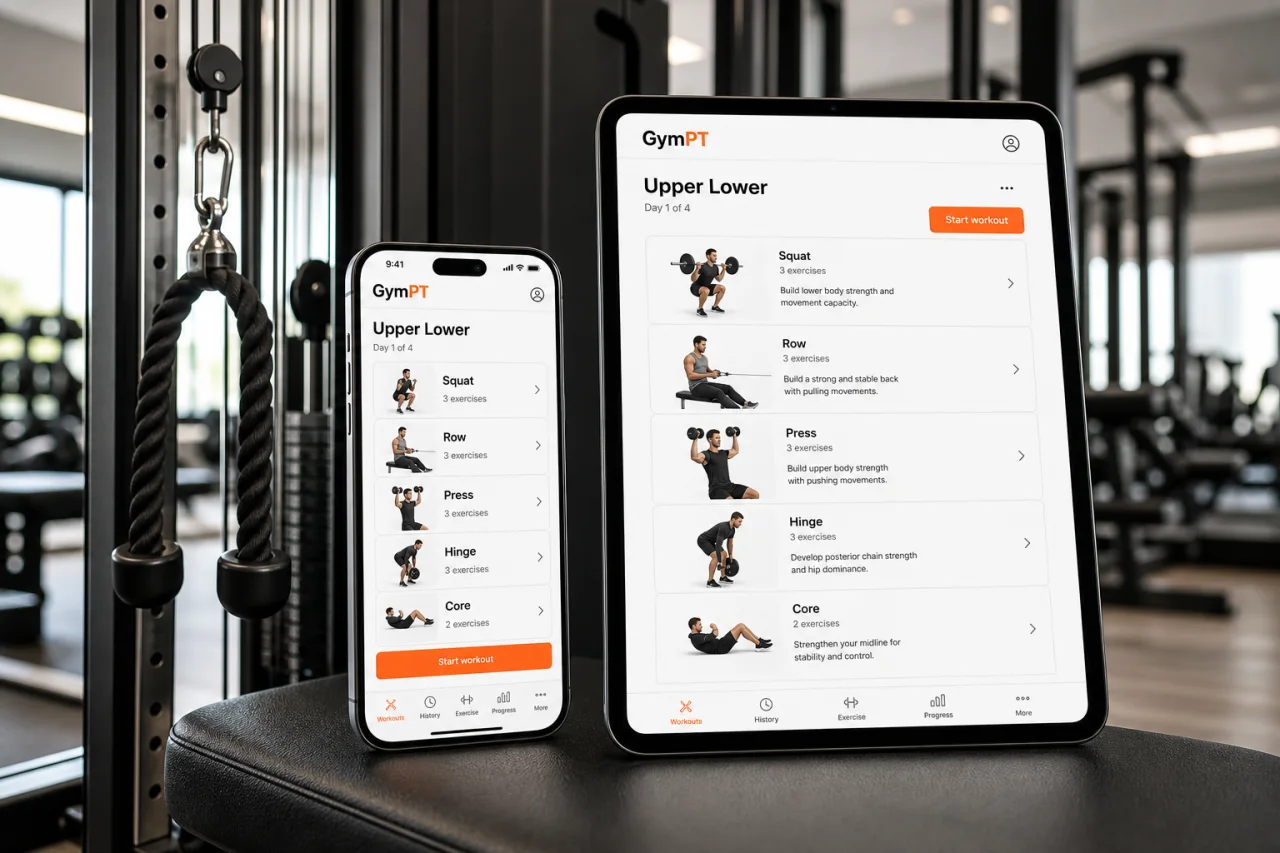
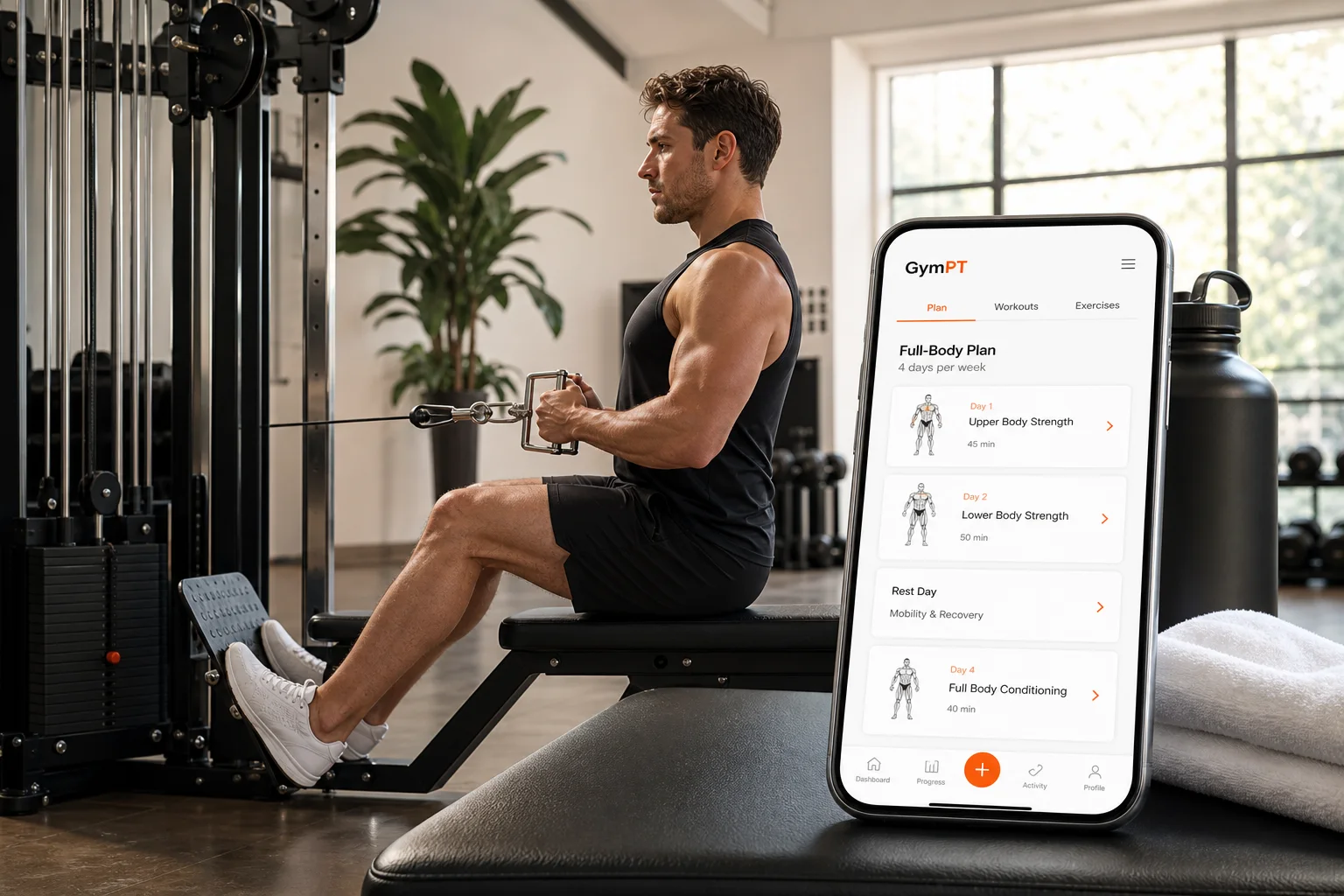
This is where GymPT becomes useful. Instead of guessing which cable exercises to do, you can build a plan around the equipment you actually have and let the app organize the session for your goal, experience level, and training frequency.
GymPT can help you:
- create a personalized cable machine workout plan
- swap exercises based on available equipment
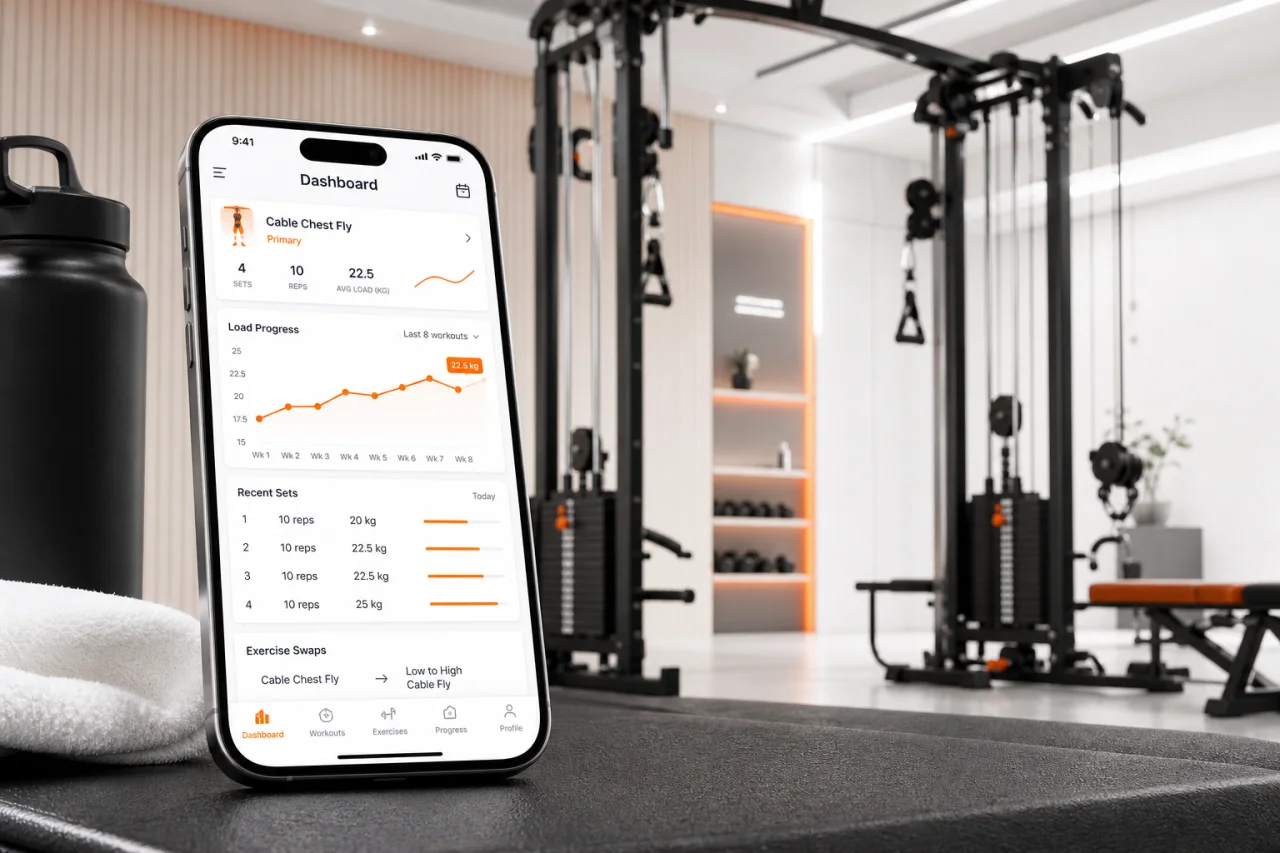
- track sets, reps, and load over time
- adjust volume when recovery or schedule changes
- show progress insights so you know what is working
That means your full body cable workout is not just a list of exercises. It becomes a system you can repeat, measure, and improve.
Common Mistakes to Avoid
Even a good cable machine workout can stall if the structure is weak. Watch out for these mistakes:
- Doing too many isolation moves first and leaving no energy for the big patterns.
- Training only the upper body because the cable station makes pressing and rowing easy.
- Using random exercises instead of a repeatable structure.
- Changing the workout every session so progress is hard to measure.
- Ignoring unilateral work when one-arm variations would improve balance and control.
If you want better results, keep the plan simple enough to repeat for several weeks.
Who This Workout Is Best For
A full body cable workout is a strong choice for:
- beginners who want a guided, low-friction routine
- busy gym users who need one station to cover most of the body
- lifters who want smooth resistance and easy exercise swaps
- people who prefer machine-based training but still want variety
It is also a smart option if you want to train all major muscle groups without building a complicated split.
Final Takeaway
A full body workout with cable machine training works best when you treat the cable station like a complete training tool, not just a machine for random accessories. Cover the main movement patterns, put the hardest exercises first, progress them steadily, and swap variations based on the equipment you have.
If you want help turning that into a plan you can actually follow, GymPT can build it around your available cable setup and keep it updated as you progress.
Train the plan you can repeat. That is usually the plan that works.