AI exercise progression planner
AI Exercise Progression Planner: How to Increase Training Safely and Stay Consistent
A smart progression plan is not about pushing harder every session. Learn how an AI exercise progression planner can help you adjust volume, reps, load, and recovery with more structure and less guesswork.
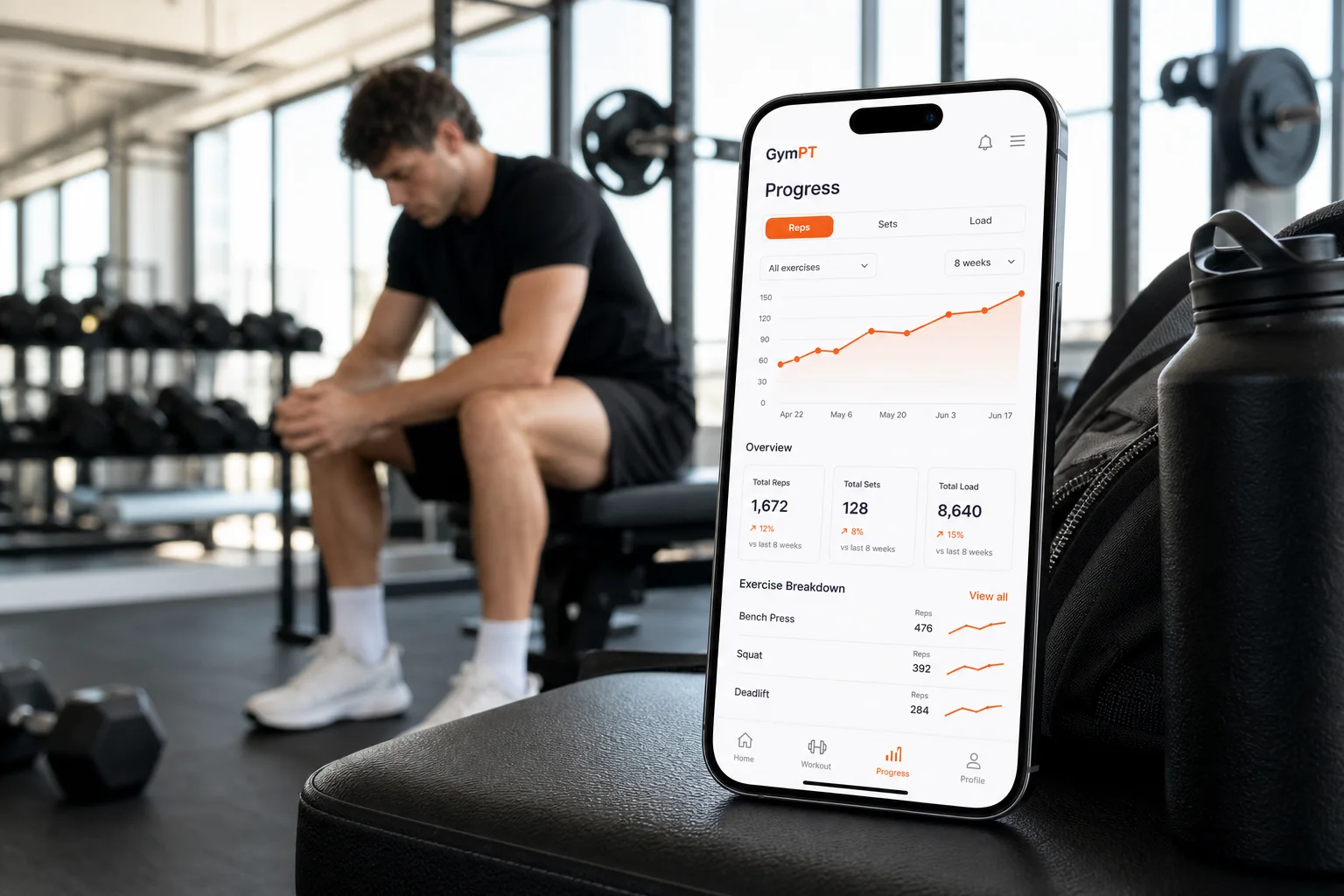
AI Exercise Progression Planner: What It Should Actually Do
An AI exercise progression planner should not guess, hype, or force you to train harder every week. Its real job is simpler and more useful: help you progress in a way that matches your current level, your equipment, your recovery, and your training history.
That matters because good training is not just about effort. It is about applying the right amount of stress, repeating it often enough, and increasing it gradually. Public health guidance also supports this idea: adults should combine regular aerobic activity with muscle-strengthening work on at least 2 days per week, and training should be sustainable over time.
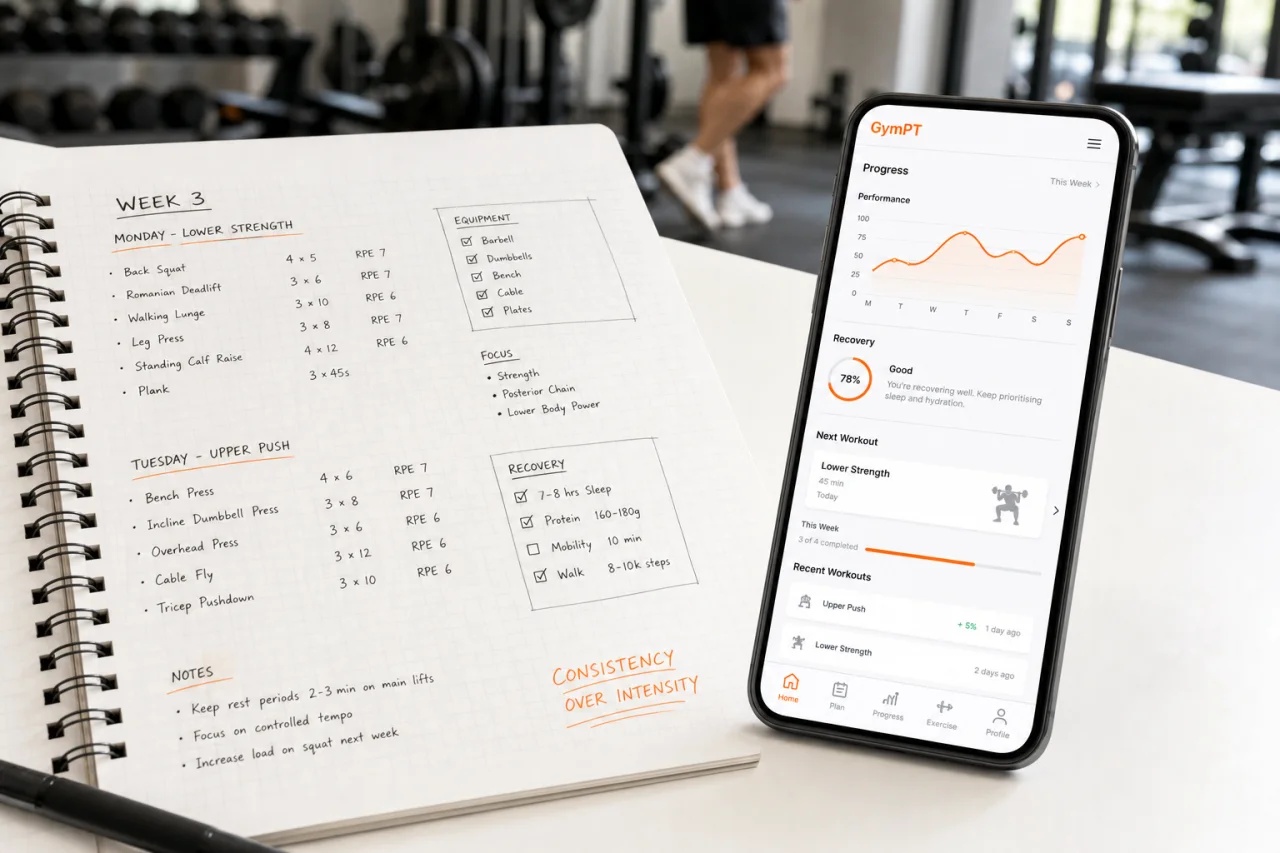
GymPT is built around that practical reality. It can help you plan workouts, adjust progression, log sessions, and review trends so you are not relying on memory or random motivation.
Why progression fails when it is left to guesswork
Most people do not fail because they lack discipline. They fail because their plan is vague. One week they add weight too soon. The next week they repeat the same workout with no clear target. Then they feel sore, stalled, or unsure whether they are improving.
A better system tracks the variables that actually matter:
- Load: how much weight or resistance you use
- Reps: how many quality repetitions you complete
- Sets: how much total work you do
- Frequency: how often you train a movement or muscle group
- Recovery: whether you are ready to progress again
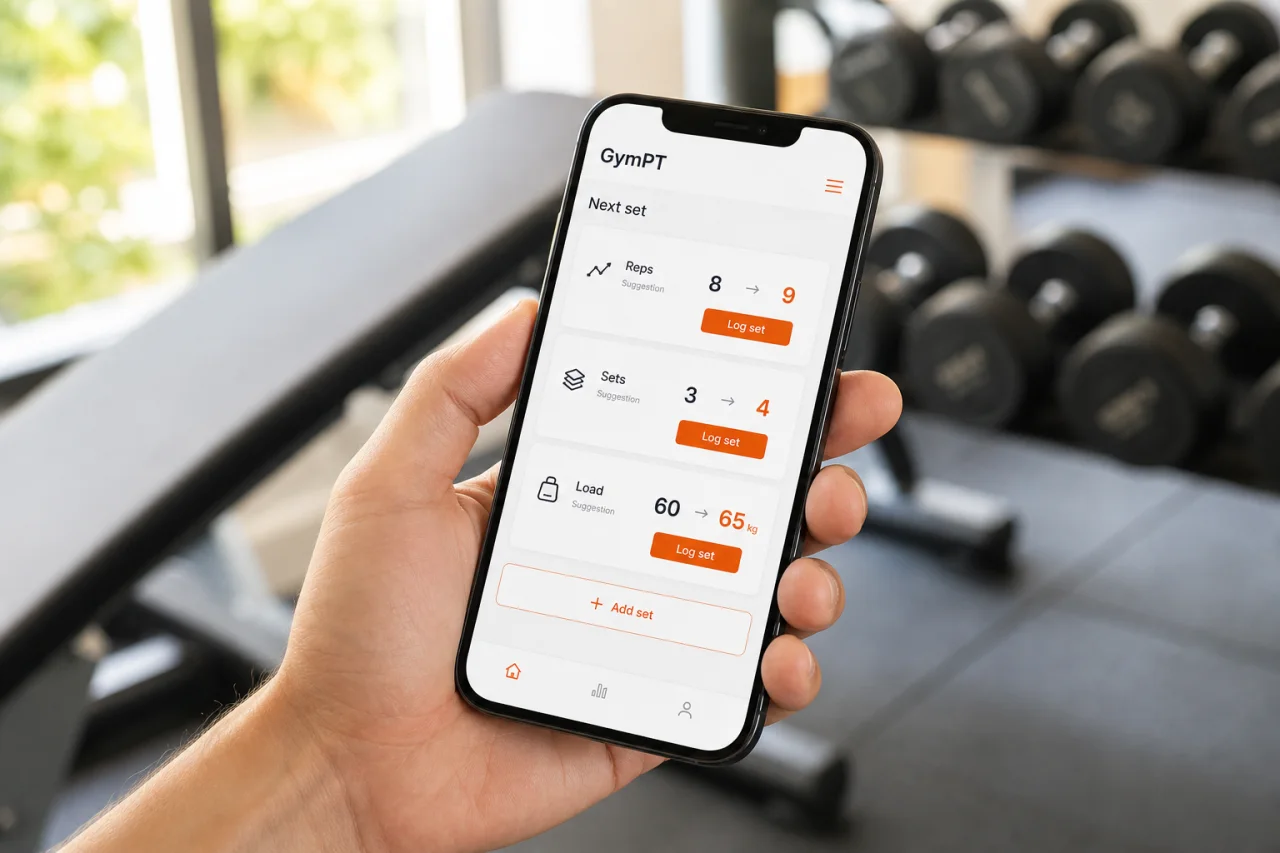
That is where AI can help. Instead of making you choose between “do more” and “do the same,” it can suggest a next step based on your recent performance. In practice, that usually means small increases, not dramatic jumps.
How an AI exercise progression planner should build your next step
A realistic progression system looks at what you actually completed, not what you hoped to do. If you finished all sets with good form and still had room left, the next workout may call for a small increase. If your reps dropped sharply or your form broke down, the smarter move may be to hold steady.
1. Progress one variable at a time
For most lifters, the safest and clearest approach is to change one thing at a time. For example:
- Add 1 to 2 reps before adding weight
- Add a small amount of load after you hit your rep target
- Add a set only when your current volume is well tolerated
This keeps your plan readable and reduces the chance that you increase too many stressors at once.
2. Use performance, not ego, as the signal
If you are completing every set with clean technique, your plan can move forward. If you are grinding, compensating, or skipping reps, the plan should slow down. That is not failure; it is feedback.
3. Match progression to the exercise
Not every movement should progress the same way. A machine chest press, a dumbbell squat, and a push-up all respond differently. An AI workout plan should adapt to the exercise pattern and the equipment you have, which is especially helpful if you train with dumbbells, cables, machines, or bodyweight only.
What makes AI coaching useful instead of unrealistic
AI coaching is most helpful when it behaves like a careful coach, not a motivational poster. That means it should be specific, conservative when needed, and transparent about why it is recommending a change.
For example, GymPT can support safer planning by combining:
- Workout plan generation based on your goal and equipment
- AI coach chat for quick adjustments and exercise questions
- Workout tracking so progression is based on real sessions
- Progress insights to show trends over time
- Body analysis to help you interpret changes beyond the scale
That combination matters because progression is not only about one workout. It is about the pattern across weeks. The World Health Organization recommends regular muscle-strengthening activity and enough weekly movement to support long-term health, which reinforces the value of a plan you can actually sustain.
How to use GymPT as your progression planner
If you want your training to feel more organized, GymPT can help you turn a vague goal into a repeatable system.
- Set the goal — strength, muscle gain, general fitness, or a more specific target.
- Choose your equipment — bodyweight, dumbbells, machines, cables, or a mixed setup.
- Follow the plan — complete the workout and log what you actually did.
- Review the trend — look for stable reps, better control, or gradual load increases.
- Adjust the next session — progress when the data says you are ready.
This is especially useful if you tend to overdo it on good days and underdo it on busy days. A planner gives you a middle ground: enough structure to progress, enough flexibility to stay consistent.
Signs your progression plan is too aggressive
More is not always better. If your plan is moving too fast, you may notice:
- Reps dropping week after week
- Form getting worse before the last set
- Persistent soreness that affects the next workout
- Needing to skip planned sessions because recovery is poor
- Feeling mentally burned out by the plan
When that happens, the answer is usually not to quit. It is to reduce the jump size, keep the same load a little longer, or lower total volume for a week. A good AI exercise progression planner should make that adjustment easier, not harder.
What to look for in a progression planner before you trust it
Not every AI fitness tool is built the same. Before you rely on one, check whether it can do these things well:
- Adapt to your current level instead of using one generic template
- Support different equipment and training styles
- Track completed workouts, not just planned workouts
- Explain why a progression change was suggested
- Let you slow down when recovery or form says to
If a tool only tells you to “push harder,” it is not really planning progression. It is just repeating a slogan.
The practical takeaway
The best progression plan is the one you can repeat next week. An AI exercise progression planner should help you make small, sensible changes based on real performance, not guesswork. That is how you build momentum without turning every workout into a test.
With GymPT, you can create a personalized plan, track what happened, and use AI support to decide what comes next. That makes progression clearer, safer, and easier to stick with.
If you want better training decisions, start with better data.
Frequently asked questions
Is an AI exercise progression planner good for beginners?
Yes. Beginners often benefit the most because they need simple, gradual progression and clear feedback. A good planner can reduce confusion and help them avoid doing too much too soon.
Should I add weight every workout?
Not always. Sometimes the better move is to add reps, improve form, or repeat the same load until it feels controlled. Progression should match your performance, not a fixed rule.
Can AI replace a coach?
No. AI can support planning, tracking, and decision-making, but it should not replace professional coaching for complex needs. It works best as a practical assistant that helps you stay organized.
How does GymPT support safer progression?
GymPT combines personalized workout planning, AI coach chat, workout tracking, body analysis, and progress insights so you can make training changes based on real data instead of guesswork.