back workout for beginners
Back Workout for Beginners: A Simple Plan for Better Form and Real Strength
A beginner back workout should do more than “feel hard.” It should teach you how to row, pull, and brace with good form so you can build strength safely and keep progressing.
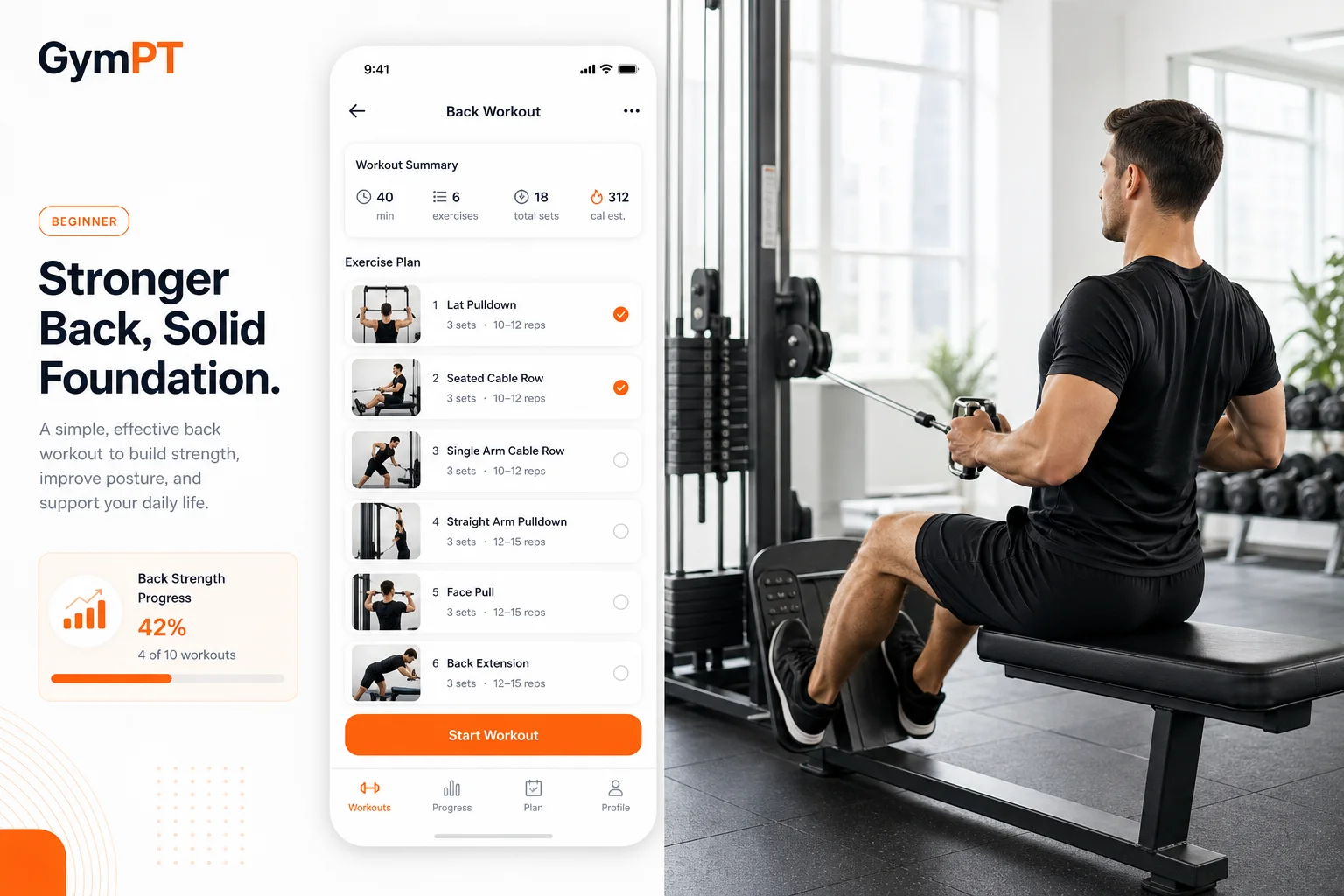
Back workout for beginners: what to train first
If you are looking for a back workout for beginners, the goal is not to do the most exercises. The goal is to learn a few reliable movement patterns, build control, and train your upper and mid-back without turning every set into a shrug-fest or a lower-back endurance test.
A smart beginner back session should cover three jobs: horizontal pulling for thickness and posture, vertical pulling for lat strength, and simple hinge or support work so your back learns to stabilize while the rest of your body moves. General strength-training guidance from major health organizations supports training the major muscle groups regularly, using good technique, and progressing gradually rather than rushing load.
Why beginner back training matters
Your back is not one muscle. It includes the lats, rhomboids, traps, spinal erectors, and the smaller stabilizers that help you hold posture, pull objects, and keep your torso steady during other lifts. Strength training resources from Mayo Clinic and NHS guidance both emphasize that strengthening the back and the muscles that support it can improve function and help you move more confidently.
For beginners, the biggest win is usually not “wider lats in two weeks.” It is learning how to pull with the back instead of yanking with the arms, how to keep the ribs stacked, and how to finish a set without losing position. That skill carries over to rows, pulldowns, deadlift variations, carries, and even push exercises because your upper body becomes more stable overall. This is an inference based on the role of the back muscles in posture and full-body strength training.
The best beginner back exercises
Choose 4 to 5 movements from the list below. You do not need all of them in one workout.
1. Seated cable row or band row
This is one of the best beginner back exercises because it teaches a clean horizontal pull. Sit tall, brace lightly, pull the handle toward your lower ribs, and pause for one second before returning under control.
- Form cue: keep your chest proud without over-arching your lower back.
- Common mistake: leaning back to turn the row into a body swing.
- Beginner alternative: use a resistance band anchored at chest height.
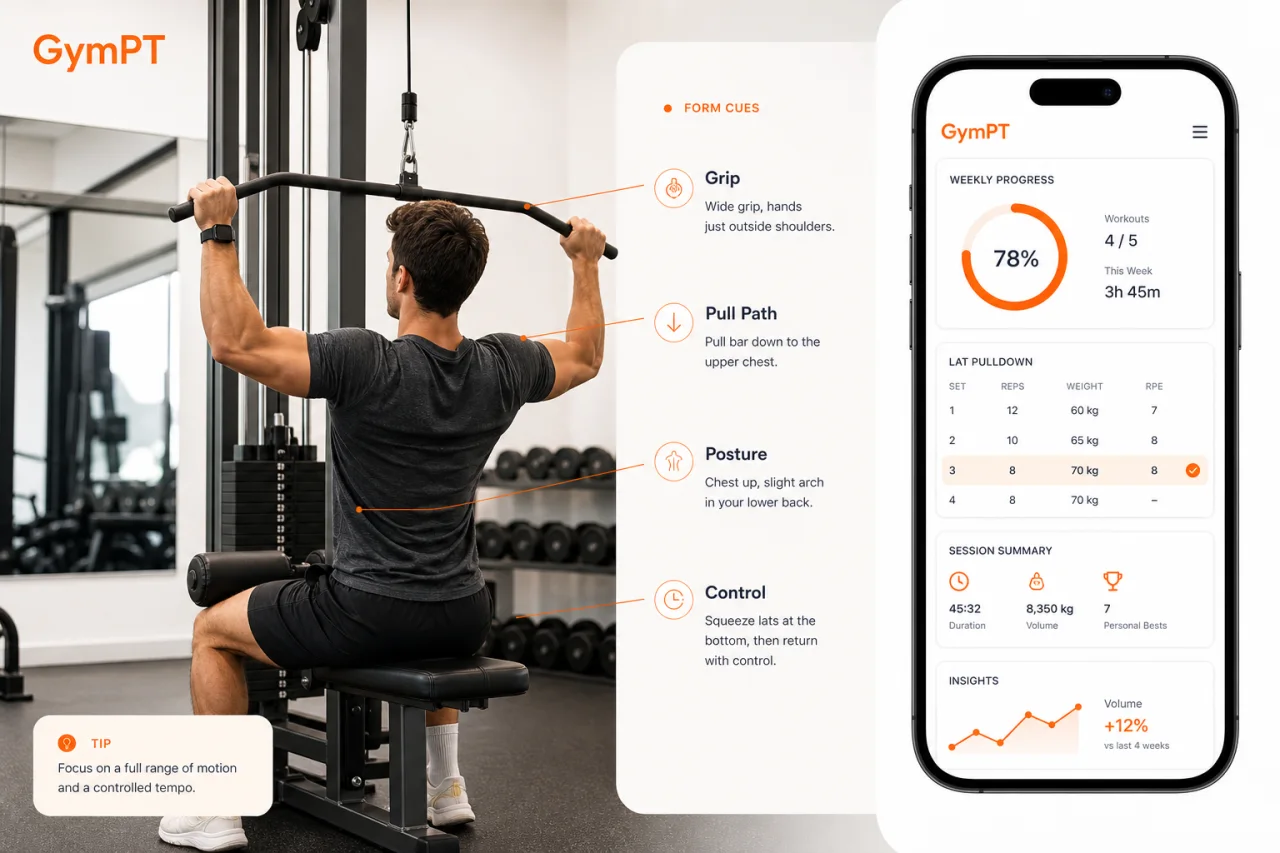
2. Lat pulldown
The lat pulldown teaches vertical pulling and helps beginners feel the lats working. Pull the bar toward the upper chest, keep your shoulders down, and avoid jerking the weight with momentum.
- Form cue: think “elbows to pockets,” not “hands to chest.”
- Common mistake: pulling behind the neck.
- Beginner alternative: use a neutral-grip handle if available.
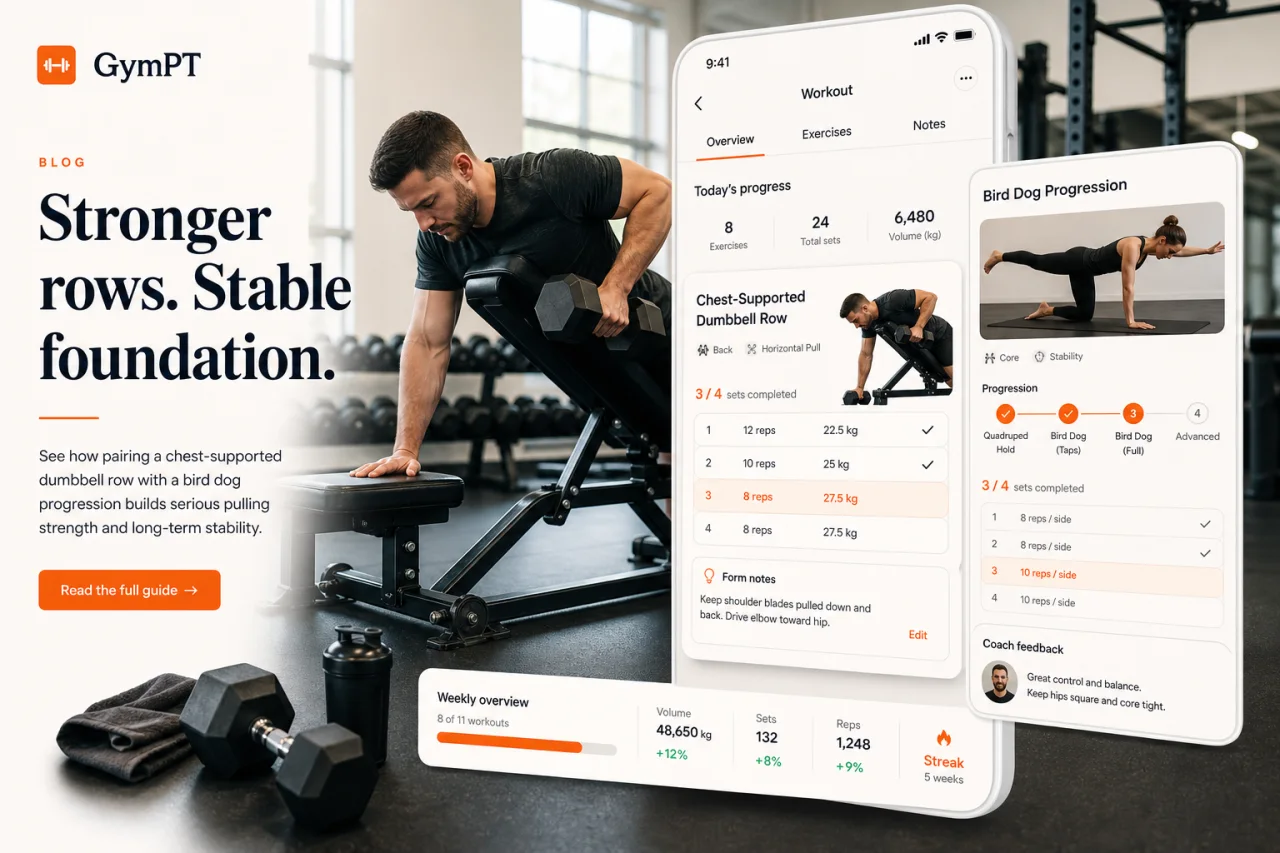
3. Chest-supported dumbbell row
This is a great option if you want to reduce cheating. Because your chest is supported, it is easier to focus on the upper back and lats instead of turning the movement into a lower-back exercise.
- Form cue: row toward your hip or lower rib area.
- Common mistake: shrugging the shoulders up toward the ears.
4. Dumbbell Romanian deadlift
This is not a pure back isolation move, but it teaches the posterior chain to work together. Keep a soft knee bend, push the hips back, and maintain a long spine as the dumbbells travel down the thighs.
- Form cue: move at the hips, not the waist.
- Common mistake: rounding the back to reach lower.
- Beginner alternative: practice the hip hinge with a dowel or light kettlebell first.
5. Face pull
Face pulls are useful for upper-back balance and shoulder-friendly pulling volume. Pull the rope toward your face with elbows high, then finish by rotating the hands slightly back.
- Form cue: keep the neck relaxed and ribs down.
- Common mistake: turning it into a lower-back lean.
6. Bird dog
Bird dogs train trunk stability, which matters when you are learning to row and hinge. Reach long, keep the hips level, and avoid twisting.
- Form cue: move slowly enough that your torso stays quiet.
- Beginner alternative: shorten the reach if balance is difficult.
A simple back workout routine for beginners
Use this as a starting point 1 to 2 times per week. If you are also training other muscle groups, keep at least one day between hard back sessions so you can recover and keep your technique sharp. Mayo Clinic guidance also recommends giving trained muscles time to rest before working them again.
- Lat pulldown — 2 to 3 sets of 8 to 12 reps
- Seated cable row or band row — 2 to 3 sets of 8 to 12 reps
- Chest-supported dumbbell row — 2 sets of 10 to 12 reps
- Face pull — 2 sets of 12 to 15 reps
- Bird dog — 2 sets of 6 to 8 reps per side, slow and controlled
That is enough volume for most beginners to learn the movements without getting buried in soreness. If you are brand new, start with the low end of the range and leave 2 to 3 reps in reserve on most sets. The point is to practice quality reps, not chase failure on day one. This recommendation is consistent with general resistance-training guidance that emphasizes gradual progression and proper technique.
How to keep your form clean
Good back training is mostly about position. If your setup is sloppy, the wrong muscles take over and the exercise stops doing what you want.
- Brace lightly: tighten your midsection before each rep so your torso stays stable.
- Keep the shoulders away from the ears: this helps the lats and mid-back do the work.
- Control the lowering phase: do not let the weight yank you forward.
- Use a full but comfortable range of motion: move through what you can control without losing posture.
- Breathe on purpose: avoid holding your breath and straining through every rep.
If you feel the movement mostly in your arms, reduce the load and slow the tempo. If you feel it mostly in your lower back, choose a supported row or lighter hinge variation first.
How much back training do beginners need?
For most beginners, 6 to 10 hard sets for the back in a week is a practical starting point, especially if you are also doing full-body training. You can build from there as your technique, recovery, and confidence improve. The latest ACSM resistance-training materials emphasize that training should be individualized and progressed gradually, with multiple sets per exercise commonly used for healthy adults.
If you are sore for more than a day or two, your grip fails before your back does, or your form falls apart on the last reps, that is a sign to reduce volume or load. Beginners usually progress faster by adding a rep, improving control, or cleaning up range of motion before adding more weight.
Beginner-friendly alternatives if you do not have a gym
You can still train your back well with limited equipment. A band row, one-arm dumbbell row, backpack row, towel isometric row, and bird dog can all build a strong foundation. If you want a simple home setup, pair pulling work with posture-focused drills and a hinge pattern so your back gets both strength and stability. Mayo Clinic and NHS resources both support movement and strengthening as part of a sensible back routine.
How GymPT can help you progress
Back training gets easier when your plan matches your equipment, experience, and recovery. GymPT can build a personalized back workout, adjust exercise selection based on the equipment you have, track your sets and reps, and show progress over time so you know when to add load or volume.
If you are unsure whether to use rows, pulldowns, machines, or dumbbells, the AI coach can help you choose the best option for your current level. That is especially useful for beginners who want structure without guessing.
Quick recap
- Start with rows, pulldowns, and one supported hinge or stability drill.
- Keep the load light enough to control every rep.
- Train your back 1 to 2 times per week at first.
- Use form cues before adding more weight.
- Progress by improving reps, control, and consistency.
A back workout for beginners should feel simple, repeatable, and technically clean. If you can finish your session with better posture, better control, and a little more confidence, you are on the right track.
Frequently asked questions
Should beginners train back on the same day as biceps?
Yes, they can. Many pulling exercises already use the biceps, so pairing back and biceps is common. Just keep the total volume reasonable so your form stays solid.
Is it normal to feel back exercises in my arms?
Some arm involvement is normal, but the back should do most of the work. If the arms dominate every set, lower the weight and slow the movement.
Can I do back workouts if I sit all day?
Yes. In fact, many people who sit a lot benefit from regular pulling work, posture drills, and hip-hinge practice. Start conservatively and build up gradually.
What is the best back exercise for beginners?
There is no single best exercise for everyone, but the seated cable row or band row is often the easiest place to start because it is simple to learn and easy to scale.