best back exercises
Best Back Exercises: 9 Moves for a Stronger, Wider, Healthier Back
A practical guide to the best back exercises for strength and muscle growth, with form cues, beginner-friendly swaps, and simple weekly programming tips.
Best back exercises: how to build a stronger back without guessing
If you want a back that looks strong and performs well, you do not need a random list of exercises. You need a few best back exercises that cover the main jobs of the back: pulling, stabilizing, and controlling the shoulder blades. A smart back workout usually mixes vertical pulls, horizontal rows, and a hip hinge or extension pattern so you train the lats, upper back, and spinal erectors together.
This guide keeps things practical. You will learn which exercises are worth your time, how to do them with better form, how much volume to aim for, and how to scale them if you are a beginner. The goal is simple: train your back hard enough to grow, but cleanly enough to repeat it week after week.
What makes a back exercise “best”?
The best back exercises are not the ones that look hardest. They are the ones that let you load the back safely, feel the target muscles work, and progress over time. In practice, that usually means exercises that let you:
- pull with the elbows instead of only the hands
- keep the ribs from flaring and the lower back from taking over
- move through a full, controlled range of motion
- repeat good reps with a load you can manage
Research on resistance training supports using a mix of multi-joint exercises and enough weekly sets to drive adaptation. For general strength and muscle gain, a common starting point is 2 to 3 sets of 8 to 12 reps for many exercises, then adjusting based on experience and recovery.
The 9 best back exercises to build strength and size
1. Lat pulldown
The lat pulldown is one of the most useful back exercises because it trains vertical pulling in a stable setup. It is especially beginner-friendly because you can control the load and range more easily than with bodyweight pull-ups. Grip changes do not appear to dramatically change lat recruitment, so the best grip is usually the one that feels smooth, stable, and pain-free for you.
- Form cue: pull the bar toward the upper chest while keeping the chest tall and the shoulders down.
- Common mistake: leaning back so far that the movement turns into a sloppy row.
- Beginner swap: use a lighter load and stop the bar slightly higher if shoulder mobility is limited.
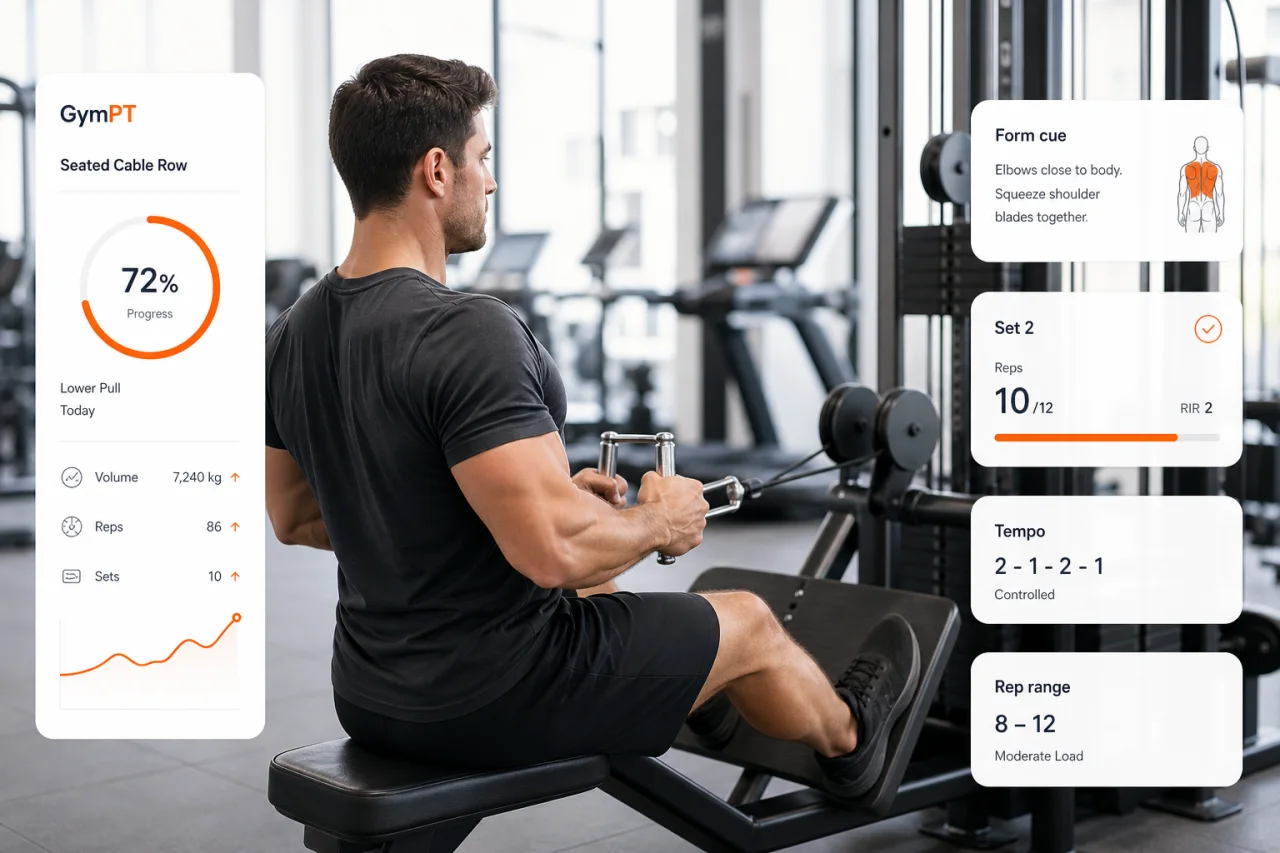
2. Seated cable row
The seated row is a strong horizontal pull for the mid-back, lats, and rear shoulders. It is one of the easiest ways to learn how to retract and control the shoulder blades without needing heavy free weights.
- Form cue: start by reaching forward, then pull the handle toward your lower ribs.
- Common mistake: jerking the torso backward to finish the rep.
- Beginner swap: use a chest-supported machine row if you struggle to keep your torso still.
3. Chest-supported row
A chest-supported row reduces cheating because your torso is braced. That makes it a great choice if you want to train the upper back hard without turning the set into a lower-back endurance test.
- Form cue: keep your chest on the pad and drive elbows back in a smooth arc.
- Common mistake: shrugging the shoulders up toward the ears.
- Beginner swap: use lighter dumbbells or a machine with a fixed path.
4. One-arm dumbbell row
The one-arm dumbbell row is useful for building lat strength and fixing side-to-side imbalances. It also gives you a clear path to learn how to pull with the elbow while keeping the torso stable.
- Form cue: let the shoulder blade reach at the bottom, then row toward the hip.
- Common mistake: twisting the body to move the weight.
- Beginner swap: support one hand and one knee on a bench for better balance.
5. Assisted pull-up or pull-up
Pull-ups are a classic back builder because they challenge vertical pulling with your own bodyweight. If full pull-ups are not there yet, assisted pull-ups let you practice the same pattern with less load.
- Form cue: start from a dead hang or controlled hang, then pull the chest up without kicking.
- Common mistake: cutting the range short and only doing half reps.
- Beginner swap: use a band-assisted version or an assisted pull-up machine.
6. Straight-arm pulldown
This is a great accessory move for teaching the lats to work without much elbow bend. It is often easier to feel than heavier compound pulls, which makes it useful in a back workout for mind-muscle connection and volume.
- Form cue: keep the arms long and pull the handle down by driving the shoulders from overhead to your sides.
- Common mistake: turning it into a triceps pressdown.
- Beginner swap: use a cable with a lighter load and slower tempo.
7. Reverse fly
The reverse fly targets the rear delts and upper back, which helps balance all the pressing many people do. It is not a main strength lift, but it is one of the best back exercises for posture-friendly upper-back work.
- Form cue: move the arms out and back with soft elbows and a steady torso.
- Common mistake: swinging the weights with momentum.
- Beginner swap: use a pec deck reverse fly machine for more stability.
8. Romanian deadlift
The Romanian deadlift trains the posterior chain, including the spinal erectors, glutes, and hamstrings. It is not a pure back isolation exercise, but it is valuable for building a strong hinge pattern and a more resilient lower back when performed well.
- Form cue: push the hips back, keep the spine long, and stop when hamstrings limit the descent.
- Common mistake: rounding the back to reach lower.
- Beginner swap: use dumbbells and a shorter range of motion first.
9. Back extension
Back extensions are a simple way to train the lower back with control. They are especially useful if you want to build endurance in the spinal erectors without loading a heavy barbell.
- Form cue: hinge at the hips and rise until your body is in a straight line.
- Common mistake: overextending at the top and cranking the low back.
- Beginner swap: do bodyweight reps first and hold a plate only after you own the movement.
How much back training do you need each week?
For most lifters, a good back workout plan starts with a manageable amount of weekly volume and builds from there. A practical target is 8 to 16 hard sets per week for the back, split across 2 or 3 sessions. Beginners can start lower, while more advanced lifters may need more total work if recovery is good.
A simple way to organize it:
- 2 vertical pull sets such as pulldowns or pull-ups
- 2 to 4 horizontal row sets such as cable rows or dumbbell rows
- 1 to 3 accessory sets such as reverse flys, straight-arm pulldowns, or back extensions
That structure gives you enough variety to train the whole back without making the session too long or too complicated. If your form breaks down, reduce the load before adding more sets. The NHS also recommends building up gradually rather than rushing repetition or load increases.
Best back exercises for beginners
If you are new to training, start with exercises that are stable, easy to learn, and simple to progress. The best beginner back exercises are usually:
- lat pulldown
- seated cable row
- chest-supported row
- reverse fly machine
- back extension
These choices reduce the amount of balance and technique noise, so you can focus on the actual back muscles. That matters because beginners often turn rows into biceps curls or deadlifts into lower-back-only lifts. A stable setup helps you learn the right pattern faster.
Form cues that make back exercises work better
Good back training is mostly about control. Use these cues during your next session:
- “Chest proud, ribs stacked.” Keep the torso tall without over-arching.
- “Elbows drive the pull.” Think about moving the elbows, not just the hands.
- “Reach, then pull.” Let the shoulder blades move naturally before each rep.
- “Slow on the way back.” The lowering phase should be controlled, not dropped.
For many people, the biggest improvement comes from reducing momentum. That lets the lats, mid-back, and rear shoulders do more of the work instead of the hips and lower back stealing the rep.
A simple back workout you can use today
If you want a straightforward back workout, try this:
- Lat pulldown — 3 sets of 8 to 12 reps
- Seated cable row — 3 sets of 8 to 12 reps
- Chest-supported row — 2 sets of 10 to 12 reps
- Straight-arm pulldown — 2 sets of 12 to 15 reps
- Back extension — 2 sets of 10 to 15 reps
Rest 60 to 120 seconds between sets depending on how hard you are working. If you finish every set with plenty left in the tank, add a little weight next time. If your last reps turn into body English, keep the load the same and clean up the movement first.
How GymPT can help you progress
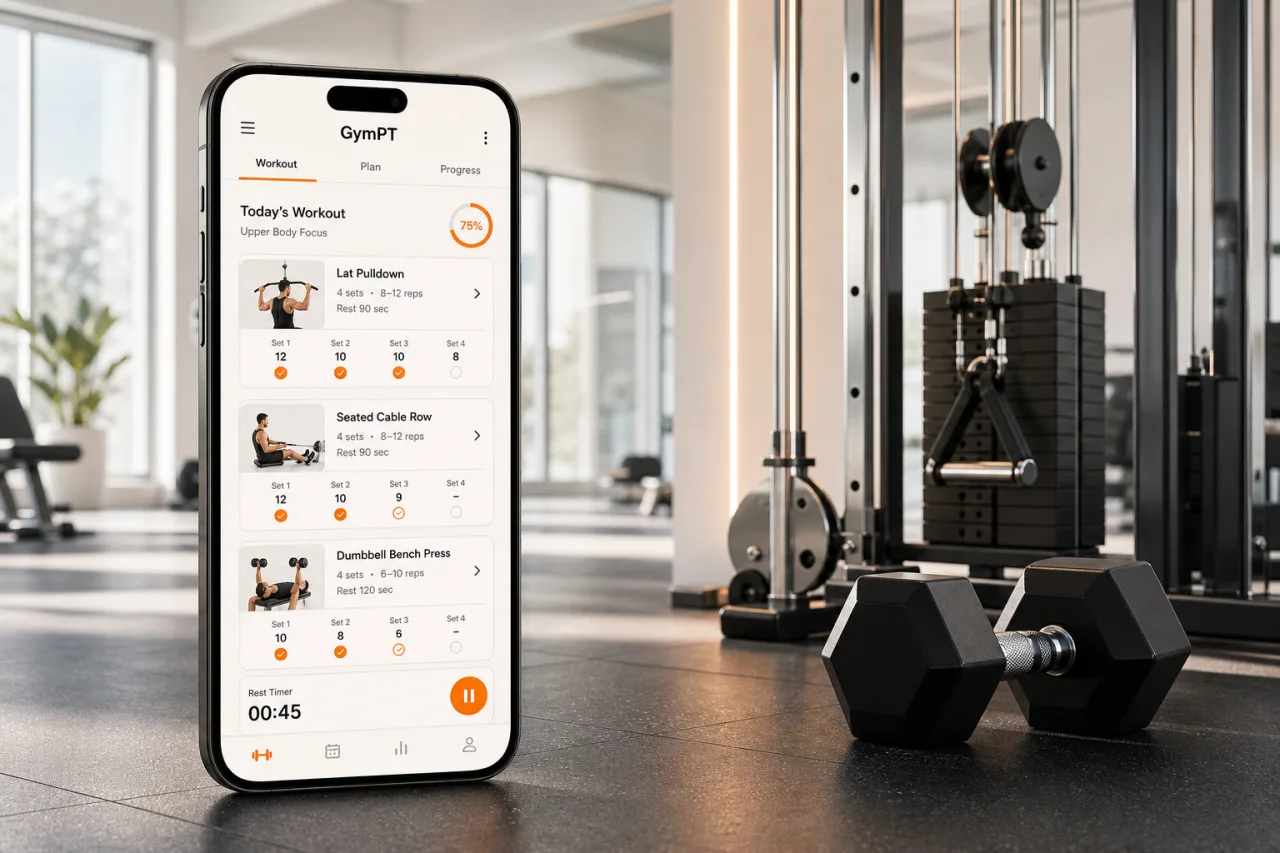
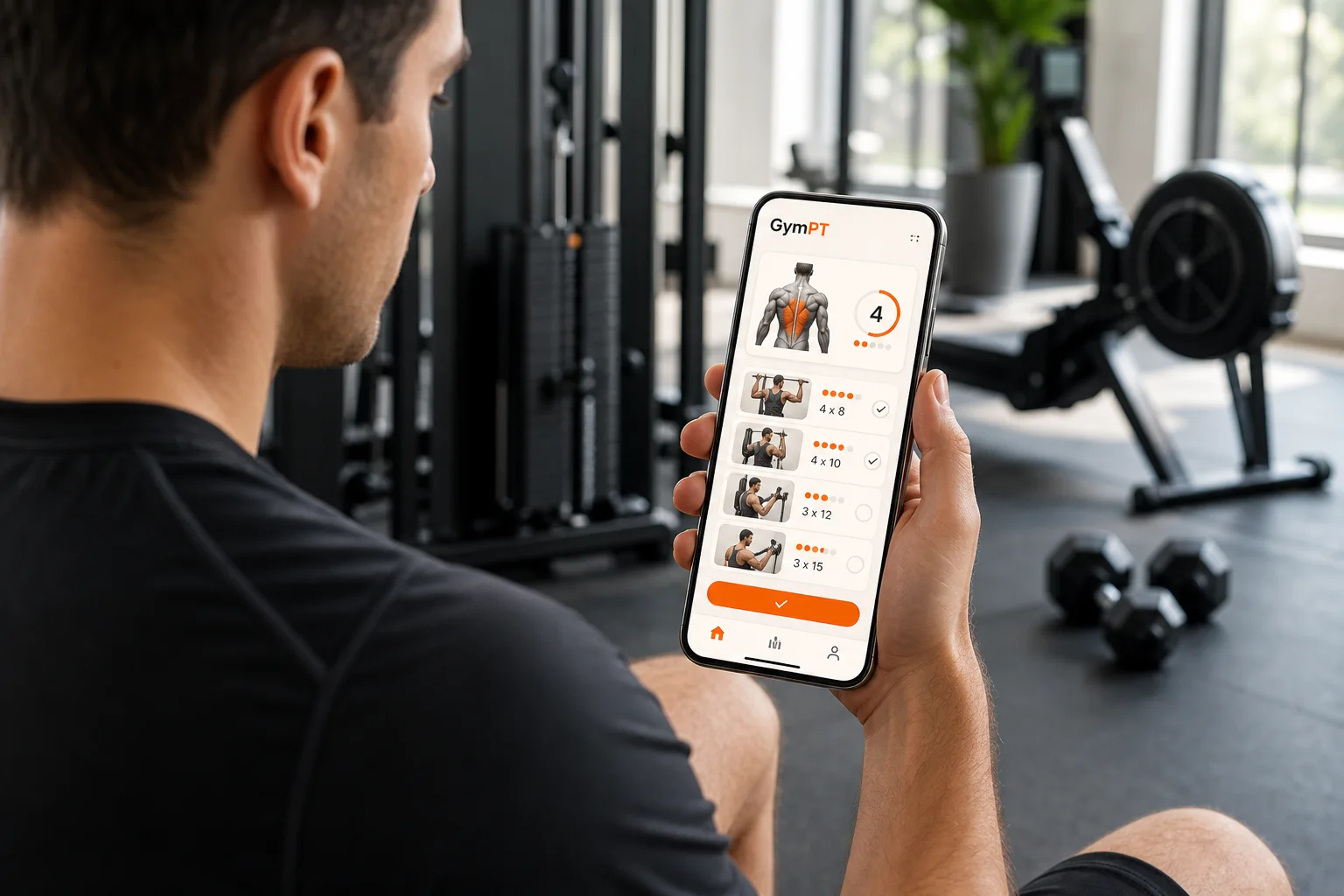
Back training works best when you can see what is improving. GymPT helps you turn a list of exercises into a real plan by matching movements to your equipment, tracking your reps and load, and showing progress over time. If you are unsure which back exercises fit your gym setup, the AI coach can help you choose a stable starting point and adjust it as you get stronger.
That is especially useful when you want to move from “I did a back day” to “I trained my back with a clear purpose.”
Final take
The best back exercises are the ones you can perform well, load consistently, and recover from. For most people, that means a mix of pulldowns, rows, rear-delt work, and a hinge or extension pattern. Start with stable variations, keep your reps controlled, and add volume only when your form stays solid. That is how you build a stronger back without wasting effort.