best legs exercises
Best Legs Exercises: 11 Smart Moves for Stronger Quads, Glutes, and Hamstrings
A practical guide to the best legs exercises, with clear form cues, beginner-friendly swaps, and simple programming tips you can actually use.
Best legs exercises for stronger, more balanced lower-body training
If you want the best legs exercises, the goal is not just to feel tired after leg day. The goal is to train the major lower-body muscles well: quads, glutes, hamstrings, calves, and the muscles that help you control your hips and knees. A good leg session should build strength, improve movement quality, and be easy to progress over time.
For most adults, muscle-strengthening training belongs in the weekly plan at least two days per week, alongside regular physical activity. That makes leg training useful not only for physique goals, but also for everyday function like climbing stairs, carrying groceries, and getting up from a chair.
Below are 11 of the best legs exercises, plus form cues, volume tips, and beginner-friendly alternatives so you can train with confidence.
1. Squat
The squat is one of the most useful lower-body patterns because it trains the quads and glutes while also challenging core control. It is a foundation exercise for many leg programs.
Form cues
- Keep your feet about shoulder-width apart.
- Brace your torso before you descend.
- Let your knees track in line with your toes.
- Lower with control, then stand by driving through the midfoot.
Beginner alternative
Use a box squat or sit-to-stand from a bench if depth or balance is still developing.
2. Romanian deadlift
The Romanian deadlift is one of the best hamstring exercises because it trains hip hinge strength and loads the back side of the legs without needing a deep knee bend.
Form cues
- Push your hips back instead of squatting down.
- Keep a soft bend in the knees.
- Maintain a long spine and neutral neck.
- Stop when you feel a strong hamstring stretch without losing position.
Beginner alternative
Try a dumbbell Romanian deadlift with a shorter range of motion.
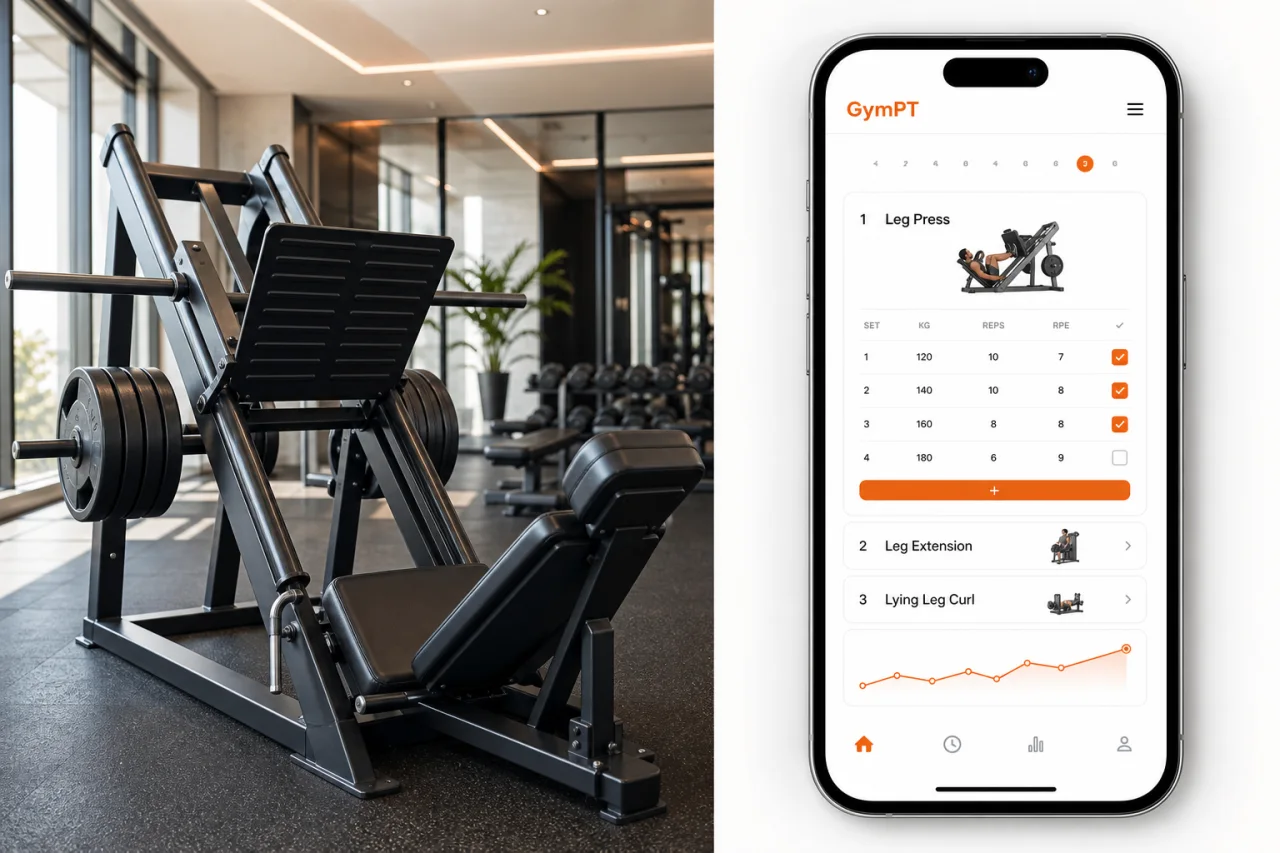
3. Leg press
The leg press is a strong option when you want guided lower-body loading. It is especially useful for building quad strength with less balance demand than free-weight squats.
Form cues
- Place your feet flat and evenly on the platform.
- Lower the sled under control.
- Do not lock out aggressively at the top.
- Keep your lower back from rounding off the pad.
Beginner alternative
Use a lighter load and a controlled tempo before adding weight.
4. Walking lunge
Walking lunges train the quads, glutes, and stability muscles at the same time. They are excellent for single-leg control and can expose side-to-side differences.
Form cues
- Take a long enough step to keep the front heel down.
- Drop the back knee toward the floor with control.
- Keep your torso tall and steady.
- Push through the front foot to stand and step forward.
Beginner alternative
Use reverse lunges first if walking lunges feel too unstable.
5. Bulgarian split squat
This is one of the most effective unilateral leg day exercises for quads and glutes. It is tough, but it gives you a lot of training value with relatively light loads.
Form cues
- Set the back foot on a bench or box.
- Keep most of your weight on the front leg.
- Lower straight down instead of lunging forward.
- Use a controlled bottom position before driving up.
Beginner alternative
Start with a split squat on the floor before elevating the rear foot.
6. Step-up
Step-ups are simple, joint-friendly, and very practical. They train the quads and glutes while reinforcing single-leg balance and force production.
Form cues
- Choose a box height that lets you keep control.
- Place the whole foot on the step.
- Lean slightly forward from the hips if needed.
- Stand up by driving through the working leg, not by jumping off the back leg.
Beginner alternative
Use a lower step and hold onto a support if balance is the limiting factor.
7. Hip thrust
The hip thrust is a strong glute-focused exercise that also supports better hip extension strength. It pairs well with squat patterns when you want a more complete lower-body plan.
Form cues
- Set your upper back on a bench.
- Keep your chin tucked slightly.
- Drive through the heels and squeeze the glutes at the top.
- Avoid over-arching the lower back.
Beginner alternative
Use a glute bridge on the floor before moving to a bench setup.
8. Leg curl
Leg curls directly target the hamstrings, which makes them a useful complement to hinge work like Romanian deadlifts. They help round out posterior-chain training.
Form cues
- Keep your hips anchored to the pad.
- Move through a smooth, controlled range.
- Pause briefly at the top if you can keep tension.
- Lower slowly instead of letting the weight drop.
Beginner alternative
Use a lighter machine setting or a stability-ball hamstring curl.
9. Goblet squat
The goblet squat is one of the best beginner-friendly leg exercises because the front-loaded position helps many people stay upright and learn squat mechanics.
Form cues
- Hold the weight close to your chest.
- Keep elbows pointed down.
- Stay tall through the torso.
- Use a smooth, repeatable depth.
Beginner alternative
If needed, use a lighter dumbbell or no load at all while learning the pattern.
10. Calf raise
Calf raises are easy to overlook, but they matter for ankle strength, lower-leg balance, and complete leg development. They also fit well at the end of a workout.
Form cues
- Use a full stretch at the bottom.
- Rise as high as you can without bouncing.
- Pause briefly at the top.
- Keep the movement smooth and controlled.
Beginner alternative
Do bodyweight calf raises on a step or flat floor.
11. Reverse lunge
Reverse lunges are often easier to control than forward lunges, which makes them a smart choice for beginners. They still train the quads and glutes well.
Form cues
- Step back softly and keep your front foot planted.
- Lower under control.
- Keep your front knee tracking over the toes.
- Drive up through the front leg.
Beginner alternative
Hold onto a rack or wall for balance if needed.
How many sets and reps should you do?
A simple way to program leg training is to start with 2 to 4 sets per exercise and use a rep range that matches the movement. For most beginners, 6 to 12 reps works well on compound lifts, while 10 to 15 reps can be useful for machine work and isolation exercises. If you are new to training, even lower volumes can be effective at first, as long as the sets are challenging and your form stays solid.
- Compound lifts: 2 to 4 sets of 6 to 10 reps
- Machine or isolation work: 2 to 4 sets of 10 to 15 reps
- Rest periods: 1.5 to 3 minutes for hard compound sets, 60 to 90 seconds for smaller movements
For most people, the best plan is not to do every exercise in one session. Pick 4 to 6 movements, train them well, and progress gradually.
How to build a smart leg day
A balanced leg day usually includes one squat pattern, one hinge pattern, one unilateral movement, one glute exercise, and one or two accessories. That gives you coverage without turning the workout into a marathon.
- Start with a squat or leg press.
- Add a hinge like a Romanian deadlift.
- Include a single-leg exercise such as a lunge or step-up.
- Finish with glute and hamstring accessories.
- End with calves if you want complete lower-leg work.
If you train legs twice per week, you can split the emphasis. For example, one day can be quad-dominant and the other can focus more on glutes and hamstrings.
Common leg training mistakes to avoid
- Using too much weight too soon: This usually shortens range of motion and reduces control.
- Skipping unilateral work: Single-leg training helps expose imbalances and improves stability.
- Only doing squat patterns: Your hamstrings need direct work too.
- Rushing reps: Controlled lowering usually improves technique and tension.
- Never tracking progress: If you do not record sets, reps, and load, it is hard to improve.
How GymPT can help you train legs better
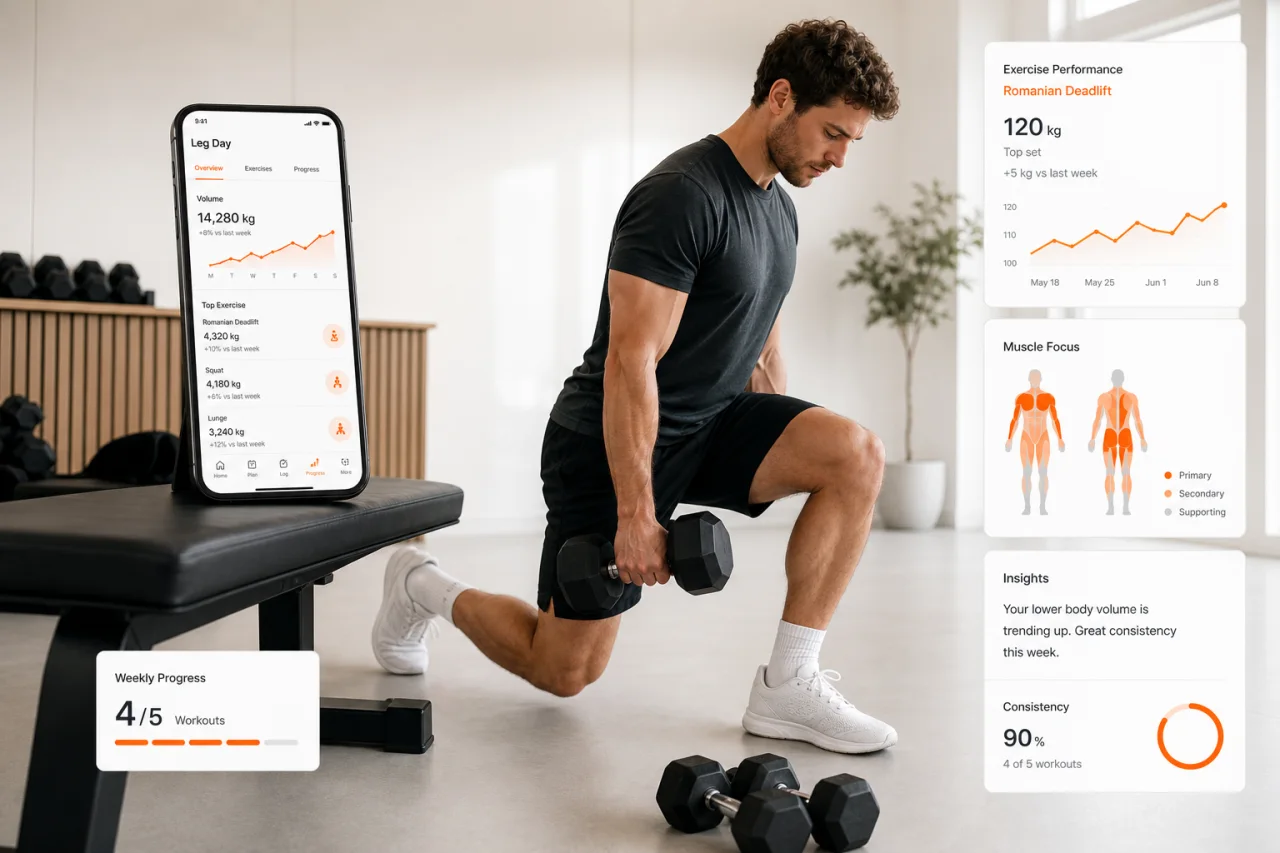
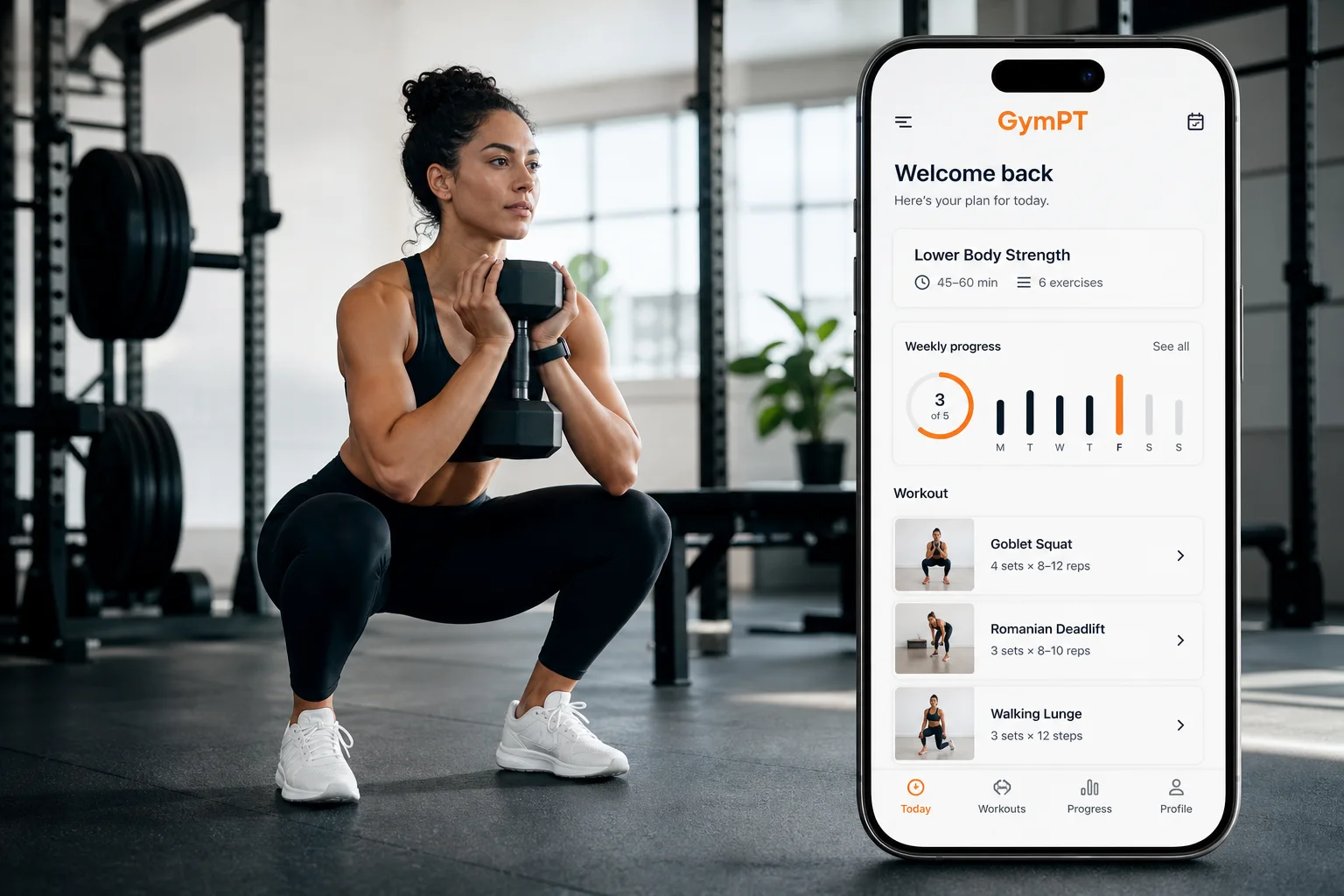
GymPT can turn these best legs exercises into a personalized plan based on your goal, equipment, and experience level. You can ask the AI coach for exercise swaps, track your workouts, and review progress insights to see whether your leg training is actually moving forward.
If you want a smarter lower-body routine, use GymPT to match the workout to your gym setup, then adjust volume and exercise selection as you improve.
Final takeaway
The best leg exercises are the ones you can perform with good form, recover from consistently, and progress over time. Build around squat patterns, hinges, unilateral work, and a few accessories, then keep the plan simple enough to repeat. That is how leg day becomes real training instead of random effort.