best glutes exercises
Best Glutes Exercises: 11 Moves That Build Stronger, Rounder Glutes
A practical guide to the best glutes exercises, with coaching cues, programming tips, and easier alternatives for beginners.
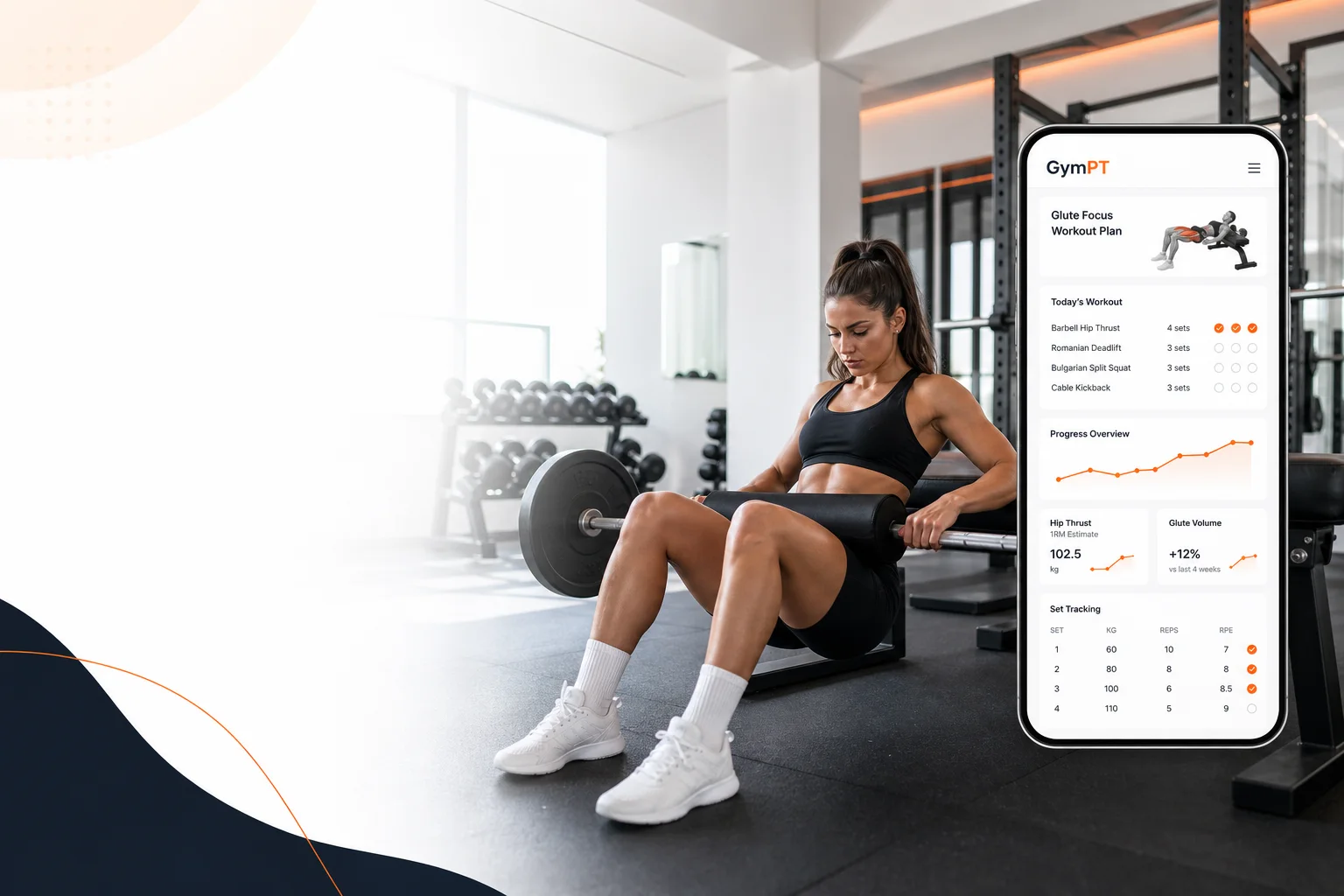
Best glutes exercises: what actually works
If you want stronger, more developed glutes, the best glutes exercises are the ones that train hip extension, single-leg stability, and controlled range of motion. In practice, that means combining thrusts, hinges, squats, lunges, and abduction work instead of relying on one “magic” move.
Research and coaching guidelines point to exercises like hip thrusts, deadlift variations, split squats, step-ups, and squats as strong options for glute development. The key is not just exercise choice, but how you load, cue, and progress them over time.
GymPT can help you turn that into a plan that matches your equipment, experience, and weekly schedule.
The 11 best glutes exercises
Use this list as a menu. You do not need all 11 in one workout. Pick 4 to 6 that cover different movement patterns.
1. Barbell hip thrust
The hip thrust is one of the most effective glute builders because it loads hip extension hard while keeping the torso supported. Keep your ribs down, chin tucked, and pelvis controlled at the top. Finish with a strong glute squeeze, not a low-back arch.
Beginner alternative: dumbbell hip thrust or glute bridge.
2. Glute bridge
The glute bridge is a simpler version of the hip thrust and a great starting point for beginners. Keep your feet flat, drive through midfoot and heel, and pause briefly at the top without overextending your spine.
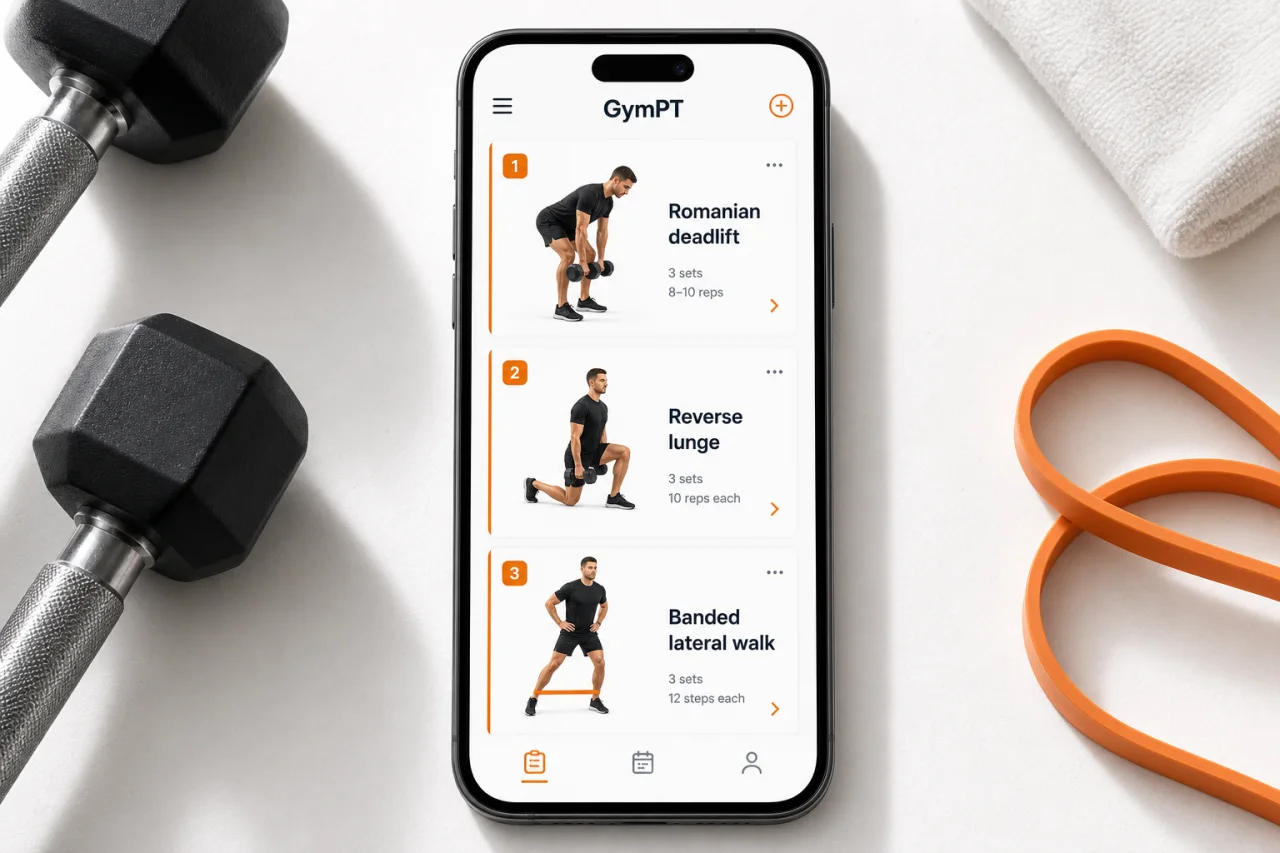
3. Romanian deadlift
The Romanian deadlift trains the glutes through a loaded hip hinge. Push your hips back, keep a soft knee bend, and maintain a long spine as the weight travels close to your legs. You should feel tension in the glutes and hamstrings, not your lower back.
Beginner alternative: dumbbell RDL with a shorter range of motion.
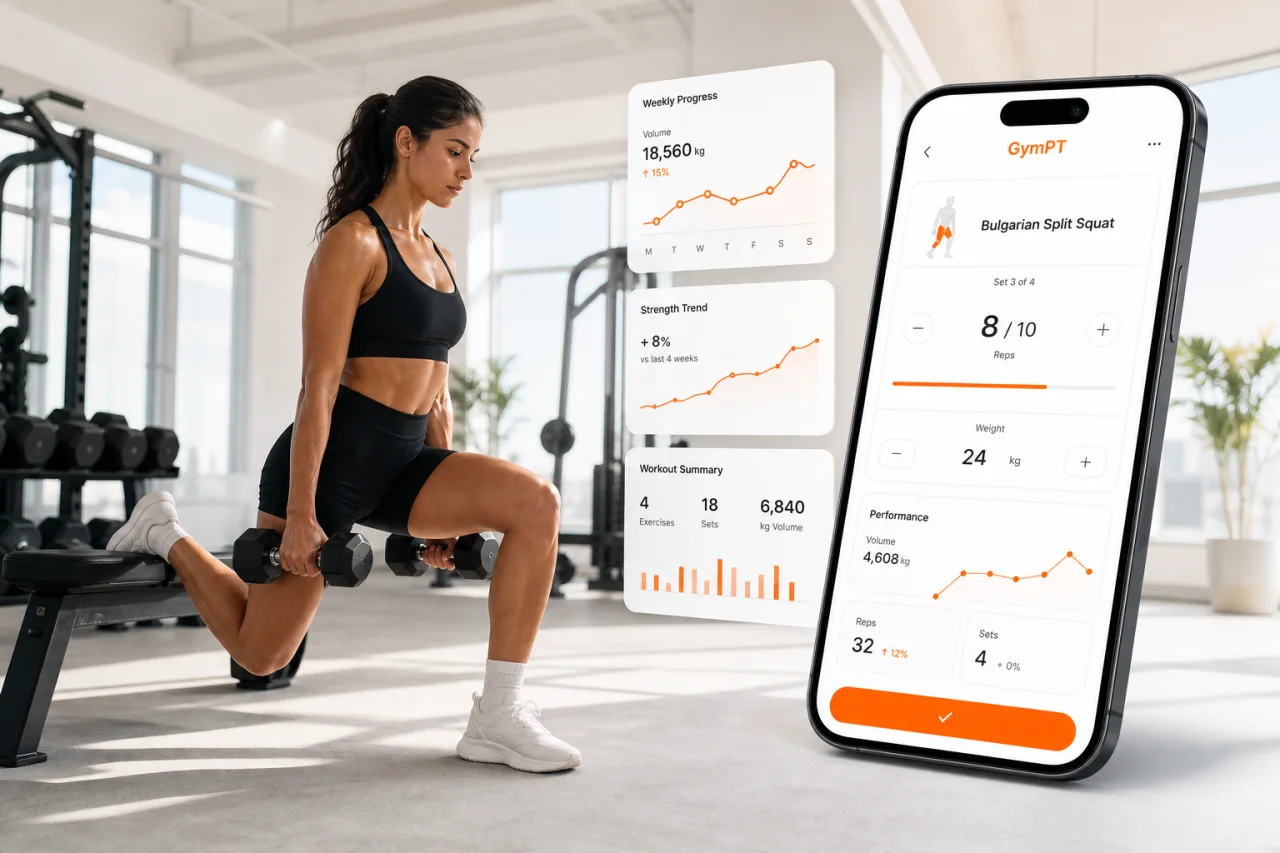
4. Bulgarian split squat
This single-leg exercise is excellent for glute growth and balance. Take a long enough stance so your front heel stays grounded and your torso can lean slightly forward. Lower under control and drive up through the front leg.
Beginner alternative: regular split squat or reverse lunge.
5. Step-up
Step-ups are a practical glute exercise because they train hip extension and pelvic control at the same time. Use a box height that lets you keep the working foot fully planted. Avoid pushing off too much with the trailing leg.
6. Reverse lunge
Reverse lunges are often easier to control than forward lunges. Step back, keep your front foot stable, and let the front glute do the work as you stand up. A slight forward torso lean can help shift more work to the glutes.
7. Squat
Squats are not only a quad exercise. With good depth and control, they can train the glutes well too. Sit between your hips, keep your feet rooted, and avoid collapsing at the bottom. If your goal is glute emphasis, use a stance and depth you can control consistently.
For a deeper breakdown of squat mechanics, see our squat form guide.
8. Cable kickback
Cable kickbacks are useful as a lighter isolation exercise. Keep your pelvis square, move through the hip rather than the lower back, and stop the rep before momentum takes over.
9. Cable pull-through
The pull-through is a hinge pattern that teaches glute loading without the same spinal demand as some barbell lifts. Keep the cable low, hinge back, then stand tall by squeezing the glutes.
10. Banded lateral walk
This is a simple way to train the glute medius, which helps with hip stability. Keep constant tension on the band, stay low enough to feel the side glutes, and avoid rocking side to side.
11. Single-leg glute bridge
This bodyweight move is excellent for beginners or home workouts. It challenges each side independently and can expose strength differences. Keep the pelvis level and avoid twisting as you lift.
How to choose the right glute exercises for your goal
The best glute workout is usually built from three categories:
- Heavy hip extension: hip thrusts, RDLs, pull-throughs
- Single-leg work: split squats, step-ups, reverse lunges
- Stability and isolation: band walks, kickbacks, bridges
If you are a beginner, start with bridges, goblet squats, reverse lunges, and dumbbell RDLs. If you are more advanced, add heavier thrusts, longer-range split squats, and more precise progression.
Form cues that make glute exercises work better
Small technique changes can make a big difference in whether you feel the glutes or just your quads and lower back.
- Use a full foot: keep pressure through heel and midfoot.
- Control the lowering phase: 2 to 3 seconds is a good target on many lifts.
- Keep the pelvis stable: avoid rotating or arching to “fake” the rep.
- Choose the right stance: longer stances often bias the glutes more in split squats and lunges.
- Finish with the glutes, not the spine: the top of a thrust or bridge should feel like hip extension, not a back bend.
If you are not sure whether your form is actually good, GymPT’s AI coach chat can help you review cues and adjust your setup.
How much glute training do you need?
For most people, glutes respond well to moderate-to-high weekly volume spread across 2 to 3 sessions. A practical starting point is 8 to 16 hard sets per week for the glutes, depending on experience, recovery, and how much lower-body work you already do.
Beginners usually grow well on the lower end of that range. More advanced lifters often need more total work, but only if they can recover and keep technique clean. If your performance drops hard from one session to the next, volume may be too high.
A simple rep guide:
- Heavy compounds: 5 to 8 reps
- Moderate hypertrophy work: 8 to 12 reps
- Isolation or band work: 12 to 20 reps
Rest long enough to keep quality high: usually 1.5 to 3 minutes for compound lifts and 45 to 90 seconds for lighter accessory work.
A simple beginner glute workout
Try this if you want a straightforward session using the best glutes exercises without overcomplicating things:
- Glute bridge — 3 sets of 10 to 15
- Dumbbell Romanian deadlift — 3 sets of 8 to 10
- Reverse lunge — 3 sets of 8 to 10 per leg
- Banded lateral walk — 2 sets of 15 to 20 steps per side
- Single-leg glute bridge — 2 sets of 8 to 12 per side
Train this workout 2 times per week, then progress by adding reps first, then load, then an extra set if recovery stays good.
For a full beginner-friendly structure, you can also read our glutes workout for beginners and glute workout plan.
Common mistakes that reduce glute growth
- Using too much lower-back extension: especially on thrusts and bridges.
- Cutting range of motion short: if you can control more depth, use it.
- Going too heavy too soon: this usually turns glute work into momentum work.
- Ignoring unilateral training: one side may be doing more than the other.
- Never tracking progress: if you do not log sets, reps, and load, it is hard to know what is working.
That is where GymPT helps: it can track your workouts, show progress trends, and adjust your plan based on what you actually completed.
How to progress your glute training safely
Progress should be boring and repeatable. Pick one main lift to improve for 4 to 6 weeks, then make small changes.
- Add 1 rep per set until you reach the top of your target range.
- Increase load by the smallest useful jump.
- Add one set only if recovery and technique stay solid.
- Swap one exercise if progress stalls or joints feel irritated.
If you want a smarter way to manage that process, GymPT’s personalized workout plans and progress insights can help you keep the plan challenging without guessing.
Final take
The best glutes exercises are not just the ones that look popular online. They are the ones you can perform with good form, recover from, and progress over time. Build your week around hip thrusts or bridges, hinges, single-leg work, and a little isolation work, then track the numbers that matter.
Do that consistently, and your glute training becomes much more effective.