glutes workout for beginners
Glutes Workout for Beginners: A Simple, Effective Plan That Actually Builds Shape and Strength
A beginner-friendly glutes workout should be simple, stable, and progressive. Learn the best exercises, form cues, weekly volume, and easy alternatives.
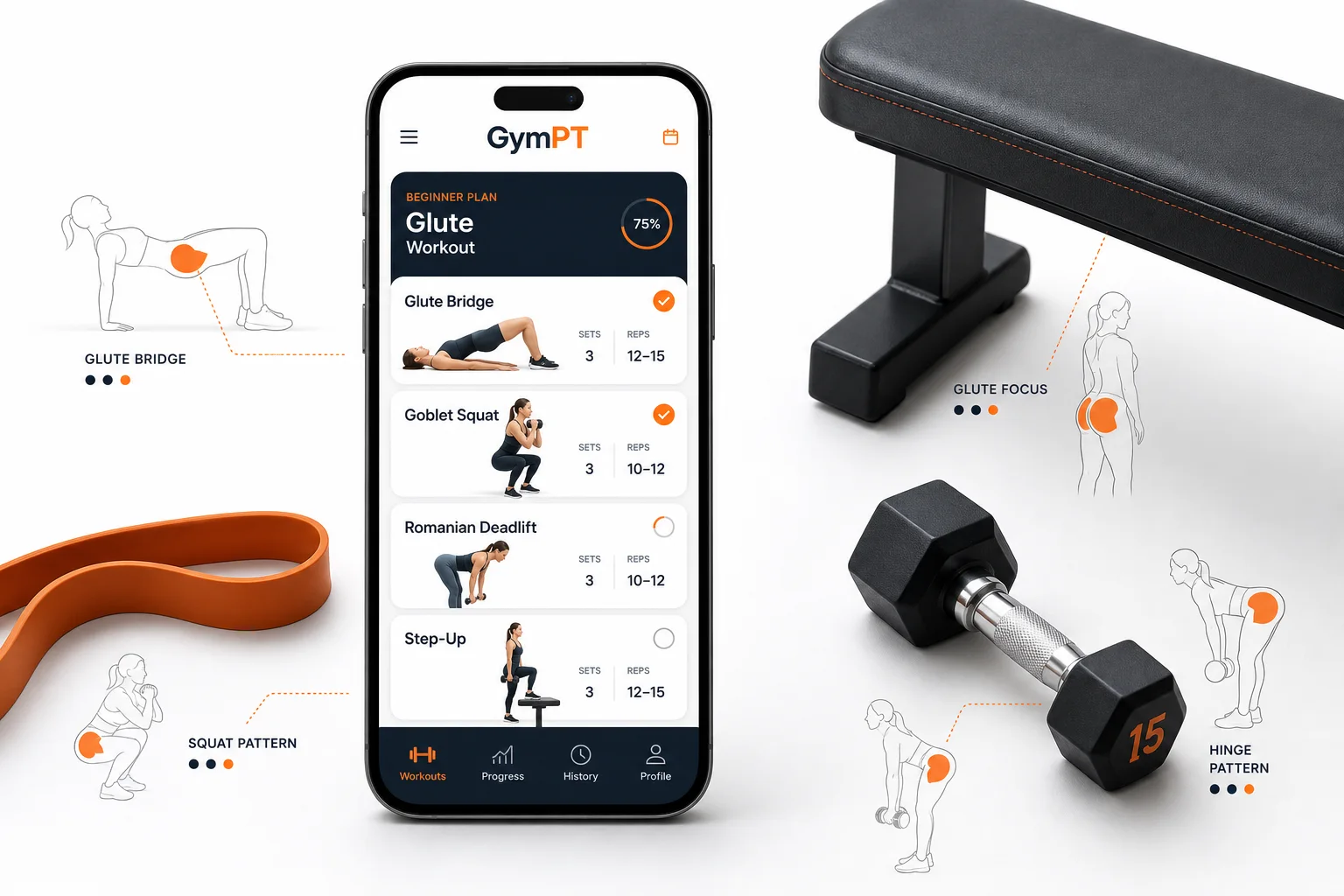
Glutes Workout for Beginners: Start Simple, Then Progress
If you want a glutes workout for beginners that actually works, the goal is not to do the most exercises. The goal is to train the glutes with good form, enough weekly volume, and movements you can repeat consistently. For beginners, that usually means starting with stable exercises, learning how to hinge and bridge properly, and adding load only after the movement feels controlled.
The glutes are a large muscle group that help with hip extension, standing up from a squat, climbing stairs, and stabilizing the pelvis during walking and running. A beginner plan should build those patterns without overwhelming your recovery or technique. Recent resistance-training guidance also continues to support simple, repeatable programming with a small number of sets per exercise and steady progression over time.
What Makes a Good Beginner Glute Workout?
A good beginner glute session should do three things:
- Teach the main movement patterns: bridge, squat, hinge, and step.
- Keep technique clean: stable setup, controlled range of motion, no rushing.
- Use enough volume: usually 2 to 3 sets per exercise is a practical starting point for most beginners.
That is why beginner glute training often works best with a mix of bodyweight, dumbbells, bands, or machines. Stable exercises let you feel the target muscles without needing advanced coordination.
Best Beginner Glute Exercises
These are the most useful beginner glute exercises because they are easy to learn and easy to progress.
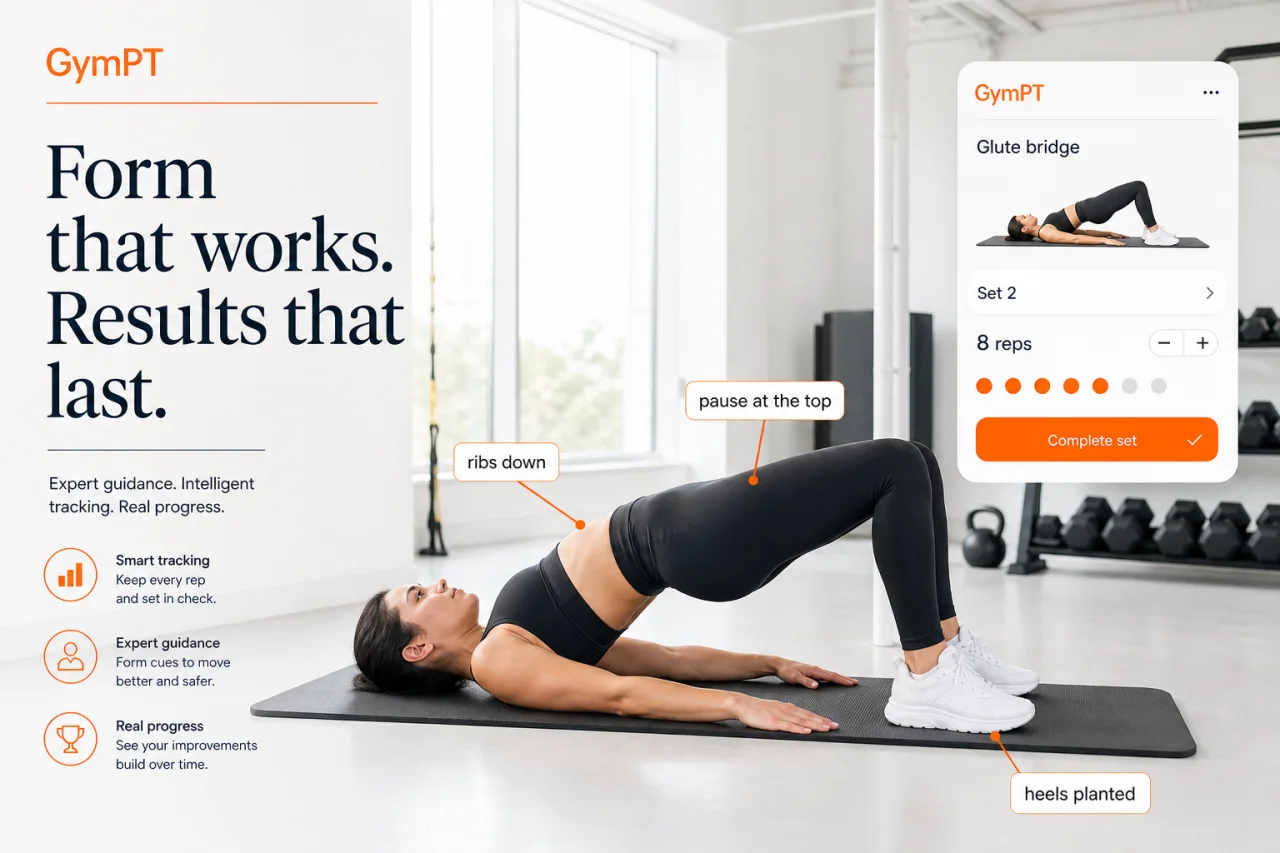
1. Glute Bridge
The glute bridge is one of the best starting points because it teaches hip extension without much balance demand.
- Lie on your back with knees bent and feet flat.
- Brace your core lightly.
- Drive through your heels and lift your hips until your body forms a straight line from shoulders to knees.
- Pause briefly at the top, then lower with control.
Form cue: keep your ribs down and avoid arching your lower back to finish the rep.
Beginner option: bodyweight only.
Progression: add a dumbbell across the hips or use a mini band above the knees.
2. Goblet Squat to Box or Bench
This version of the squat gives you a clear depth target and helps you stay controlled.
- Hold one dumbbell at chest height.
- Sit back to a box or bench.
- Keep your chest tall and knees tracking in line with your toes.
- Stand by pushing the floor away.
Form cue: think “sit between the hips,” not “fold forward.”
Beginner option: bodyweight box squat.
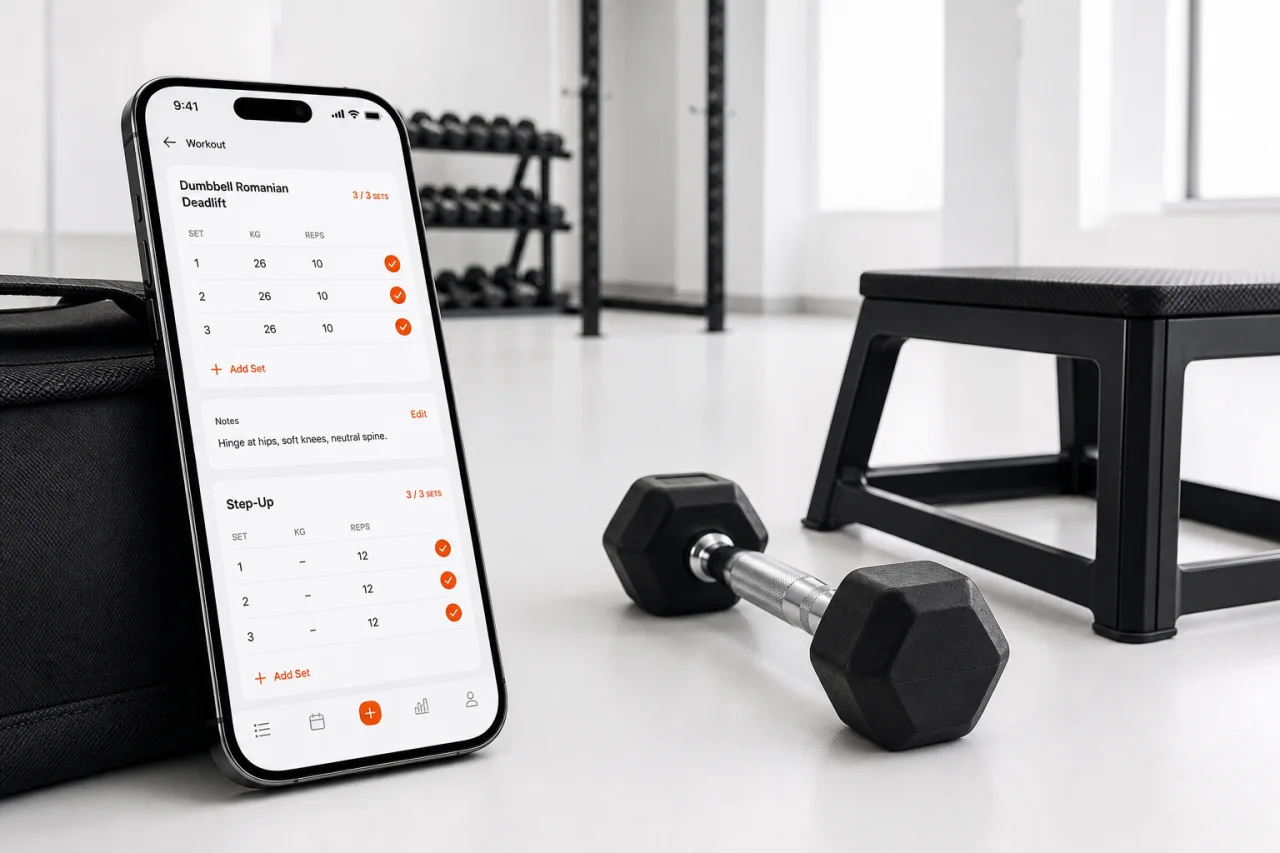
3. Romanian Deadlift with Dumbbells
This teaches the hip hinge, which is essential for glute and hamstring development.
- Stand tall with dumbbells in front of your thighs.
- Push your hips back while keeping a soft knee bend.
- Lower the weights until you feel a stretch in the back of the legs.
- Drive the hips forward to stand up.
Form cue: the movement should come from the hips, not from bending the knees more and more.
Beginner option: practice the hinge with no weight first.
4. Step-Up
Step-ups train the glutes in a single-leg pattern and are great for building control.
- Use a low box or step.
- Place the whole foot on the platform.
- Lean slightly forward and drive through the working heel.
- Stand tall at the top, then lower slowly.
Form cue: avoid pushing off hard with the trailing leg.
5. Hip Thrust or Machine Glute Drive
If your gym has a hip thrust setup or glute drive machine, this can be a strong beginner option because it is stable and easy to load gradually.
- Set your upper back on the bench or machine pad.
- Keep your chin slightly tucked.
- Lift until your torso is parallel to the floor.
- Pause and squeeze the glutes before lowering.
Form cue: finish the rep with glutes, not by overextending your lower back.
How Many Sets and Reps Should Beginners Do?
For a beginner glute routine, a simple starting point is:
- 2 to 3 sets per exercise
- 8 to 12 reps for most moves
- 10 to 15 reps for bridges, bands, and lighter accessory work
- 1 to 2 reps in reserve on most sets, so you stop before form breaks down
That usually gives enough stimulus to learn the movement and build strength without turning every workout into a grind. If you are brand new, start on the lower end of the range and add reps before adding weight.
A Simple 2-Day Glutes Workout for Beginners
Here is a practical weekly structure you can repeat for 4 to 6 weeks.
Day 1: Glute Strength Basics
- Glute Bridge — 3 sets of 10 to 12 reps
- Goblet Squat to Box — 3 sets of 8 to 10 reps
- Dumbbell Romanian Deadlift — 2 sets of 8 to 10 reps
- Side-Lying Clamshell or Mini-Band Abduction — 2 sets of 12 to 15 reps
Day 2: Glute Control and Single-Leg Work
- Hip Thrust or Machine Glute Drive — 3 sets of 8 to 12 reps
- Step-Up — 2 to 3 sets of 8 reps per leg
- Bodyweight Split Squat — 2 sets of 8 to 10 reps per leg
- Frog Pump or Banded Glute Bridge — 2 sets of 15 reps
If two lower-body days feel like too much at first, reduce each workout to three exercises and keep the same movement patterns.
How to Feel the Glutes More Without Overthinking It
Many beginners worry that they are not “activating” the glutes enough. In practice, the best fix is usually better setup and cleaner reps, not endless activation drills.
- Use a full but controlled range of motion.
- Pause briefly at the top of bridges and thrusts.
- Keep your feet planted and pressure through the heel and midfoot.
- Slow the lowering phase for 2 to 3 seconds.
- Choose a load that lets you stay stable and repeatable.
If you still feel the movement mostly in your lower back or quads, reduce the load and check your posture, foot placement, and torso angle.
Common Beginner Mistakes to Avoid
- Going too heavy too soon and losing control of the rep.
- Rushing through bridges and thrusts without a pause at the top.
- Turning every exercise into a squat instead of learning the hip hinge.
- Using too much range if it causes pelvic tilt or lower-back compensation.
- Changing exercises every session instead of practicing the same basics long enough to improve.
How to Progress Your Glute Training Safely
Progress should be boring in the best way. Pick one method at a time:
- Add 1 to 2 reps per set until you reach the top of the range.
- Then increase the weight slightly and return to the lower end of the range.
- Or add one extra set to one exercise if recovery is good.
For most beginners, training glutes 2 times per week is a smart starting point. That gives you enough practice to improve technique while still leaving time to recover.
How GymPT Can Help You Build a Better Glute Plan
GymPT makes beginner training easier by turning these principles into a plan you can actually follow. You can use it to build a glute-focused routine based on your equipment, track your workouts, and see whether your volume is progressing week to week. If you are unsure about exercise selection, the AI coach chat can help you choose a safer variation, adjust reps, or swap in a machine-based alternative when needed.
That matters because the best glute workout is the one you can repeat consistently, recover from, and improve over time.
Quick Beginner Glute Workout Summary
- Start with bridges, squats, hinges, step-ups, and thrusts.
- Use 2 to 3 sets per exercise.
- Stay in the 8 to 12 rep range for most lifts.
- Train glutes about 2 times per week.
- Progress slowly and keep form clean.
If you want stronger glutes, do not chase complexity. Build a simple routine, repeat it, and add a little more work only when your form is solid.