squat form guide
Squat Form Guide: How to Squat Better, Safer, and More Consistently
A practical squat form guide with setup cues, common mistakes, and easy alternatives you can use to improve your reps and train with more confidence.
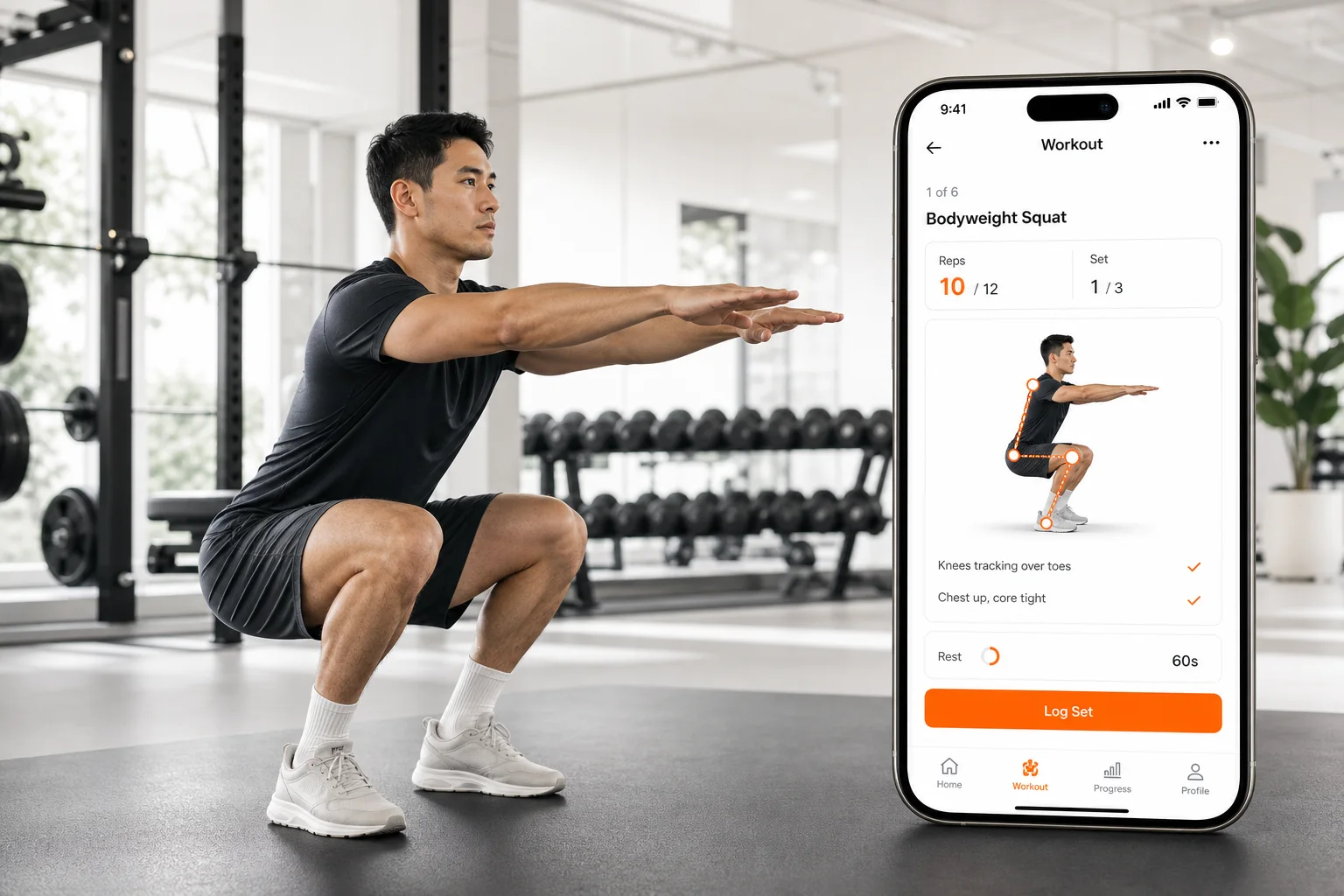
Squat Form Guide: Build a Better Rep From the Ground Up
If you want stronger legs, better glutes, and a more useful lower-body pattern, a good squat form guide should do more than tell you to “sit down and stand up.” The squat is a compound movement, so small setup choices change how stable, deep, and repeatable each rep feels. This guide gives you clear cues, common mistakes, and practical alternatives so you can train with better control.
GymPT can help you turn these cues into a repeatable plan: log your squat sessions, adjust load based on performance, and use AI coach chat to troubleshoot form when a rep starts to feel off.
What a good squat should look and feel like
There is no single perfect squat style for every body, but a solid rep usually shares the same basics: balanced feet, a stable torso, knees that track in a controlled path, and a depth you can own without losing position. The goal is not to force a textbook pose. The goal is to repeat a strong pattern.
- Feet: planted and stable, with pressure spread across the whole foot.
- Torso: braced, not loose or over-arched.
- Knees: moving in line with your toes instead of collapsing inward.
- Depth: as low as you can go while keeping control and a neutral spine.
- Bar or load path: steady, without drifting forward or forcing you to tip over.
That is the standard to aim for whether you are doing bodyweight squats, goblet squats, or barbell squats.
How to set up your squat
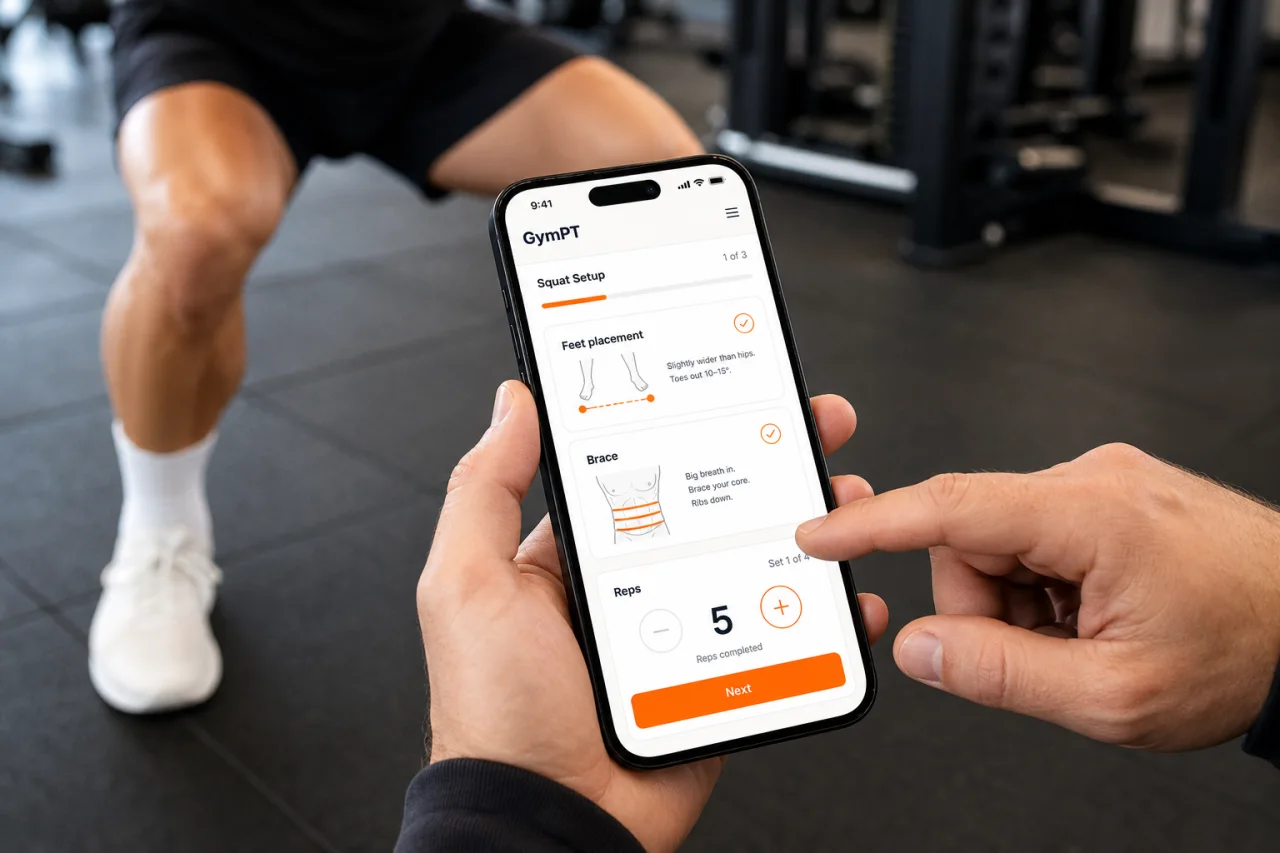
1. Start with your feet
Place your feet about shoulder-width apart, then adjust slightly wider or narrower if your hips feel better that way. Turn your toes out a little if it helps your knees and hips move smoothly. Before you descend, feel the floor under your big toe, little toe, and heel.
2. Brace before you move
Take a breath into your midsection and tighten your trunk before the descent. A good brace helps you stay organized through the whole rep. Think “ribs stacked over pelvis,” not “chest up at all costs.”
3. Sit between your hips, not just straight down
As you lower, let your knees bend and your hips travel back enough to keep balance. The exact torso angle will vary by body type and squat style, but you should still feel controlled rather than folded in half.
4. Drive up through the whole foot
On the way up, push the floor away evenly. If your heels pop up or your weight shifts hard to your toes, the load is probably too heavy, your stance is off, or your depth is deeper than you can currently control.
Common squat mistakes and how to fix them
Most squat problems are not random. They usually come from a setup issue, a mobility limit, or a load that is too ambitious for your current pattern.
Knees cave inward
This often happens when the feet lose pressure or the hips stop controlling the descent. Try a slightly slower lowering phase, keep the knees moving in the same direction as the toes, and reduce the load until the pattern looks cleaner.
Heels lift off the floor
If your heels rise, check your stance width, toe angle, and ankle mobility. A small heel wedge or weightlifting shoe can help some lifters, but only if it improves control rather than masking a bigger issue.
Chest collapses forward
This usually means the brace is weak, the bar or load is too far forward, or the squat is too heavy for your current strength. Use a lighter load and think about keeping your torso organized instead of forcing it upright.
Depth changes rep to rep
Inconsistent depth often means you are rushing. Slow the descent, pause briefly at the bottom if needed, and use a depth target you can repeat with confidence.
Lower back takes over
If your squat feels like a back exercise, reduce the load and check whether you are losing brace or overextending at the top. A cleaner rep should feel like the legs and hips are doing the work together.
How to choose the right squat variation
The best squat variation is the one that lets you practice good mechanics now and progress later. If a barbell back squat is not yet smooth, start with a version that gives you more control.
- Bodyweight squat: best for learning the pattern and building confidence.
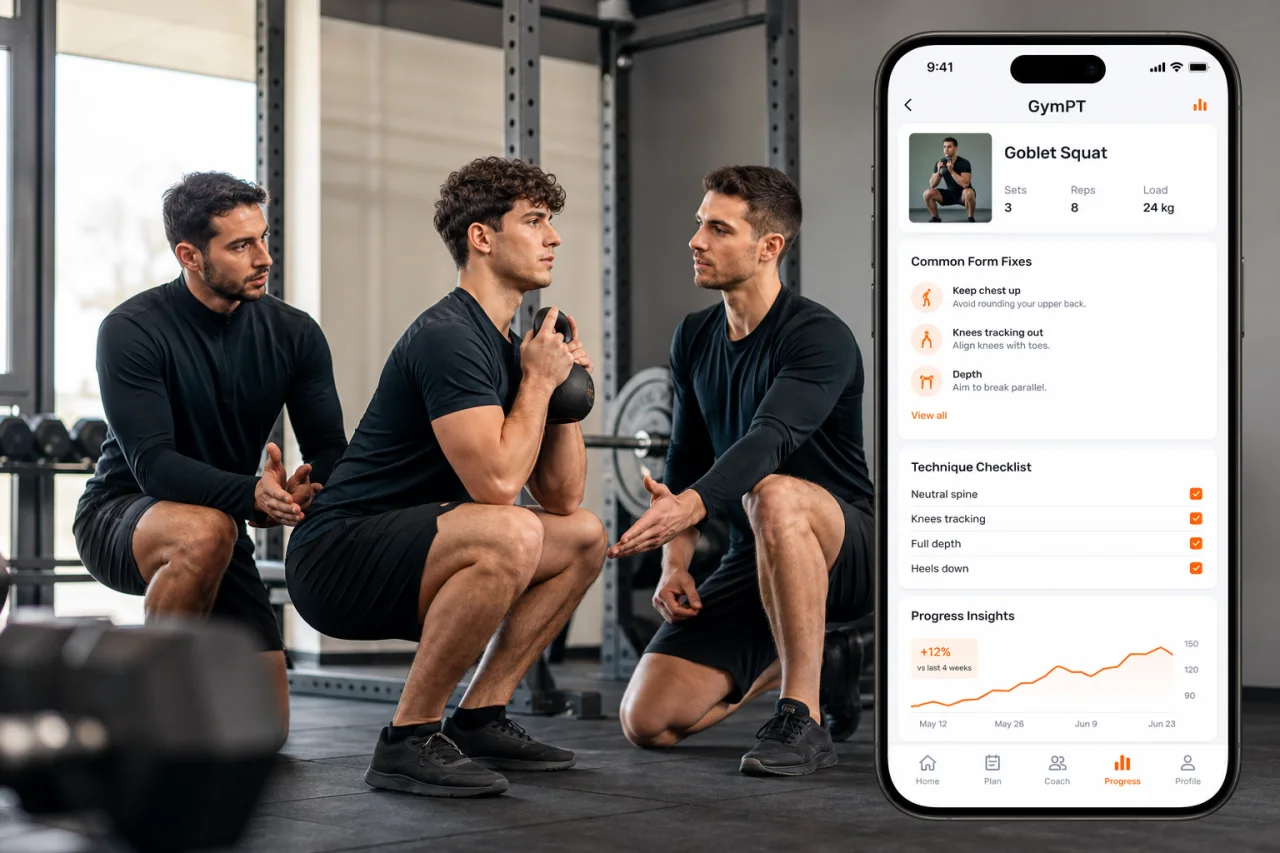
- Goblet squat: great for upright posture and easier bracing.
- Box squat: useful if you need a clear depth target.
- Split squat: helpful when bilateral squatting feels unstable or limited.
- Heel-elevated squat: useful if ankle mobility is limiting depth.
If you train with limited equipment, GymPT can match your squat variation to what you actually have available, whether that is bodyweight, dumbbells, cables, or machines.
Practical squat cues you can remember in the gym
When you are under the bar or holding a dumbbell, too many thoughts can make your squat worse. Use a short cue stack instead.
- Plant the feet.
- Brace the trunk.
- Lower with control.
- Keep knees tracking well.
- Stand up through the whole foot.
If one cue fixes your rep, keep it. If not, simplify the load or the variation before chasing more complexity.
How to progress your squat without losing form
Progress should come from repeatable reps, not from adding weight every session. A simple progression rule works well: first make the movement cleaner, then make it harder.
- Add reps before adding load.
- Use a slower tempo to improve control.
- Pause at the bottom to build position strength.
- Increase range only when you can keep position.
- Move to a harder variation only after the easier one looks consistent.
GymPT workout tracking makes this easier because you can compare sessions, spot when form breaks down, and adjust your plan before bad reps become a habit.
When to use squat alternatives
Squats are valuable, but they are not the only way to train your legs. Use an alternative when the squat pattern is not the best fit for your current setup or training goal.
- Use split squats if you need more stability or unilateral work.
- Use leg press if you want a machine-based lower-body option.
- Use goblet squats if you want a simpler way to practice mechanics.
- Use box squats if depth control is your main challenge.
If you want a broader lower-body plan, pair this guide with a structured leg day or a beginner strength plan so your squat work fits into a full week of training.
Final takeaway
A better squat is usually built from better basics: stable feet, a strong brace, controlled depth, and a load you can actually own. Once those pieces are in place, the squat becomes easier to repeat, easier to progress, and easier to trust.
If you want help turning this into a personalized routine, GymPT can build the plan, track your reps, and help you adjust when your squat form starts to drift.