bodyweight only workout
Bodyweight Only Workout: A Smarter Home Training Plan for Small Spaces
A bodyweight only workout can build strength, muscle, and consistency at home when you use the right exercise choices, progression, and weekly structure.
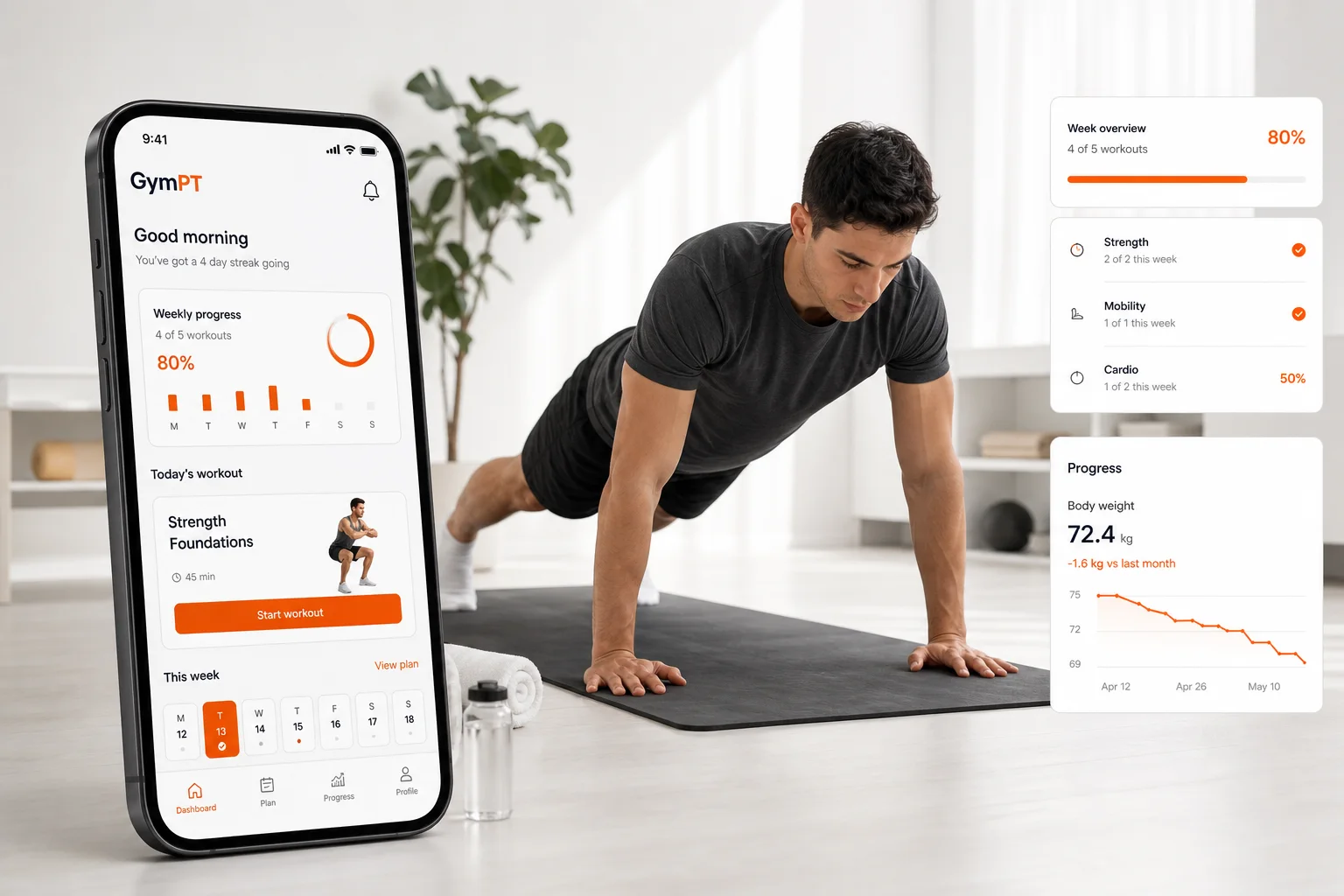
Bodyweight Only Workout: How to Train Effectively at Home
A bodyweight only workout can do more than “keep you moving.” With the right exercise selection, tempo, range of motion, and weekly progression, you can build a serious home routine in a small space. The key is not doing random exercises until you are tired. The key is training with a plan.
Health guidelines from major organizations support regular muscle-strengthening work for adults, and recent ACSM guidance also recognizes bodyweight and home-based training as effective options. That means you do not need a full gym to make real progress. You do need structure, consistency, and a way to make exercises harder over time.
In this guide, you will learn how to build a bodyweight routine that works in a bedroom, living room, or hotel room, plus how GymPT can help you turn that routine into a personalized plan.
What Makes a Bodyweight Workout Effective?
Bodyweight training works when it creates enough challenge for your muscles. That challenge can come from:
- Exercise difficulty — for example, moving from incline push-ups to floor push-ups.
- More reps or sets — adding volume when the movement feels too easy.
- Slower tempo — controlling the lowering phase to increase time under tension.
- Shorter rest periods — useful for conditioning and density.
- Better range of motion — using full, controlled reps instead of partial reps.
For most people, the best home workout is not the hardest one. It is the one you can repeat, progress, and recover from week after week.
How to Build a Bodyweight Only Workout at Home
A balanced bodyweight only workout should cover five movement patterns:
- Squat — lower-body strength and leg endurance.
- Hinge — glutes and hamstrings, often with single-leg work.
- Push — chest, shoulders, and triceps.
- Pull — upper back and biceps, which can be harder at home.
- Core — trunk stability, anti-extension, and anti-rotation control.
If you only train push-ups and crunches, your plan is incomplete. A smarter home routine balances the body and gives each major muscle group a reason to adapt.
A simple weekly structure
For most beginners and intermediate lifters, start with 3 full-body sessions per week:
- Day 1: Full body strength
- Day 2: Full body strength
- Day 3: Full body strength
If you prefer shorter sessions, alternate two workouts and repeat them across the week. The goal is to train each major muscle group at least twice weekly, which aligns well with public health guidance for muscle-strengthening activity.
A Practical Bodyweight Workout You Can Do in Small Spaces
Here is a simple session you can use as a starting point. It needs very little room and no equipment.
Workout A
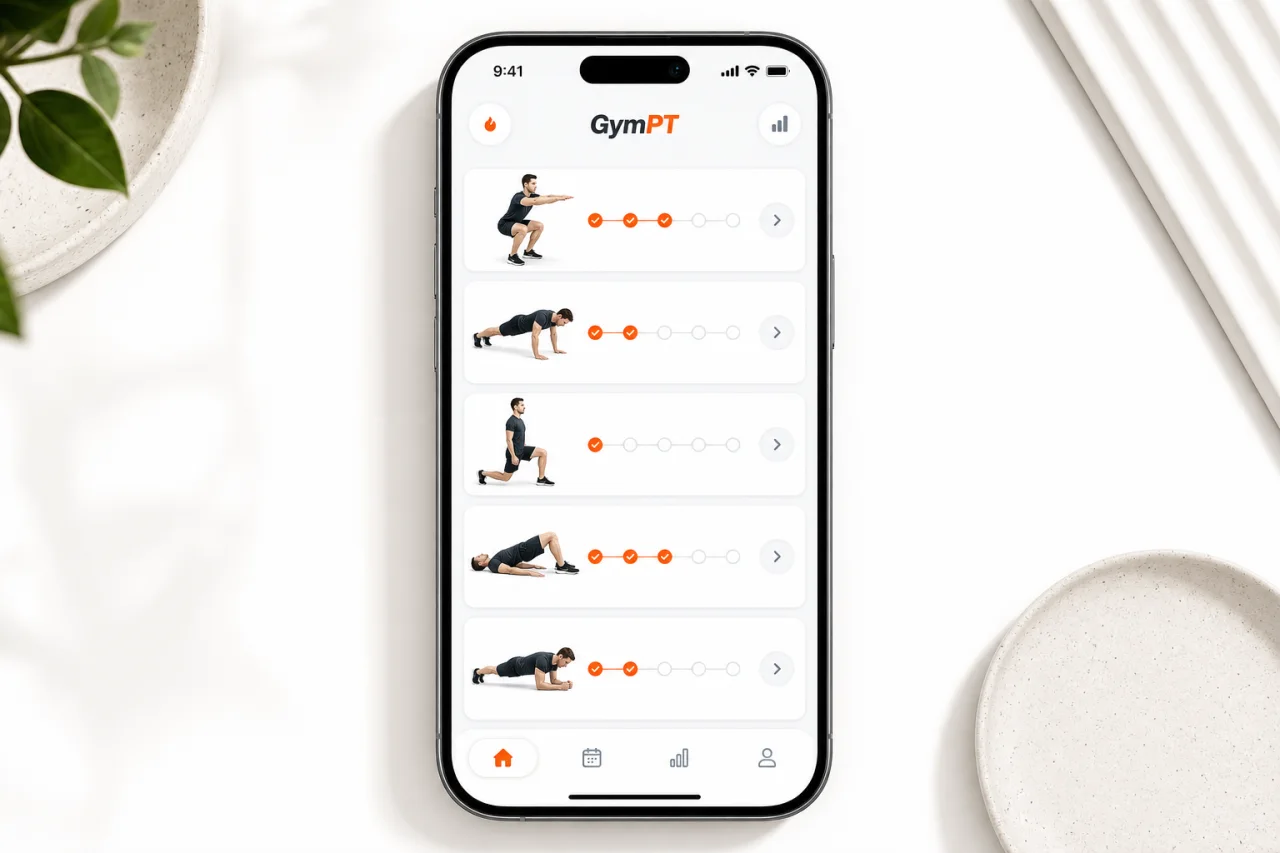
- Squat: 3 sets of 10-20 reps
- Push-up: 3 sets of 6-15 reps
- Split squat: 3 sets of 8-12 reps per leg
- Glute bridge: 3 sets of 12-20 reps
- Plank: 3 sets of 20-45 seconds
Workout B
- Reverse lunge: 3 sets of 8-12 reps per leg
- Pike push-up or incline push-up: 3 sets of 6-12 reps
- Single-leg hip hinge: 3 sets of 8-12 reps per leg
- Dead bug: 3 sets of 8-12 reps per side
- Side plank: 3 sets of 15-30 seconds per side
Alternate Workout A and Workout B across the week. Rest 60-90 seconds between sets if your goal is strength and muscle, or slightly less if you want a more conditioning-focused session.
How to Progress Without Equipment
Progression is what turns a home routine into a training plan. If the same workout feels easy for weeks, your body has little reason to adapt.
Use one of these progression methods at a time:
- Add reps until you reach the top of your target range.
- Add a set when the current volume feels manageable.
- Slow the lowering phase to 3-5 seconds.
- Pause at the hardest point for 1-2 seconds.
- Upgrade the variation from easier to harder.
For example, you might move from incline push-ups to floor push-ups, then to feet-elevated push-ups. For legs, you might progress from bodyweight squats to split squats, then to tempo split squats or single-leg variations.
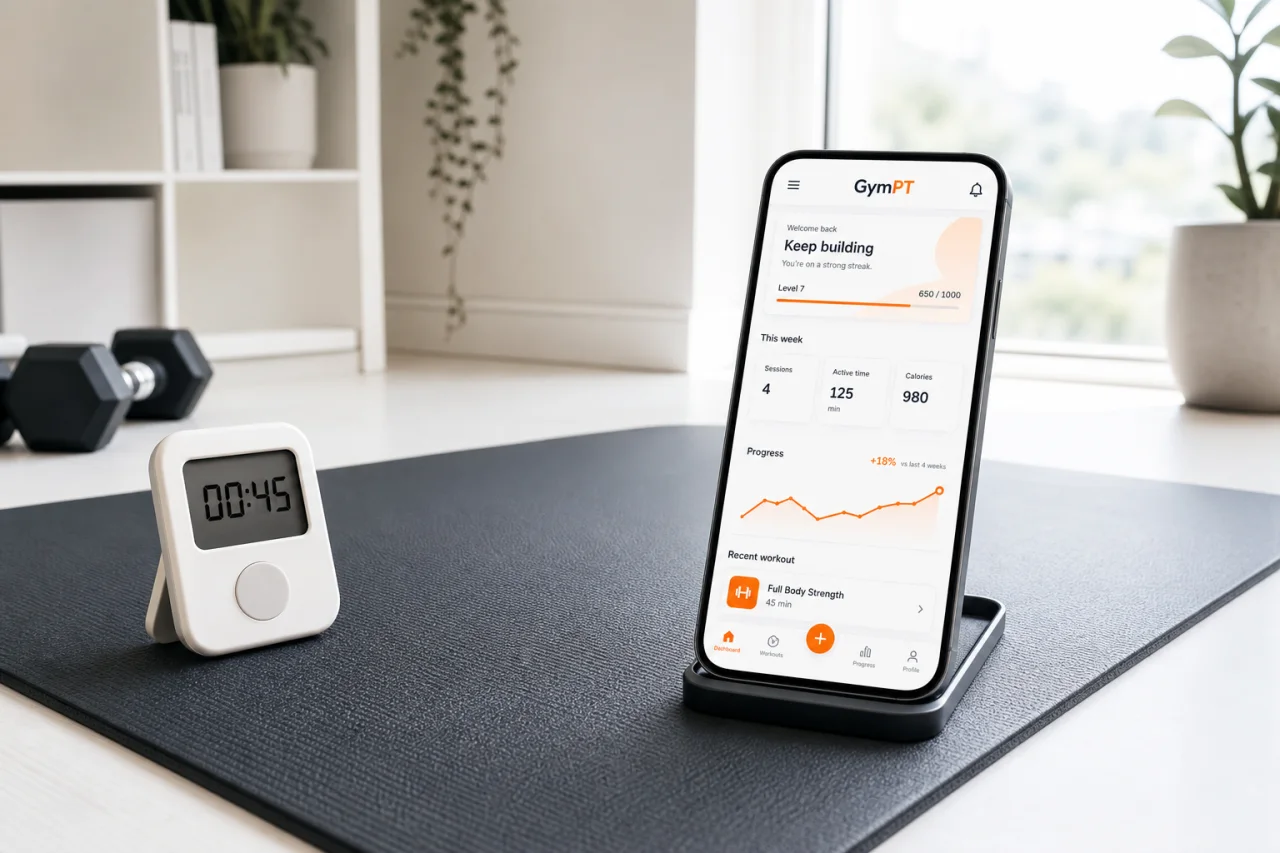
This is the same logic GymPT uses when it builds personalized plans: match the exercise to your current level, then progress it in a way that is realistic and trackable.
Common Mistakes in Bodyweight Training
Bodyweight training is simple, but that does not mean it is easy to program well. Watch out for these mistakes:
- Doing too many random exercises instead of repeating a plan long enough to improve.
- Skipping pulling work and overemphasizing push-ups and abs.
- Training only to fatigue without a progression target.
- Using poor range of motion just to chase more reps.
- Ignoring recovery and trying to train hard every day.
If your workouts are inconsistent, too long, or too hard to repeat, the problem is usually the plan, not your motivation.
How to Make a No Equipment Workout More Challenging
When you no longer have dumbbells or machines to add load, you can still make training harder in smart ways:
- Use unilateral exercises like split squats and single-leg bridges.
- Increase time under tension with slow eccentrics.
- Reduce rest between sets.
- Use mechanical drop sets, such as moving from feet-elevated push-ups to regular push-ups to incline push-ups.
- Add a fourth weekly session if recovery is good.
These methods help you keep progressing even when your space and equipment are limited.
Who Benefits Most From a Bodyweight Only Workout?
A bodyweight only workout is a strong option if you are:
- Training at home with limited space
- Traveling and need a simple routine
- Starting from scratch and want a low-friction plan
- Returning to exercise after a long break
- Looking for a consistent base routine before adding equipment later
It can also be a useful phase for experienced lifters who want to improve movement quality, conditioning, or training consistency without relying on a gym.
How GymPT Helps You Stay on Track
GymPT makes home training easier by turning a general idea like “work out at home” into a plan you can actually follow. You can use it to:
- Build a personalized bodyweight plan based on your goals and schedule
- Get AI coach chat support when you are unsure how to progress
- Track workouts so you know when to add reps, sets, or harder variations
- Review progress insights instead of guessing whether you are improving
- Adjust training when your space, time, or energy changes
If you want a bodyweight routine that feels organized instead of improvised, that structure matters.
Final Takeaway
A bodyweight only workout can absolutely build strength and consistency at home if you treat it like real training. Focus on movement patterns, train each muscle group regularly, and progress one variable at a time. Small spaces are not the problem. A vague plan is.
Start simple, repeat the basics, and make the next session slightly better than the last. That is how home training becomes real progress.