leg press machine exercises for beginners
Leg Press Machine Exercises for Beginners: A Smarter Way to Train Legs
A beginner-friendly guide to leg press machine exercises, including setup, foot placement, common mistakes, and how to build a simple lower-body plan with GymPT.
Leg press machine exercises for beginners: start with the basics
If you are new to the gym, leg press machine exercises for beginners are one of the easiest ways to train your lower body with structure and stability. The machine gives you a fixed path, which can make it simpler to learn effort, control, and range of motion before you move into more complex leg training.
The goal is not to load the stack as fast as possible. The goal is to learn how to set up the machine, press through a comfortable range, and build a repeatable lower-body session you can progress over time.
Why the leg press is a smart beginner exercise
The leg press is useful for beginners because it lets you train the quads, glutes, and hamstrings without needing to balance a barbell. That makes it a practical option when you are still learning how to brace, control tempo, and recognize a good working weight. Major health organizations also support regular muscle-strengthening work for all major muscle groups, and beginner resistance training is commonly programmed with simple, repeatable exercises and gradual progression.
- Stable setup: less balance demand than free weights.
- Easy to scale: you can add small amounts of load or reps.
- Clear feedback: you can feel whether your feet, knees, and hips are working together.
- Good for consistency: it fits well into a beginner leg day or full-body plan.
How to set up the leg press machine correctly
Before you press, adjust the seat so your hips stay in contact with the pad and your knees can bend comfortably. Your lower back should stay supported, and your feet should be placed flat on the platform. A controlled setup matters more than a heavy load.
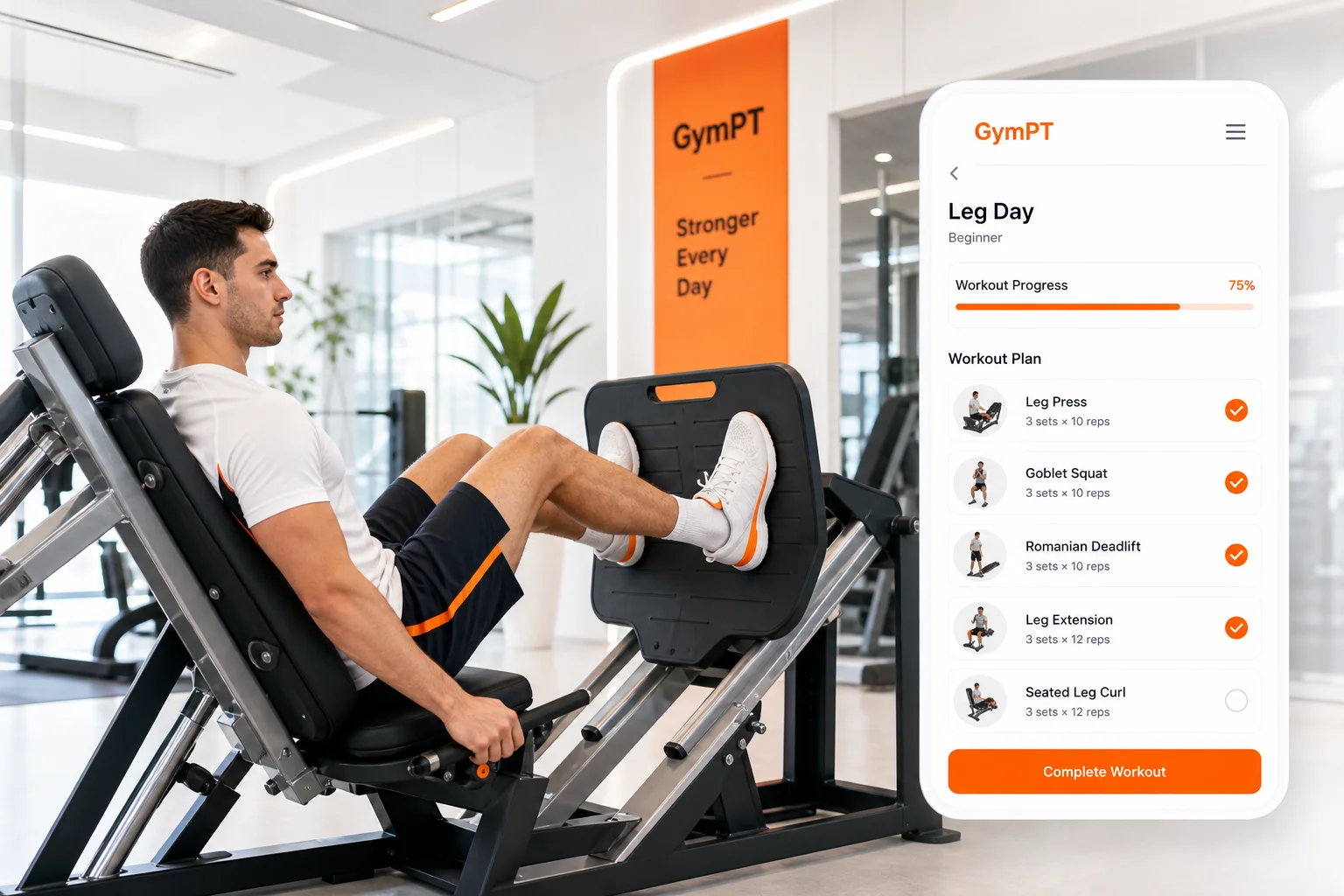
- Sit all the way back into the pad.
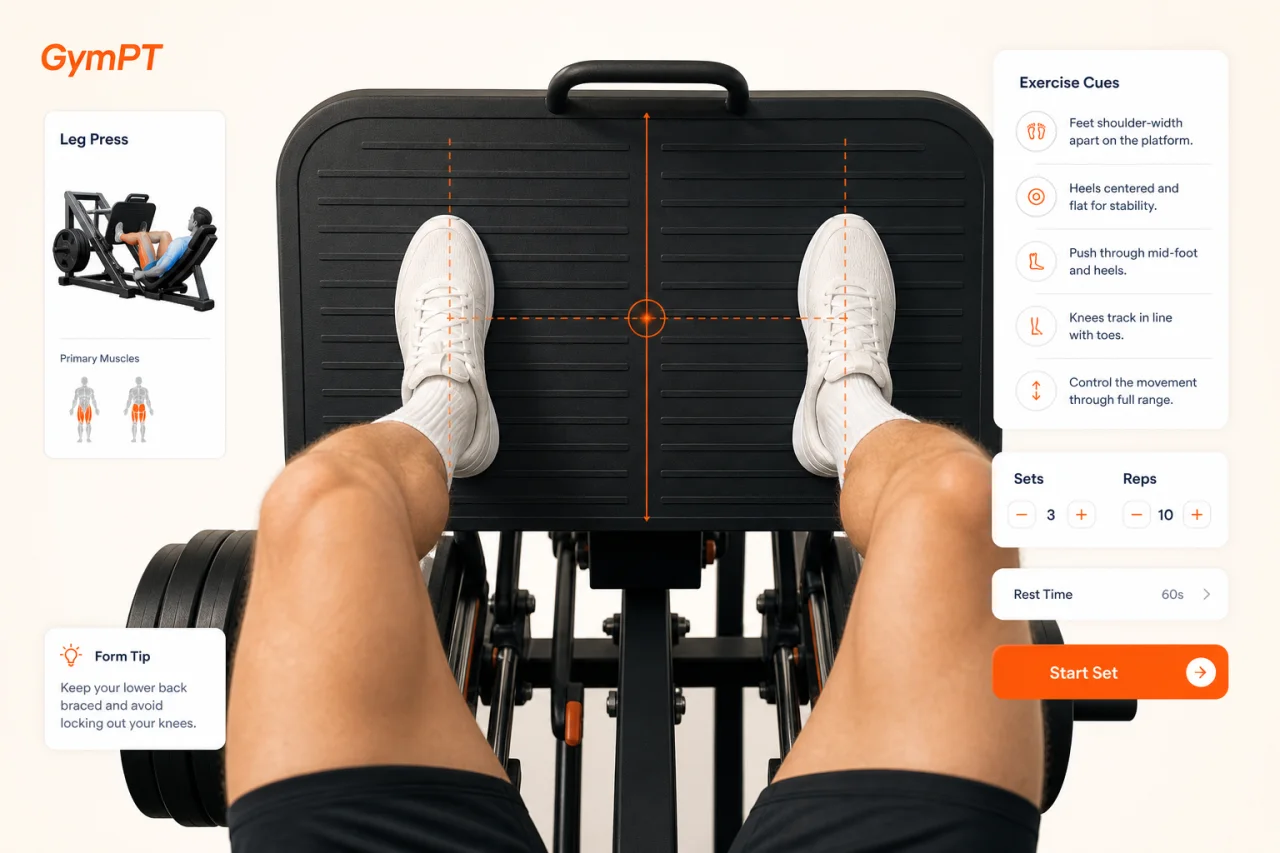
- Place both feet shoulder-width apart on the platform.
- Unrack the sled with control.
- Lower the weight until your knees bend comfortably without your pelvis lifting.
- Press through the whole foot and return slowly.
For most beginners, a smooth tempo is better than bouncing the sled or locking out aggressively. Think controlled down, strong up.
Best leg press foot placement for beginners
Foot placement changes how the exercise feels, but beginners should start with a neutral setup before experimenting. That usually means feet about shoulder-width apart and slightly turned out, with pressure spread across the heel, big toe, and little toe.
Neutral stance
This is the best starting point for most people. It gives you a balanced way to train the legs without overcomplicating the movement.
Higher foot placement
Placing your feet a little higher on the platform can shift more emphasis toward the glutes and hamstrings. Use this only after you are comfortable with the standard setup.
Lower foot placement
A lower foot position can make the quads work harder, but it also increases the need for good knee control. Beginners should use this carefully and only if it feels smooth and pain-free.
No matter where your feet are, keep your knees tracking in line with your toes instead of collapsing inward.
Common beginner mistakes to avoid
Most leg press problems come from trying to move too much weight too soon. Fixing a few simple habits will make the exercise safer and more effective.
- Too much depth: if your hips lift off the pad, the range is too deep for now.
- Knees caving in: keep them aligned with your toes.
- Heels lifting: keep the whole foot grounded.
- Bouncing the sled: lower under control instead.
- Locking out hard: stop just short of snapping the knees back.
- Stacking too much weight: choose a load you can control for every rep.
If your form changes a lot from rep to rep, the set is probably too heavy.
A simple beginner leg press workout
You do not need a complicated leg day to make progress. Start with a small number of quality sets and build from there.
- Leg press: 2 to 3 sets of 8 to 12 reps
- Bodyweight squat or goblet squat: 2 sets of 8 to 10 reps
- Leg curl machine: 2 sets of 10 to 12 reps
- Calf raises: 2 sets of 12 to 15 reps
Train this session 1 to 2 times per week at first, depending on your recovery and the rest of your program. Beginners usually do best with simple full-body or lower-body sessions that are repeated consistently rather than changed every week.
How to progress without guessing
Progress should be small and measurable. You can add one rep per set, a little weight, or one extra set when the current load feels controlled. Keep the same exercise long enough to learn it well before making major changes.
A good rule is to stop each set with a couple of reps left in the tank. That gives you enough effort to stimulate progress without turning every session into a grind.
How GymPT helps you adapt the plan to your equipment
Not every gym has the same machines, and not every beginner needs the same leg day. GymPT can build a plan around the equipment you actually have, then adjust the workout when your gym is busy or a machine is taken.
- Swap the leg press for another machine or movement when needed.
- Adjust sets, reps, and exercise order based on your goal.
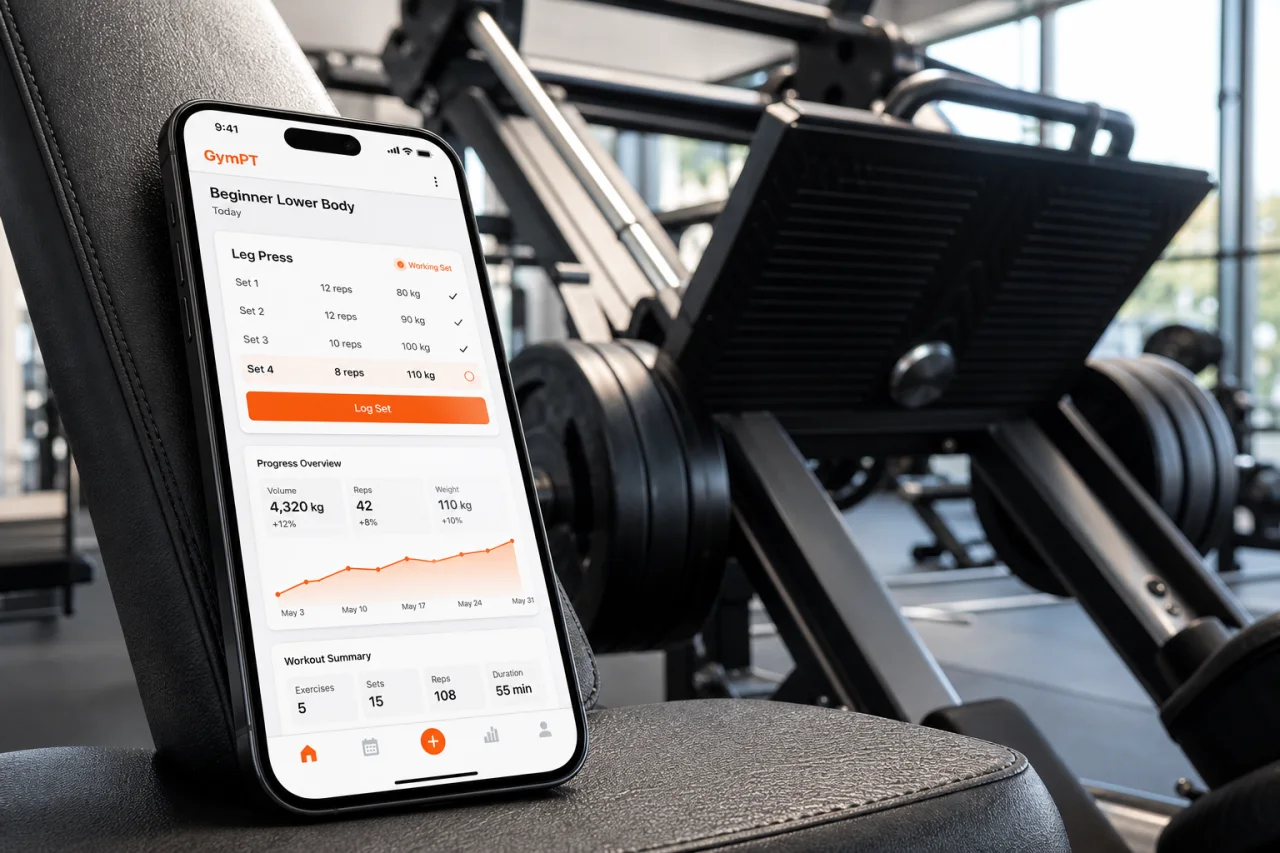
- Track your loads and reps so progression is clear.
- Use AI coach chat to ask whether your setup, foot placement, or volume makes sense.
- Review progress insights to see whether your leg training is moving forward.
That is the real advantage of a smart training app: it helps you stay consistent even when your equipment changes.
When to choose a different exercise
The leg press is a great beginner tool, but it is not the only option. If the machine feels awkward, if your hips cannot stay supported, or if you want more carryover to real-world movement, GymPT can help you build around squats, split squats, step-ups, or other machine-based leg work instead.
The best plan is the one you can perform well, recover from, and repeat.
Final takeaway
Leg press machine exercises for beginners work best when you keep the setup simple, use controlled reps, and progress gradually. Start with a neutral foot position, avoid common form mistakes, and build a repeatable leg session around the equipment you have. With GymPT, you can turn that one machine into a personalized lower-body plan that actually fits your gym and your goals.