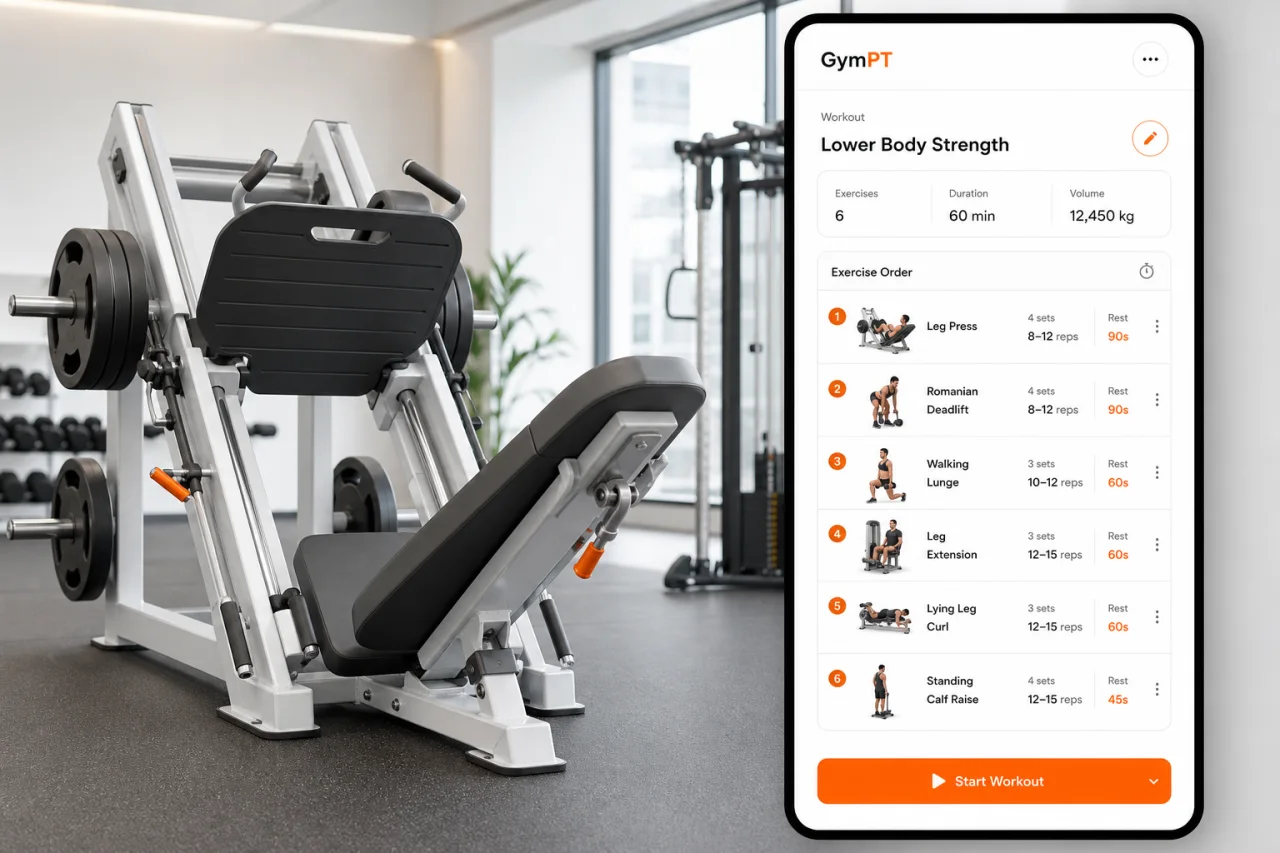
full body workout with leg press machine
Full Body Workout With Leg Press Machine: A Smarter Plan Around One Station
A leg press machine can anchor a surprisingly effective full-body session when you pair it with the right push, pull, hinge, and core moves. Here’s how to build a balanced plan around the equipment you have.
Full body workout with leg press machine: the simple idea
A full body workout with leg press machine works best when you treat the leg press as your main lower-body lift, then build the rest of the session around movement patterns: push, pull, hinge, squat or press, and core. That gives you a balanced workout even if your gym is busy or your equipment options are limited.
The leg press is especially useful because it lets you train the quads, glutes, and adductors with a stable setup. From there, you can add upper-body machines, cables, dumbbells, or bodyweight moves to cover the rest of the body. Public health guidance also supports training all major muscle groups at least two days per week, which makes a full-body structure a practical choice for consistency.
Why the leg press is a strong anchor exercise
The leg press is not a complete workout by itself, but it is a very efficient base. It lets you load the lower body without needing to balance a barbell, which can make it easier to focus on controlled reps and steady progression. For many gym-goers, that makes it a reliable first exercise when time, confidence, or equipment are limited.
In a full-body session, the leg press usually belongs near the start of the workout, before smaller isolation work. Exercise-order guidance generally favors doing larger, more demanding multi-joint movements earlier in the session so you can use better technique and more quality effort on the main lifts.
How to build the workout around the equipment you actually have
The best plan is the one that matches your gym floor, not an idealized template. If your gym has a leg press plus a few machines, you can still cover the whole body by choosing one movement from each category below.
- Lower body main lift: leg press
- Upper-body push: chest press machine, dumbbell press, or push-ups
- Upper-body pull: seated row, lat pulldown, or cable row
- Hip hinge: Romanian deadlift with dumbbells, back extension, or cable pull-through
- Core: plank, dead bug, Pallof press, or cable crunch
This approach keeps the workout flexible. If one station is taken, you can swap in another exercise that trains the same pattern without breaking the plan.
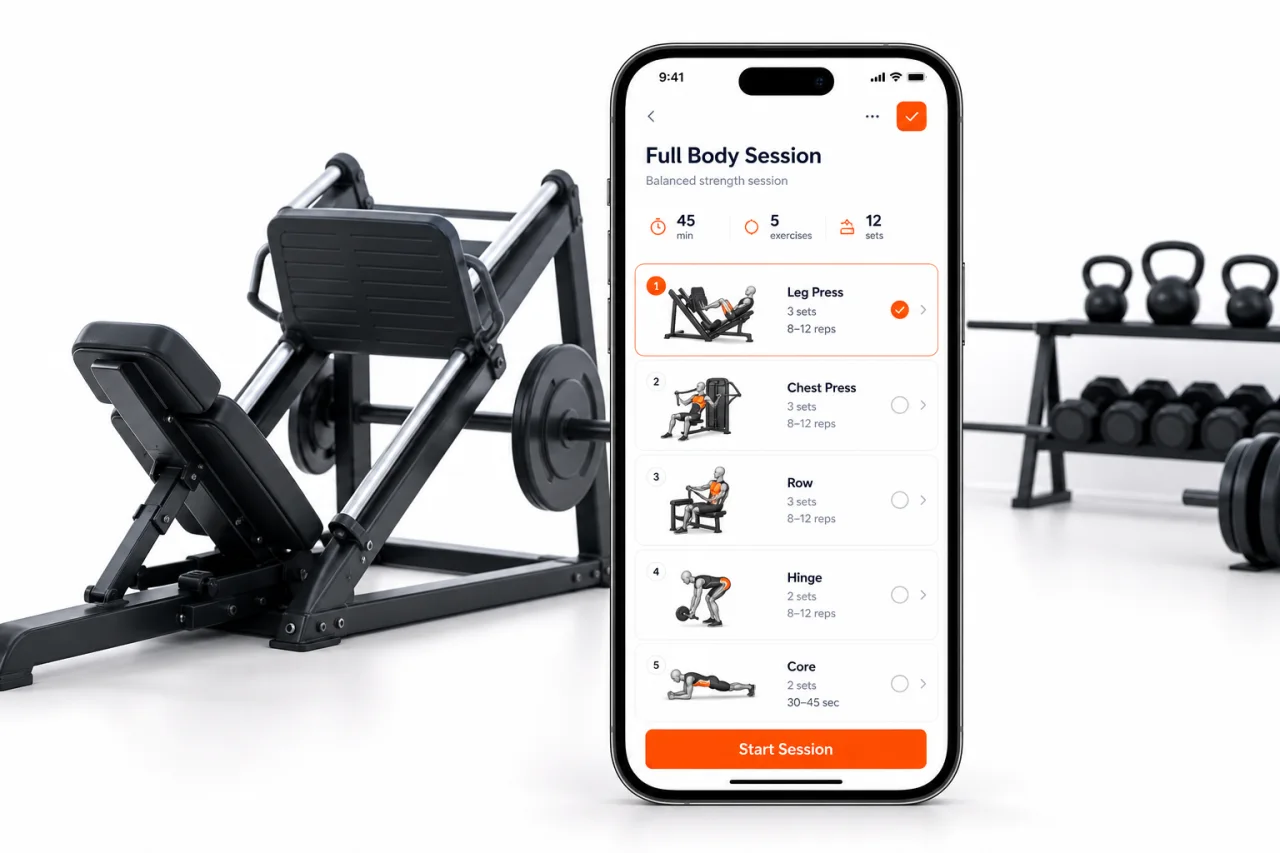
A practical full body workout with leg press machine
Use this as a simple template for 2 to 3 sessions per week. Start with a load that leaves about 2 to 3 reps in reserve on most sets, then adjust as you get stronger.
- Leg press — 3 sets of 8 to 12 reps
- Chest press machine or dumbbell press — 3 sets of 8 to 12 reps
- Seated row or lat pulldown — 3 sets of 8 to 12 reps
- Dumbbell Romanian deadlift or back extension — 2 to 3 sets of 8 to 10 reps
- Plank or Pallof press — 2 to 3 sets of 20 to 40 seconds
If you want a slightly more beginner-friendly version, reduce each movement to 2 sets and keep the effort moderate. The CDC recommends muscle-strengthening activity on at least 2 days per week, and a full-body plan makes that easy to repeat without needing a complicated split.
How to use the leg press for better results
Foot placement changes the emphasis
A slightly lower foot position tends to shift more work toward the quads, while a higher foot position often feels more glute- and hamstring-dominant. You do not need to overcomplicate this. Pick one stance, keep it consistent for a few weeks, and track progress.
Control the bottom position
Lower the sled with control and stop before your pelvis tucks under or your lower back rounds. A smooth range of motion is more useful than chasing extra depth that your body cannot own yet.
Progress one variable at a time
When the top end of your rep range feels solid, add a small amount of weight next time. That simple progression is often more effective than changing exercises every week.
How to balance the workout so it still feels like full body training
A common mistake is turning the leg press into a leg-only day and then adding random upper-body exercises afterward. Instead, think in terms of coverage. Your session should leave you with work for the lower body, push muscles, pull muscles, and trunk.
If you only have machines, that is still enough. A machine-based full-body workout can be highly effective when you choose movements that cover the major patterns and keep the weekly volume consistent. ACSM’s updated resistance-training guidance also emphasizes training all major muscle groups regularly and building volume gradually over time.
Sample 3-day weekly structure
If you want to repeat the same workout across the week, use this simple schedule:
- Day 1: leg press, chest press, row, hinge, core
- Day 2: leg press, shoulder press, pulldown, split squat or step-up, core
- Day 3: leg press, incline press, cable row, back extension, core
This keeps the leg press as a stable anchor while changing the upper-body and accessory work enough to avoid boredom and overuse. It also makes it easier to compare performance from week to week.
How GymPT helps you adapt the plan in real time
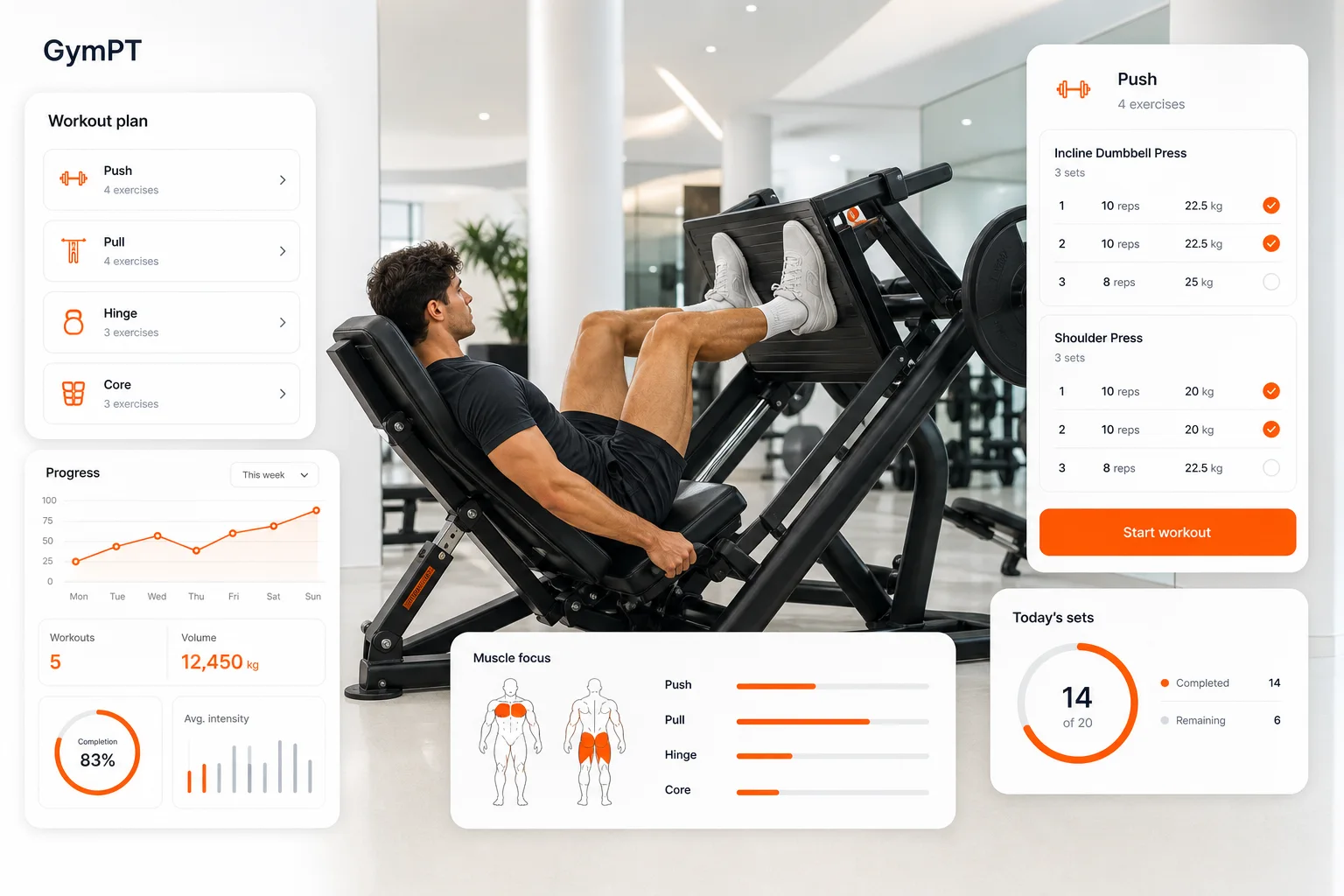
GymPT is useful when your gym setup changes from day to day. If the leg press is free but the cable station is busy, GymPT can help you swap in a similar movement pattern without losing the structure of the session. That means your workout stays balanced even when the room is not.
You can also use GymPT to:
- build a plan around the exact machines available
- track leg press load, reps, and progression over time
- adjust volume when you are recovering poorly or short on time
- get a quick alternative when a station is occupied
- see whether your weekly training still covers all major muscle groups
That kind of feedback matters because consistency is easier when the plan fits the equipment you actually have.
Common mistakes to avoid
- Doing only leg press: great for legs, not enough for a full-body session.
- Starting with small isolation moves: save those for later so your main lifts get your best effort.
- Changing exercises every workout: keep the core structure stable long enough to measure progress.
- Using too much load too soon: control the reps and progress gradually.
- Ignoring pulling work: rows and pulldowns help balance pressing volume.
Bottom line
A full body workout with leg press machine is simple to build and easy to repeat. Use the leg press as your lower-body anchor, add one push, one pull, one hinge, and one core exercise, and keep the structure consistent long enough to progress. If you want help adapting that plan to the machines in front of you, GymPT can turn a crowded gym into a workable training session.