chest workout for beginners
Chest Workout for Beginners: Form, Volume, and a Smarter First Plan
A beginner chest workout should build strength without overcomplicating the plan. Learn the best exercises, form cues, volume tips, and easy progressions.
Chest Workout for Beginners: Start Simple, Train Well
If you want a chest workout for beginners that actually helps you improve, the goal is not to do everything. The goal is to do a few good movements with solid form, enough weekly volume, and a plan you can repeat. For beginners, that usually means pressing patterns, controlled reps, and gradual progression instead of random exercise hopping.
The chest is trained well by horizontal pressing movements like dumbbell press, machine press, push-ups, and bench press variations. A beginner-friendly plan should also fit the equipment you have, because consistency matters more than chasing the “perfect” exercise.
What a beginner chest session should do
A good first chest session should help you:
- learn pressing mechanics without rushing the load
- build confidence under control
- train the chest, shoulders, and triceps together
- leave a little energy in reserve so you can recover and repeat the workout
Public health guidance recommends muscle-strengthening work at least two days per week, and beginner resistance training is usually most effective when it is simple, repeatable, and progressively harder over time.
The best beginner chest exercises
Pick 2 to 4 of these exercises for one workout. If you are new, start with the easier options first.
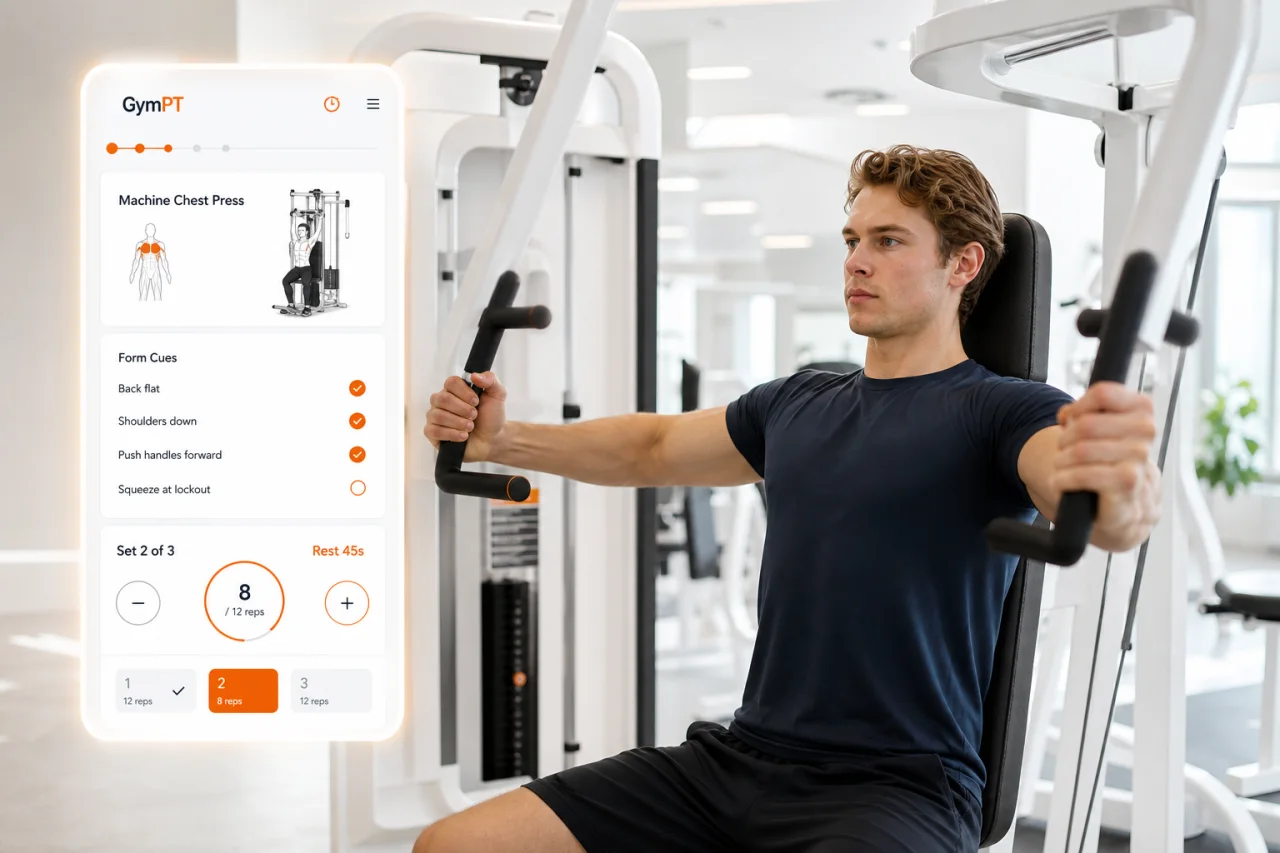
1. Machine chest press
This is often the easiest way to learn pressing because the path is guided. Keep your shoulder blades gently back and down, lower the handles with control, and press without locking out aggressively.
2. Dumbbell bench press
Dumbbells let each side work independently, which can help you notice uneven control. Lower the weights until your upper arms are near parallel to the floor, then press up smoothly.
3. Push-ups
Push-ups are a great bodyweight option if you can keep a straight line from head to heels. If full push-ups are too hard, use an incline bench, Smith bar, or wall to reduce the load.
4. Incline dumbbell press
This variation shifts more emphasis toward the upper chest and front shoulders. Keep the bench angle moderate and avoid turning it into a shoulder exercise by setting the bench too steep.
5. Cable chest press or cable fly
Cables are useful for smooth resistance and easy adjustments. For beginners, pressing is usually the better first choice; fly variations can come later once you control the movement well.
How many sets and reps should beginners do?
For most beginners, a smart starting point is 2 to 3 sets per exercise and 8 to 12 reps with good form. If you are using a harder variation, even 6 to 10 controlled reps can work well. The key is to stop with about 1 to 3 reps left in the tank, not to grind every set to failure.
That approach matches the broader evidence-based idea of building strength with manageable volume and gradual overload, rather than trying to do too much too soon.
A simple chest workout for beginners
Here is a practical session you can repeat once or twice per week.
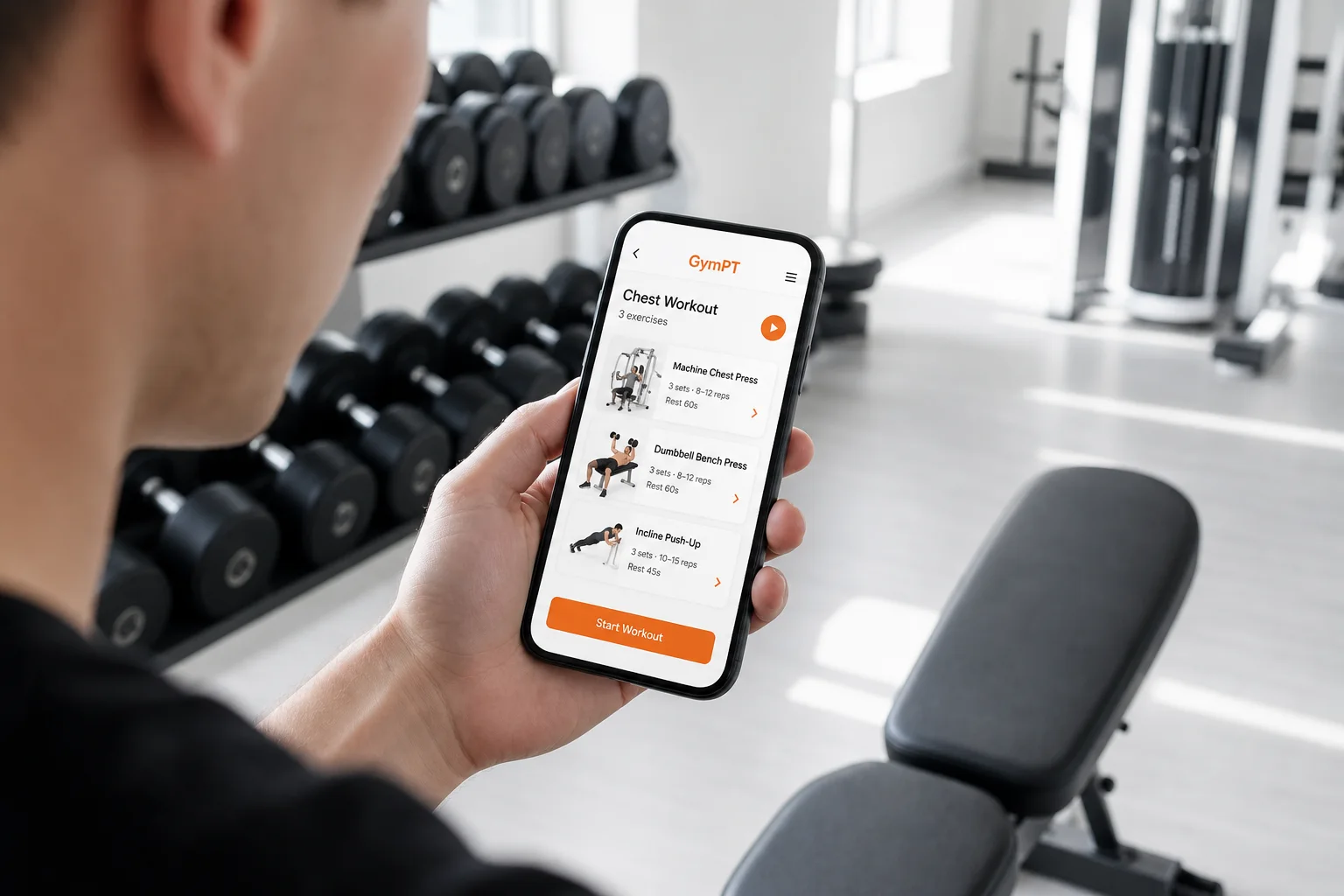
- Machine chest press — 3 sets of 8 to 12 reps
- Dumbbell bench press — 2 to 3 sets of 8 to 10 reps
- Incline push-up — 2 sets of 8 to 15 reps
- Cable press or light cable fly — 2 sets of 10 to 15 reps
If you are very new, start with just 2 exercises. A smaller plan is easier to learn, easier to recover from, and easier to keep doing.
Form cues that make chest training safer and better
- Set your shoulders first. Keep the shoulder blades gently back and down before you press.
- Use a controlled lowering phase. Lower the weight for about 2 seconds instead of dropping it.
- Keep wrists stacked. Your wrist should stay roughly over your elbow and forearm.
- Press in a smooth arc. Do not bounce the weight off your chest.
- Keep your ribs down. A small arch is normal, but avoid overextending your lower back.
These cues help you feel the chest work more clearly and reduce the chance that your shoulders or lower back take over the movement.
Common beginner mistakes to avoid
- Using too much weight too soon. If your form changes every rep, the load is too heavy.
- Skipping warm-up sets. A few lighter sets help your joints and technique.
- Doing only fly movements. Beginners usually need pressing first, not isolation first.
- Training chest hard every day. Chest muscles need recovery time to adapt.
- Chasing soreness instead of progress. Better reps and better control matter more than how sore you feel.
Beginner-friendly alternatives if pressing feels awkward
If a standard bench press does not feel right yet, use a simpler variation:
- Wall push-up for the easiest entry point
- Incline push-up for a moderate challenge
- Machine press for guided movement
- Dumbbell floor press if you want a shorter range of motion
These options let you train the chest without forcing a movement that your current strength or mobility cannot support yet.
How to progress week by week
Progress should be small and predictable. Try one of these methods:
- add 1 rep per set until you reach the top of your rep range
- add a small amount of weight once all sets feel controlled
- add one extra set only after your current workload feels easy to recover from
If you can complete all reps with clean form for two workouts in a row, that is a good sign you are ready for a small increase.
How GymPT can help you stay consistent
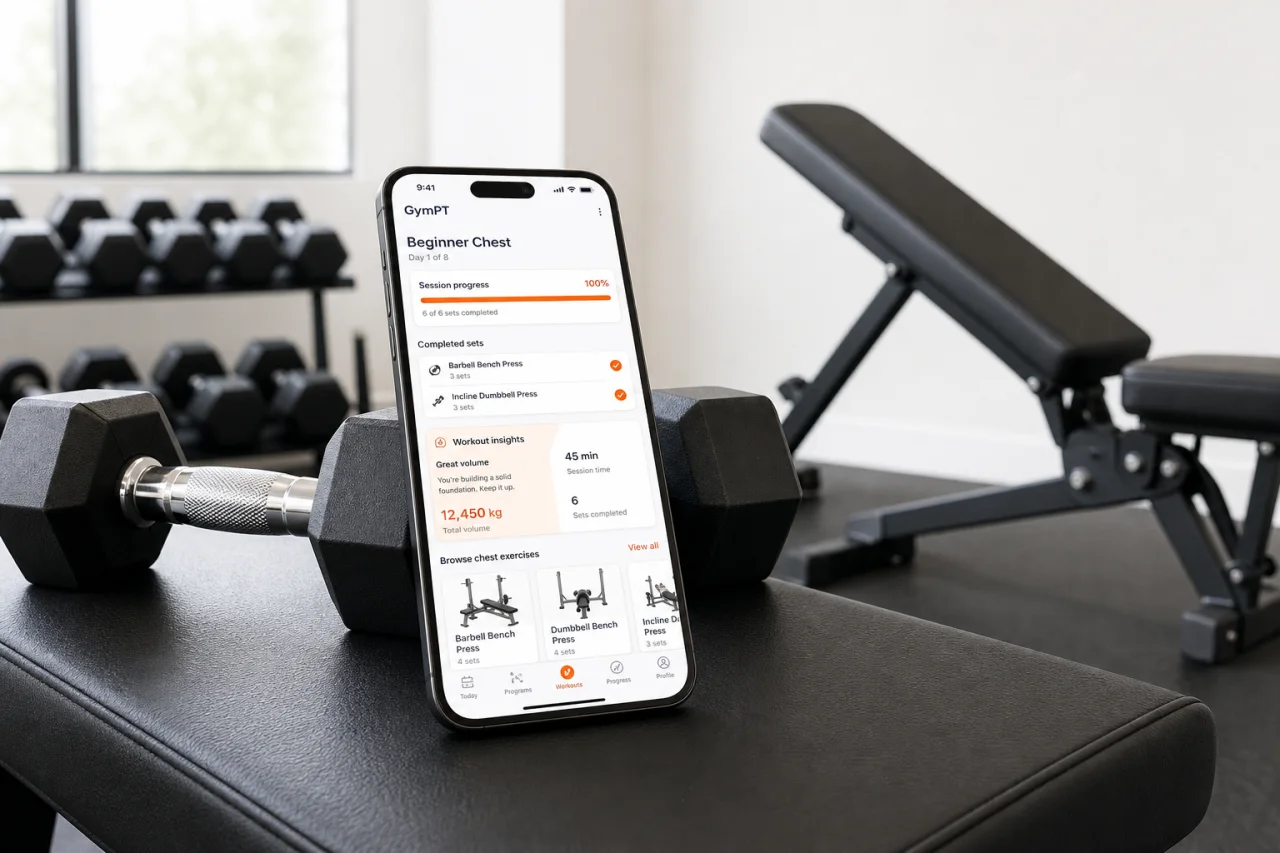
GymPT can build a chest plan around your equipment, track your workouts, and show progress over time. That matters because beginners improve faster when the plan is clear, the load is appropriate, and the next step is obvious.
If you are not sure whether to use dumbbells, machines, or bodyweight work, GymPT can adapt the workout to your setup and keep the plan simple enough to follow.
Sample weekly structure for beginners
If you train chest twice per week, keep one session slightly heavier and the other slightly easier.
- Day 1: machine press, dumbbell press, incline push-up
- Day 2: incline dumbbell press, push-up variation, light cable press
That gives you practice without overloading the same pattern every session.
Final takeaway
The best chest workout for beginners is not the most advanced one. It is the one you can perform with good form, recover from, and repeat next week. Start with a few pressing movements, keep your reps controlled, and progress slowly. That is how beginner chest training turns into real strength.
If you want a plan that matches your equipment and experience, GymPT can help you build it in minutes.