shoulder workout for beginners
Shoulder Workout for Beginners: A Simple Plan for Stronger, Healthier Delts
A beginner shoulder workout should build strength without beating up your joints. Learn the best exercises, form cues, weekly volume, and simple progressions.
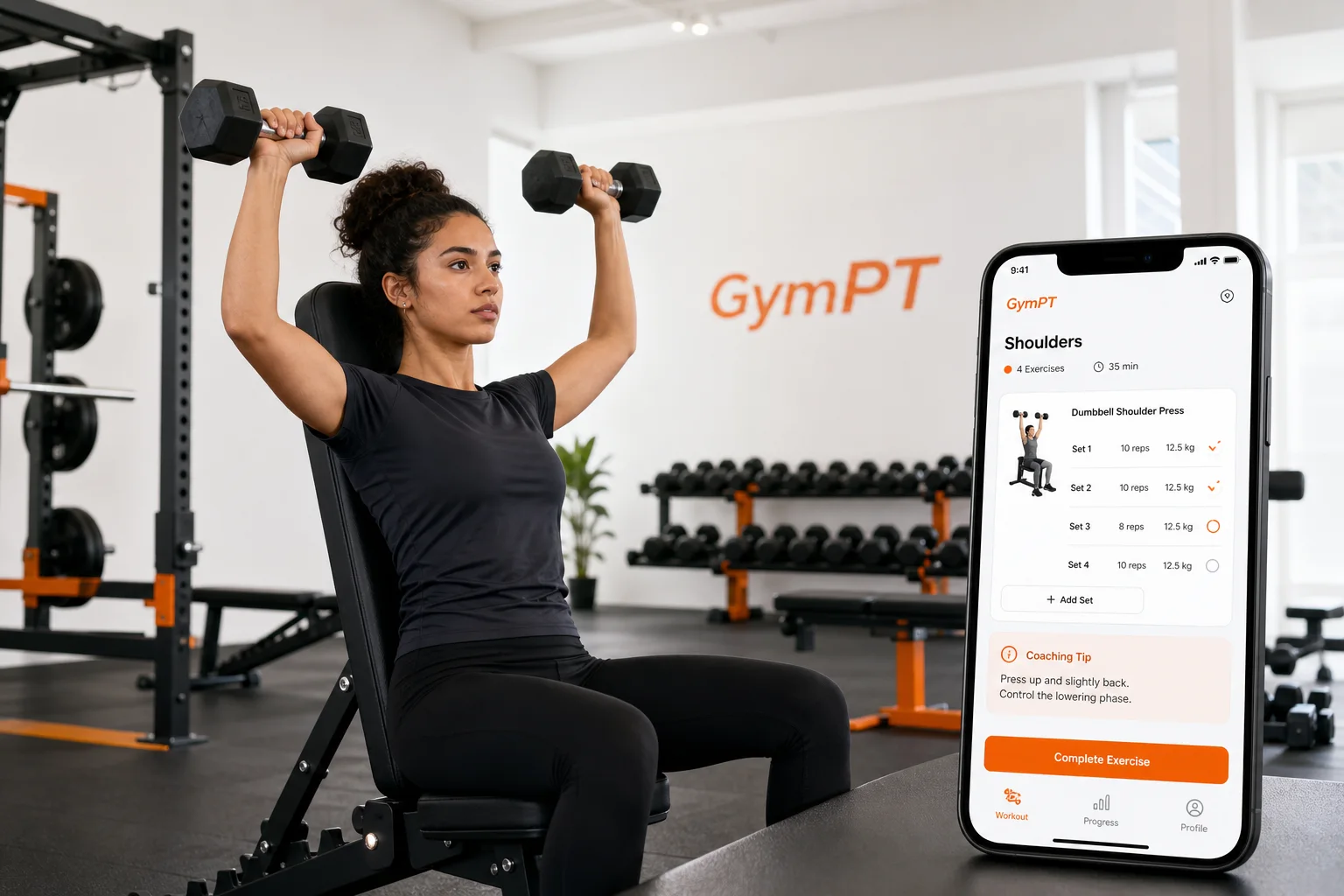
Shoulder Workout for Beginners: Start With Control, Not Ego
If you want a shoulder workout for beginners that actually helps you get stronger, the goal is simple: train the delts with good mechanics, enough weekly volume, and exercises you can repeat consistently. Beginners do not need a complicated split or heavy overhead pressing on day one. They need a plan that builds strength, teaches shoulder control, and leaves room to progress.
The shoulder is a mobile joint that works best when the surrounding muscles do their job well. That means your workout should include pressing, raising, and a little pulling or rear-delt work to keep things balanced. For most beginners, 2 shoulder sessions per week is a smart starting point, with moderate sets and clean reps rather than max effort.
What Makes a Good Beginner Shoulder Workout?
A good beginner plan is not just “do shoulder press and hope for the best.” It should cover the main jobs of the shoulder muscles:
- Front delts help with pressing and lifting the arm forward.
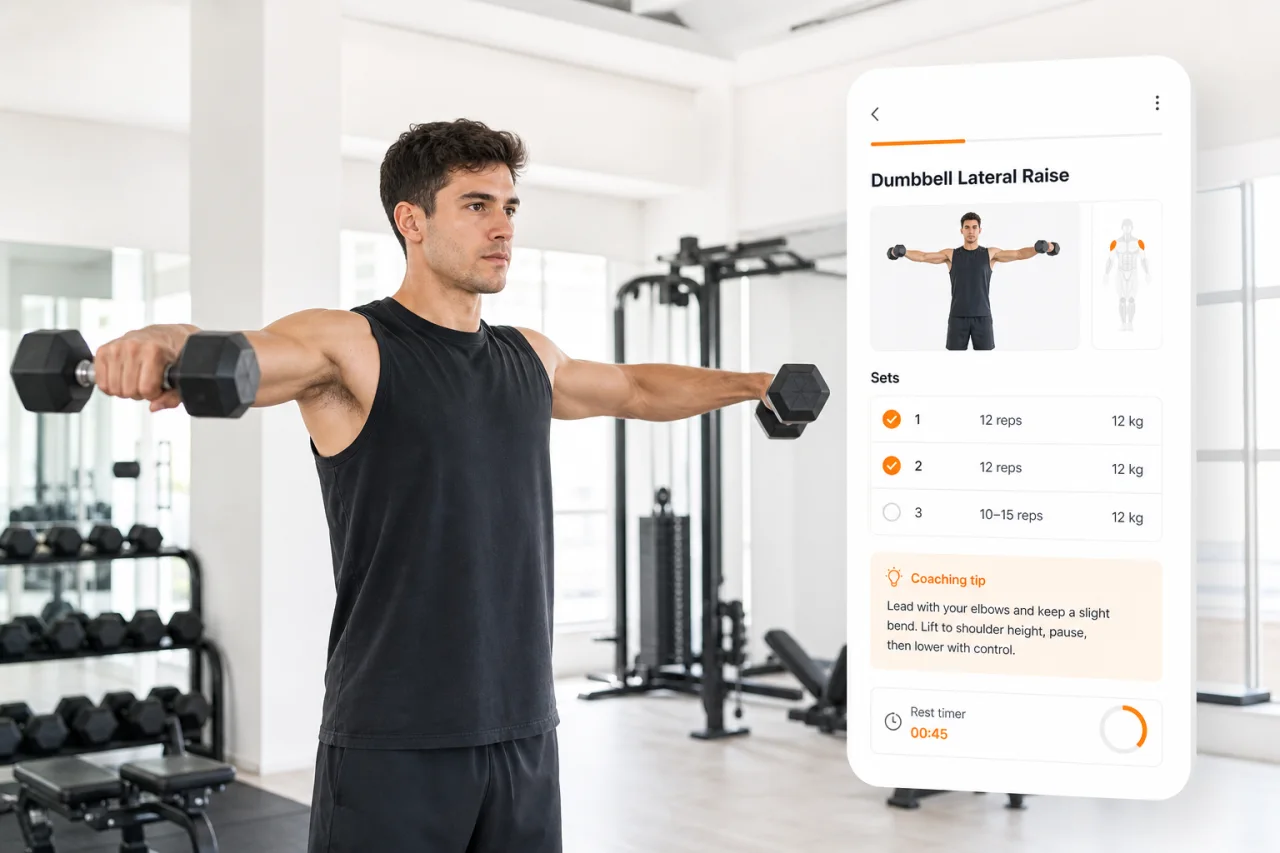
- Side delts create shoulder width and are trained well with lateral raises.
- Rear delts help balance the shoulder and support posture with reverse fly or face-pull style work.
For beginners, the best shoulder workouts usually use 2 to 4 exercises, 2 to 4 sets each, and a rep range that lets you stay in control. A practical starting point is 6 to 12 hard sets per week for the shoulders, split across two sessions. That is enough to stimulate progress without overwhelming recovery.
Beginner Shoulder Workout: The Simple Version
Use this as a straightforward gym or home-friendly template. Choose loads that leave about 2 to 3 reps in reserve on most sets.
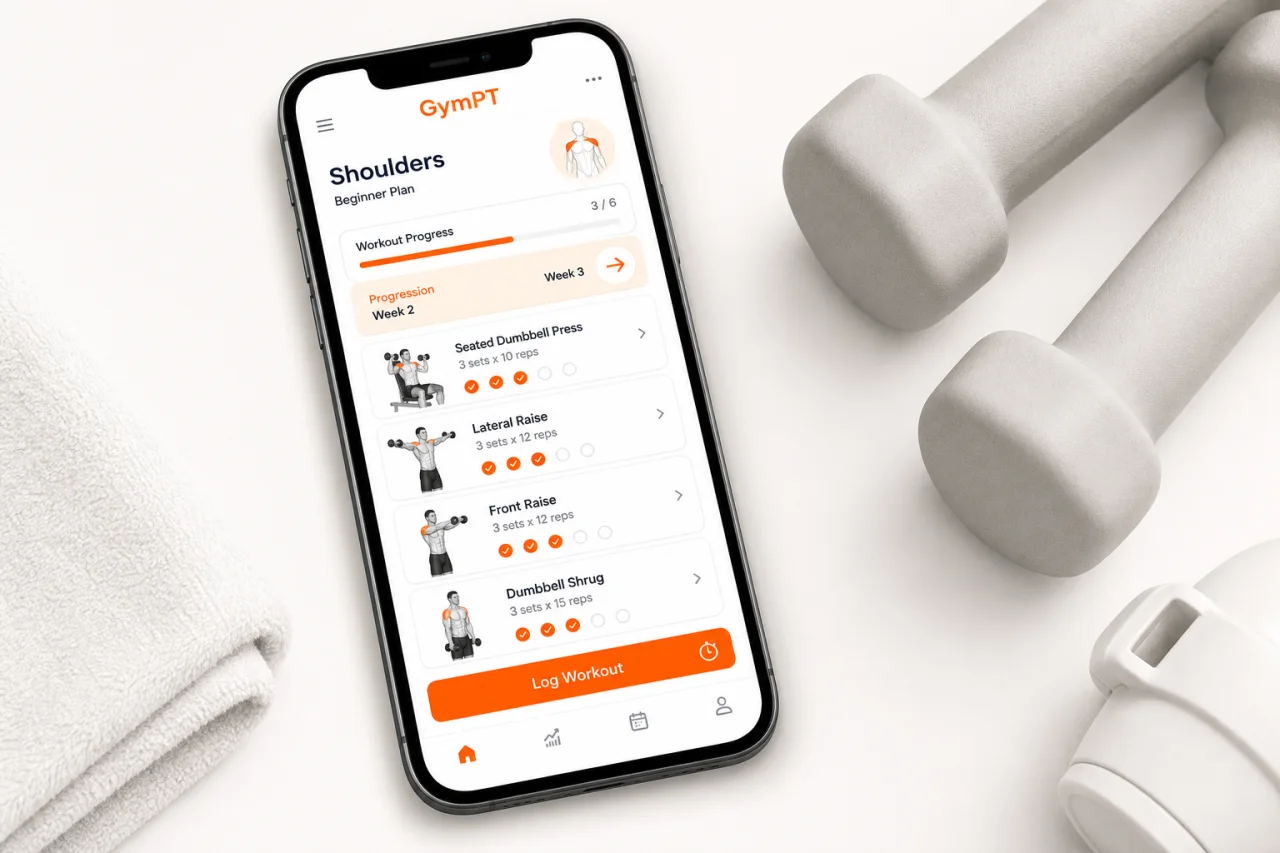
- Dumbbell or machine shoulder press — 3 sets of 6 to 10 reps
- Dumbbell lateral raise — 3 sets of 10 to 15 reps
- Rear delt fly or reverse pec deck — 2 to 3 sets of 10 to 15 reps
- Face pull or cable external-rotation style pull — 2 sets of 12 to 15 reps
If you are very new to lifting, start with just 2 exercises in the first week or two. You can add the third and fourth movement once your technique feels stable.
How to Warm Up Your Shoulders
Do not jump straight into heavy pressing. A short warm-up helps you move better and often makes the workout feel smoother.
- 5 minutes of light cardio or brisk movement
- 1 to 2 rounds of arm circles or controlled shoulder rolls
- 1 light set of each first exercise before your working sets
Keep the warm-up simple. The goal is to prepare the joint and nervous system, not to tire yourself out before the workout starts.
Form Cues That Matter Most
Good shoulder training is mostly about repeatable positions. Use these cues to keep your reps clean:
- Press with ribs stacked — avoid over-arching your lower back.
- Keep your neck long — do not shrug every rep.
- Lower under control — the eccentric phase should not drop fast.
- Raise in the scapular plane — for lateral raises, let your arms travel slightly forward instead of straight out to the side.
- Stop before pain — a muscle burn is normal; sharp joint pain is not.
For shoulder press, a neutral grip or machine press can feel easier for many beginners than a straight barbell. If overhead pressing feels awkward, start with a seated dumbbell press or a machine press and build from there.
Best Beginner Shoulder Exercises, Ranked by Simplicity
1. Seated dumbbell shoulder press
This is one of the best all-around beginner options because it teaches pressing strength while allowing a natural arm path. Keep the weights light enough that you can lower them smoothly and press without leaning back.
2. Machine shoulder press
If you want more stability, the machine press is a great choice. It reduces balance demands, which lets you focus on effort and technique.
3. Dumbbell lateral raise
This is the classic side-delt builder. Use light weights, a slight elbow bend, and controlled reps. If you swing the weight, it is too heavy.
4. Rear delt fly
Rear delts are often neglected, but they matter for balanced shoulder development. Use a chest-supported setup if possible to reduce cheating.
5. Face pull
Face pulls are useful for upper-back and rear-shoulder work. Think of them as a control exercise, not a max-strength lift.
How Much Should a Beginner Train Shoulders?
Most beginners do well with 2 shoulder sessions per week. That frequency gives you enough practice to improve technique while still allowing recovery. A simple weekly structure could look like this:
- Day 1: Shoulder press, lateral raise, rear delt fly
- Day 2: Machine press, lateral raise, face pull
If you already do a lot of chest pressing, your front delts are getting extra work. In that case, you may need less direct pressing and more side-delt and rear-delt work to keep the shoulder balanced.
NHS guidance on strength training also supports working major muscle groups at least 2 days per week, which fits well with a beginner shoulder routine built into a broader program.
How to Progress Without Stalling
Progression should be boring in the best way possible. Pick one method and use it consistently:
- Add reps first until you reach the top of your rep range.
- Then add a small amount of weight and repeat.
- Keep form the same as the load goes up.
For example, if you are doing 3 sets of 8 to 10 reps on shoulder press, stay with the same weight until you can hit 10 reps on all sets with good form. Then increase the load slightly.
That approach matches the broader evidence that training volume matters, but beginners do not need extreme volume to make progress. A moderate, repeatable workload is usually the best place to start.
Common Beginner Mistakes to Avoid
- Going too heavy too soon — this usually turns presses into lower-back exercises.
- Skipping side and rear delts — this can leave your shoulders underbalanced.
- Using momentum on raises — if you swing, the target muscle gets less work.
- Training shoulders hard every day — recovery matters.
- Ignoring pain signals — discomfort from effort is different from joint pain.
If a movement feels irritating, reduce the range of motion, slow the tempo, or switch to a more stable variation. NHS shoulder guidance also emphasizes staying active, using exercises gradually, and not forcing painful movements.
Beginner Shoulder Workout Alternatives if Overhead Pressing Feels Hard
Not everyone is ready for a full overhead press right away. That is normal. Try these easier options first:
- Machine shoulder press instead of free weights
- Incline dumbbell press if overhead work feels uncomfortable
- Landmine press if available
- Seated lateral raises for more stability
- Chest-supported rear delt fly for cleaner reps
These options let you train the shoulders while keeping technique more manageable. As your confidence improves, you can gradually move toward more demanding variations.
How GymPT Can Help You Build a Smarter Shoulder Routine
A beginner shoulder plan works best when it fits your equipment, schedule, and recovery. That is where GymPT can help. The app can build a personalized shoulder workout, adjust exercise choices based on the equipment you have, and track your reps and loads so progression is easier to see.
If you are unsure whether to add more volume, change an exercise, or keep the same plan another week, GymPT’s AI coach chat can help you make a practical decision instead of guessing.
Final Takeaway
The best shoulder workout for beginners is not the hardest one. It is the one you can repeat, recover from, and improve over time. Start with a press, add lateral raises and rear-delt work, keep your form strict, and progress slowly. That is how beginners build stronger shoulders without turning every session into a grind.
If you want a plan that adapts to your equipment and progress, GymPT can help you train shoulders with more structure and less guesswork.